Why dementia rates differ across the globe may unlock prevention. This is a very important paper I hope folks don’t miss reading. Incidence means the number of new cases of a disease that develop over time in a population. Hendrie and colleagues describe in a new paper in JAMA how dementia and Alzheimer disease rates differ between older Yoruba adults in Nigeria and African Americans in Indianapolis.
Key Points:
- Dementia and Alzheimer disease incidence rates were significantly lower in Yoruba (residing in Nigeria) compared to African Americans in the United States.
- The study used identical methods across both populations, strengthening the validity of the comparison.
- Differences in vascular risk factors, environment and possibly gene interactions may contribute to these striking differences.
My take: This is a landmark study because it forces us to rethink dementia as not inevitable. When rates differ this much across populations, it suggests there are modifiable factors we can target. The brain is telling us a story here and we need to listen carefully.
Here are 5 points that resonated w/ me:
1- Dementia risk is not uniform across the globe and this opens the door to prevention strategies.
2- Lifestyle and vascular health may play a bigger role than we previously appreciated.
3- Studying diverse populations is essential to uncovering why diseases start and how they progress.
4- Lower rates in one population should push us to identify protective factors and apply them broadly.
5- The future of dementia care will depend on understanding environment, biology and access to care and of course it will depend on us working together.
https://t.co/qtSG1hWMbN #alzheimer #parkinson @ParkinsonDotOrg
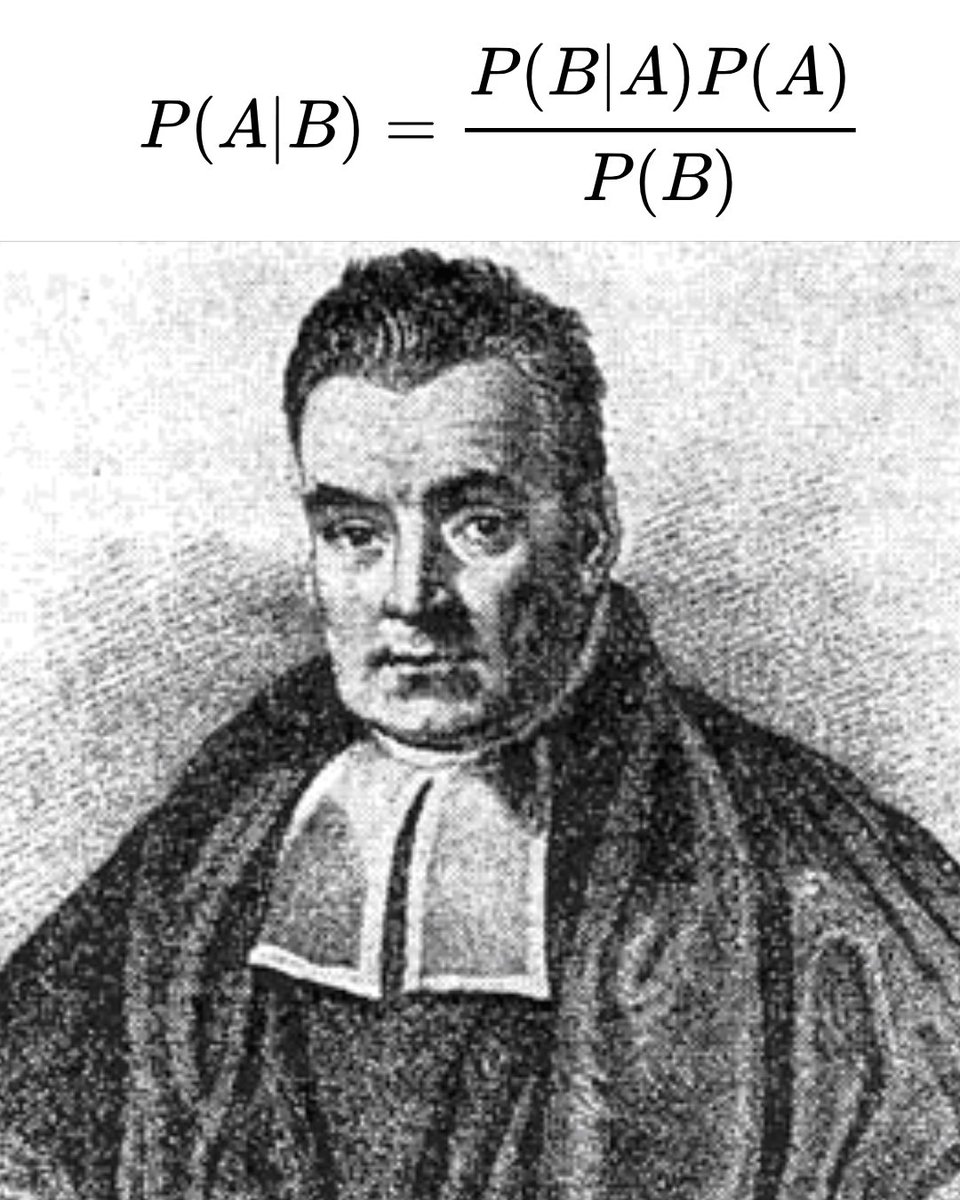
Bayes’ theorem is probably the single most important thing any rational person can learn.
So many of our debates and disagreements that we shout about are because we don’t understand Bayes’ theorem or how human rationality often works.
Bayes’ theorem is named after the 18th-century Thomas Bayes, and essentially it’s a formula that asks: when you are presented with all of the evidence for something, how much should you believe it?
Bayes’ theorem teaches us that our beliefs are not fixed; they are probabilities. Our beliefs change as we weigh new evidence against our assumptions, or our priors. In other words, we all carry certain ideas about how the world works, and new evidence can challenge them.
For example, somebody might believe that smoking is safe, that stress causes mouth ulcers, or that human activity is unrelated to climate change. These are their priors, their starting points. They can be formed by our culture, our biases, or even incomplete information.
Now imagine a new study comes along that challenges one of your priors. A single study might not carry enough weight to overturn your existing beliefs. But as studies accumulate, eventually the scales may tip. At some point, your prior will become less and less plausible.
Bayes’ theorem argues that being rational is not about black and white. It’s not even about true or false. It’s about what is most reasonable based on the best available evidence. But for this to work, we need to be presented with as much high-quality data as possible. Without evidence—without belief-forming data—we are left only with our priors and biases. And those aren’t all that rational.
A radiologist reached out: “So many of my patients will never know how much I think about them, gather second and third opinions about them, and ruminate about whether I've given them the best version of myself. I know I'll never meet them, but I hope they know how much I care.”
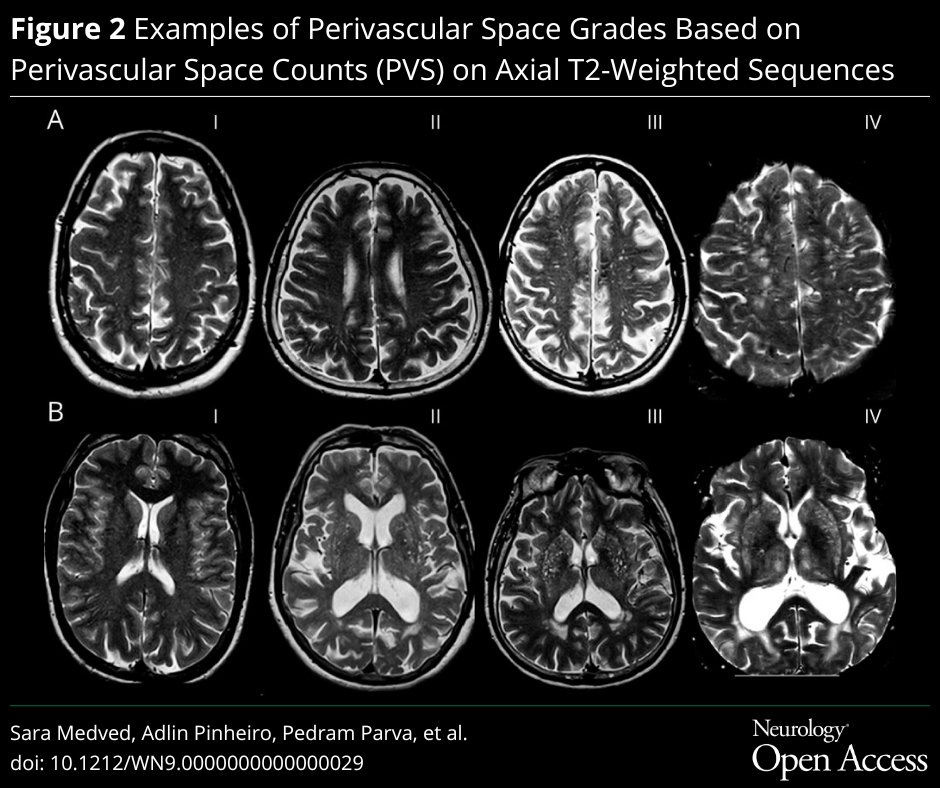
This study in Neurology Open Access found high enlarged perivascular space burden to be associated with incident depression in a stroke-free and dementia-free community-based sample: https://t.co/jVnB4vH5b6
New @Nature
The possibility that lithium deficiency is a driver of Alzheimer's disease. Experimental model shows Li depletion impedes amyloid clearance, and repletion in humans could be achieved with low doses
https://t.co/Wki5c8WSR5
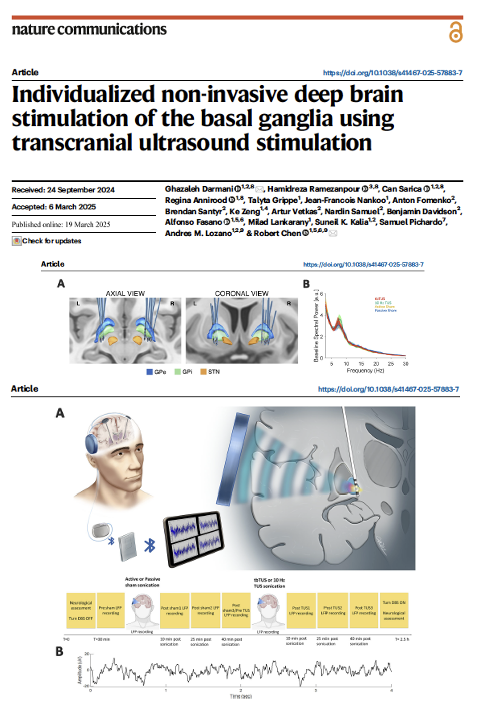
Wouldn't it be cool to be able to stimulate deep within the brain without the need for brain surgery (i.e. DBS), and without actually making a physical lesion in the brain (i.e. focused ultrasound or pallidotomy)? This paper provides 'proof of concept' that a transcranial ultrasound stimulation (TUS) approach may be achievable. Darmani, Chen and colleagues bring us up to speed in Nature Communications.
Key Points:
- The authors provide an interesting study that examined TUS-induced changes in 10 individuals w/ Parkinson’s and dystonia.
- There were also 15 healthy controls.
- Physiology and local field potentials were sampled from deep brain stimulation leads w/in the globus pallidus.
- Theta burst TUS increased theta power during DBS.
- The authors showed 10 Hz TUS enhanced beta power and the effect persisted for ~40 min.
- Interestingly, the GPi TUS actually prolonged stop-signal reaction times. There was also impaired response inhibition.
My take: What was interesting was that transcranial ultrasound was able to engage a common target (GPi) used for DBS surgery and focused ultrasound. We all remain 'deeply' interested in noninvasive deep brain stimulation as this could open the door for a safer and potentially (one day) a more practical approach for stimulating from 'outside the brain.' The field has a ways to go, but this is a nice early step. It is critically important that the authors were able to show us that TUS was able to 'modulate neural circuits in a spatially precise manner.' We must – respice finem – consider the outcome, when developing the less invasive methods of brain stimulation. I don't think we should be too disappointed with the early results, as this road will be a long but worthwhile journey. https://t.co/WE0F7A2mJT #parkinson #deepbrainstimulation #focusedultrasound @ParkinsonDotOrg@FixelInstitute@Nature@NatureComms@DBSThinkTank
Share Christ!
Sin separates: "All have sinned" (Rom 3:23)
God sent His Son: "God loved the world" (Jn 3:16)
Christ died: "Bore our sins" (1 Pet 2:24)
Christ rose: "He was raised" (1 Cor 15:4)
Believe: "Faith in Him" (Acts 3:16)
Receive life: "Life in His Son" (1 Jn 5:11)
Can a 3T MRI be used as a diagnostic tool to help clinicians differentiate Parkinson's, MSA and PSP? Yep. Welcome Automated Imaging Differentiation for Parkinsonism or AIDP to the toolbox. Brand new AI based technique just published by Vaillancourt and colleagues in JAMA Neurology.
Key Points:
- A 3T magnetic resonance imaging sequence paired w/ machine learning met primary end points for differentiating Parkinson's disease, MSA, and PSP.
- This was a NIH funded and PSG collaborative multi-center study and the technique was named Automated Imaging Differentiation of Parkinsonism.
- The study used 249 patients and also had a large retrospective cohort of 396 patients (to validate it).
- Excellent discrimination was uncovered for Parkinson's disease vs atypical parkinsonism.
- Excellent discrimination shown for MSA vs PSP.
- Excellent discrimination in Parkinson's disease vs MSA.
- Finally, excellent discrimination of Parkinson's disease vs PSP.
- The AIDP machine learning algorithm "predicted the postmortem neuropathology in 93.8% of autopsy cases."
My take: The day has arrived where MRI can be used as a diagnostic tool for helping clinicians to differentiate Parkinson's, MSA and PSP. This is really important, as most people will collect at least one MRI study anyway for workup of a potential neurodegenerative disease (and to exclude obvious causes such as tumors). 3T magnetic resonance imaging, when paired w/ machine learning proved powerful. Importantly, the study was conducted in many centers and on many different types of MRI scanners. The procedure was fast and took less than than 10-minute to obtain a diffusion MRI free water based imaging sequence. This was paired w/ an automated image processing and support vector machine learning diagnostic classification. Test-retest analysis was excellent. "DaT SPECT, skin biopsy, and synuclein seed aggregation assays (SAA) have all been proposed to aid in diagnosing Parkinson's." We can add a 3T MRI with AIDP to our toolbox. Could the combination of AIDP plus SAA, skin biopsy, or both "offer a more practical, affordable, and accessible potential approach to test for diagnosis and disease staging?" Thank you to all the 21 sites who participated and for disclosure, I was the senior author, so please take into account my natural bias. It is – mirabile dictu – wonderful to say, that we are moving closer to tools that have the potential to impact both care and research in the area of Parkinson's disease.
https://t.co/XPg6j55Zej @ParkinsonDotOrg@FixelInstitute #Parkinsons @JAMANeuro
How does stroke disrupt neurotransmitter circuits?
We built an MRI atlas of neurotransmitter circuits to map pre- & postsynaptic disruptions. Our findings shed light on stroke cognitive deficits and potential treatments.
Read more in Nature Communications: https://t.co/pGiTmkVTAF
Does TMS delivered to the dlPFC elicit a response in the subgenual ACC?
New work with intracranial EEG says yes!
@NickTrapp13@DrCoreyKeller@jingjiang_psy
Preprint here:
https://t.co/6fnYWLNk36
1/4 Lynch et al: "Using precision functional mapping and several samples of deeply sampled individuals, we found that the Frontostriatal Salience Network is expanded nearly twofold in the cortex of most individuals with #depression."
https://t.co/BNTpxGevPT
Why any Alzheimer's definition needs a clinical-cognitive-biological approach. Biomarkers (ATN & others, i.e., proteomics) are pathological processes, not hallmarks of a unique disease. AD is a complex disease. Delighted to join this IWG in @JAMANeuro
👉https://t.co/sZb6C5FhAN
Theta-burst stim (TBS) is used to treat depression, but how does it work? I dug into this question in my research yr with @DrCoreyKeller@ACPaulk, now out in @NatureComms, finding that TBS can produce plasticity-like changes in just minutes of stim. https://t.co/hDCFvqwsxJ
"The first gulp from the glass of natural sciences will turn you into an atheist, but at the bottom of the glass God is waiting for you" - Werner Heisenberg
1/
A 34 yo M presents with worsening confusion and seizures. He is febrile.
He is intubated and transferred to the NeuroICU.
A #continuumcase about a cause that’s probably low (not) on your DDx.
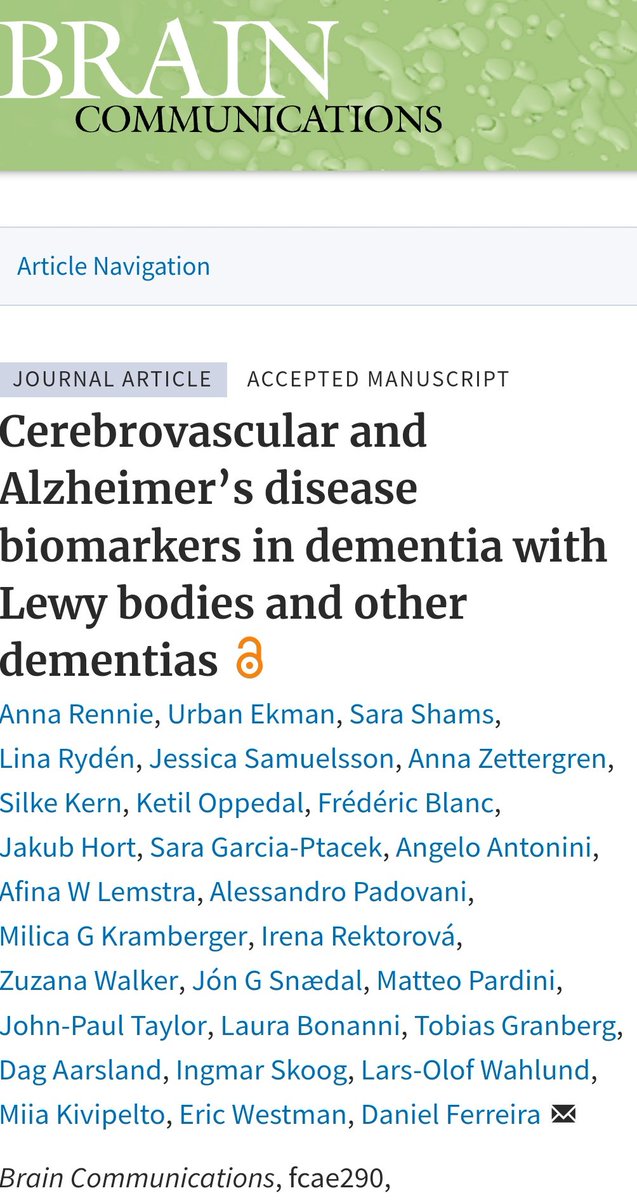
Never before a study compared white matter hyperintensities in so many dementias and so many patients (N=4549). Here we assessed correlations with atrophy, Alzheimer biomarkers and cognitive performance. Of course, we put the focus on dementia with Lewy bodies 👇👇👇
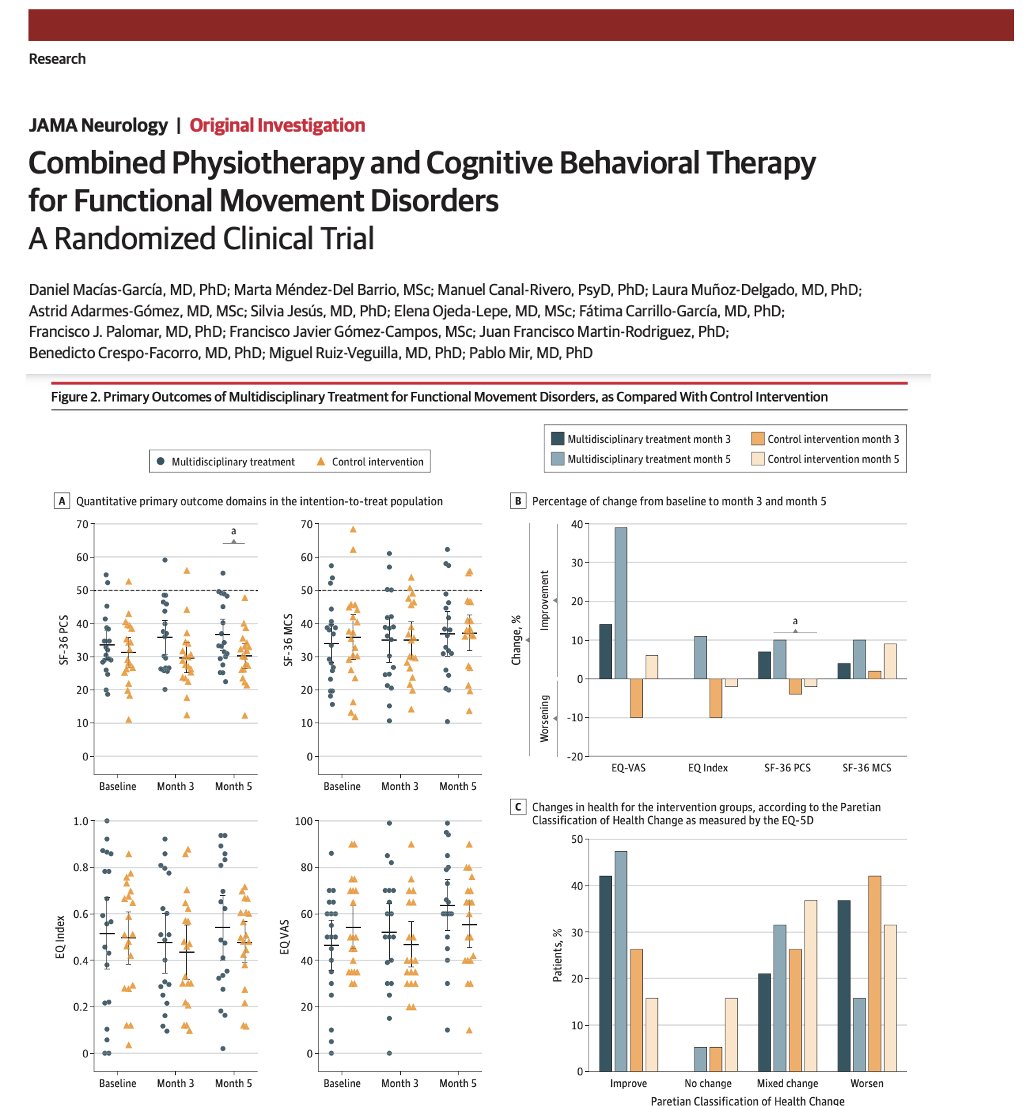
How about if you combine physiotherapy and cognitive behavioral therapy to treat functional movement disorders? How about this new randomized clinical trial by Daniel Macías-García and colleagues in @JAMANeuro.
Key Points:
- The authors wanted to know what the efficacy of a multidisciplinary treatment which combined specialized physiotherapy w/ cognitive behavioral therapy would be for functional movement disorders.
- It was a parallel randomized clinical trial w/ 40 folks.
- Multidisciplinary treatment significantly improved physical aspects of quality of life.
- No significant difference between interventions on mental health–related quality of life.
- Nonsignificant improvement in general health self-perception.
My take: We need randomized trials for functional movement disorders and though the results were not robust, the notion that multidisciplinary treatment could improve symptoms and also the physical aspects of quality of life were both important findings. These are tough studies to pull off, and the comparators of multidisciplinary treatment (physiotherapy plus cognitive behavioral therapy), vs. a control intervention (psychological support intervention) were reasonable, however remember both approaches may lead to improvements since functional disorders or heterogenous. BRAVO to the authors for performing a randomized trial and I think this will help others, especially when choosing comparators for future trials. How about mental health in FND's? How can we do better?
https://t.co/LhcN3Y9a0Y #Parkinsons #dystonia #tremor #functionalneurologicaldisorder @FndPortal
A new blood test approach to screen for Alzheimer's was just published in JAMA. Would you sign up for affordable blood tests for Alzheimer's or down the road Parkinson's which may be offered by general doctors and advanced practice providers? Will these be game changers for care in low income countries? Will everyone want to be tested? Sebastian Palmqvist and colleagues tackled this is a fresh article fresh off the presses in @JAMA_current.
Key Points:
- The authors asked if a blood test which was based on the ratio of plasma phosphorylated tau 217 (p-tau217) relative to non–p-tau217 (expressed as percentage of p-tau217) when combined with the amyloid-β 42 and amyloid-β 40 plasma ratio (the amyloid probability score 2 [APS2]) accurately identified Alzheimer disease.'
- The study targeted general primary care (and secondary care) settings and not neurologists/psychiatrists; though they did have data on performance of dementia specialists.
- They proposed and used a predefined biomarker cutoff value.
- Overall 1200 folks were tested.
- Their test, the APS2 revealed high diagnostic accuracy of 88%-92% for detecting Alzheimer disease.
My take: Blood tests are coming, and the hope is that these tests will be cheap, easy to access, reliable and advance diagnosis and care. The hope also includes that there will be access for all zip codes, regions and nations. The high diagnostic accuracy for identifying Alzheimer's in folks who presented to primary and secondary care setting for thinking challenges was a bright spot in these findings. How expensive will the plasma analyses by mass spectrometry end up being down the road? I really like how the authors determined the primary outcome as Alzheimer's pathology by using fluid from a spinal tap to confirm the findings. The test seemed to assist both primary care providers and dementia specialists. Will everyone want to know? I think the answer will be no even after counseling unless there is a viable therapy they are interested in pursuing. We should take a page from the genetic counseling playbook and be ready for the test related 'human factor.'
https://t.co/OJGD31pW6h #Alzheimers #Parkinson #fixelinstitute








![MichaelOkun's tweet photo. A new blood test approach to screen for Alzheimer's was just published in JAMA. Would you sign up for affordable blood tests for Alzheimer's or down the road Parkinson's which may be offered by general doctors and advanced practice providers? Will these be game changers for care in low income countries? Will everyone want to be tested? Sebastian Palmqvist and colleagues tackled this is a fresh article fresh off the presses in @JAMA_current.
Key Points:
- The authors asked if a blood test which was based on the ratio of plasma phosphorylated tau 217 (p-tau217) relative to non–p-tau217 (expressed as percentage of p-tau217) when combined with the amyloid-β 42 and amyloid-β 40 plasma ratio (the amyloid probability score 2 [APS2]) accurately identified Alzheimer disease.'
- The study targeted general primary care (and secondary care) settings and not neurologists/psychiatrists; though they did have data on performance of dementia specialists.
- They proposed and used a predefined biomarker cutoff value.
- Overall 1200 folks were tested.
- Their test, the APS2 revealed high diagnostic accuracy of 88%-92% for detecting Alzheimer disease.
My take: Blood tests are coming, and the hope is that these tests will be cheap, easy to access, reliable and advance diagnosis and care. The hope also includes that there will be access for all zip codes, regions and nations. The high diagnostic accuracy for identifying Alzheimer's in folks who presented to primary and secondary care setting for thinking challenges was a bright spot in these findings. How expensive will the plasma analyses by mass spectrometry end up being down the road? I really like how the authors determined the primary outcome as Alzheimer's pathology by using fluid from a spinal tap to confirm the findings. The test seemed to assist both primary care providers and dementia specialists. Will everyone want to know? I think the answer will be no even after counseling unless there is a viable therapy they are interested in pursuing. We should take a page from the genetic counseling playbook and be ready for the test related 'human factor.'
https://t.co/OJGD31pW6h #Alzheimers #Parkinson #fixelinstitute](https://pbs.twimg.com/media/GTlJBluWQAERQvk.png)


