This is the Airbus Racer, and the trick isn't the propellers. It's the wings.
A helicopter can't just add power to go faster. Past a point the retreating blade stops making lift. So the Racer's wings carry about half the lift in cruise, and the main rotor can slow down.
The catch is that you pay for that speed in parts. Long driveshafts, wings, more to maintain. That's why Airbus still calls it a demonstrator.
Forget the 240 kt target. In cruise the main rotor gets only 20-25% of the torque.
Video: Aerowl Aviation
I can't f*cking believe this: the CEO of Y Combinator put his own second brain on GitHub, and it's one clone away from being yours
7 second brains you probably haven't seen, all ready to clone tonight:
1. gbrain · 32.4K stars
Garry Tan's own agent brain. every fact remembers where it came from, and all his agents share one memory
https://t.co/Cg7CA8qHYe
2. Karpathy's llm wiki · 50K stars
the one-page idea file that started this whole wave
https://t.co/Adm0ibaUSG
3. ai memory · 13.7K stars
quit Claude Code mid-task and pick it up in Codex without losing a thing. memory lives in plain markdown
https://t.co/vk9KqrBn8K
4. COG second brain · 1.4K stars
35 skills and 10 agents, no database. just markdown files that think
https://t.co/tStEcS60G4
5. agent second brain
send a voice note on Telegram and it lands as a linked note in Obsidian, or a task in Todoist
https://t.co/psSeqDEQA4
6. open second brain
every night it turns the corrections you keep repeating into rules your agent follows
https://t.co/RfshSgcYrn
7. claude second brain
one npx command sets up Obsidian, Claude Code and local search together
https://t.co/tYkCsOPDPq
the man who funds the next Airbnb runs his agents on this. yours still forgets you overnight
save it so you don't lose it
THIS IS ACTUAL F*CKING TREASURE
Anthropic just shared one of the best tricks for Claude Code.
The idea: run Sonnet, Haiku and Opus 5.5 together, each one doing only the job it's best at.
Opus-level judgment on every big call, without paying Opus rates for every routine turn.
You just launch Claude Code like this:
claude --model sonnet --advisor opus
here's the split:
→ Sonnet 5.5 runs the session and writes the code
→ Haiku 5.5 explores files and docs in parallel
→ Opus 5.5 stays on call as advisor for the big calls
→ you stop spending Opus on work that doesn't need it
Opus only steps in at three moments:
→ before a plan locks
→ when the same error shows up twice
→ before calling it done
Sonnet builds. Haiku explores. Opus reviews.
JEV engineering is the same move one layer down: the forks that need no thinker (which file, which tool, retry or stop) go to JEV in milliseconds, and the big models only see the ones that split
the full tree
> Sonnet 5.5 runs the main session and edits code
> search maps the repo on Haiku 5.5
> grep finds call sites on Haiku 5.5
> docs pulls the API reference on Haiku 5.5
> Opus 5.5 on call as advisor, reads the whole transcript when consulted
> JEV routes micro-forks in milliseconds
paste the tree and this prompt into Claude Code ↓
"Rebuild my Claude Code setup around this tree:
1. Run the main session on Sonnet 5.5 with Opus 5.5 as advisor.
2. Create three read-only Haiku 5.5 subagents: search (maps the repo), grep (finds call sites), docs (pulls the API reference).
3. Add one rule to CLAUDE.md: consult the advisor before locking a plan, after the same error twice, and before calling a task done.
4. Route fast deterministic forks (tool choice, path selection, retries) through JEV.
Show me every change as a diff first. No edits until I say go."
↳ https://t.co/UILyuKoqUt
save this, then read the full guide for Opus 5.5 loop + jev engineering ↓
This is f*cking insane. Boris Cherny, the man who built Claude Code, was asked if people should still learn to code. His answer:
"In a year or two, it's not going to matter"
In 73 seconds, he explains what to do instead: play with the AI tools, learn them, don't be scared of them, stay on the frontier
On his team, everyone codes now. The PM, the designer, even the finance guy
He hasn't edited a single line of code by hand since last November. He ships 10 to 30 pull requests a day
Writing Code → Prompting → Agents → Harness → Loops → Everyone on the Team Ships
Claude Code is a harness: the tools, memory, rules and loops around the model. His team changes it with every new model and cut 80% of its system prompt
Save this before it disappears from your feed
Every doc, guide and repo below is free:
Claude Code best practices
https://t.co/GbmXiaEIDd
Effective harnesses for long-running agents
https://t.co/xrtGydQVJY
Building effective agents
https://t.co/AlmLkMTGu2
Claude Code docs
https://t.co/HD2f3EEFmE
Memory: how Claude remembers your project
https://t.co/nozmp2WL3o
Custom subagents
https://t.co/VKlbDuol0B
Hooks: rules the agent can't skip
https://t.co/qsDseCAMX5
Skills
https://t.co/5bEJ0arUGo
Run Claude Code on a schedule
https://t.co/JolCHBKW2p
Free course: Claude Code in Action
https://t.co/Dd0MnjEGSn
Claude Code on GitHub
https://t.co/PLMi4HwjFu
Claude Code inside your PRs and issues
https://t.co/YuA7O7ENw2
Build your own agent on the same harness
https://t.co/JidFNfxArL
The best Claude Code resources in one list
https://t.co/BeOsrePwHY
Plugins, agents and skills for Claude Code
https://t.co/snrWwfOncP
He compares it to the printing press. Writing went from a few scribes to everyone. Building software is next
95% will keep asking whether to learn to code, the 5% who build a harness will ship 30 pull requests a day
Bookmark it and read the first link tonight
Then use the guide below to build your harness before everyone else does ↓
ChatGPT learns using a formula that was invented in 1847 to calculate the orbits of planets.
w ← w − η∇L
This is gradient descent, and without it, not a single modern neural network would exist. It wasn't invented at OpenAI or Google but in France almost 180 years ago, when the mathematician Augustin-Louis Cauchy was looking for a faster way to calculate the motion of celestial bodies.
Imagine you're standing on a mountain in thick fog. You can't see the bottom, but you can feel the slope under your feet. You take a step where it's steepest downhill, check the slope again, and take another step. Step by step, you end up in the valley.
A neural network does the same thing. The mountain is its mistakes, and the valley is the right answers. Except this mountain doesn't have three dimensions but billions.
Cauchy calculated orbits. His formula taught machines to write.
One thing exposed in this Miami Learjet crash is this: clickbait.
Melissa here "quotes pilots" and an amateurish AI video to lecture on coffin corner in the Learjet 1 million views
As quoted by our mate @sdracer13 (who is actually a pilot): "No corner at FL350. Lots of excess margins."
Bam. the video info is incorrect. Still 1 million views.
A few days ago, she also unhearted a months old video of a pilot dodging turbulence to explain"THAT´S HOW ITS DONE", on a totally unrelated occurrence to the accident, to show that "this guy did it right, avoided turbulence, the miami guys did not"
https://t.co/BD0E8bZdrO
(Also had millions of views)
At this stage, we don´t know what happened for sure: not even investigators do.
To jump to conclusions this far is, to put it very mildly, "intellectually dishonest".
And I would not trust someone who tweets on politics, soccer, or electronic devices, on a single day, to simply become an aviation expert.
So folks, be careful with what you read: you can have 1 million followers and still, deliberately, produce incorrect content.
This is largely bullshit for this aircraft type at that altitude. The 60 is certified for 51,000ft (not that you ever go there, but that’s what it is certified to).
Routinely, they operate 40,000ft to 43,000 ft.
The above chart is the buffet boundary chart from the flight manual.
20000lb gross weight (although I’d suspect they would’ve been lighter than that). FL350 1.0 g load factor. There’s about a 160kt window between high and low speed buffet. In other words, the “corner” in coffin corner at that altitude is a massive arc, not a corner at all! Roughly M.54 to M.81
BUT…
Severe turbulence could easily double the load factor… THEN this results in an elevated low speed buffet boundary of up to M.71-M.72.
Turbulence penetration speed is Mach .73, which is what I’d imagine they would’ve been flying in the turbulence they were experiencing.
So, not a lot of margin in turbulence. This is not the stall speed, though… but it’s in the neighborhood.
Ice accretion is the unknown. Who knows what those numbers are, but as a general rule, low speed buffet/stall increases with ice.
Had they aerodynamically stalled, they should’ve been able to recover, in the first 5-10 thousand feet, but it didn’t sound like they had any pitch authority to even slow their descent.
A Child's Brain Can Learn to Live Like It's in a War Zone
What happens when a child grows up surrounded by shouting, fear and violence? Science has found something deeply concerning.
In a 2011 study published in Current Biology, researchers used brain scans to examine children exposed to family violence. They discovered that two important brain regions — the amygdala and anterior insula — showed heightened activity when children saw angry faces.
Interestingly, the same pattern of brain activity had previously been observed in soldiers exposed to combat.
Why? A child growing up in an unsafe home may become extremely sensitive to signs of danger. Detecting anger quickly can help them survive an unpredictable environment, but this constant alertness may increase their vulnerability to anxiety and other mental health difficulties later in life.
A child may look perfectly fine on the outside while constantly feeling unsafe inside. Sometimes, what children need most is not discipline or criticism, but a home where they can finally feel safe.
Source:
McCrory, E. J., De Brito, S. A., & Viding, E. (2011). Heightened neural reactivity to threat in child victims of family violence. Current Biology, 21(23), R947–R948.
I cleaned up the commuting diagram. Hopefully it's now clear as a bell. The red P is a profunctor, and the blue G is a functor from the twisted arrow category.
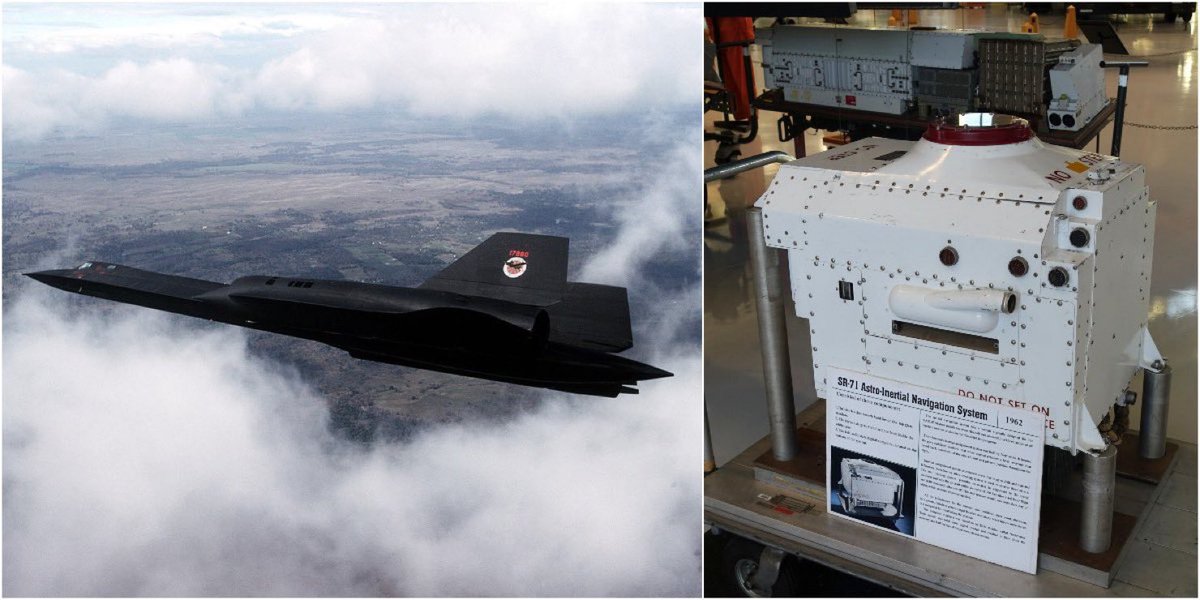
Long before GPS the SR-71 was navigated by the stars 💫🌟✨
Flying the SR-71 at 85,000 feet and Mach 3 is a religious experience,” said Air Force Colonel Jim Watkins, “Nothing had prepared me to fly that fast… My God, even now, I get goosebumps remembering.”
Jim Watkins and Dave Dempster were some of the very early crews that flew the SR 71. In 1967 computers and satellites were in their infancy and were not reliable.
GPS had not even been thought of or dreamed of.
They quickly got into the record book on July 2, 1967. They accidentally flew into international airspace when they drifted over into Mexico. This is when the navigational system ANS failed. I don’t believe that the Mexicans noticed so it was not an international incident, thankfully.
Here are some parts of an article that I wrote in the aviation geek club published for me a few years ago.
The pilot’s job was to handle the aircraft and watch over the automatic systems to make sure they were doing their jobs properly. Meanwhile, the RSO handled the cameras, sensors, and the all-important Astroinertial Navigation System (ANS).
The ANS was the 1960’s version of GPS, but instead of using satellites to locate itself, the ANS used the stars. This is because, before the invention of the modern satnav networks, there wasn’t a way to navigate the SR-71 in the areas where it operated. The SR-71 needed to be able to fix its position within 1,885 feet (575 m) and 300 ft (91 m) of the center of its flight path while traveling at high speeds for up to ten hours in the air.’
The ANS works by tracking at least two stars at a time listed in an onboard catalog, and with the aid of a chronometer, calculates a fix of the SR-71 over the ground. It was programmed before each flight.
They had to double-check to make sure the navigational system was not aligning the floodlights in the hangar.
The aircraft’s primary alignment and the flight plan were recorded on a punched tape that told the aircraft where to go, when to turn, and when to turn the sensors on and off. The stars were sighted through a special quartz window (located behind the RSO cockpit) and there was a special star tracker that could see the stars even in daylight.’
~Linda Sheffield
https://t.co/KRxQo0Z0yF…
Heard this term “coffin corner” from pilots as a possible contributing factor to the Learjet 60 crash.
This is the best explanation of what it is and why descending rather than climbing is the way out.
The coffin corner is a dangerous band high up in the sky where a plane’s “too slow” limit and “too fast” limit get so close together that the safe window narrows to almost nothing.
If anything pushes the plane a little too slow or a little too fast (a bit of turbulence, a turn, or even trying to climb), it can easily slip outside that tiny safe band and fall out of the sky.
That’s why it’s called the coffin corner - there’s almost no room for error, and losing control up there is extremely dangerous.
This is f*cking insane. Former Google CEO Eric Schmidt, the man who led Google for 10 years:
"If you really want to make money, it's actually easy, found an agentic AI company, I mean build an agent to do something
If you build a better agent than anyone else, you can probably build one incredible company and own it yourself"
In 27 seconds, he lays out why the next year or two is the agentic period, and why the window won't stay open
Prompts → Claude Code → Memory → Skills → MCP → A Company You Own Yourself
Save this before it vanishes from your feed
Everything below is free:
Agent architecture
https://t.co/EGZkaKdyxc
Claude Code 101
https://t.co/DoFeNUgDA2
Claude Code in action
https://t.co/PY6wYfoZlY
Prompt engineering
https://t.co/vmKXd9s1Dk
Interactive prompt course
https://t.co/jTXKMO3ZOH
Claude.md + memory
https://t.co/h5fwmlItTt
Skills
https://t.co/RhyNhYP4Ao
MCP
https://t.co/Rt9uMYKgxe
Routines
https://t.co/Bmt3WkkXXn
Claude Code ultimate guide
https://t.co/dBP2Wm9O2V
Awesome Claude Code
https://t.co/BgqybyB71X
Anthropic academy
https://t.co/A1HAuUkZ3y
Official Claude Code docs
https://t.co/UyIRIeCKUr
All of this costs $0
95% will spend the agentic period scrolling through AI threads, the 5% who ship agents will own the companies that come out of it
Bookmark it and begin with the first link tonight
Then read the full Graph Engineering guide below ↓
This is f*cking insane. Former Google CEO Eric Schmidt, the man who ran Google for 10 years:
"If you really want to make money, it's actually easy, found an agentic AI company, I mean build an agent to do something
If you build a better agent than anyone else, you can probably build one incredible company and own it yourself"
In 27 seconds, he explains why the next year or two is the agentic period, and why the window won't stay open
Prompts → Claude Code → Memory → Skills → MCP → A Company You Own Yourself
Save this before it disappears from your feed
Everything below is free:
Agent architecture
https://t.co/Chvem5GspS
Claude Code 101
https://t.co/aG7NouZfew
Claude Code in action
https://t.co/4CQGgMyqGS
Prompt engineering
https://t.co/vHGrXwMdVp
Interactive prompt course
https://t.co/Eagw53Bv7h
Claude.md + memory
https://t.co/QNPfajPDER
Skills
https://t.co/2i7BUY3nIt
MCP
https://t.co/DmunNrf3Rh
Routines
https://t.co/plUZELLKgI
Claude Code ultimate guide
https://t.co/fbjAnwI7Q2
Awesome Claude Code
https://t.co/IfTGf6LHeF
Anthropic academy
https://t.co/VVGgBp5mTE
Official Claude Code docs
https://t.co/cOsKsz4o73
All of this costs $0
95% will spend the agentic period scrolling AI threads, the 5% who ship agents will own the companies that come out of it
Bookmark it and start with the first link tonight
Then read how to build an agent that actually does the job in the harness engineering guide below ↓