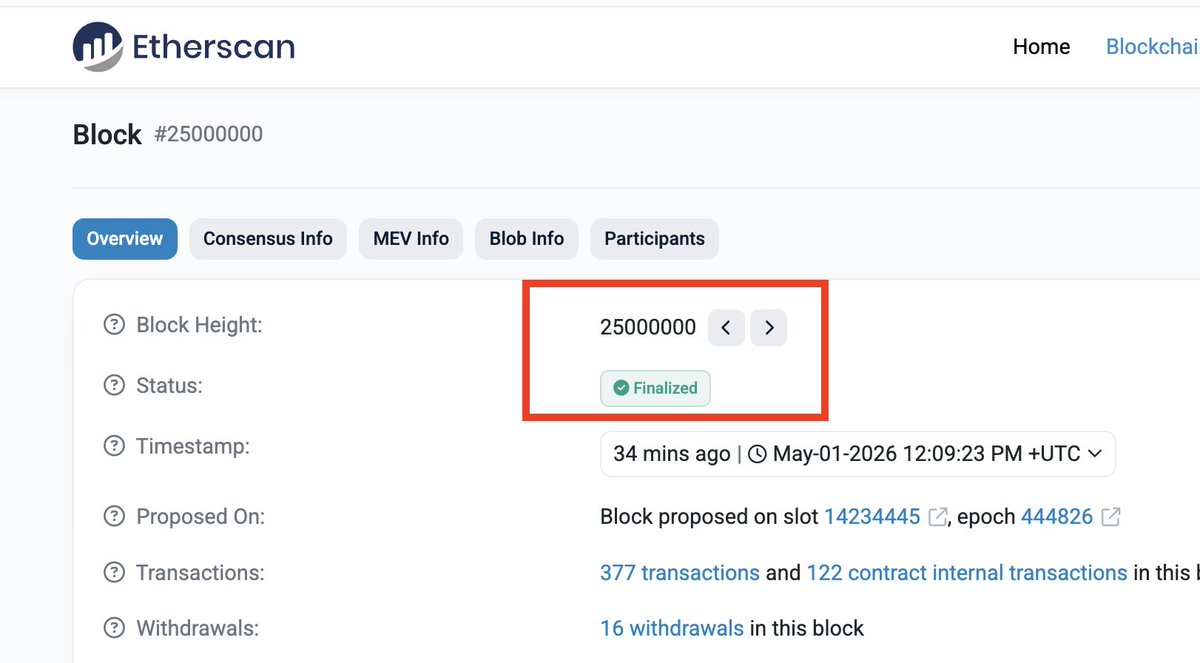
I’m curious if the block building and validating infrastructure can follow on to both sides of a fork. Would validators and block builders be able to afford a doubling of their infrastructure or would one of the forks not have a robust enough market to profit from? I suppose a validator can always responsibly wind down participation in a given fork and stakers in the LST will not be rugged/bricked in any way.
DeFi lending lives and dies by trust. One of the biggest mistakes is trying to compare DeFi lending with AMM pools because they work in completely different ways.
Lending only works when people believe the markets are sound, that collateral is solid, risk parameters make sense, and the system as a whole is stable. Once that trust breaks, you get the onchain version of a bank run.
That’s why a model where anyone can spin up a vault permissionlessly and market it on the same platform has built-in weaknesses. Since most strategies are already commoditized, curators don’t have many ways to stand out. They either lower fees to the bone or take on more and more risk to attract capital from other pools.
At some point, one big failure could wipe out confidence across the space and set the whole industry back. The next Terra Luna moment will come from a reckless curator on an open platform.
Syndicate Mainnet is live.
For the first time, developers and their communities can own every layer of their networks––sequencer, infrastructure, and economics––without vendor lock-in.
Welcome to the community-owned internet.
↓
In most networks, token holders own almost nothing.
They may “vote”—but foundations still control the treasury, the network, and the contributors.
That’s not ownership. That’s influence without authority.
A DUNA flips this dynamic. ↓
Today, we're proud to announce that Syndicate Network is one of the FIRST decentralized networks to be built and launched in AMERICA—formed under a Wyoming-based DUNA with no offshore entities.
This is a major step forward for the crypto industry and U.S. 🇺🇸
Learn more ↓
God told Heraclitus to conceive of a country he’d never see
Heraclitus said yes
God told William the Conqueror to keep laws for a country he’d never see
He said yes
God told Machiavelli to write a country he’d never see
He said yes
God told the Founders to build America
Engineers spend 70% of their time understanding code, not writing it.
That’s why we built Asimov at @reflection_ai.
The best-in-class code research agent, built for teams and organizations.
Testnet Asimov is LIVE.
GenLayer’s decentralized court system has activated.
This is the Trust Infrastructure for the AI Age, powered by Intelligent Contracts + LLM validators.
No judges. No oracles. Just trust at machine speed.
In a world without a verifiable shared ledger, every financial institution needed to hold cash to guarantee that it got paid. This meant effective settlement happened at the speed of transfer of cash.
Today, the "stablecoin sandwich" is used to speed up global transfers for businesses by replacing the transfer of cash across borders with the transfer of stablecoins.
While this is a meaningful improvement, I yearn for a world where full-cycle finance takes place onchain. Crypto enables 100x faster settlement and innovation than legacy financial systems so there is no reason for us to accept being a tiny part of an archaic system.
Read more of our thoughts on the stablecoin sammich below:
Chicago is a great city because Chicago is a beautiful city
It’s an act of will, an act of love, it didn’t have to be like this, it didn’t have to be a pretty city
Chicago invented skyscrapers, Chicago invented commodities, we call them futures, Chicago invented the future
And what is the future? War? Violence? Tragedy and greatness? Rise and Fall and chafing against death?
The future is a city of beuatiful buildings, and you can afford to live there, so that you can fall in love and have a family. We call it the American Dream
@futurenomics@_TomHoward I’m not sure if that’s a benefit or a hazard. Take the traders that diagnosed the underlying cause of the Challenger crash - they responded many months before the official forensics. It was almost immediate.
the eth core devs don’t tweet a lot about just how hard the work that they do is so let’s talk about it:
1. every line of code they merge can move more money than most banks process in a quarter. there is no staging server for that.
2. they swap consensus logic for a 400B + dollar economy without scheduling downtime. ever.
3. they coordinate hundreds of researchers, auditors, and client teams across time zones, cultures, and philosophies, yet ship like a single mind.
4. they do it all in public, with every decision dissected by the loudest peanut gallery on the internet, and still keep the vibe collaborative.
5. they design for attackers who have nine figure incentives and infinite patience. then they sleep anyway.
6. they keep six independent clients in perfect sync so the same block lives at the same height for every node in the world.
7. they turn bleeding edge research into production code while preserving backwards compatibility for machines that went online before defi even had a name.
8. they debug issues that only happen once a year on a single archive node because someone somewhere will rely on that edge case.
9. they write cryptography that must stay unbroken for decades while the math itself evolves beneath their feet.
10.when the upgrade lands smooth the outside world shrugs. inside ethereum we know it was a minor miracle. every successful fork proves that decentralized coordination can outperform the world’s best hierarchies and shows that open internet capital markets are now the default.
thank you, truly.
we owe you everything.
⚖️ IN DEPTH: @GenLayer aims to settle on-chain disputes as AI agents rise with AI-powered court system, says YeagerAI CEO, Albert Castellana.
Read more in @tom_carreras' report 🔗👇
Some more intracortex communication action- this is from a gyrus in the frontal cortex. Note the vertical and horizontal communication going on to integrate signals.
https://t.co/PK2jBvD3Ce
#brain#sciart#artsci#neuron#neurology#neuroscience
@_TomHoward@paulg@Indian_Bronson Fun fact - information is only information if it is new, according to the first definition in the Oxford English Dictionary
I keep thinking the space will finally wizen up and realize that infinitely minting new meme/content/nft tokens dilutes liquidity, inflicts losses to many, fragments the space, and accelerates a race to the bottom that -- rightfully so -- further entrenches the mainstream thought that this space is a scam at worst and joke at best.
But it seems that I am the naive one to think that we can change.
DeFi is still cool though and is why I will continue to build.