Médico-Epidemíologo, Doctor en Educación, Profesor Titular,Coordinador de Investigaciòn Facultad Med UCV. hablamos de TIC en Investigación, Educación y Salud.
SIEMPRE ESTARÉ TRANQUILO PORQUE SE COMO USAR CLAUDE TODO EL DIA SIN ALCANZAR EL LÍMITE DE USO.
Claude no cuenta mensajes — cuenta tokens. Eso significa que algunos chats consumen tu límite 10× más rápido que otros.
Si quieres usar Claude todo el día sin quedarte sin acceso, utiliza estos 9 trucos inteligentes:
La inteligencia artificial podría dejarnos sin empleo, pero hay algo que el dinero no puede devolvernos. @TheEconomist analiza investigaciones que revelan que trabajar también nos proporciona identidad, relaciones humanas, reconocimiento y un propósito. Perder el empleo puede significar perder mucho más que un salario.
Hay un hallazgo extraordinario: personas desempleadas durante años experimentaron una mejora importante en su bienestar al alcanzar la edad de jubilación, aunque su situación económica apenas cambiara. Dejaron de ser consideradas desempleadas y pasaron a ser reconocidas como jubiladas. Cambió su condición social, no necesariamente su vida material.
En México, la Constitución reconoce el derecho al trabajo digno y socialmente útil. Si la IA permite producir más riqueza con menos trabajadores, tendremos que discutir cómo repartir sus beneficios y proteger a quienes sean desplazados. Porque una sociedad puede dejar de necesitar nuestro trabajo, pero jamás debería hacernos sentir que ha dejado de necesitarnos.
Математики против ИИ, а шахматисты за!
Больше тысячи математиков объединились в Association for Human Mathematics. Они обязуются не публиковать работы, сгенерированные ИИ, и не сотрудничать с крупными лабораториями.
Часть из них (более 600) пошла дальше — вообще не использует ИИ в исследованиях. Их аргумент простой и жёсткий: машина может помочь найти доказательство, но она не даёт человеческого понимания. Математика — это не набор ответов, а способ видеть структуру мира. Если этот способ отдаёшь алгоритму, ты перестаёшь быть математиком.
Шахматисты наоборот!
Магнус Карлсон говорит без всякой опаски, Нейросети, по его словам, невероятно улучшили наше понимание игры. Не «помогли выигрывать», а именно понимание. Он признаёт, что его собственное понимание часто недостаточно — и это полезно. Потому что когда компьютерный движок показывает ход, который кажется странным, а потом оказывается правильным, ты вынужден пересмотреть то, что считал очевидным. Движки делают его «глупым и бесполезным», поэтому он почти не играет против них напрямую. Он использует их как инструмент, а не как соперника. И именно в этой смиренной позиции он и стал сильнее.
Получается интересная развилка. В математике часть людей видит в ИИ угрозу самому способу думать. В шахматах лучший игрок мира говорит, что машины сделали его понимание глубже, потому что постоянно показывают, где он ошибается. Разница не в силе алгоритмов. Разница в том, готов ли человек использовать чужую точность, чтобы лучше увидеть свои границы.
Магнус не спорит с машиной. Он просто смотрит, где она видит то, чего не видит он. И это, по его словам, полезно.
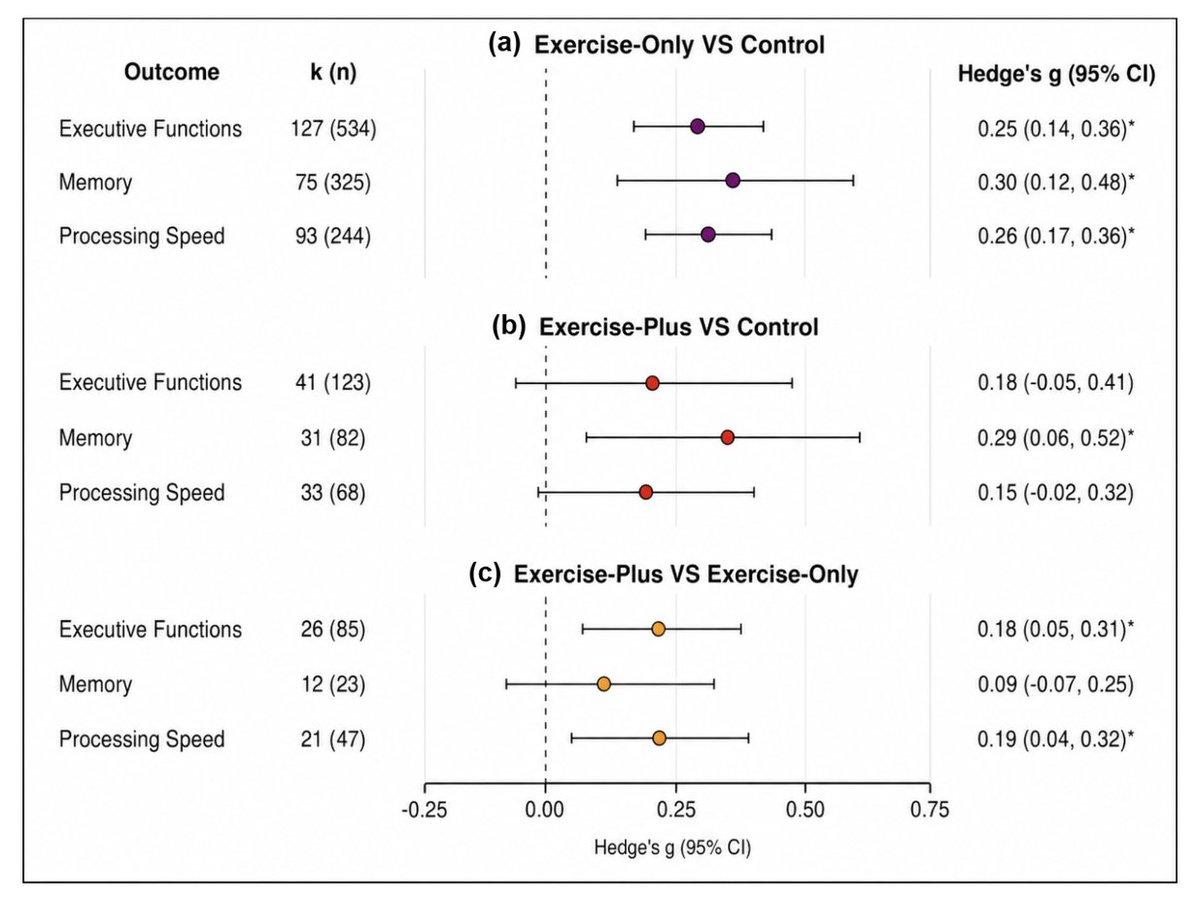
🧠🏃♂️ El ejercicio físico mejora las funciones ejecutivas, la memoria y la velocidad de procesamiento en adultos mayores.
➕ Combinar ejercicio con otras intervenciones aporta beneficios adicionales en algunas funciones cognitivas, pero no en todas.
🔗 https://t.co/q0uRxhZqkD
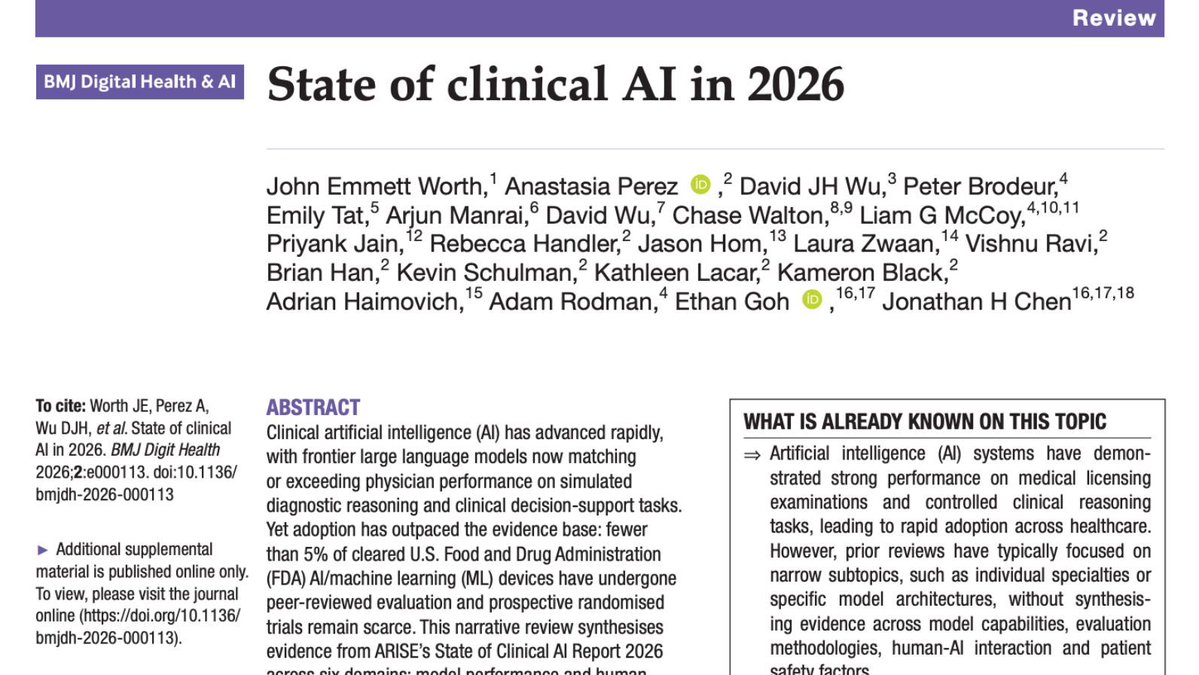
"State of Clinical AI in 2026," a new review by @StanfordMed authors & colleagues in @bmj_latest Digital Health & AI, discusses advances and persistent gaps in clinical AI. Read it: https://t.co/AZsV1rbqnh
🎓 El crecimiento de la educación virtual ha puesto en valor un perfil técnico-pedagógico clave: el maquetador Moodle. No solo carga contenido sino que diseña aulas accesibles, navegables y coherentes para una experiencia eficaz https://t.co/2PZzXpcruR
#eLearning#Moodle #DiseñoInstruccional #IA #EducaciónVirtual
Most people assume that bringing down blood sugar after a meal takes a real workout, something like a brisk half hour or a trip to the gym. The research says the amount of movement needed is far smaller than that, and when you move matters even more than how long.
The reason sits in your muscles. When a muscle contracts, it pulls sugar out of the blood without needing insulin to open the door. The protein that carries the sugar in, called GLUT4, rises to the surface of the muscle cell in response to two separate signals, and muscle contraction is one of them. That is why movement lowers blood sugar even in people whose insulin works poorly, and why the effect shows up within minutes instead of after weeks of training.
A 2026 trial tested how little movement it takes. Thirty adults came in on two evenings and drank a standard sugar drink with 75 grams of glucose. On one evening they stayed seated, and on the other they stepped up and down stairs for a single minute at whatever pace felt comfortable. They rated the effort 1.9 out of 10, barely more than sitting. In the hour after the drink, their blood sugar rose about 42 percent less after the minute of stairs than after sitting, and their total sugar exposure across the session was lower too. The researchers chose the evening on purpose, because the same amount of sugar pushes blood sugar higher at night than it does in the morning.
One minute is right at the edge of what works, and it does not work in every situation. The same research group ran the comparison in the morning with bouts of 1, 3 and 10 minutes after the sugar drink. Three and ten minutes lowered blood sugar, while one minute did not come close to making a difference. When they repeated it after a real mixed meal of 650 calories, one minute did help, trimming the blood sugar rise by about 14 points on a standard glucose meter. So a single minute seems to be enough after a normal meal and in the evening, but not reliably after a morning sugar drink. Three minutes worked in every version they tested, which makes three the safer number to aim for.
Timing turned out to matter more than length. A 2023 analysis pooled eight trials with 116 people, about 4 in 10 of whom had type 2 diabetes, and compared exercising before a meal, after a meal, and not at all. Moving after the meal beat moving before it and beat doing nothing. Moving before the meal worked no better than sitting still. The analysis also found that the shorter the gap between finishing the meal and starting to move, the bigger the benefit, so a short walk taken right away does more than a longer one taken an hour later.
The useful change is in the ten minutes after you finish eating. Sitting down is what most of us do by default, and for blood sugar it is one of the weakest choices available. Climb the stairs if you have them or take a walk if you do not, and keep in mind that starting sooner matters more than going longer.
References
Morales et al., Experimental Physiology, 2026
Moore et al., Journal of Exercise Science and Fitness, 2024
Kressler et al., Nutrition, Metabolism and Cardiovascular Diseases, 2022
Engeroff et al., Sports Medicine, 2023
📚 🔥بحثك العلمي ممكن يكون فيه أخطاء ما انتبهت لها
جوجل فتحت أداة Deep Review لمراجعة الأبحاث والتقارير، تكشف لك نقاط الضعف، والتناقضات بين الفقرات، والادعاءات التي تحتاج إلى توثيق
📚 والأجمل؟ مراجعتان مجانيتان كل أسبوع
مفيدة قبل تسليم بحثك
🔗الرابط
https://t.co/AA8KZHAfVn
El estudio de Stanford sobre caminar y creatividad es de mis favoritos: hasta un 60% más de ideas caminando que sentado, y el efecto seguía al volver a la silla. Las mejores decisiones del día casi nunca salen delante de una pantalla.
🧬 ¿A qué edad suelen aparecer las enfermedades autoinmunes?
Nuestro sistema inmunitario envejece y las enfermedades autoinmunes siguen patrones de aparición diferentes según la edad.
🔹 Diabetes tipo 1: 0–15 años.
🔹 Vitíligo: 15–55 años.
🔹 Enfermedad celíaca: 20–60 años.
🔹 Psoriasis: 25–60 años.
🔹 Lupus: 30–60 años.
🔹 Enfermedad inflamatoria intestinal: 25–60 años.
🔹 Tiroiditis de Hashimoto: 40–75 años.
🔹 Enfermedad de Graves: 40–75 años.
🔹 Artritis reumatoide: 50–75 años.
🔹 Síndrome de Sjögren: 45–70 años.
La clave: la edad no solo modifica nuestro metabolismo. También transforma nuestro sistema inmunitario y las enfermedades que podemos desarrollar.
Buf, esto no para. Otros tres descubrimientos anunciados por @openaIA. Esta vez no solo matemáticas, sino tambien física y ciencia computacional. Y no son precisamente un tema baladí. Parecen verdaderos hitos científicos.