Ves este partido de Haaland, aunque ahora haga 8 goles, y te das cuenta del daño que le hicieron los estadígrafos al análisis del fútbol. Los números habilitaron a mucha gente a decir muchas cosas. He llegado a ver la palabra "Haaland" en la misma oración que la palabra "Messi".
ROBO A CROACIA: Errores en física.
Si nos vamos a poner detallistas con el tema de los sensores de las pelotas, de si hubo un mínimo roce y aplicar el reglamento al milímetro, también tenemos que aplicar física al milímetro.
La pelota Trionda usa tecnología de balón conectado con un sensor de movimiento de 500 Hz que da información al VAR sobre movimiento/contactos del balón. Ese sensor no “ve” una cabeza: mide aceleraciones, rotaciones y patrones de movimiento. Por eso, si la pelota pasa muy cerca de una cabeza, puede haber perturbaciones aerodinámicas, vibraciones o ruido mecánico. En principio, eso puede generar una señal pequeña. Que el algoritmo la clasifique como contacto ya es otra cosa.
Si el sensor muestra una señal típica de impacto —pico brusco, alta frecuencia, cambio instantáneo de rotación o trayectoria, sincronizado con la posición de la cabeza—, entonces la anulación es defendible aunque en TV no se vea. Las cámaras tienen parallax, motion blur, pocos frames comparado con el sensor, y un contacto mínimo puede ser invisible.
Si el sensor solo muestra una oscilación ínfima y no hay cambio coherente de trayectoria, ni deformación, ni imagen compatible, ni firma de impacto, entonces NO se debe anular un gol. Ahí se estaría convirtiendo una herramienta probabilística en un oráculo.
A Croacia le anularon un empate tardío tras una revisión del VAR polémica vinculada a una detección marginal del balón. Una cosa es una señal clara de impacto; otra es un “blip” diminuto.
Sobre los árbitros: no necesitan ser físicos, pero sí deberían tener formación suficiente en limitaciones de medición, la cual OBVIAMENTE NO TIENEN. Un árbitro moderno que usa sensores, semiautomático, tracking 3D y VAR debería entender conceptos básicos: margen de error, falso positivo, calibración, umbral, sincronización temporal y diferencia entre dato bruto e interpretación algorítmica. Si no, termina pasando esto: la tecnología deja de asistir al arbitraje y empieza a reemplazar el juicio crítico.
En conclusión, no se ve contacto y el único argumento es “el sensor detectó un roce ínfimo” que, como ya mencioné, por el gráfico se puede ver que está mas relacionada a diferencias de presión en el aire al pasar cerca de una cabeza que por un toque con la misma (si la hubiera tocado se vería un pico muy alto y brusco en la imagen).
Se está usando tecnología muy avanzada con árbitros que no la saben comprender (ni el propio VAR). Ningún físico diría que ese gráfico muestra un toque.
En una jugada decisiva, la carga de la prueba debería ser altísima. Sensor sí, fe ciega en el sensor, NO.
es realmente una vergüenza que a esta altura del partido los resúmenes de tarjeta sean tan poco descriptivos y uno tenga que hacer investigaciones sobre sus propios consumos para ver qué carajo era MERCADOPAGO*ELECTRONICAPFP 02/09
¿Y si una de las decisiones más importantes para proteger tu memoria no estuviese en un fármaco… sino en tus oídos?
Durante años hemos tratado la pérdida auditiva como una consecuencia “normal” del envejecimiento.
Algo incómodo. Pero secundario.
La evidencia científica de 2026 dice otra cosa.
Un meta-análisis publicado en The Journals of Gerontology, con más de 231.000 participantes, concluye que el uso de audífonos se asocia con una reducción del 16% en el riesgo de deterioro cognitivo.
Además, quienes corrigen su audición muestran mejores resultados en memoria y funciones ejecutivas.
Y esto tiene una explicación neurológica muy clara:
Cuando no oímos bien, el cerebro trabaja el doble para interpretar sonidos.
Ese sobreesfuerzo consume recursos que deberían destinarse a funciones como la atención o la memoria.
Pero hay algo todavía más importante.
La pérdida auditiva también favorece el aislamiento social. Y la soledad mantenida en el tiempo no es inocua para el cerebro.
Cada conversación que dejamos de seguir. Cada comida en la que nos desconectamos. Cada “da igual, luego me lo cuentas”.
Todo eso también impacta en nuestra salud cerebral.
Por eso debemos empezar a entender los audífonos no solo como una herramienta de confort, sino como una estrategia de prevención y autonomía cognitiva.
La salud cerebral no empieza cuando aparecen los síntomas.
Empieza mucho antes.
Empieza en decisiones aparentemente pequeñas que, sostenidas en el tiempo, cambian el futuro del cerebro.
¿Estamos prestando suficiente atención a nuestros sentidos como estrategia real de prevención?
A Norwegian neuroscientist spent 20 years proving that the act of writing by hand changes the human brain in ways typing physically cannot, and almost nobody outside her field has read the paper.
Her name is Audrey van der Meer.
She runs a brain research lab in Trondheim, and the paper that closed the argument was published in 2024 in a journal called Frontiers in Psychology. The finding is brutal enough that it should have changed every classroom on Earth.
The experiment was simple. She recruited 36 university students and put each one in a cap with 256 sensors pressed against their scalp to record brain activity. Words flashed on a screen one at a time.
Sometimes the students wrote the word by hand on a touchscreen using a digital pen, and sometimes they typed the same word on a keyboard. Every neural response was recorded for the full five seconds the word stayed on screen.
Then her team looked at the part of the data most researchers had ignored for years, which is how different parts of the brain were communicating with each other during the task.
When the students wrote by hand, the brain lit up everywhere at once.
The regions responsible for memory, sensory integration, and the encoding of new information were all firing together in a coordinated pattern that spread across the entire cortex. The whole network was awake and connected.
When the same students typed the same word, that pattern collapsed almost completely.
Most of the brain went quiet, and the connections between regions that had been alive seconds earlier were nowhere to be found on the EEG.
Same word, same brain, same person, and two completely different neurological events.
The reason turned out to be something nobody had really paid attention to before her work. Writing by hand is not one motion but a sequence of thousands of tiny micro-movements coordinated with your eyes in real time, where each letter is a different shape that requires the brain to solve a slightly different spatial problem.
Your fingers, wrist, vision, and the parts of your brain that track position in space are all working together to produce one letter, then the next, then the next.
Typing throws all of that away. Every key on a keyboard requires the exact same finger motion regardless of which letter you are pressing, which means the brain has almost nothing to integrate and almost no problem to solve.
Van der Meer said it plainly in her interviews.
Pressing the same key with the same finger over and over does not stimulate the brain in any meaningful way, and she pointed out something that should scare every parent who handed their kid an iPad.
Children who learn to read and write on tablets often cannot tell letters like b and d apart, because they have never physically felt with their bodies what it takes to actually produce those letters on a page.
A decade before her, two researchers at Princeton ran the same fight using a completely different method and ended up at the same answer. Pam Mueller and Daniel Oppenheimer tested 327 students across three experiments, where half took notes on laptops with the internet disabled and half took notes by hand, before testing everyone on what they actually understood from the lectures they had watched.
The handwriting group won by a wide margin on every question that required real understanding rather than surface recall.
The reason was hiding in the transcripts of what the two groups had actually written down.
The laptop students typed almost word for word, capturing more total content but processing almost none of it as they went, while the handwriting students physically could not write fast enough to transcribe a lecture in real time, which forced them to listen carefully, decide what actually mattered, and put it in their own words on the page.
That single act of choosing what to keep was the learning itself, and the keyboard had quietly skipped the choosing and skipped the learning along with it.
Two studies. Two countries. Same answer.
Handwriting makes the brain work. Typing lets it coast.
Every note you have ever typed instead of written went into your brain through a thinner pipe. Every meeting, every book highlight, every idea you captured on your phone instead of on paper was processed at half depth.
You did not forget those things because your memory is bad. You forgot them because typing never woke the part of the brain that would have made them stick.
The fix is the thing your grandmother already knew.
Pick up a pen. Write the thing down. The slower road is the faster one.
-Los sindicatos docentes ahora se quejan de que están cerrando aulas y JARDINES de infantes, de que se quejan? Si ellos están a favor del aborto
+PERO CLARO!!
JAJAJJAJAJAJAJAJAJAJAJ ES LO MAS ESTÚPIDO QUE ESCUCHÉ EN MI VIDA
Bertold Brecht, autor de izquierdas, escribió en La Ópera de los Tres Centavos que la diferencia entre el delincuente común y el respetable muchas veces es apenas el traje que llevan puesto. La obra se sitúa en el Londres de entreguerras, corrupción, miserias y crímenes a la orden del día.
Un siglo después, en Argentina, mientras aparecen patrimonios imposibles de explicar, sobreprecios, corrupción y excusas obscenas para justificarlo, el mileísmo empieza a parecer menos una revolución liberal y más una remake criolla de esa obra, la moral en el discurso, negocios en las sombras.
“Primero viene el estómago lleno, luego viene la moral”, escribió Brecht en una de sus líneas principales. Y no era una defensa de la amoralidad, sino una denuncia de la hipocresía: las sociedades que exigen virtud a los de abajo mientras naturalizan los privilegios y negociados de quienes están arriba. Y todos juegan sucio para ganar en un ambiente miserable de traiciones con el humor negro como única arma contra la desesperanza.
El problema nuestro, actual, es que cuando quienes llegaron prometiendo destruir a la casta terminan justificando exactamente esas conductas, ya no estamos frente a una excepción moral. Estamos frente a la vieja política con nuevo envoltorio. El enfrentamiento entre Peachum y Mack the knife se vuelve tan actual que da miedo.
https://t.co/mvQaZ88785
"Austrians must realize now that the fame and recognition Milei’s rise brings to Austrian economics is part of a Faustian bargain whose cost is the destruction of the school’s reputation when his presidency’s failure can no longer be denied." Saifedean Ammous
This account has argued the same thing☝️☝️ since the very day Milei emerged:
Turning Austrian economics into a personality cult around a volatile politician was always a Faustian bargain.
The short-term fame was never worth the long-term destruction of the school’s intellectual credibility.
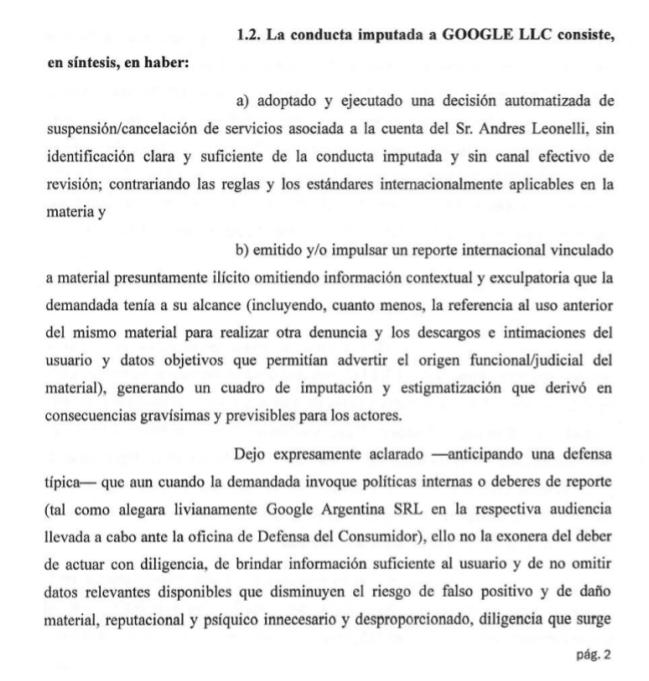
👨⚖️Un juez argentino guardó material de abuso sexual infantil en @googledrive
Google lo trató como contenido ilegal, bloqueó su cuenta y lo reportó al @NCMEC
Pero ese material era evidencia en una causa penal.
Parece un escándalo pero es algo aún más grave.🧵