Shame is becoming something that people dismiss altogether, Jay Caspian Kang writes. “Life experienced on phones and through social media leaves us lonely and alienated from one another; this has led to an existence that’s somehow at once both intensely individual and intensely tribal. We can find online fellow-travellers for our worst impulses, people who will influence and reinforce these tendencies, but this does not provide a real sense of community. Rather, it often emboldens what once would have been regarded as obviously shameful behavior.”
While it’s true that social media can function as the ultimate shaming machine, we don’t see the repercussions in reality. “Do you look around in whatever city or town you live in and see evidence that social-media shaming has made people more submissive to a shared set of social norms?” Kang asks. “Or do you see influencers invading personal space, people rudely taking out their phones in the middle of conversations with actual people, and theatrical, internet-incentivized, constantly filmed conflict?” In his latest column, he considers how social media has made us far more shameless, and the inefficacy of shame without actual communities. Read it here: https://t.co/jJxYGLev88
What is important is not so much how long you live as whether you live a meaningful life. This doesn’t mean accumulating money and fame, but being of service to your fellow human beings. It means helping others if you can, but even if you can’t do that, at least not harming them.
Life advice from Johann Wolfgang von Goethe (b otd 1749):
“A man should hear a little music, read a little poetry, and see a fine picture every day of his life, in order that worldly cares may not obliterate the sense of the beautiful which God has implanted in the human soul.”
“If you aren’t careful, the newspapers will have you hating the people who are being oppressed, and loving the people who are doing the oppressing.”
— Malcolm X
Your entire life will change when you realize energy is the most attractive human trait. Not looks, wealth, or status. Energy. Start walking into rooms with genuine enthusiasm, curiosity, and interest. Watch what happens. You become a magnet for the highest quality people. Energy is contagious. Spread the kind you’d want to catch.
Even a single session of exercise can leave a measurable trace in the brain networks that organize emotion, which helps explain why movement has such a powerful effect on mood. https://t.co/fQTPDbCT9F
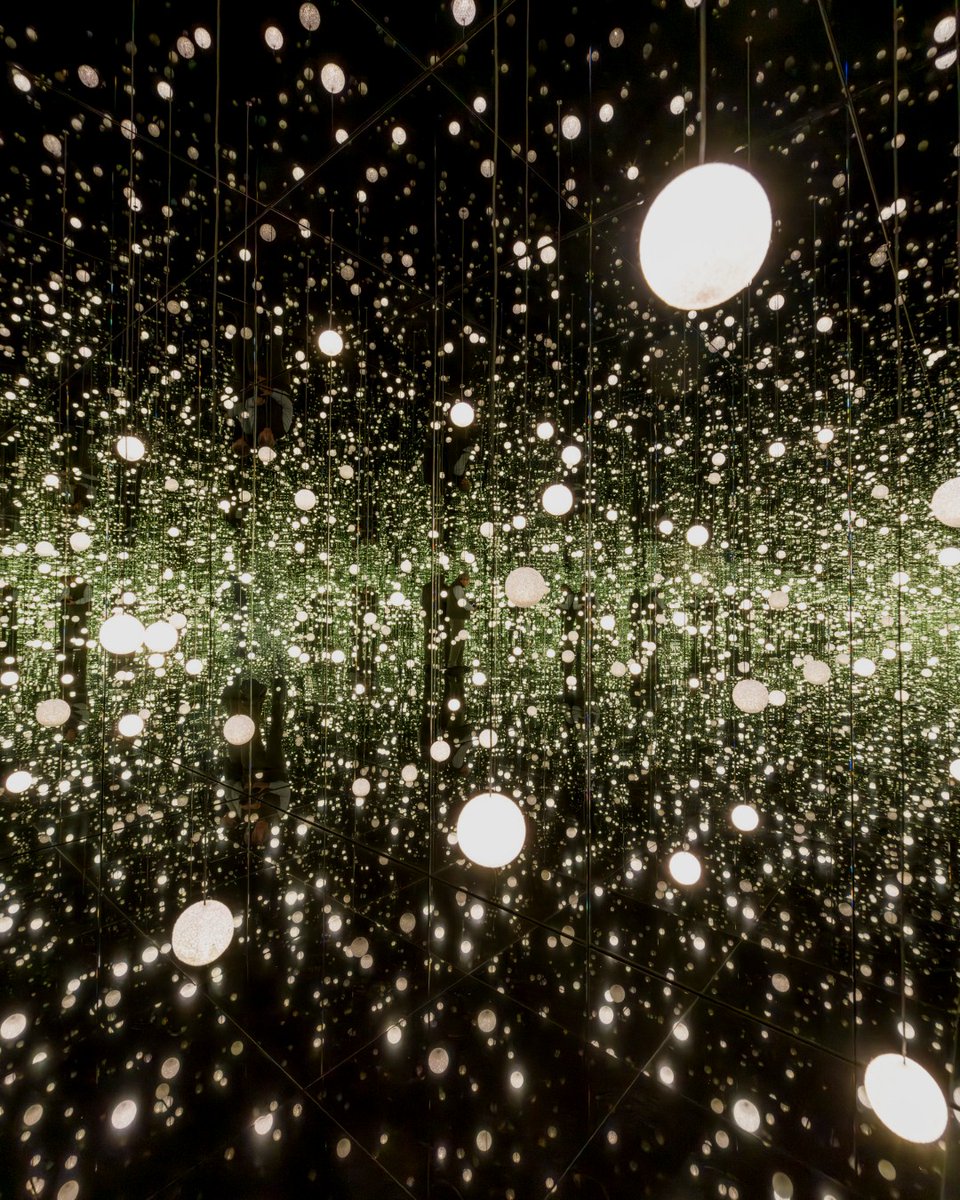
For seventy years she turned obsession into infinity — the dots, the pumpkins, the mirrored rooms that dissolve the wall between a person and the universe.
Yayoi Kusama broke through frontiers no one had mapped, and she changed the history of avant-garde art along the way.
We are so grateful for Kusama's work, for her belief in love and peace, & for a relationship with the Guggenheim that spanned much of her life.
Significant works live on in our collections in New York, Bilbao, and Abu Dhabi, including her INFINITY MIRRORED ROOM — DANCING LIGHTS THAT FLEW UP TO THE UNIVERSE (2019) currently on view in "Guggenheim Pop: 1960–Now."
Our deepest condolences to her family, her friends, her colleagues, and to everyone who found something of themselves in her work.
Images: (1) Kusama creating for the "My Eternal Soul" series in her studio
2014, Yayoi Kusama Museum. (2) Installation view, "Guggenheim Pop: 1960 to Now." David Heald.
"An artist is a sort of emotional or spiritual historian. His role is to make you realize the doom and glory of knowing who you are and what you are."
James Baldwin's most personal, most profound interview: https://t.co/ky0dAHL94c