He said taking a taxi to the gym isn't worth it because it's way too expensive, so he bought an e-bike. Imagine a nearly 2-meter-tall guy riding an electric scooter wearing a tiny little helmet 😭
He's really starting that frugal living life just to buy tickets to Antarctica 😭
🇸🇮 Pogacar plans earlier return to training as focus shifts to 2027
🗣️ “I might be able to rest a little longer, but I'll also start training earlier than I normally would. I'll begin about a month earlier.”
📰 https://t.co/7eYSxTmFci
📸 Cor Vos
🇸🇮 Luka Mezgec has ridden his final race, and he can look back on a great career. His best season was of course the impressive 2014 campaign, when he won, among other things, a stage in the Giro d'Italia and three stages in Volta Ciclista a Catalunya. 👏
https://t.co/vtbFYiWAa5
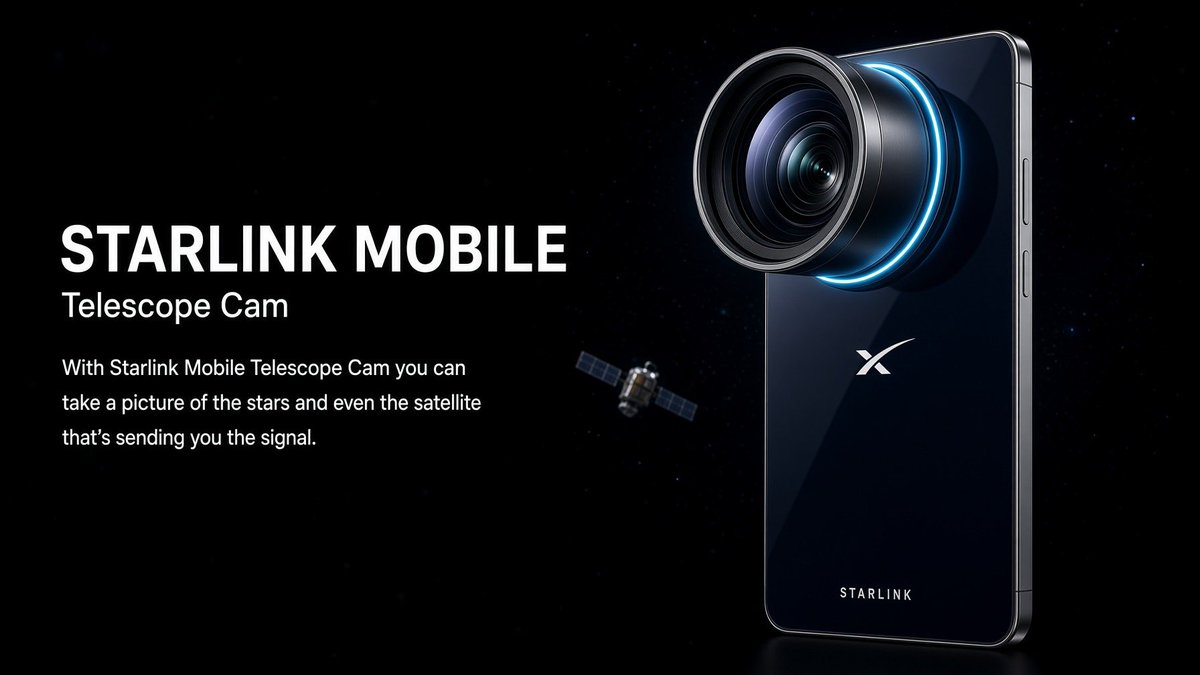
Wouldn’t a @Starlink Mobile phone be awesome? And since it’s @X and/or @Starlink it could have a seriously amazing telescope camera where we could see the stars, the satellites or even watch a lunar landing right on our phone. 📱
One could hope🙏
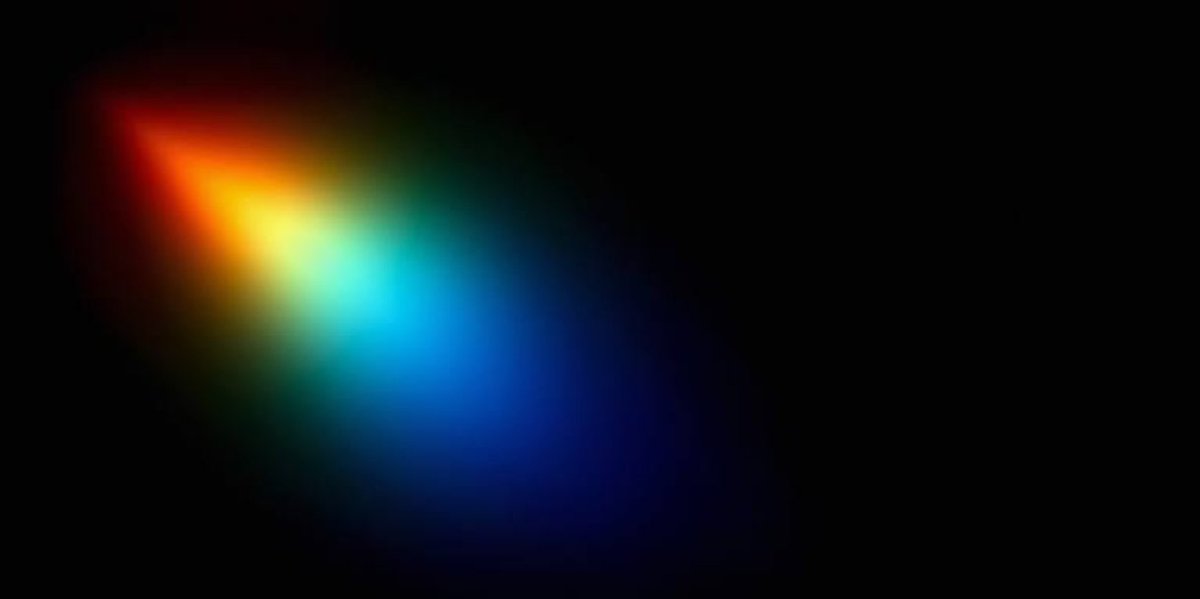
Rainbows could eventually help us identify liquid clouds on planets orbiting other stars. Even when a distant world appears as a single point of light, its reflected starlight can carry information about its atmosphere and surface. A study published in 2023 explored how these optical signatures might be investigated with NASA’s future Habitable Worlds Observatory, or HWO.
NASA is developing HWO to directly image planets around nearby stars and examine their potential habitability. Proposed telescope designs have mirrors between six and eight metres across. A coronagraph would suppress the overwhelming glare of the host star, allowing us to collect light from much fainter planets nearby. Measurements of that light’s brightness, spectrum and potentially its polarization could provide complementary ways to characterise these worlds.
On Earth, rainbows form when sunlight enters liquid droplets, reflects inside them and emerges with different colours travelling in slightly different directions. This interaction also produces strongly polarized light, whose electric field oscillates preferentially in a particular direction. We could look for a characteristic polarization peak in the combined light of an exoplanet. Its properties could help distinguish liquid droplets from ice particles or dust and constrain what the droplets are made of. We’d be measuring the optical signature of those droplets across an unresolved planet.
The viewing geometry matters. As a planet travels around its star, the illuminated fraction visible to us can change, much as the Moon goes through phases. Different optical effects become strongest at different phases. Unfortunately, some occur when the planet appears particularly close to its star, where the coronagraph can obscure it. Both the orbit’s orientation and the instrument’s ability to observe close to the star therefore determine which signals are accessible.
Another useful signature is ocean glint: starlight reflecting from a liquid surface. At suitable viewing angles, this reflection could increase a planet’s brightness and alter its polarization. Such reflections already have a clear example elsewhere in our Solar System. Cassini detected sunlight glinting from a lake on Titan, where the surface liquid consists of hydrocarbons. Identifying a distant ocean as water would require interpreting the reflection alongside other evidence about the planet.
Atmospheric gases offer another clue through Rayleigh scattering, the process responsible for Earth’s blue sky. Molecules scatter shorter wavelengths more strongly, and the resulting light can also be polarized. Measuring how that signal changes with viewing angle could help reveal an atmosphere.
Using 164 candidate stars and one assumed telescope configuration, the researchers estimated that suitable viewing angles for water-cloud rainbows would be accessible in about 46 systems, and for ocean glint in about 16. These figures describe opportunities to observe hypothetical planets. Successful measurements would still depend on the planets’ actual properties and the instrument’s sensitivity.
Liquid water clouds alone wouldn’t establish that a planet has oceans or supports life. They would, however, add valuable physical evidence to atmospheric spectroscopy. What I find particularly interesting is how much we might learn from light interacting with droplets, even when we can’t resolve the planet’s clouds or landscape.
👉 https://t.co/fkDtZSXazK
Thousands of black holes may be hiding in the Milky Way, and the people most likely to find them are sitting at laptops, not in observatories.
Astronomers know of only about 70 stellar black holes in our galaxy. University of Southampton researchers think the real number could be far higher, and they have built a citizen-science project, Black Hole Hunters, to go after the rest.
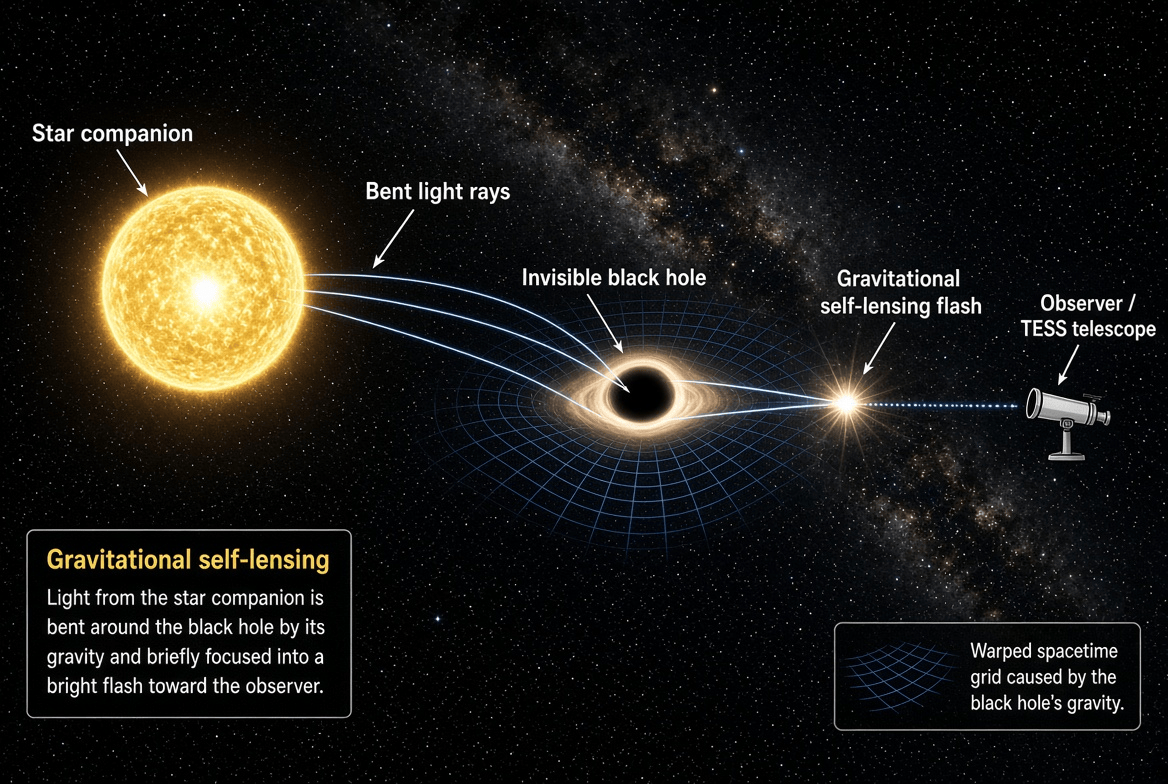
Black holes swallow light, so telescopes cannot see them directly. What they can see is the damage their gravity does to nearby stars. As a black hole orbits a companion, its gravity can briefly bend and magnify the star’s light, a brief flash known as gravitational self-lensing. Catch that flicker in the right way and you have effectively pointed at an invisible object.
The raw material comes from NASA’s Transiting Exoplanet Survey Satellite (TESS), a planet-hunting telescope that has been staring at huge stretches of the sky. Southampton’s team used an AI system to scan millions of candidate locations in days rather than years, then turned the survivors into simple graphs and animations. Volunteers are asked only to flag patterns that look unusual. No astronomy degree is required; the project shows examples of the signatures to watch for.
Undergraduate Grace Clarke, 20, who studies physics and astronomy at Southampton and leads the university astronomy society, signed up for that reason. “I can search for black holes on my laptop from my bedroom,” she said, “and could make a real impact on real space science.”
Project scientist Dr. Adam McMaster put the stakes plainly: volunteers will narrow down where professional telescopes should look next, and one of them might be the person who finds a black hole no one has catalogued before. The project is hosted on Zooniverse.
🎯 Hubble marks its 200,000th orbit while keeping watch for a lensed supernova
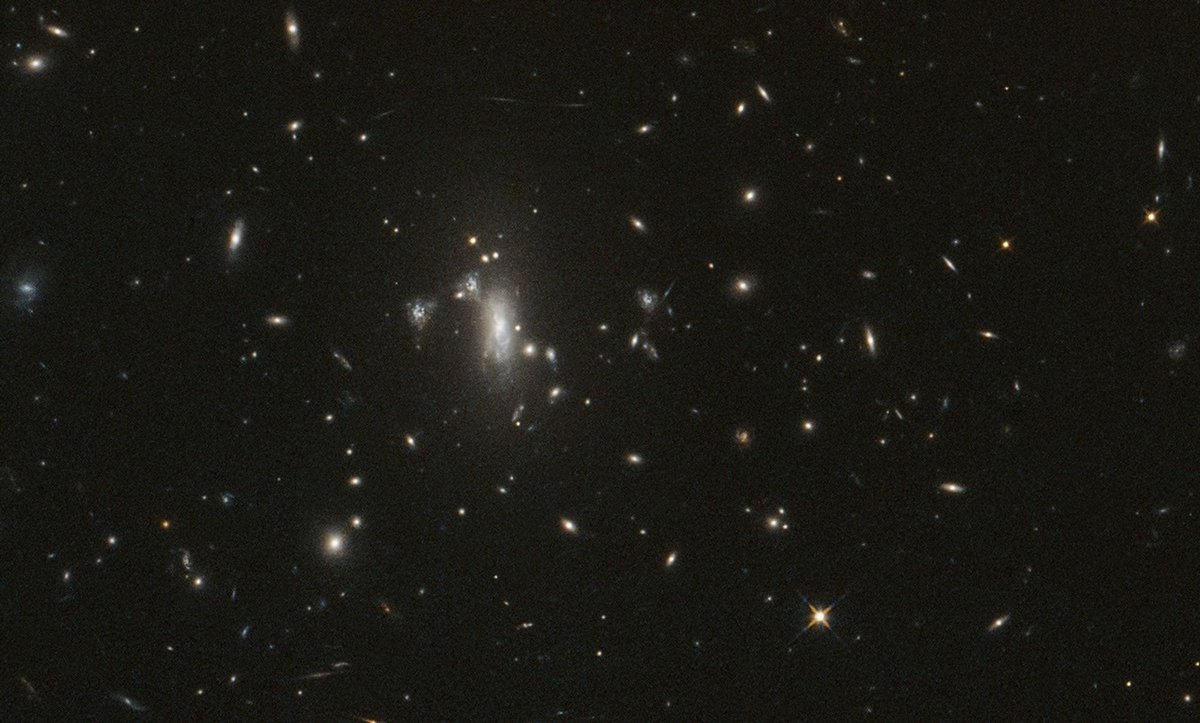
Hubble dedicated this milestone observation to the galaxy cluster MACS J0417 in the constellation Eridanus, located approximately 4.65 billion light-years away. The goal is to re-observe the supernova "Athena," which was discovered last year by the James Webb Space Telescope. Such explosions serve as "standard candles," helping to measure cosmic distances and the rate of the universe's expansion.
The cluster's mass acts as a gravitational lens, causing the supernova's light to travel to us along different paths and appear in the sky at different locations and times. Athena is expected to reappear sometime between now and early March 2027. Hubble will monitor MACS J0417 to capture this reappearance and use the signal delays to reconstruct the cluster's mass distribution.
Combining Hubble’s visible and ultraviolet observations with Webb’s infrared data refines the "distance ladder" and estimates of the Hubble constant; the Nancy Grace Roman Space Telescope will join this collaborative effort in 2027. 🔭
🔭
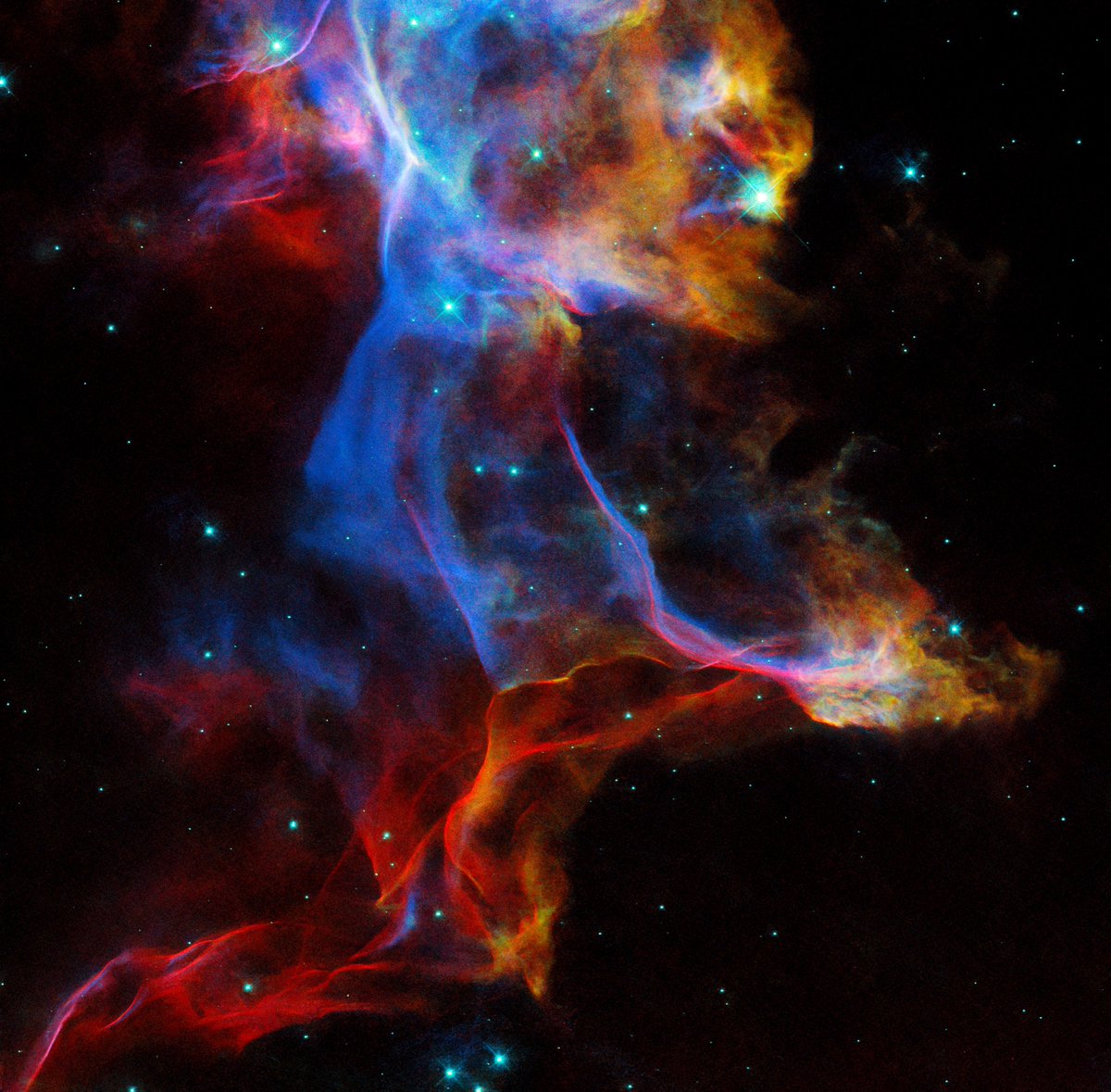
Hubble lifts the veil on one of the Universe’s most spectacular stellar remnants. 🌌✨
This colorful view of the Veil Nebula, 2,400 light-years away in Cygnus, shows the expanding remains of a massive star that exploded about 10,000 years ago.
A single cosmic explosion, frozen in a breathtaking tapestry of glowing gas and delicate filaments. 💫
📸 NASA/ESA Hubble — R. Sankrit