Sexual freedom is merely the foundational preamble to the greater liberation, that of capital.
Western elite-driven advances of changing sexualities foster de-normed individuals that define themselves not by family, nation, religious affiliation,mor tradition, as Iran 🇮🇷, but rather through self-creation according to the liberated individual will.
With this groundwork in place, corporations can then gain control of the populace by dictating and manipulating multiform identities based on nothing more than appetites atomized from any larger cultural networks.
Controlling the symbolic grammar of society is a stunningly effective means to achieve dominance.
@movetomuscat Is the ‘digital nomad visa’ with the $3900/m requirement he mentions here real? I haven’t seen anything about it on the royal police site. Visited Oman last year and really enjoyed it!
@Know_More_News Myron’s usual grift antics aside, it’s not as absurd as it sounds. Disinfo is useful if demoralizing— for pressure on elites, civil unrest, mutiny, desertion, even sabotage. Make cracks and drive wedges. It’s a tactic they know well themselves.
Day 7 of #Iran vs. U.S./Israel conflict (focus on Iranian strategic narrative):
🔹The United States significantly escalated its air campaign. U.S. B-2 bombers reportedly dropped multiple bunker-buster bombs on deeply buried Iranian missile facilities.
🔹CENTCOM reported that over the previous 72 hours U.S. forces had struck around 200 targets in Iran and also destroyed dozens of naval assets. According to U.S. officials, Iranian ballistic missile attacks have decreased sharply.
🔹Israeli operations also intensified. Reports indicate that roughly 50 Israeli fighter jets were used in strikes targeting an underground command facility believed to be connected to Iran’s leadership emergency command network.
🔹Iranian sources acknowledge that major missile infrastructure has been damaged, including production and fuel facilities such as the Khojir complex near Tehran.
🔹Tehran, however, remains defiant. Iranian officials claim that the new phase of the war involves the use of more advanced missiles, including Khorramshahr-4, Kheibar Shekan, and Fattah, which have already been used in recent waves of attacks, some of which have successfully hit their targets in Israel.
🔹This pattern aligns with earlier assessments that Iran initially focused on degrading early-warning radars and interception systems before deploying its most advanced missiles.
🔹The spokesperson of Khatam al-Anbiya headquarters of the armed forces openly mentioned that targeting radar and early-warning networks was a core element of the first phase of the war.
🔹Iranian state-affiliated media also argue that the United States may eventually face shortages of interceptor missiles because of the cost, complexity, and production time required to replenish them.
🔹Meanwhile, Iranian attacks against U.S. targets in Iraq continued, including strikes on bases hosting American diplomatic facilities near Baghdad International Airport.
🔹Hezbollah has continued its involvement in the war, with some Iranian analysts arguing that Hezbollah’s early participation may have been a preemptive move intended to prevent Israel from launching a surprise campaign against its leadership.
🔹Iranian officials have also warned European governments against joining the conflict, stating that any country participating in attacks against Iran would become a legitimate target.
🔹On the diplomatic front, reports suggest that China may be considering providing Iran with financial assistance or logistical support, although Beijing remains cautious due to concerns about energy security.
🔹China is also reportedly negotiating with Tehran to ensure safe passage for Chinese oil tankers and LNG shipments through the Strait of Hormuz.
🔹These developments highlight China’s dual challenge of protecting its energy interests and undermining America’s strategic capacity while avoiding deeper involvement in the conflict.
🔹Iran’s warnings toward the KRG in Iraq have intensified. Tehran has publicly threatened to target all facilities in Iraqi Kurdistan if Kurdish insurgent groups launch attacks against Iran from that territory.
🔹The Kurdish dimension is becoming increasingly important. Iranian analysts fear that Kurdish, Baluchi, Arab separatist, and other transborder militant groups could be mobilized by the U.S. and Israel as proxy forces against the Iranian state.
🔹Meanwhile, tensions with Azerbaijan continue following drone incidents in Nakhchivan, which Iranian officials insist were not carried out by Iran and were false-flag operations.
🔹This episode has raised concerns in Tehran that Baku could use this as a pretext to initiate its own ground incursion into Iran, alongside ethnic insurgent groups.
🔹The war is also increasingly affecting global energy markets. Gulf officials warn that if the Strait of Hormuz remains disrupted for several weeks, oil prices could rise to around $150 per barrel.
🔹China has also become more concerned about energy disruptions, as the conflict has already affected a significant share of global LNG flows and a large portion of China’s imports.
🔹In response to Iranian attacks, the UAE is reportedly considering freezing billions of dollars in Iranian assets held in the country.
🔹At the same time, South Korea has confirmed discussions with the United States about potentially redeploying Patriot air-defense systems to the Middle East.
🔹These moves suggest that the war is placing increasing pressure on U.S. air-defense stockpiles and regional security architecture.
🔹Meanwhile, reports indicate that Russia may be providing Iran with intelligence on U.S. military positions in the region, marking the first indication that another major U.S. rival may be indirectly supporting Tehran.
🔹If accurate, such intelligence sharing could help explain why some Iranian strikes against U.S. assets have appeared more precise than expected.
🔹The humanitarian impact inside Iran is becoming more visible. Iranian authorities report that thousands of civilian structures—including homes, schools, hospitals, and public facilities—have been damaged or destroyed in the ongoing strikes across the country.
🔹According to the Iranian Red Cross, attacks since the start of the war have hit 3,090 residential homes, 588 commercial and service centers, 14 medical facilities, and 9 Red Cross sites across the country.
🔹UNICEF has reported that at least 180 children have been killed and hundreds wounded in the strikes, highlighting the growing civilian toll of the conflict.
🔹Also on the domestic front, authorities continue to warn against domestic dissent. The intelligence ministry warns that those who threaten the country’s security will be treated as “Israeli soldiers”.
🔹Overall, Day 7 indicates that the conflict is evolving from a primarily aerial campaign into a broader strategic struggle involving proxy warfare, intelligence operations, continued energy disruption, and potential geopolitical realignments across the region and beyond.
Day 6 of Iran vs. U.S./Israel conflict (focus on Iranian strategic narrative):
🔹Gulf states appear to be reassessing their exposure. The Financial Times reports that Saudi Arabia, the UAE, Kuwait, and Qatar are considering reviewing or reducing some overseas investments (including in the U.S.) as war-related financial pressures mount.
🔹Late evening, Iran resumed missile attacks toward Israel while also launching missiles toward a U.S. base in Kuwait, with reports indicating damage to U.S. facilities.
🔹Trump’s explicit endorsement of Kurdish insurgent action against Tehran is being used by Iranian official to encourage a “rally around the flag” effect, reinforcing official narratives that the war is about partition and internal collapse, not just regime change.
🔹This framing is now echoed across political camps. The Iranian Reformist Front issued a statement warning about civil war/partition dynamics while simultaneously urging an end to the war and hinting that succession should open space for political change.
🔹Civil defense is becoming a visible problem. Tehran authorities say dozens of metro stations have been prepared as shelters, highlighting how limited Iran’s purpose-built civilian shelter infrastructure is amid expanding strikes on urban areas.
🔹Iranian military messaging is increasingly explicit about an attritional strategy. A senior army (Artesh) commander claimed U.S. interceptor stockpiles could be depleted within days, reinforcing the logic that Iran is targeting U.S./GCC defensive layers to reduce protection for Israel later.
🔹A new wave of Iranian strikes on Israel included apparent use of cluster munitions again, and footage showing missiles reaching targets rather “easily” has fueled speculation about interceptor depletion or degradation of defensive performance.
🔹The Houthis continue to signal readiness while remaining held in reserve. Abdelmalek al-Houthi framed support for Iran as part of a broader “ummah” struggle, implying they may be kept for a later escalation stage.
🔹Leadership politics remain unresolved. The interim leadership council held its fourth session, with Larijani presenting a war report and discussions continuing on how to prepare the Assembly of Experts for selecting the next Supreme Leader.
🔹Importantly, the interim council was reportedly granted expanded authorities, including appointing/dismissing senior military officials and declaring war/peace, suggesting the succession process may still be contested rather than imminent.
🔹Rumors about Mojtaba Khamenei’s succession persist, but the very need to expand interim authorities points to continued disagreement among power brokers, including within security and IRGC circles.
🔹Iran’s strikes against Kurdish insurgent positions in Iraqi Kurdistan continued, while Kurdish groups reportedly increased preparedness. The border/insurgent dimension is becoming one of the war’s most dangerous escalation pathways.
🔹Trump publicly said he would support a Kurdish insurgent offensive, escalating Tehran’s anxieties and prompting Pezeshkian to order provincial authorities and commanders to confront any “separatist” move forcefully.
🔹KRG leaders are visibly trying to avoid entrapment. Both Nechirvan and Massoud Barzani publicly emphasized Iraqi Kurdistan will not be part of escalation, reflecting fear of becoming a battlefield between Iran, U.S. forces, and insurgent groups.
🔹Iran’s Intelligence Ministry claims it conducted a “preemptive” joint operation with the IRGC to disrupt attempted infiltration by separatist groups – another indicator Tehran is treating this as a red line.
🔹Regional air-defense strain is increasingly acknowledged in Western reporting. CBS reports Gulf states are struggling with interceptor depletion and have asked the U.S. to accelerate resupply.
🔹In Iranian commentary, the operational center of gravity is increasingly attributed to a small set of senior commanders shaping a “no red lines” approach, suggesting Tehran may become more offensively inclined as the war stretches.
🔹Iranian official figures claim ~500 missiles and 2,000 drones launched since the war began, with a stated majority directed at U.S. targets rather than Israel, reinforcing the argument that Washington is Tehran’s primary priority in this phase.
🔹Iran continues to pressure early warning networks. Reports claim additional THAAD-associated radar systems were targeted, including a reported strike in Jordan, expanding Iran’s attempt to blind the regional defensive architecture.
🔹Lebanon is trying to contain spillover: the Lebanese government imposed visa requirements for Iranian citizens, likely aimed at limiting movement of Iranian personnel linked to Hezbollah.
🔹Energy warfare continues to broaden. There are estimates that prolonged Hormuz closure could halt Iraqi exports within days and severely disrupt Kuwaiti exports soon after – exactly the pressure Iran appears to be banking on.
🔹Saudi Arabia is reportedly increasing exports via Red Sea routes, but the Houthi factor remains the key variable. If Iran seeks a comprehensive blockade effect, Red Sea routes may not remain insulated.
🔹Satellite imagery reportedly shows substantial damage at Bandar Abbas naval facilities, including fires and damage to major platforms, suggesting continued U.S./Israeli focus on degrading Iran’s maritime capacity underpinning Hormuz pressure.
🔹Human displacement is accelerating. UNHCR reports roughly 100,000 people have left Tehran since the start of the war.
🔹Iran claims first use of Khorramshahr-4 hypersonic missiles with a 1,000 kg warhead, a qualitative escalation even as overall launch tempo appears lower.
🔹The drone challenge is now openly acknowledged. Reports indicate U.S. officials admitted Iranian suicide drones are difficult to fully intercept, pushing the U.S. and Gulf states toward negotiations over Ukrainian-made counter-drone interceptors.
🔹Mediation signals are multiplying (China/Oman/Russia), but there’s little sign of traction.
🔹China increases diplomatic activities. Beijing says it is mediating, while reports suggest it is adjusting refinery export amid supply uncertainty, showing that energy escalation pressures China as well as the U.S.
🔹After a missile was intercepted over Turkey in a recent episode, and after drone attacks in Azerbaijan’s Nakhchivan, Iranian armed forces joint chief of staff issued unusually direct denials stressing respect for Turkish and Azerbaijani sovereignty. The need for high-level military denials signals how seriously Tehran views the risk of accidental spillover with Turkey and with Azerbaijan.
🔹The core concern is command-and-control. If parts of Iran’s launch and drone activity are being executed under decentralized wartime conditions, the probability of uncoordinated strikes or navigation errors increases, creating pathways to unintended escalation.
🔹Overall, Iran is still trying to expand costs across U.S. regional infrastructure and energy flows while managing internal fragility and border threats. The U.S./Israel side is apparently preparing for a longer campaign rather than a quick decisive outcome.
@ragipsoylu Nope. At least not as framed. I’m thinking the WP article making this suggestion is deliberate disinfo. Similar narrative blaming gulf countries in Maddow’s reporting. Zio gaslighting trying to deflect responsibility.
Only scenario this make sense is the ‘theater’ theory.
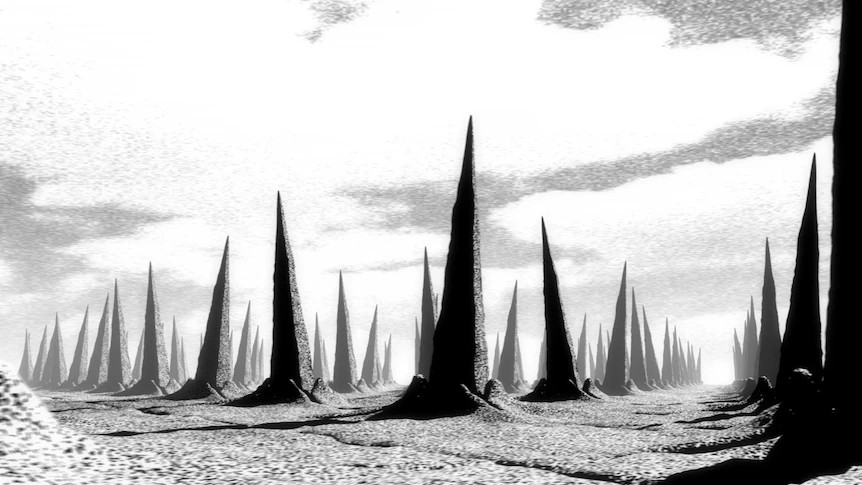
Cómo diseñar un edificio importantísimo para que dure más de diez mil años? Y más complejo aún, cómo logras que el edificio comunique un mensaje super preciso, a una civilización que aún no existe?
Amigos, hoy vamos a hablar de la semiótica nuclear
🧵
@FreyaNorthnyot This is a great distillation of that very non-human quality that makes it so enigmatic. Often overlooked as one of the Qur’an’s most immediately intuitive and compelling signs.
Kaffirbabble.
Islam is the only thing that can save the West. Our next century or so is going to be like the fight scene from They Live.
You can only defend yourself if you understand what ‘your self’ is, and who your enemy is.
Take the glasses. Quit the larp.
No. Christianity is the cause of the decline of the West. We need to study the Greeks and the Romans. We need to study the classical world. We need to study the ancient Germanic religions.
We need to critique all Christian philosophy. Aquinas, Augustine, Luther…all shit.
We need to create a philosophical through line from the pre-Socratics to Julius Evola, with a return of the Pagan Tradition attacking and devaluing all Christian influences.
Jummah mubarak!
Episode 4 of Riba Resistance, titled "Bitcoin 101 for the Ummah" is now out. In this episode, we break down Bitcoin’s core monetary properties, explain how it functions technically as digital sound money, and explore why its design aligns with Islamic principles