Expanded benefits reported today for GLP-1 therapy @JAMADerm
Extragenital lichen sclerosus
https://t.co/C45PMf6yVx
Potential for psoriasis, a review of evidence
https://t.co/DYToF3p3db
Japan Airlines will trial humanoid robots for baggage handling and aircraft cleaning at Tokyo's Haneda Airport starting in May, citing workforce shortages and rising tourist numbers
JUST IN: Skin exams are getting automated.
SquareMind just raised $18M to build a robotic system that scans your entire body and tracks every mole over time.
• Swan robot captures full-body dermoscopic images in minutes
• Tracks new and changing spots across visits
• Replaces spot-check exams with total skin coverage
• Creates a time-series record for earlier melanoma detection
• Plugs directly into dermatology clinics
Robotics is going to reshape healthcare.
@OGdukeneurosurg One interesting fact about Giardia is that it is a eukaryote without mitochondria. It has a vestigial organelle known as a mitosome, which is believed to be a mitochondria which has lost its genome and respiratory function.
The first human longevity trials are revealing something unexpected about rapamycin timing.
It's not continuous mTOR suppression that drives healthspan benefits—it's the oscillation between suppression and recovery that appears to activate cellular maintenance pathways.
We synthesized findings across animal models, dog trials, and emerging human studies to ask a simple question: how do you harness rapamycin's healthspan biology without disrupting normal cellular function?
Our latest Research Review explores what the biology—and new human evidence—are starting to reveal.
https://t.co/nlBUjdWXRp
I sequenced my genome at home, on my kitchen table.
I wrote up exactly how I did it - the equipment, protocol, theory, and cost:
https://t.co/Nkjqaho2zm
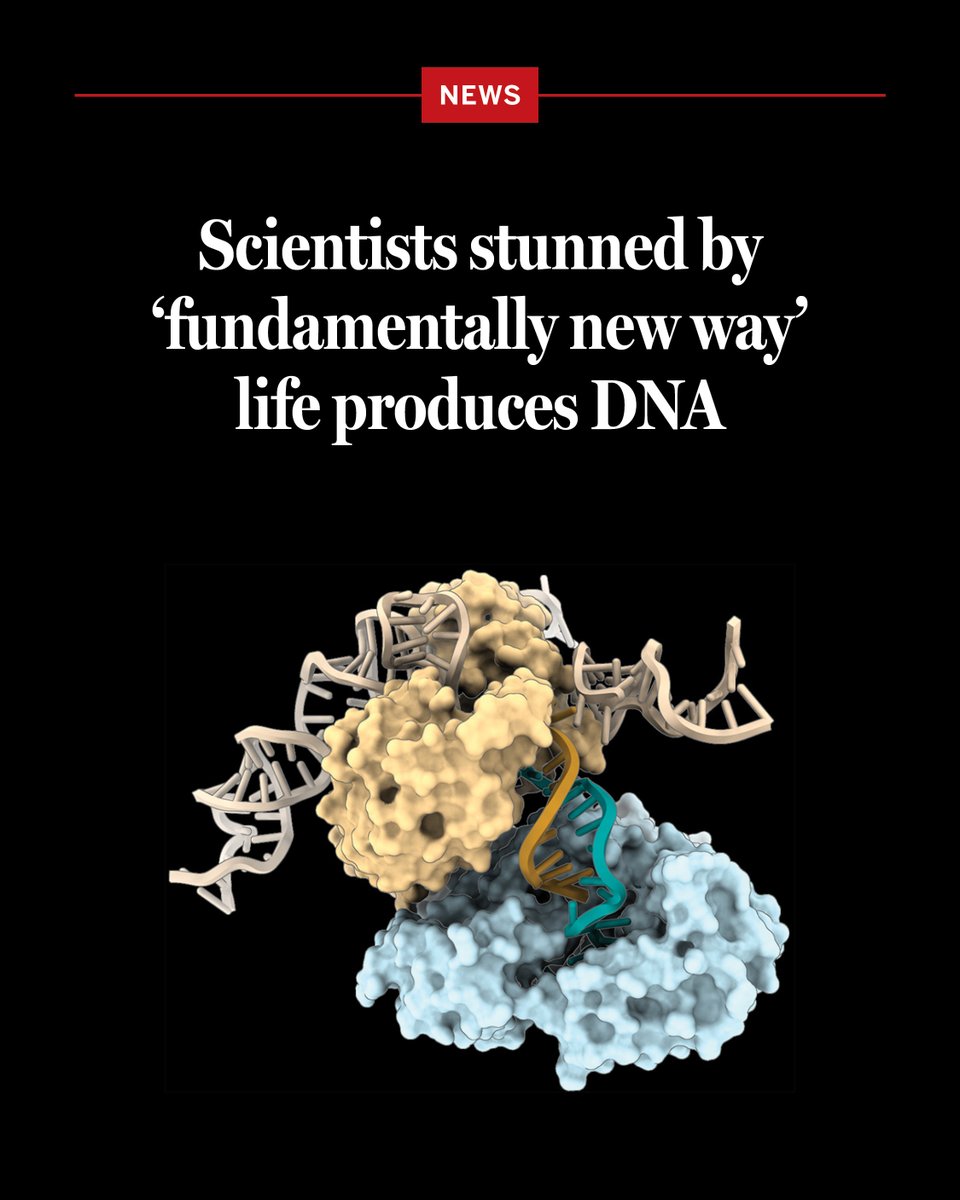
For decades, biology textbooks have enshrined a simple rule: DNA is made by copying a template. After one enzyme unzips a DNA double helix into separate strands, another called a polymerase builds a complementary sequence, base by base, for each strand. Presto: two copies of the original DNA.
But new research into how bacteria defend themselves from viruses now shows this synthesis rule isn’t absolute.
Now, a team describes a bacterial enzyme that synthesizes DNA without a nucleic acid template, using its own structure as a guide.
Learn more: https://t.co/bpVgr0KMdR