As I have argued repeatedly, the current situation in Lebanon is fundamentally incompatible with a sustainable U.S.-Iran agreement.
Once Lebanon became linked to the broader ceasefire framework, Tehran was never going to tolerate ongoing violations or a status quo that it viewed as undermining Hezbollah's position. From Iran's perspective, the Lebanese file is not a secondary issue; it is a core component of any regional understanding with Washington.
As long as Israeli forces remain inside Lebanese territory, friction is inevitable. And where there is constant friction, escalation becomes a matter of time rather than possibility. That reality makes it extraordinarily difficult to preserve a broader diplomatic arrangement between the United States and Iran.
This places the burden squarely on Washington. If President Trump is determined to secure and preserve an agreement with Tehran, he may ultimately face a difficult choice: either exert meaningful pressure on Prime Minister Netanyahu to withdraw from Lebanon or accept the growing risk that the entire diplomatic framework could unravel.
Netanyahu's decision to continue military operations in Lebanon, despite concerns within the administration that such actions could jeopardize nuclear diplomacy, was a calculated gamble. It may ultimately succeed in limiting the impact of the Lebanese issue on U.S.-Iran negotiations. But it could also provoke a sharp response from a White House that has invested significant political capital in making an agreement work.
The coming hours and days will be critical. One point, however, appears increasingly clear: Iran has shown no indication that it is prepared to compromise on the Lebanese component of the negotiations. In Tehran's view, that issue is not negotiable—it is integral to the deal itself.
Continued Israeli military activity in Lebanon is unlikely to remain a localized issue. If the current trajectory continues, the risk is not only of a stronger Iranian response but also of renewed escalation from the Houthis in Yemen.
#IranWar
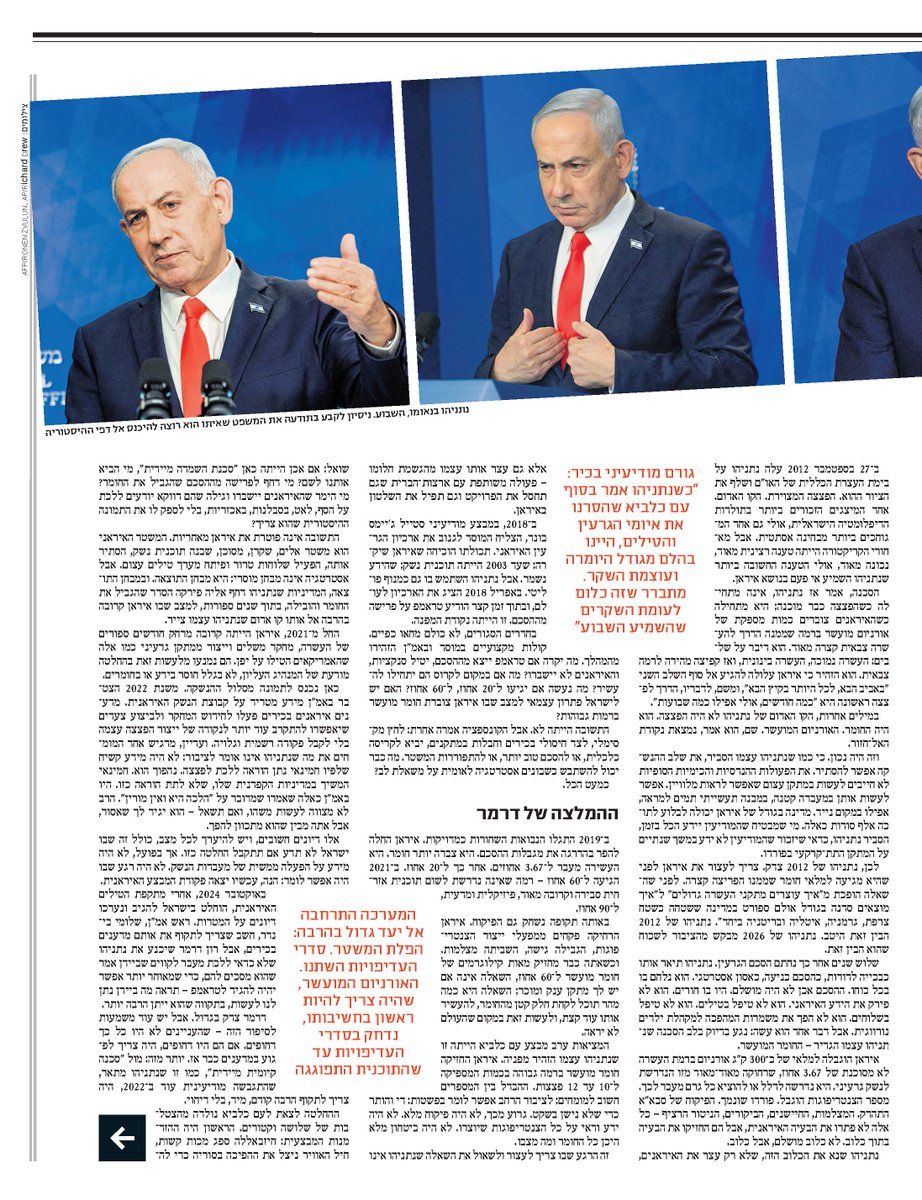
לגבי בן גביר- מומלץ לא להקדיש זמן לנזק הבינלאומי. הוא גורם נזק הרבה יותר חמור לחברה הישראלית עצמה, נזק שיכול להגיע כדי אלימות קטלנית לפני הבחירות. הכתובת לא על הקיר, הכתובת צרובה באש ודם. נתניהו אחראי אישית, נתניהו יהיה אחראי, וייתכן שעימות כזה משרת את נתניהו לפני הבחירות.
Channel 14 in Israel, considered Netanyahu’s most important mouthpiece, continues to use the most insulting languge for the president of the United States.
After years — and especially since he returned to the White House — in which its attitude toward him was admiring and flattering, second only to its treatment of Netanyahu, everything flipped last week when news of the agreement with Iran broke.
Now they are calling him there “Donald Hussein Trump.”
.@issacharoff: "Our prime minister is someone for whom political survival consistently takes precedence over the good of the country. It is safe to assume that he will allow Ben-Gvir to continue to light the country on fire to advance his hateful goals."
https://t.co/HWEqb76get
In my latest for @TIME, I argue that #Iran has signed a document that advertises peace while quietly preparing for its breakdown. Which of those two futures the agreement was truly built for is the question the next 60 days will answer.
https://t.co/6vZCH4Nuor
"ניגשתי לספר לפני חודשים, בניסיון להבין. להבין מדוע הדופק מאיץ, המחשבה משתבשת ומילים נאבקות בגרון ומחפשות לעשות אחורה פנה? ממה נבע החשש, האם יש בו הגיון או שהכל בראש שלי? ואם זה רק בראש שלי, איך זה הגיע לשם בכלל?" // עמנואל האדירה על "הצנזורה החדשה" עכשיו בעין השביעית:
https://t.co/36tXgOw5PF @manuelbaz@the7i@molad_institute
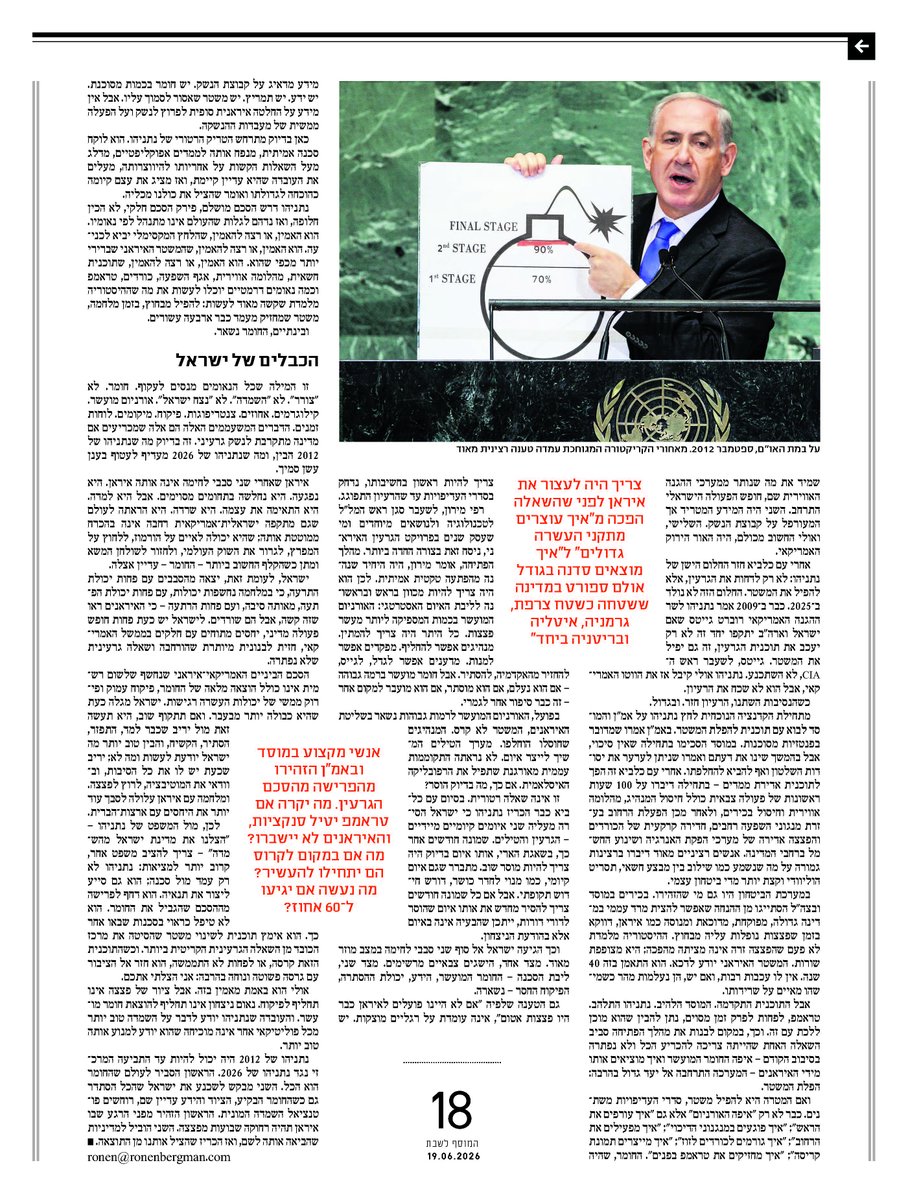
מול המשפט של נתניהו – "הצלנו את מדינת ישראל מהשמדה" – צריך להציב משפט אחר, קרוב יותר למציאות: נתניהו לא רק עמד מול סכנה; הוא סייע ליצור את תנאיה. הוא דחף לפרישה מההסכם שהגביל את החומר. הוא לא טיפל כראוי בסכנות שבאו אחר כך. הוא אימץ תוכנית לשינוי משטר שהסיטה את מרכז הכובד מן השאלה הגרעינית הקריטית ביותר. וכשהתוכנית הזאת קרסה, או לפחות לא התממשה, הוא חזר אל הציבור עם גרסה פשוטה ונוחה בהרבה: אני הצלתי אתכם.
אולי הוא באמת מאמין בזה. אבל ציור של פצצה אינו תחליף לפיקוח. נאום ניצחון אינו תחליף להוצאת חומר מועשר. והעובדה שנתניהו יודע לדבר על השמדה טוב יותר מכל פוליטיקאי אחר אינה מוכיחה שהוא יודע למנוע אותה טוב יותר.
@YediotAhronot@ynetalerts
https://t.co/XamGegYpyT
(תיכף יעלו ויבואו כל ברגי ורעלני המכונה, להגיד שאלו שקרים רל"ביסטים ואיך בכלל אני מרשה לעצמי בזמן הזה, כשביבי צריך את כל התמיכה מול הרשע הזה טרמפ, לא להיות סולידרי וליצוק מיים על ידיו. הרבה חירופים וגידופים ורעל והפרשנים המלומדים של עריץ 14 שאין טעות ואין שקר לגבי המלחמה הזו (והקודמת, וזאת שלפניה) שהם דילגו מעליה ומעליו. ורק דבר אחד הם לא יידעו לעשות, כרגיל, להראות שמשהו ממה שנכתב כאן אינו נכון
This campaign, from beginning to end, was built on a fundamental misunderstanding of Iran. There is a significant difference between analyzing Iran through intelligence reports and actually understanding how Iran thinks, operates, and makes decisions.
Concepts such as closing the Strait of Hormuz or seizing Kharg Island overlooked a critical reality: decision-makers in Washington were never likely to accept the risks inherent in such moves, especially when success was far from guaranteed. As a result, most of these ideas remained largely theoretical.
The same applies to the proposed naval blockade. As me and @BrettErickson28 and others argued from the very beginning, it was unlikely to achieve its intended goals. Even if implemented successfully, Iran has extensive experience managing oil production, storage, and exports under pressure. It would take a considerable amount of time before economic pain translated into meaningful strategic pressure, if it did at all. More importantly, Tehran understood that the global economic costs of disrupting energy flows through the Gulf would be immediate and substantial, giving Iran confidence that time was on its side.
And even if the pressure had intensified, Iran's leadership has historically shown a greater willingness to escalate than to capitulate. This is a critical point that many analyses failed to appreciate.
The broader lesson is clear: you cannot design a military campaign against a country like Iran based on assumptions, lobbying efforts, or the views of self-proclaimed experts with political or institutional interests. Decisions of this magnitude require the input of genuine subject-matter experts who understand the country, its strategic culture, and its decision-making processes.
When policymakers fail to do so, military campaigns become far more complicated than expected, which is precisely what happened here.
#iran
The principal spoiler of any broader understanding with Iran remains Lebanon.
Tehran is unlikely to accept a situation in which it commits to a comprehensive ceasefire while Israel retains the right to conduct military operations in Lebanon under the broad definition of "removing threats." From the Iranian and Hezbollah perspective, such an arrangement would create a loophole large enough to undermine the agreement itself.
Israel, however, views the issue very differently. Israeli policymakers are unlikely to accept a ceasefire that does not preserve some capacity to act against emerging threats, weapons transfers, or efforts by Hezbollah to rebuild its military infrastructure. In Israeli eyes, a ceasefire that prevents preemptive action risks recreating the conditions that led to previous rounds of conflict.
This leaves a dangerous gray zone between the two positions. Activities that one side considers legitimate self-defense may be interpreted by the other as clear violations of the agreement. Intelligence operations, arms smuggling, force deployments, or limited military strikes could quickly become sources of dispute.
As a result, accusations of non-compliance are likely to emerge almost immediately. The challenge is not necessarily reaching an agreement on paper; it is maintaining one when inevitable incidents occur on the ground.
Ultimately, the issue returns to Washington. The central question is how far the United States is prepared to go in enforcing a ceasefire that both sides interpret differently. If the administration seeks to preserve a broader understanding with Iran, it may face increasing pressure to restrain Israeli military actions in Lebanon. If it chooses not to do so, it risks allowing the Lebanese arena to become the trigger for a wider breakdown in the arrangement.
For that reason, Lebanon remains the most fragile component of any prospective agreement. Even if progress is achieved on the Iranian file, the durability of the broader framework may ultimately depend on whether the competing Israeli and Iranian interpretations of security and deterrence can be managed on the ground.
The Israeli prime minister's decision to continue military operations in Lebanon risks putting his government on a direct collision course with the President of the United States. If Washington's priority is preserving a broader regional understanding with Iran and preventing renewed escalation, continued Israeli strikes could increasingly be viewed not as a contribution to regional stability but as a challenge to American policy.
This dynamic is particularly significant because the current administration has demonstrated a strong preference for maintaining direct control over the diplomatic and strategic framework it is constructing. Any perception that Israel is acting unilaterally in ways that jeopardize that framework could generate considerable friction between Jerusalem and Washington.
The risk for Israel is therefore not limited to renewed fighting in Lebanon. It is the possibility of transforming a dispute over military operations into a broader confrontation with the White House itself. Should Washington come to view Israeli actions as threatening a major American diplomatic achievement, the administration's response could be far less forgiving than many in Jerusalem expect.
#IranWar
Told @Reuters:
We went to topple the regime with U.S. backing and ended with Washington effectively giving legitimacy and strengthening the same regime we wanted to bring down.
The deal delivers none of Israel's core demands: no curbs on Iran's missile programme or proxies and no clear path to dismantling its nuclear facilities. Even Israel's campaign in Lebanon has been constrained by the ceasefire framework imposed at Iran's insistence.
The fallout is both political and strategic. The deal undercuts Netanyahu's narrative on Iran and exposes the limits of his leverage with a U.S. president seen as closely aligned with Israel. Iran has gained room to manoeuvre and the deal risks entrenching its position while deepening Israel's isolation.
#IranWar
https://t.co/WM8dnMgbZs
דקה ועשרים שניות של טקסט שקשה להיזכר מתי נאמר כמוהו על ידי איזשהו נשיא או סגן נשיא אמריקאי על איזושהי ממשלה ישראלית והעומד בראשה. למרות ההתנגשויות החריפות עם נתניהו, לא קלינטון, ולא אובמה, לא ביידן ולא האריס התקרבו בכלל לעוצמת הכעס הבוקע מכל מילה של סגן הנשיא ואנס, אולי הקול החשוב ביותר היום במפלגה הרפובליקאית. דקה ועשרים שניות שאומרות הרבה מאוד על מצבה של ישראל בוושינגטון.
הם מובילים את ישראל לתהום. ההשמצות והקללות של כל מיני שופרות, האמירות של שרים מגוחכים נגד טראמפ וארה״ב, העלו את הסעיף לסגן הנשיא ג׳יי. די ואנס: ״טראמפ הוא המנהיג היחיד בעולם שאוהד כרגע את ישראל. אם הייתי בממשלה הישראלית לא הייתי תוקף את בעל הברית היחיד שיש לי בעולם״. מדחי אל דחי, ראש ממשלה כושל, קבינט חלש ופופוליסטי, קריסה של כל האסטרטגיה מול איראן. שאלוהים ישמור על ישראל
I asked ChatGpt about the text of the MOU in the Bloomberg article: Verdict a translation into English
“It does not read like a native English-language draft from U.S. or UK legal/diplomatic teams. It’s closer to:
A translated memorandum
Or a draft originating from the Iranian side and rendered into English”
So care should be exercised until the official English language version surfaces or is revealed; language nuances can matter.
https://t.co/wMO1sTVprD
Prime Minister Netanyahu has few people to blame but himself.
When President Trump posted his now-famous message, "Help is on the way," Netanyahu likely saw a historic opportunity: persuading the President of the United States to join a campaign against Iran and fundamentally alter the regional balance of power.
From that moment onward, it appeared that Israel's overriding objective was to convince Trump that the time had come for a decisive confrontation with the Islamic Republic. Every argument, every intelligence assessment, and every potential scenario seemed directed toward one goal: securing greater American involvement.
The problem was that the underlying assumptions were deeply flawed. It is difficult to believe that Netamyahu genuinely expected Kurdish groups, opposition movements, or exiled political figures to trigger regime change in Iran. Such expectations would reflect a profound misunderstanding of the resilience of the Islamic Republic and the limitations of external pressure.
That was not a strategy; it was wishful thinking.
Trump has always preferred clear victories and limited commitments. He is willing to use force, but he has consistently shown little appetite for open-ended conflicts or nation-building projects. The prospect of regime change in Tehran may have been appealing rhetorically, but once the conflict threatened broader economic consequences, particularly disruptions to energy markets and maritime trade, the calculus inevitably changed.
The Strait of Hormuz represented the critical turning point. An extended closure or sustained disruption of shipping lanes would have imposed significant costs on the global economy and directly affected American interests. For a president focused on economic performance and domestic political considerations, that was a risk not worth taking.
The Israeli PM should have understood this. They knew that Trump had no intention of deploying large-scale American ground forces to Iran under virtually any circumstances. Without such a commitment, regime change was never a realistic objective. Military pressure alone could weaken Iran, but it was unlikely to bring down the regime.
Faced with mounting economic risks and limited strategic upside, the administration's incentives shifted toward de-escalation and diplomacy. Reaching an arrangement with Tehran that preserved freedom of navigation and prevented a wider regional conflict became the more attractive option.
In that context, efforts by Netanyahu to block or complicate such an agreement only increased friction with Washington and reinforced the administration's determination to pursue a diplomatic off-ramp.
The result is that Israel risks finding itself in a strategically weaker position. It has not achieved a transformative outcome in Iran, while at the same time potentially damaging its credibility with its most important ally.
The broader lesson extends beyond this particular conflict. Future American administrations may become even more skeptical of arguments that military pressure alone can fundamentally transform Iran's political system. The war may ultimately mark the end of an era in which regime change was viewed, explicitly or implicitly, as a viable foundation for Western policy toward Tehran.
If that is the case, any Israeli policymaker will need to rethink their assumptions. Weakening Iran and overthrowing the Islamic Republic are not the same objective. The recent confrontation demonstrated that the former may be achievable through military means; the latter almost certainly is not without a level of American commitment that neither President Trump nor, likely, future U.S. presidents are prepared to provide.
The result is a diplomatic fiasco of historic proportions for Israel, one that is unlikely to fade quickly and whose political and strategic consequences may be felt for years to come.
#IranWar
Omer Bartov, author of a book about how Israel became a brutal occupying power and a belligerent, nationalist state: Israel is proof that politics should not be based on stories of past crimes.
https://t.co/6NITwA9Acy