Mit einem Blick zurück auf das letzte #BlocktrainerEvent steigt die Vorfreude auf das Diesjährige. 😍
SAVE THE DATE: 19.09.2026🗓️
Der Ticketverkauf startet am kommenden Sonntag. Für "Blocktrainer-Paten" bereits ab Donnerstag.
Mehr Infos & Tickets ⬇️
https://t.co/A0hzXsrNVN
ALLES WAS IHR ZUM NEUEN "TREZOR SAFE 7" WISSEN MÜSST! 👀
Das ehrlichste und ausführlichste Review zum neuen @Trezor Hardware-Wallet! 👏
Was das Gerät kann, für wen sich der Kauf lohnt (und für wen nicht), erfahrt ihr in diesem Testbericht.
⬇️⬇️⬇️
https://t.co/XOZQXwPhpd
Love the car, but:
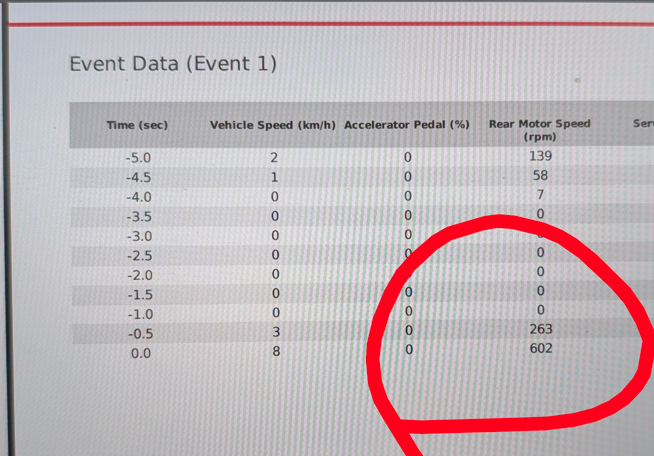
Video of my Tesla (2020 Model X) crashing into a car.
Autopilot was engaged. Sudden unintended acceleration.
No user input. 100% system failure.
I have the data + video proof.
What now, @Tesla?
@elonmusk@teslaownersSV@Teslarati#AutopilotFail
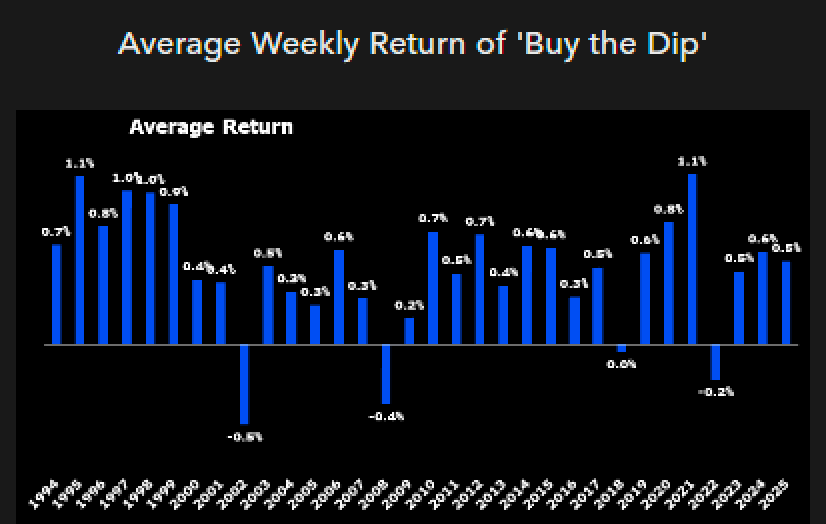
Lot of dooming going on, but don't be surprised if traders buy the dip. Why? Because it works- and has had for literally DECADES. Here's a look at the avg weekly returns after a dip. Not as good a pop as it produced in 2021 and the '90s, but still positive.
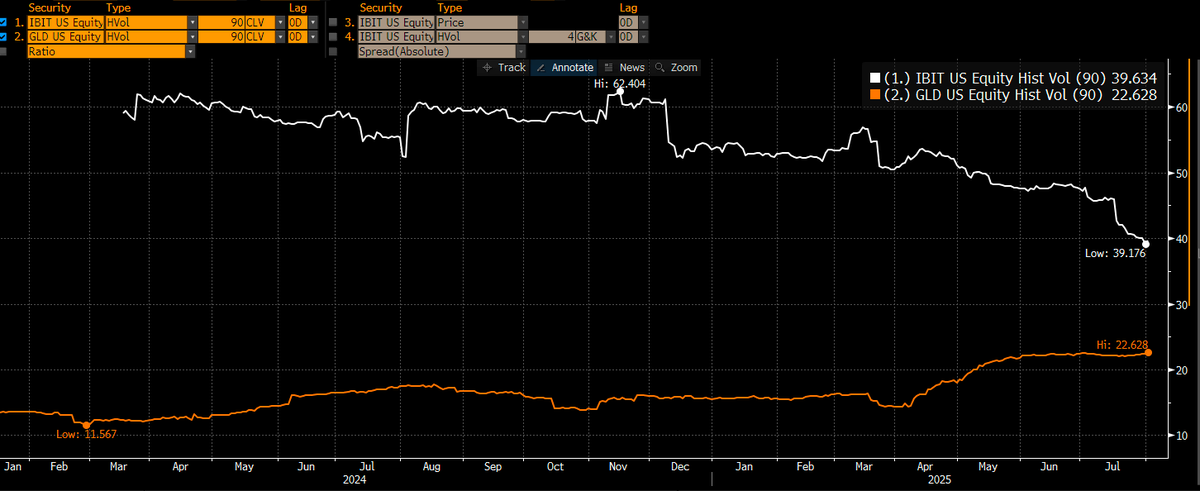
VOL KILLER: Since the launch of the ETFs the volatility on bitcoin has plumetted. The 90-day rolling vol is below 40 for the first time- it was over 60 when the ETFs launched. I threw in $GLD for perspective. Less than 2x gold, used to be over 3x.
@piveyy@RomanReher@jonathancgiart Ist aber halt Schwachsinn, weil dann hat er ja zumindest einen onchain Nachweis. Also ist er selbst entweder nicht tief genug gegangen bei der Dokumentation oder da FA hat einen Fehler gemacht, den man anfechten hätte können.
The Bitaxe Gamma is now Made in Germany!!!
Introducing the Bitaxe 601 Gamma – now Made in Germany, CE-certified, and delivering a powerful 1.30 TH/s right out of the box! A major leap forward for decentralized Bitcoin mining and open-source development!
#Bitcoin bull cycle is over — here’s why.
There’s a concept in on-chain data called Realized Cap. It works like this: when BTC enters a blockchain wallet, it's considered a "buy," and when it leaves, it's treated as a "sell." Using this idea, we can estimate an average cost basis for each wallet. Multiply that by the amount of BTC held, and you get the total Realized Cap. It’s often seen as the total capital that has entered the Bitcoin market through actual on-chain activity.
Market Cap is based on the last traded price on exchanges. Many people misunderstand this concept. When someone buys just $10 worth of BTC, the market cap doesn’t increase by only $10. Instead, prices are determined by the balance between buy and sell pressure in the order book.
When sell pressure is low, even a small buy can push the price—and therefore the market cap—significantly higher. $MSTR took advantage of this. By issuing convertible bonds and using the proceeds to buy BTC, the paper value of their holdings grew far more than the actual capital they deployed.
But when sell pressure is high, even large purchases fail to move the price. There are simply too many sellers. For example, when Bitcoin was trading near $100K, the market saw massive volumes, but the price barely moved.
So how can we tell if market cap is likely to rise relative to the capital being invested? Realized Cap shows how much actual money is entering the market, while Market Cap reflects how the price is reacting. If Realized Cap is growing but Market Cap is stagnant or falling, it means capital is flowing in, but prices aren’t rising—a classic bearish signal. On the flip side, if Realized Cap is flat while Market Cap is surging, it suggests that even a small amount of new capital is driving prices higher—a bullish sign.
Right now, we’re seeing the former—capital is entering the market, but prices aren't responding. That’s typical of a bear market.
Some people argue that on-chain data has limitations in capturing all capital flows, but in reality, most major flows are reflected on-chain—whether it's exchange deposits and withdrawals, custodial wallet activity, or ETF-related transactions.
In short: when small capital drives prices up, it's a bull market. When even large capital can't push prices upward, it's a bear. Current data clearly points to the latter. Sell pressure could ease anytime, but historically, real reversals take at least six months—so a short-term rally seems unlikely.
Bitcoin developer Agustin Cruz published a draft Bitcoin Improvement Proposal (BIP) titled "Quantum-Resistant Address Migration Protocol" on the Bitcoin-Dev mailing list, proposing to force users to migrate funds from old addresses vulnerable to quantum attacks to quantum-resistant wallets through a hard fork. https://t.co/U24DKDBtNp
@PrimeSB2@JoshuaTobkin@Profoneur Its not all early investors though. Also tokenomic/vesting changes are always seen as more problematic. Fine line between sell pressure relief and massive project scrutiny for tokenomic change
@PrimeSB2@JoshuaTobkin@Profoneur That would just tank prices further. Changing do more frequent claiming without changing overall tokenomics would be much better. No frontrunning, more fee generation for treasury building and less questions of "wen claim".
To clear up confusion here.
This EO established 2 different things: a Strategic Bitcoin Reserve, and a U.S. Digital Asset Stockpile.
The Strategic Bitcoin Reserve will contain our ~198,109 bitcoin obtained through forfeiture proceedings, conduct a formal audit, and not sell any of it.
The U.S. Digital Asset Stockpile will contain all other non-BTC assets obtained through forfeiture proceedings.
This is not news—it has been heavily speculated by people like @matthew_pines at the @bitcoinpolicy that this was the path of least resistance to create a Strategic Bitcoin Reserve: reclassifying what we already own under a formal ownership structure.
But here's the key.
The Secretaries of Treasury and Commerce will develop budget-neutral strategies for acquiring more bitcoin for the Strategic Bitcoin Reserve.
The U.S. will not develop strategies to acquire more non-bitcoin assets for the Digital Asset stockpile.
This is phenomenal. An acquisition strategy for bitcoin, not "crypto", will be developed by the US government.
This opens the door for the Treasury & Commerce Departments to use Pines' suggestion: use our ~$40bn surplus sitting in the Exchange Stabilization Fund to acquire more bitcoin.
This will likely be one of many funding mechanisms explored and established for the SBR by the government in the coming weeks and months.
What a time to be alive.
@IRiver29 12,08M 0xa5b2dc126a7e0343294120f8071b5bcfc4a222e3ec8d7b49e384d5d1856c6a47
7,17M 0xb1b4b85d1b8d36d86b7834bd2324ec9f9e361aff5e504c5b06fd3545f5462056
Those are the addresses - totaling an amount of 475m Supra tokens.