Combine movement with a verbal spotlight.
As you say, "The most important idea I'd like you to remember is this…" step closer to your audience.
Two signals reinforcing your structure at once.
#PainlessPublicSpeaking#PublicSpeaking
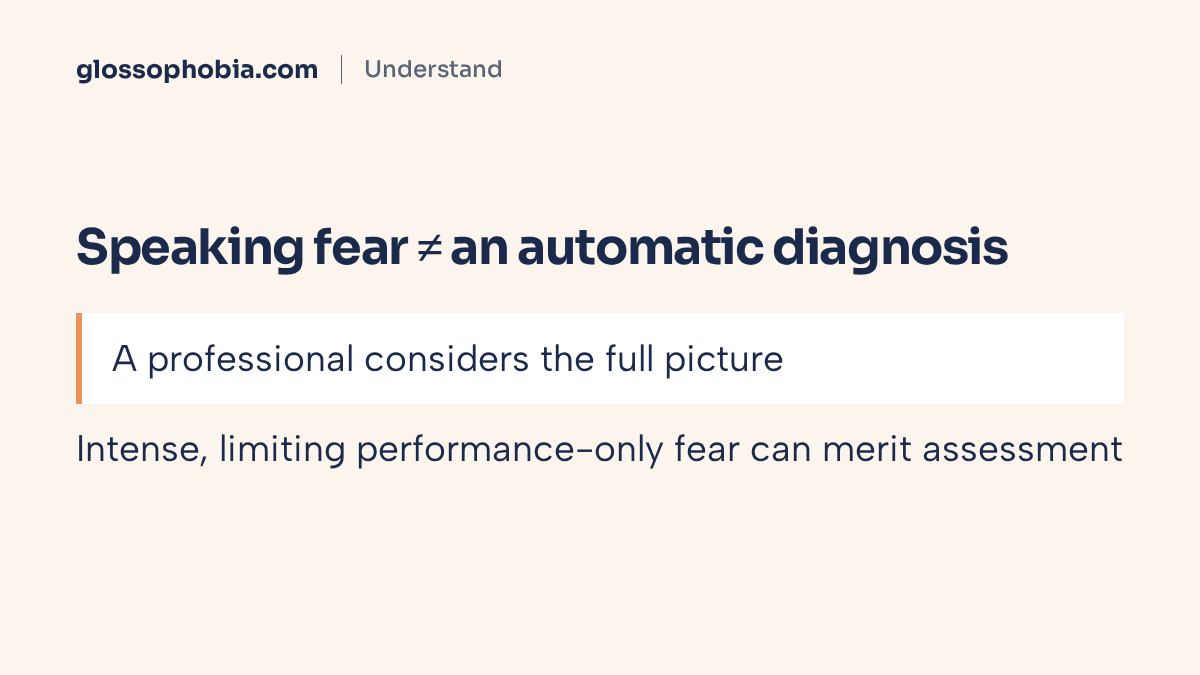
Fear of public speaking does not automatically mean a diagnosis.
You don’t have to decide on a label before asking a qualified professional about concerns that affect your life.
@Emily_Edgeley Honestly 😂. It's like you've been practicing like it's not that deep. The main presentation day feels like you're facing your fears one has to go down you or your fear.
@Emily_Edgeley Honestly 😂. It's like you've been practicing like it's not that deep. The main presentation day feels like you're facing your fears one has to go down you or your fear.
@Dukeofkendubay@osama_novara@OmwambaHSC Asking for the mic is the best advice here. Reading helps, but the skill really grows in short reps.
Try a 60-second take: one point, one example, done.
Do it often and it starts to feel normal.
> 20yrs ago I was a Maths Nerd
> 10yrs ago I was a Cyber Security Professional
> Now I’m a Public Speaking Coach
I credit a lot of that success to = Storytelling
Here’s the exact 4 steps I used to kick-start my storytelling journey.👇
🧵THREAD 🧵
Idiom of the Day: "Above board," meaning honest, open, legitimate, and free from trickery, deception, or hidden agendas.
The phrase comes from 16th- and 17th-century card games. In old English, the word "board" was commonly used to mean a table.
Honest card players were expected to keep their hands visible above the board (the table) at all times so other players could see that no cards were being switched or hidden. Dishonest gamblers would slide their hands under the table to palm or swap cards, giving rise to the contrast between keeping things "above board" and acting "underhand."
The expression was recorded in print as early as the late 16th century in the works of writer Thomas Nashe (such as "The Terrors of the Night" in 1594).
#PublicSpeaking
#PainlessPublicSpeaking
@Emily_Edgeley Exactly a lot of people worry about accent so much forgetting that's why they're unique different from other speakers. So use your accent to command the room.
Common grammatical error: Saying “irregardless” instead of "regardless."
Irregardless is not a word.
If it were, it would be nonsensical, b/c “regardless” means “without regard.”
The “ir” prefix makes it a double negative, so irregardless would mean WITH regard.
#PublicSpeaking
#PainlessPublicSpeaking