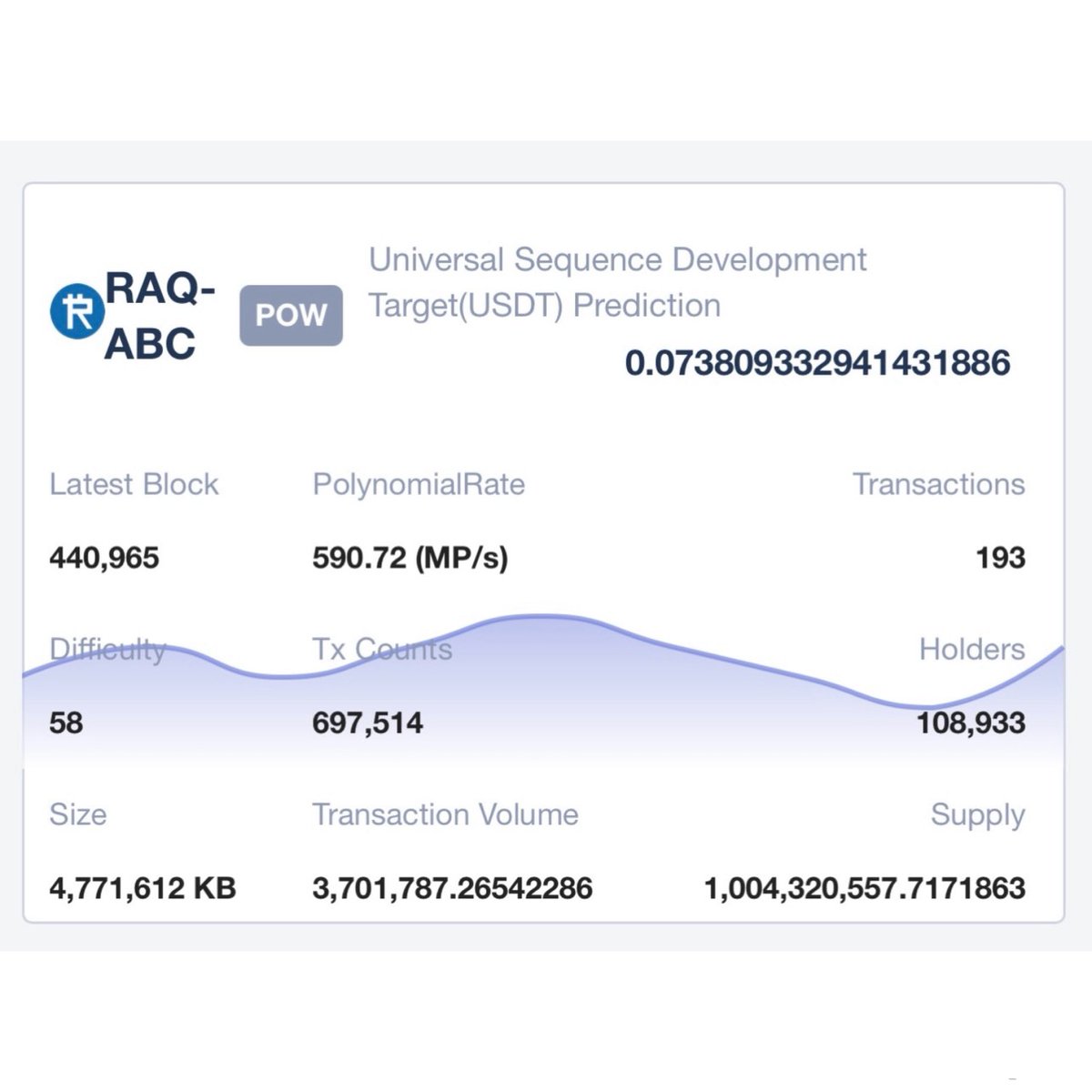
Have you heard of #Raqcoin?
As far as I know about #Raqcoin
1. Quantum resistant
2. First Multivariate Digital Signature with #Zipcodinization
3. Zipcodinization, public keys can be compressed to around 100 bytes (Corrections are welcome)
4. Has smaller public keys and signatures
5. 90-year Proof-of-Work
6. Use an early version of the Bitcoin codebase
7. Offline Verification
8. Reduce quarter every 4 years
9. Multivariate Mining (mathematically meaningful) — not Hash Mining
10. Mining with NVIDIA GPUs (seems to also support ASIC miners)
11. Verifying transactions for the same address is faster
12. Under the framework of ABC Coin, whose original parameters had been broken and whose security level was below 1, new parameters 1, 3, and 5 were adopted, and, using algorithm agility, the coin was forked into a new coin, Raqcoin, based on UOV and Rainbow
13. Crypto-agility(UOV& Rainbow ) signature,Convert between addresses of different security levels (7kinds)
14. The mining power has been monopolized by some teams, making solo mining very difficult
15. Total supply is 2.1 billion, with around 1 billion currently mined https://t.co/y7GVKWW8ek
16. Still not listed on exchanges after 8 years
GitHub👇
https://t.co/CZv8UUmq77
No investment advice here: don’t buy anything from unknown sources—just study it.
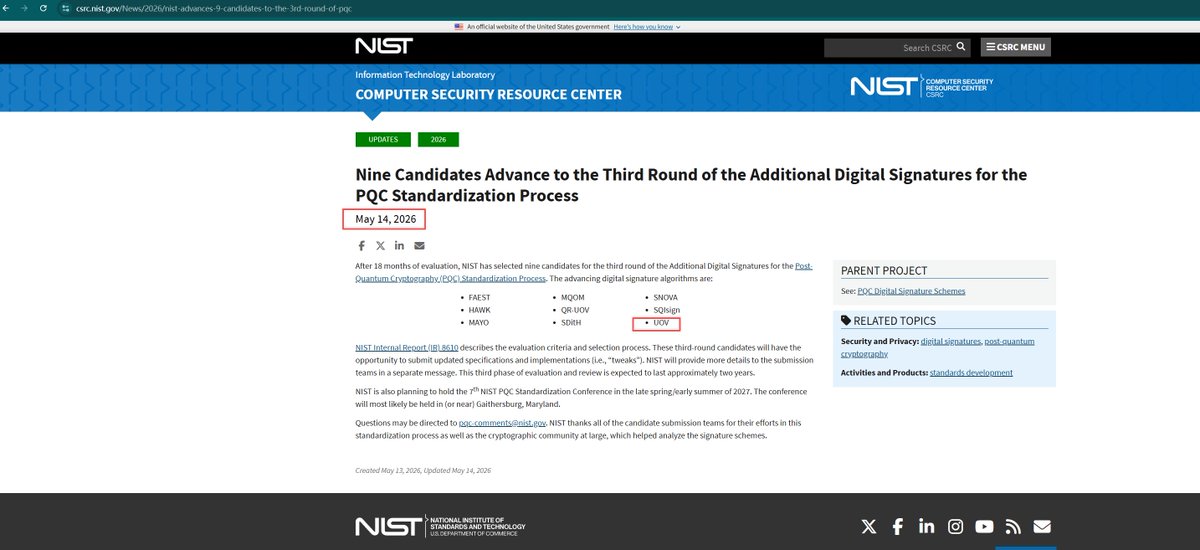
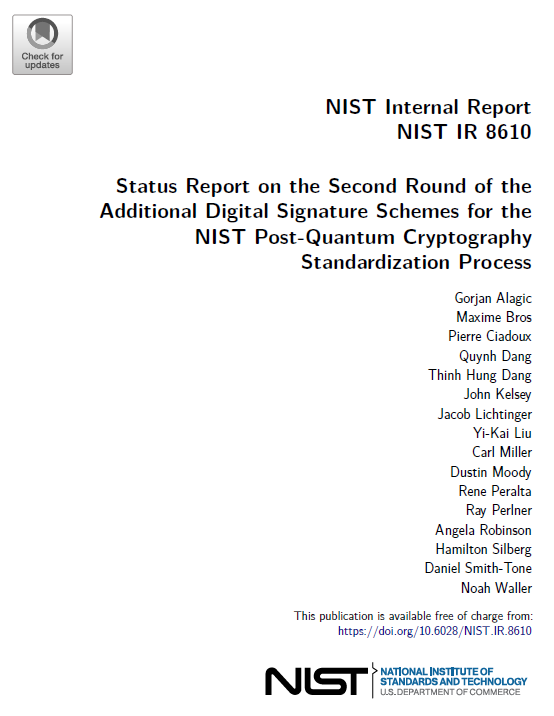
🚨NIST Advances 9 Candidates to the 3rd Round of PQC
·FAEST · HAWK · MAYO · MQOM · QR-UOV
· SDitH · SNOVA · SQIsign · UOV
In the results of the next evaluation round, more suitable quantum-resistant algorithms for #Bitcoin use cases with smaller public keys and signature sizes are likely to emerge. #Multivariate
Wait another two years. Unfortunately, there isn’t much time left for Bitcoin. 🥲
https://t.co/GXv26IJrAj
Warm congratulations to Professor #JintaiDing for his #UOV and #SNOVA being selected for the third round of the additional round of digital signature evaluation in the #NIST#PQC project.
https://t.co/YN2pZNMUcr
https://t.co/SbBzEW5sQg
Have you heard of #Raqcoin?
As far as I know about #Raqcoin
1. Quantum resistant
2. First Multivariate Digital Signature with #Zipcodinization
3. Zipcodinization, public keys can be compressed to around 100 bytes (Corrections are welcome)
4. Has smaller public keys and signatures
5. 90-year Proof-of-Work
6. Use an early version of the Bitcoin codebase
7. Offline Verification
8. Reduce quarter every 4 years
9. Multivariate Mining (mathematically meaningful) — not Hash Mining
10. Mining with NVIDIA GPUs (seems to also support ASIC miners)
11. Verifying transactions for the same address is faster
12. Under the framework of ABC Coin, whose original parameters had been broken and whose security level was below 1, new parameters 1, 3, and 5 were adopted, and, using algorithm agility, the coin was forked into a new coin, Raqcoin, based on UOV and Rainbow
13. Crypto-agility(UOV& Rainbow ) signature,Convert between addresses of different security levels (7kinds)
14. The mining power has been monopolized by some teams, making solo mining very difficult
15. Total supply is 2.1 billion, with around 1 billion currently mined https://t.co/ztQtWfQfnk
16. Still not listed on exchanges after 8 years
GitHub👇
https://t.co/j7WrwZkTwm
No investment advice here: don’t buy anything from unknown sources—just study it.
No way, migrating to quantum-resistant is extremely difficult, and by not taking it seriously, Bitcoin will die even faster. #Bitcoin
1. No suitable quantum-resistant algorithm
2. Hash-based and lattice-based algorithms have excessively large public keys and signatures
3. Migrating to quantum-resistant algorithms could cause severe on-chain congestion and even paralysis
4. Quantum-resistant algorithms result in a significant reduction in transaction efficiency
5. Increased node and transaction fees
6. Who has the authority to freeze or burn Satoshi’s addresses and other lost addresses
7. The aggregation threshold in quantum-resistant algorithms is challenging
8. Taproot makes the transition to quantum-resistant even more difficult
9. High hardware upgrade costs
10. 1MB block size is not suitable for quantum-resistant algorithms
11.Achieving global consensus is extremely difficult
I could probably list ten more obstacles to the migration...