I love this map of housing built before 1919.
It largely tracks economic development (Greater Paris, the West, the Alps, the South-East...)
But there's one nasty blue scar in the North-East that looks eerily familiar...
"What country are we not paying enough attention to?"
JPMorgan CEO Jamie Dimon:
"Europe's GDP per person has gone from 90% of America to 70% because of their own bad policies. And that's going to hurt us one day."
"I would give them one big beautiful free trade bill. The whole of Europe. It would be unbelievable for their growth and for our growth."
"It's when the economy can no longer afford the military they need. That's the problem, and Europe is kind of there right now. And we're staring that in the face."
The Hill & Valley Forum 2026
@HillValleyForum@jpmorgan@ChairmanG
@mayukh_panja Sometimes I was playing with the idea if all contacts were time limited. Let's say 3, 5, 10 years, whatever. The need for work would not disappear, there would still be jobs. People would probably try new professions, their salaries would go up, no stuck careers
Comparison between the sizes of #Paris (& the former Seine department - before 1968) and the Groß #Berlin at the time it was divided.
This larger size of Berlin, including green spaces & still sparsely built-up areas, gives that feeling of being a city where you can breathe. 🌳
Etruscan is non-IE in language, but "pre-Aryan" is the wrong framing for anything in Europe.
(1) The IE speakers who went west never called themselves Arya. That term (ārya / airya) is an Indo-Iranian self-designation.
The western groups used names pointing to something starting with swe-, like Swebe – meaning "one’s own people".
The same root is observable across Italic and Germanic branches: Suebi, Swebaz, Swedes, Suiones, Swabians, Sabines, Sabelli, etc.
(2) Tuscan paternal genetics are dominated by R1b, specifically the R-U152 clade – the major genetic signature tied to Etruscan or early Italic ancestry in the region.
In fact the "Celtic/Italo-Celtic" R-L2 subclade is more common among Tuscans than the R-Z56 branch often linked to Proto-Villanovan.
Recent aDNA (e.g. Posth et al. 2021) suggests Iron Age Etruscans were genetically very close to contemporary Latins, with comparable steppe-derived ancestry – the language difference notwithstanding.
Confidence, masks, and Pirandello (do you know who he is?)
If you spend two decades advising Fortune 500s from New York to Sydney, you see a lot of things.
Often, you see performative arts. I know I did.
You see people who are paid A LOT of money every year acting like they have it all figured out, while internally redlining from anxiety.
If you read the mainstream advice on how to fix this (how to actually become "confident") I can guarantee it is almost always garbage.
Everyone tells you how to LOOK and APPEAR confident:
> Stand up straight.
> Lower your vocal register.
> Wear the right watch.
> Master the power pose.
All BS.
Let me tell you about this Italian playwright from the early 1900s, Luigi Pirandello.
He wrote a masterpiece titled "Uno, nessuno, e centomila" (One, no one, and one hundred thousand) about how we don't actually exist as one solid person.
Instead, we carry a 100,000 different versions of ourselves, wearing a different mask for every person we meet and every role we play.
In the corporate world, we don't normally call them masks, but often refer to them as "executive presence" or "professionalism" or "gravitas".
I think a problem comes with that: if you play the role long enough, the mask swallows your face, and you start believing your confidence comes FROM the mask.
This is effectively "role-based confidence", and it's a ticking time bomb.
High-earning executives may completely melt down in foreign boardrooms because their usual tricks don't work. Their confidence was circumstantial - a temporary leasehold, not private property.
Now, I came to the conclusion that true confidence has nothing to do with your role. It is innate. It is a foundational mental framework, not a reaction to your environment.
"I am confident because I am entirely comfortable not knowing the answer yet, and I know I will figure it out."
An helpful realization is that nobody has the magic script: that realization makes the pressure you feel evaporate.
We should not look at confidence like a mask you put on to impress people but rather what's left when you finally have the guts to take the mask off.
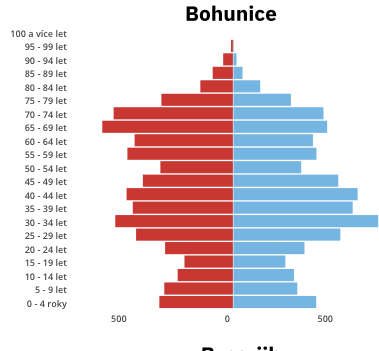
This is indeed true. In the Czech Republic, the county with the highest fertility rate is Žďár nad Sázavou, a largely rural one where roughly 65–70% of people live in family houses. You can see its population pyramid - which is relatively healthier than is the norm in the country even though the region is seeing youth emigration to urban areas - in the first picture.
By comparison, the Karviná county — one of the areas with the oldest median age and lowest fertility — consists primarily of apartment buildings, mostly "commie blocks," as it was a coal-mining town; its population pyramid is attached as well. Socioeconomic factors play a role too: Karviná is generally a poorly performing region, which drives higher emigration and so on. Still, the typical size of the dwelling surely plays a big part.
Moreover, the other two pictures show the population pyramids of the demographically youngest and oldest districts of Brno, the country's second-largest city. The youngest is mostly suburban, made up of family houses and newer apartment blocks, while the oldest consists mainly of commie blocks. This suggests that people starting families will avoid such neighborhoods if they can — even though commie-block neighborhoods generally have all the amenities needed for raising children, such as kindergartens, schools, and playgrounds.
The fundamental issue with modern urbanism is that the things that genuinely make a city run well — walkability, services, vibrant street life, pleasant aesthetics — all require density, yet density is just not all that good for fertility rates. So a lot of well-meaning and well-executed urban development may often be hurting fertility, even when it is excellent in every other respect. America has a real advantage in this regard, even if it comes at the cost of making cities less pleasant in other ways.
I ran into some Europeans at the Trader Joe’s. They are visiting the DC area for the World Cup. Guess what excited them on the shelves behind me. The humus! LMAO. I would have thought they would go for the ravioli.
Then when they went to check out, the cashier asked where they were from. The answer was “Slovenia!” The cashier had no idea what that was. So they said “like your First Lady.” He still had no clue. “Melania Trump,” they helped out. Crickets still. So they got the full American experience at checkout. It was perfect.
What's actually possible is suppressed from public view. This is a diagram of an actual compressed-air power plant that ran for over 70 years; it was shut down because an insurance company claimed that it attracted too many observers and someone could get injured, so they shut it down... They are trying to control the rain, the groundwater, your ability to save seed, and so much more - why wouldn't they hide basic things like nearly-free energy generation? This is #Permaculture in practice, and this is a diagram from The Permaculture Student 2: https://t.co/jqgUbBgkfU
Empirical observation, that might be anecdotal (or not): the more dysfunctional the organization, the more they will develop an interest in AI.
Makes sense?
I believe outlier candidates often not getting interviews at all is largely a positioning problem.
The average hiring manager when they are setting out to fill a position already has an archetype in mind. And they are looking for someone closest to that archetype.
This person despite being clearly very smart doesn’t really fit into most archetypes that hiring managers have.
And so their CV, in all likelihood, is not getting a second look because it is assumed that they are not relevant.
People when hiring, unfortunately, tend to overoptimize on existing skillset and massively underprice the ability to do difficult work.
There are two reasons for this:
1. People by and large tend to avoid risk. So anything that feels different and unfamiliar is immediately rejected. This is a problem academics face a lot.
2. The average company is doing average work and needs an average person who has done the thing the company needs 10 times before and can do it the 11th time. They don’t need an outlier candidate. So it is safer just look at existing skillset.
A good workaround is reframing everything you have done in terms of the job description and job requirements. And by reframing I don’t mean adding a few words here or there. I mean aggressive and radical reframing so that it catches the attention of the recruiter (who is an idiot anyway) and the hiring manager almost immediately at first glance.
Try to present yourself as the person the hiring manager is excited about.
Your farts are telling you something about your gut health.
Silent but deadly = bad sign.
Loud but odorless = good sign.
Here's why you should take it seriously:
Some of us will live forever.
And if you’re reading this, that may or may not be you.
I am so bullish on this that I just renamed my company to Immortals.
Below:
+ why I think this
+ early signs of success
+ how to increase your odds
Yes, I know this sounds crazy.
Immortality has been an ambition for humanity since the beginning of recorded history.
The immortality I’m referring to is specific: increases in life expectancy will outpace the rate of aging. Meaning, we will no longer, by default, expect to die of natural causes.
I believe this for three reasons.
#1: Immortality already exists
Biology can reverse some features of aging, and in a handful of organisms escape it almost entirely. For example, a sperm and an egg from two people in their 30s carry the legacy of bodies that have aged for decades (the egg in particular has been arrested inside the mother since before she herself was born), yet they combine to produce an embryo that resets the aging clock to zero.
The immortal jellyfish goes further and resets itself within one lifetime, reverting its adult cells to an earlier stage through transdifferentiation and starting its life cycle again. And in the lab, scientists have begun doing this deliberately, making induced pluripotent stem cells (iPSCs) from mature adult cells such as skin fibroblasts, and using partial cellular reprogramming to turn the clock back in the tissues of living animals.
#2: AI offers new potentials
Biology is a hard problem. For most of history that complexity was beyond native human capacity. AI was made for this complexity. The clearest demonstration so far is protein folding. Predicting the three-dimensional shape a protein folds was an unsolved problem for roughly fifty years, and it mattered because a protein's shape determines what it does in the body.
DeepMind's AlphaFold2 effectively solved it in 2020, reaching a median accuracy of 92.4 out of 100, a level long thought to require the slow, painstaking work of crystallizing a protein and solving its structure by X-ray crystallography. It then released predicted structures for over 200 million proteins, nearly the entire catalogued protein universe, in a fraction of the time anyone expected.
#3: Early signs are encouraging
These aspirations are not imaginative. With the current tools in biotech Sid Sijbrandij, the co-founder of GitLab, was diagnosed with an aggressive bone cancer, osteosarcoma in his vertebrae. He treated his own disease like an engineering problem, he used AI to help direct several experimental, personalized therapies in parallel and drove the cancer into remission after standard medicine had given up. Around the same time, an Australian named Paul Conyngham, with no medical or biology background, did something similar for his dog. He used AI to help design a personalized mRNA vaccine targeting the specific mutations in his dog's tumor, and after it was given alongside another immunotherapy and within a few months the main tumor had shrunk by roughly three-quarters.
How to increase your odds…
I. Don’t die in the meantime
We don’t know when these longevity therapies will become available. Your goal is to be around when they come out. Buy yourself as much time as possible by looking after your body to the best of our scientific knowledge. Good diet, sleep, exercise will get you 80% of the results.
II. Find your achilles
Longevity therapies will likely be outcome specific. Individual specific drugs/therapies that target specific things like…
> prevent and remove arterial plaque
> prevent and reverse neurodegeneration
> specifically target and eliminate cancers, or pre cancerous legions
> prevent frailty and muscle loss, and regain muscle mass, strength and, bone density
> reverse skin aging
> rejuvenate eye health
> restore lost hearing
> etc
We don’t know what therapies will be available first. Your goal is to find what your body is struggling with most and keep that problem at-bay until a therapy is available that can fully cure or reverse it.
For example, do you struggle with cholesterol? Blood glucose control? Cognitive decline? Find your achilles heel and reduce your risk systematically.
III. Invest in the future
There are three macro trends happening on planet earth right now, and the people who bet on these areas have the highest risk + reward.
> AI
> Immortality
> Energy
As we know, power comes in many forms: money, social, political, health, etc. Those that can collect power in these fields will have the greatest chance of positioning themselves in the Immortal future.
With time, Immortal therapies will become broadly available.
If you’re reading this: don’t waste your chances by burning down your life points on a yolo-like mentality. Grind culture, addiction, social media pollution, fast food, porn, alcohol, these are all corporations turning your life into their profit. This is the Die Economy.
My company Immortals has the sole objective of turning your time, attention, and life into more healthy, functional, and prosperous minutes, days, and years. The Don’t Die Economy.
Good luck.
A German psychologist proved in 1885 that cramming erases what you learned within 48 hours. He published the fix in the same book. Almost no school on Earth has adopted it in 140 years.
His name was Hermann Ebbinghaus.
He had no lab. No funding. No colleagues.
He worked alone in a room in Berlin and ran every experiment on himself. He spent years memorizing thousands of nonsense syllables — made-up combinations like DAX and BUP, strings with no meaning — so that prior knowledge could not contaminate the results.
Then he tested his own recall at intervals. Twenty minutes. One hour. Nine hours. One day. Six days. Thirty-one days.
What he found became one of the most replicated findings in the history of psychology.
Two-thirds of everything you learn is gone within 24 hours if you do not return to it. Within a week, the curve flattens near zero. The brain does not store what it does not revisit. It treats unused information the way it treats everything else it does not need. It discards it.
He drew this curve in 1885 and called it the forgetting curve.
Then he found something else in the same data.
Students who spread their study sessions over multiple days retained far more than students who spent the same total hours studying in one block. Not slightly more. Dramatically more. The brain needed time between exposures to consolidate the material into something durable.
He called this the spacing effect.
Same information. Same total hours. Completely different outcome depending on when you spread the hours out.
The finding has been replicated over 250 times. A 2006 meta-analysis in Psychological Bulletin covered 254 studies across every age group and every subject. The effect held every time.
A German journalist named Sebastian Leitner built a physical flashcard system around it in 1972. An open source app called Anki turned that system into software in 2006. Medical students who use Anki to pass board exams are not working harder than everyone else. They are working in the only pattern the brain actually responds to.
The most uncomfortable part of all of this is what happened after Ebbinghaus published.
Educators read the research. They understood what it showed. They kept the cramming.
The school calendar was already built around it. Semester exams. Finals week. One concentrated block of review before the test and then nothing. The entire architecture of how most schools schedule learning is optimized for the forgetting curve, not against it.
The lesson is not that you need more time to study.
It is that the same time, distributed differently, produces a completely different brain.
Ebbinghaus proved this in 1885 with no budget and no institution. He ran the experiment on himself because no one would run it for him.
The fix has been available for 140 years.
Almost nobody who designs schools has used it.
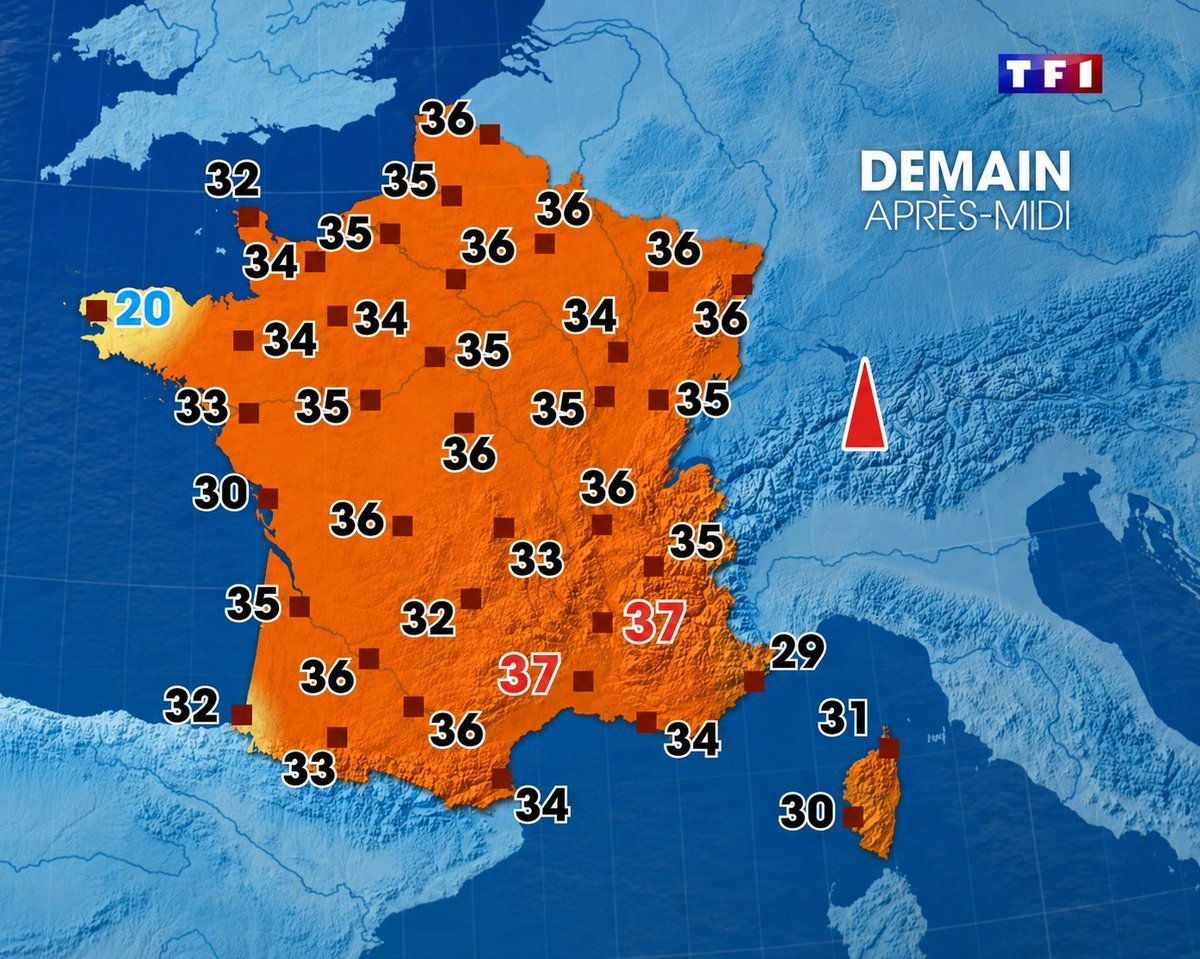
Nous sommes en 2026 après Jésus-Christ.
La canicule a conquis presque toute la Gaule...
Toute ? Non !
Un petit village d'irréductibles Gaulois résiste encore et toujours à l'envahisseur... 🔥
One of the worst heatwaves in European history is underway.
Peak high temperatures forecast this week:
France: 45°C / 113°F Monday-Tuesday
London: 39°C / 102°F
Amsterdam: 34°C / 93°F
Berlin: 38°C / 100°F
Paris: 41°C / 106°F
@Dovydas44444 Each € paid to the pension system gives you 1 share of entitlement. Each could very easily calculate their pension (tot money collected/your shares). You could abolish retirement age entirely. When you collect enough shares to fit your lifestyle you could simply go in pension
@Dovydas44444 And if the share of money collected, the rents goes up. If not, rents go down. Short term it is a very stable system, as the sums yoy don't change that much. Long term, the system is dynamic enough to compensate for changes in demography.
Heck, you could even make it so...