🔬 One more undergrad intern spot at Microsoft Research India (6 months)
Deep transformer encoders are slow under production pressure. So, we are asking: what should a retrieval architecture look like if we don't just assume transformer?
This spot continues that line of exploration including new architectures, loss functions, efficient training for large dense encoders.
Skills reqd: Strong Python + PyTorch + ML intuition. Bonus if you've trained an encoder or built a retrieval pipeline.
Start: late Oct / early Nov. DM me on X or LinkedIn by end of this week.
A major retrieval use case is web search
It is very specific and existing benches fall short at evaluating it
Today, we introduce Q2D-Web, composed of 190M documents, 70k agent-rewritten queries and deep annotations!
Retrieval Needs Multivectors: An Exponential Separation
Microsoft formally proves that multi-vector embeddings can be exponentially more compact than single-vector ones for ranking documents.
📝 https://t.co/fiqz4dBR2B
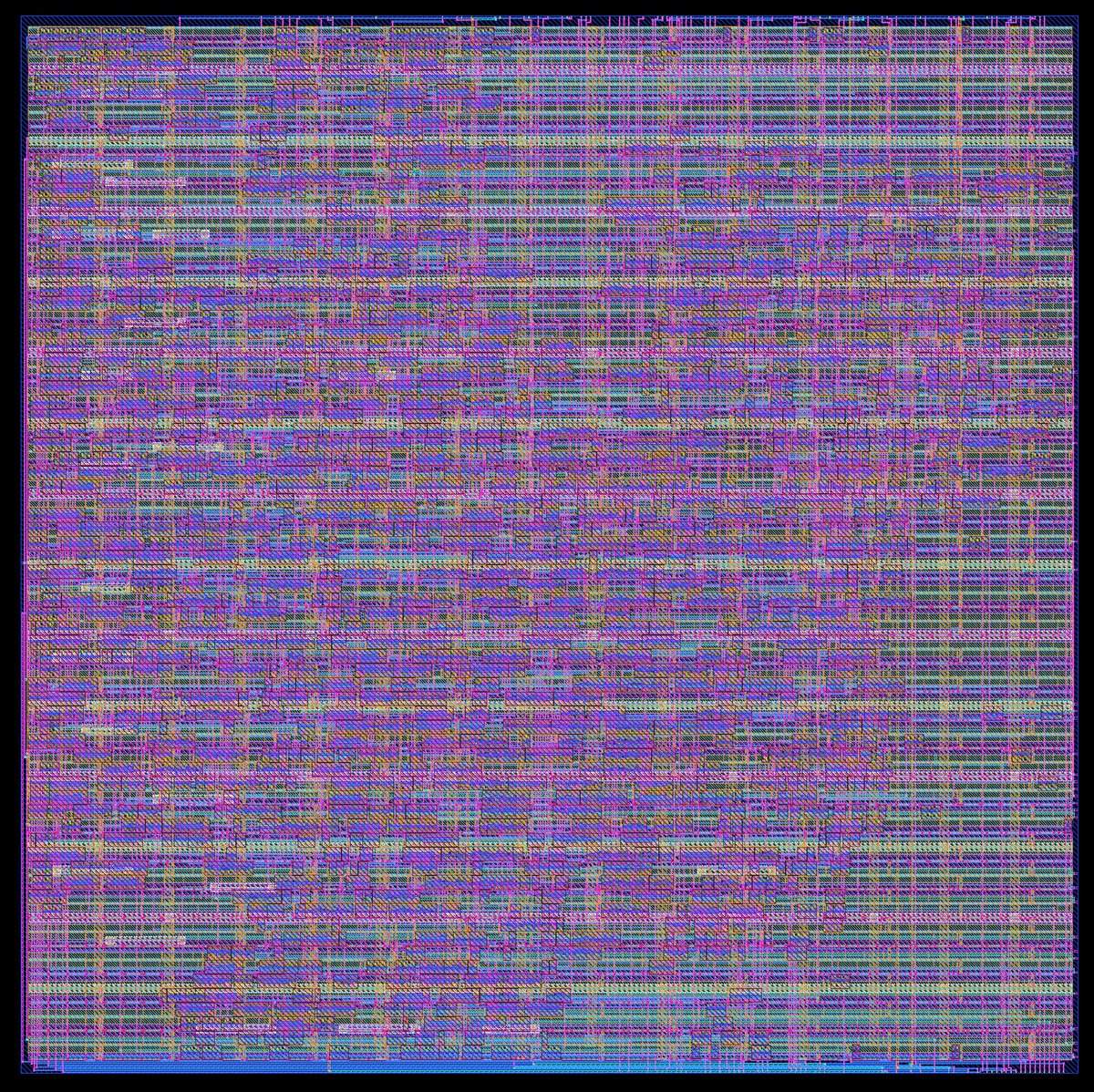
I spent the last six months trying to deconstruct Taalas's patents. We think it can be better: 100x fewer memfetches than their bitROM, better software by better quantization than their hardware team could.
So we wrote a compiler that:
> takes a huggingface checkpoint,
> quantizes the model
> descends the weights down metal layers to RTL and GDS, do your DRC, Yosys, PEX, make the electrical waveform execute a mat-vec from your huggingface checkpoint (thanks Cambricon tech papers)
in ~7000 lines of human-readable code.
we're looking for someone with contacts with a foundry/access to 7nm PDKs or contacts at a cheap EuroPTW shuttle? I'm broke and unemployed.
@itsclivetime this is what i think is the future of perplexity per picojoule. @zerohedge@zephyr_z9 you guys wanna see 40,000 tokens/sec?
I want to demonstrate that you can do a complete CPU tapeout from scratch with no tools, no LLMs whatsoever, just totally manually write the entire flow for a modern process. Like, literally just sit down with nothing but a text editor, write code, emit all the rectangles.
ORBIT ACHIEVED. 🚀
Vikram-1 Test Flight-1 has reached orbit. India's first privately developed orbital rocket has completed its final burn and injected its payloads into a ~450 km orbit, making India the third country in the world with private orbital launch capability.
History is made. 🇮🇳
#Vikram1 #JourneyToOrbit #SkyrootAerospace
@AsideAI loving the browser so far — genuinely great day to day.
A few polish asks:
1. Ship Widevine DRM by default. Fresh installs break Netflix till you update the CDM
2. Auto PiP on tab switch (like Arc)
3. Trackpad resize for PiP — clicking handles every time is painful
🔬 Hiring 2 undergrad research interns (6 months) at Microsoft Research India.
The transformer has been the default encoder for dense retrieval. But under the low-latency constraints of real production systems, it becomes a serious bottleneck on retrieval performance, deep encoders are accurate but too slow, shallow ones are fast but lossy.
So we're asking fundamental questions:
→ What assumptions are we baking in when we reach for a transformer to solve a task?
→ What alternative scalable encoder architectures can exploit the natural biases of retrieval better than the transformer does?
What interns will actually work on over 6 months:
→ Critically analyzing where transformer-based dense encoders fall short under production retrieval pressure
→ Exploring alternative architectures that preserve deep-encoder accuracy at a fraction of the inference cost
→ Data + compute efficient training algorithms for large dense encoders
Strong Python + PyTorch. Bonus if you've trained an encoder or built a retrieval pipeline end-to-end.
For undergrads who treat "why is the architecture shaped this way?" as a real question.
Apply: https://t.co/eTfA15eRnU
DMs open.
#InformationRetrieval #MLSystems #NLProc
@MSFTResearch
Just shipped SpeakFlow v1.0.0: a local-first macOS dictation app, built for people who live in chat boxes.
Check it out at https://t.co/tVT8r4nlFn.
Still in really early phases.
You told us you’re running multiple AI agents and wanted a better UX. We listened and shipped it!
Here’s what’s new in the latest @code release:
🗂️ Unified agent sessions workspace for local, background, and cloud agents
💻 Claude and Codex support for local and cloud agents
🔀 Parallel subagents
🌐 Integrated browser
And more...
Use OpenAI's Codex or Anthropic's Claude agent directly in @code with your GitHub Copilot subscription :)
VS Code gives you choice: be it your models or agent harness.
@pierceboggan in GitHub copilot, giving the models a tool to read images given their path would be really useful. Other agentic tools support this as of now.