Just had a fascinating lunch with a 22-year-old Stanford grad. Smart kid. Perfect resume. Something felt off though.
He kept pausing mid-sentence, searching for words. Not complex words - basic ones. Like his brain was buffering.
Finally asked if he was okay. His response floored me.
"Sometimes I forget words now. I'm so used to having ChatGPT complete my thoughts that when it's not there, my brain feels... slower."
He'd been using AI for everything. Writing, thinking, communication. It had become his external brain. And now his internal one was getting weaker.
Made me think about calculators. Remember how teachers said we needed to learn math because "you won't always have a calculator"? They were wrong about that.
But maybe they were right about something deeper.
We're running the first large-scale experiment on human cognition. What happens when an entire generation outsources their thinking?
Don’t get me wrong, I’m beyond excited about what AI and AI agents will do for people in the same way that I was excited in 2009 when the App Store was launched.
But thinking out loud you got to think this guy I met with isn't the onnnnnly one that's going to be completely dependent on AI.
Happiness (if you want it):*
1. Meet basic needs
2. Avoid cheap dopamine
3. Leave the past alone
4. Limit desires to ones achievable at the edge of your capability
5. Find something beyond yourself (mission, children, God)
*Most people want something else.
Claude can now control your computer and iPhone
SPOILER: ChatGPT is now falling behind.
Here're 11 unbelievable things Claude can do: [ Don't miss 5th one ]
A lot of people are asking me about prompting with https://t.co/B95RPZtZOu, @cursor_ai, Claude, ChatGPT or other AI tools.
Here's a list of resources to get you up to speed with prompting so you can make better and effective prompts.
A thread
I'm 38.
At 30, I had $10K left in the bank after my eCommerce startup failed (I lost everything).
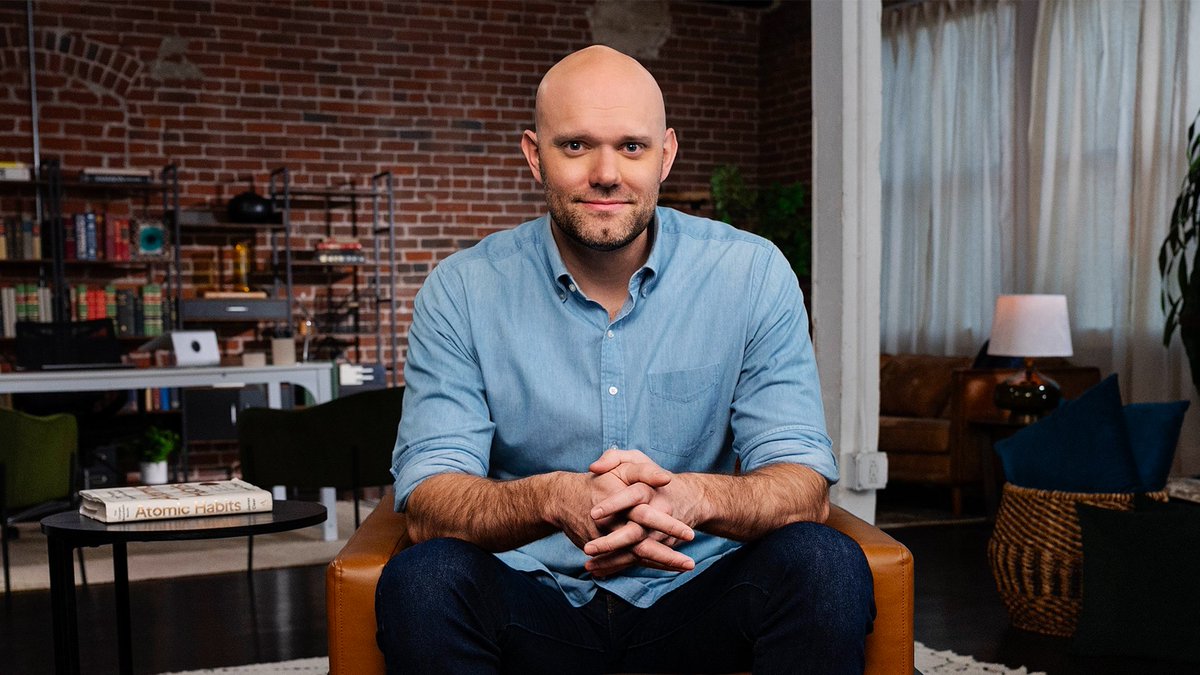
Then, I discovered James Clear's work on habit-building, and made my first million at 33.
13 of his insights that transformed my life (and will do the same for you):
Since your handle is “Whole Mars”, perhaps this lengthy reply is apropos:
Getting the cost per ton to the surface of Mars low enough that humanity has the resources to make life multiplanetary requires a roughly 1000X improvement in rocket & spacecraft technology.
Recent US Mars missions have had a cost per ton of useful load to the surface of Mars of about $1B. Moreover, it has become more, not less, expensive over time!
To build a city on Mars that can grow by itself likely requires at least a million tons of equipment, which would therefore require >$1000 trillion, an obviously impossible number, given that US GDP is only $29T.
However, if rocket technology can be improved by 1000X, then the cost of becoming sustainably multiplanetary would drop to ~$1T, which could be spread out over 40 or more years, so <$25B/year.
At that cost, it becomes possible to make life multiplanetary, ensuring the long-term survival of life as we know it, without materially affecting people’s standard of living on Earth.
Starship is designed to achieve a >1000X improvement over existing systems and, especially after yesterday’s booster catch and precise ocean landing of the ship, I am now convinced that it can work.
This is wild.
Elon Musk just revealed the future with Tesla Optimus, Robotaxi and Robovan.
10 wild demos:
1. Tesla Optimus, autonomous assistant, humanoid friend
Tinder created a $5.3B industry:
• Processed 1B swipes a day by 2014
• Matched 65B couples to date
• Makes nearly $2B/year
Yet the founder says he's just as happy owning a local coffee shop…
7 surprising pieces of advice from Tinder founder Sean Rad:


![CodeByPoonam's tweet photo. Claude can now control your computer and iPhone
SPOILER: ChatGPT is now falling behind.
Here're 11 unbelievable things Claude can do: [ Don't miss 5th one ] https://t.co/WWeNvax1fs](https://pbs.twimg.com/media/GdexR7HWYAEVU5B.jpg)