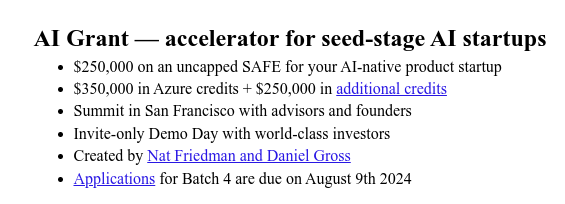
@a16z is hosting an insanely curated art gallery for the brightest young minds in SF on the evening of July 23rd.
We’re bringing SF’s best bites and music to you for a night of fun. More info in comments!
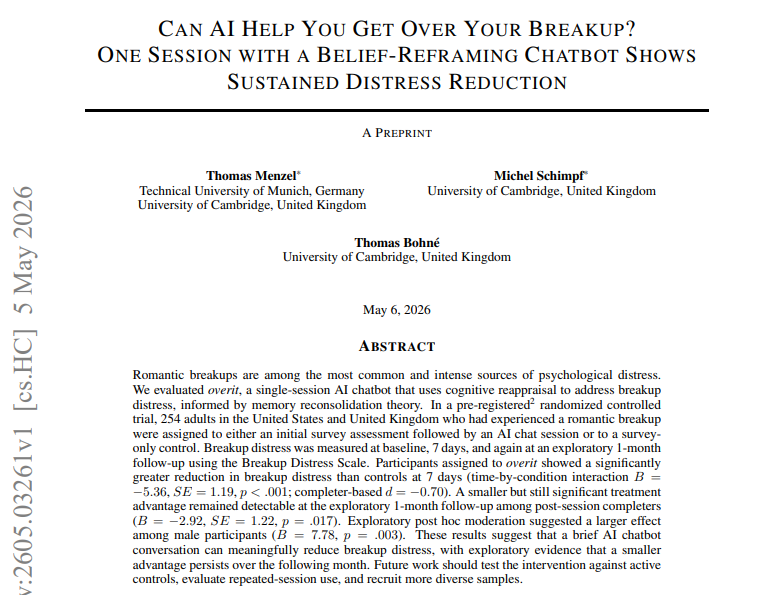
Can AI Help You Get Over Your Breakup?
The authors tested whether a single conversation with AI could reduce breakup distress - the intense emotional pain people experience after a breakup. And this was not about simple «stay strong, everything will be okay» style support, but about deeper work with the beliefs that keep the pain alive.
The researchers created a chatbot called overit - an app designed to support people after breakups. It used Claude Sonnet 4.5 under the hood. The conversation was tightly structured as a short therapeutic intervention. The system first helped users talk through the situation and their emotions in detail, then identified a key painful belief («I’m not good enough», «I’ll never find anyone again», «this proves there’s something wrong with me») and finally gently guided them toward alternative interpretations and a different way of viewing what happened.
The authors based the intervention on cognitive reappraisal and memory reconsolidation - the idea that emotional pain is often sustained not only by the event itself, but by the meaning a person assigns to it. If that meaning can be reconsidered during an emotionally significant moment, distress may decrease.
The experiment was designed as a randomized controlled trial. The study involved 254 participants from the US and the UK who had gone through a breakup. One group completed an approximately 20-minute session with the chatbot, while the control group only filled out questionnaires. Distress levels were measured using the Breakup Distress Scale before the intervention, 7 days later, and again roughly a month afterward.
Overit used a dual-call architecture: one Claude Sonnet call generated responses for the user, while a second parallel call evaluated «therapeutic progress» - whether a limiting belief had been identified, whether it had been challenged, whether an insight emerged, and so on. The goal was not simply to comfort users, but to help them break out of painful repetitive interpretations of the breakup.
After 7 days, the chatbot group showed a significantly larger reduction in breakup distress compared to the control group. Among participants who completed the study, the effect size was around d = −0.70 -a fairly strong result for digital mental health interventions. After a month, the advantage became smaller but was still detectable. The authors suggest that the chatbot may have accelerated the natural recovery process after a breakup.
One particularly interesting finding involved insight. People who spoke with the AI reported «aha moments» far more often - sudden realizations or reframings of the situation. And the presence of these insights partially explained the reduction in distress. Some participants said they stopped blaming themselves for the first time, recognized patterns of self-sabotage, or realized they had been holding onto a destructive interpretation of the relationship.
The paper raises a very important question. The value of AI in mental health may not lie only in being an «empathetic companion», but in its ability to help people rethink painful beliefs about themselves and their lives. And this becomes even more interesting because the authors explicitly discuss the problem of sycophancy: a good therapeutic AI should not simply agree with every interpretation a user has. Sometimes real support means not validating the pain itself, but helping a person see it differently.
https://t.co/5v5wHhG3ML
12/41km
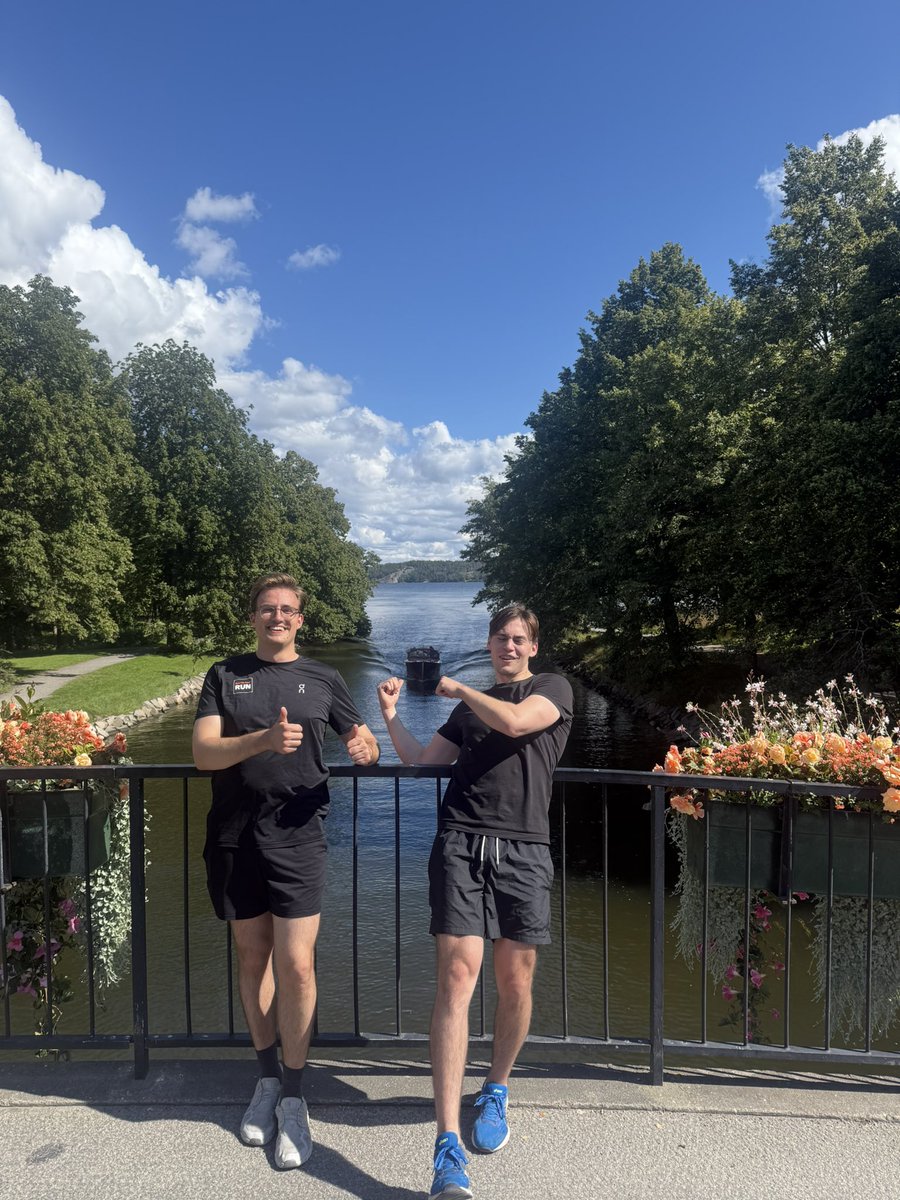
Let’s get another 5k in - follow my run and our hackathon by signing up below! We will reduce the discount with every km I run (60% off right now)
https://t.co/YUdpB4kQsS
@ProjectEurope_
@antonosika says: “the internet will run on @lovable”. But will it convert?
We are building an AI chief revenue officer for your Lovable website, to make sure it does. Bonus: I’m running a marathon in-between
https://t.co/cEfQC5ifvY
@HarryStebbings@ProjectEurope_