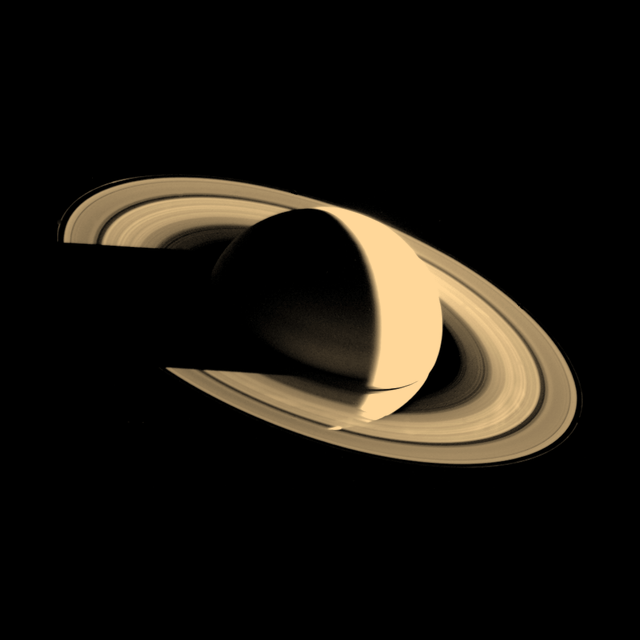
Voyager 1 captured this picture on this day in 1980, while looking back at Saturn just a few days after its closest approach to the ringed planet. The approximate distance at the time of the shot was 3.3 million miles.
Credit: NASA
Unfortunately, tonight's not a night for viewing the heavens but the forecast for Friday is much better - and that is great news because we have Planetarium Shows scheduled for 7, 8 and 9pm. We still have some slots available, so please call us on 01382 435967 to make a booking.
That’s no Moon—it’s Venus, wearing its rarest and most dramatic disguise.
Every year and a half, Venus slips almost directly between us and the Sun. From Earth it becomes a razor-thin crescent, the kind that can fool you into thinking you’re looking at a new Moon. But Venus refuses to play by lunar rules.
Its thick, carbon-dioxide atmosphere bends and scatters sunlight around the planet’s edge, stretching the glowing arc past a perfect half-circle. The tips lengthen into luminous “horns” that curl farther than geometry alone would allow—an ethereal, almost living crescent that seems to wrap itself around the night side.
The effect is brief and spectacular. Catch it in the days around inferior conjunction and even a modest telescope (or steady binoculars at twilight) will show you a planet that looks less like a world and more like a glowing scythe suspended in the sky.
Next time you spot a delicate crescent near the Sun, look twice. It might not be the Moon at all—it might be Venus, briefly wearing horns.
Hopefully some clear skies tonight for viewing. We had a decent night last night too in terms of visibility, compared to the rest of the UK, however it didn't translate into many visitors unfortunately.
No other traveler has ever journeyed so far from home.
Voyager 1 is about to become the first human-made object to reach a distance of one light-day from Earth, or about 16 billion miles. ½
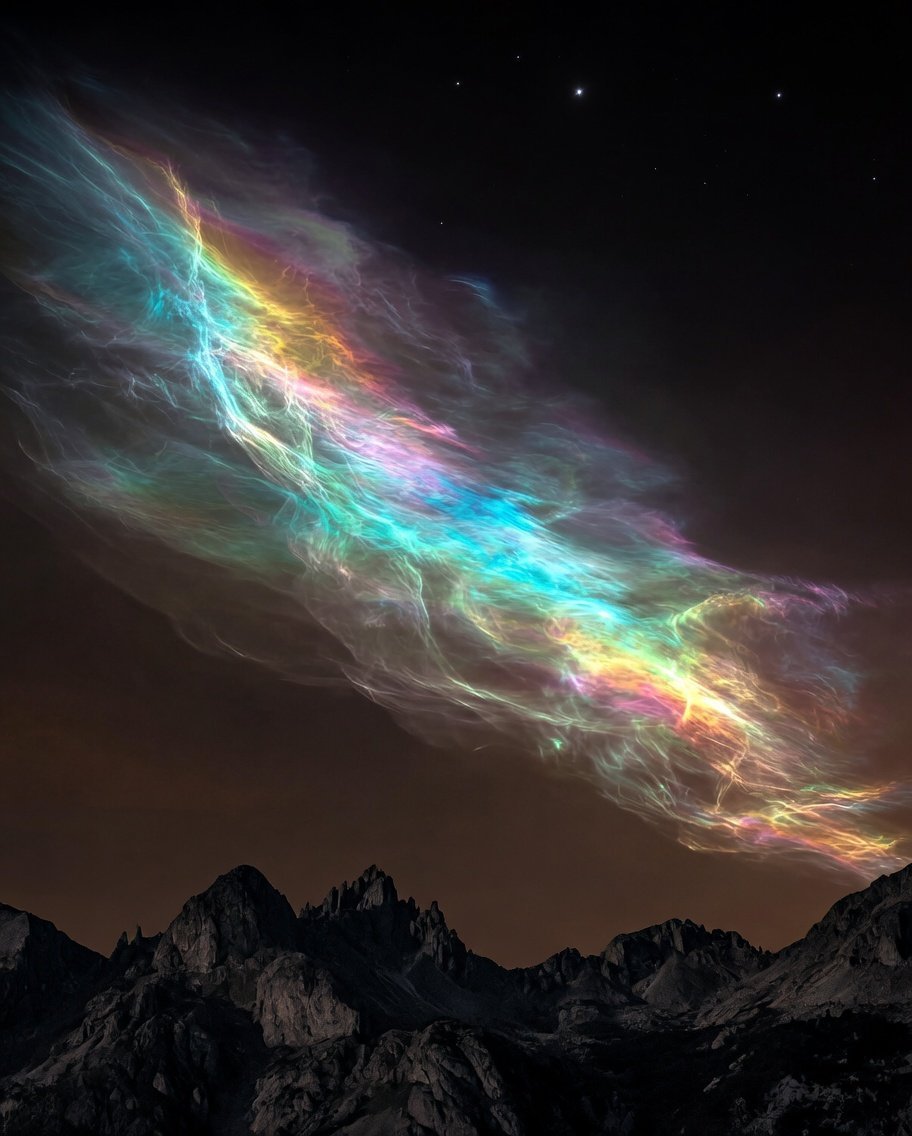
🚨: NASA released a new Mars image showing real clouds 250 million miles away. These include rare iridescent clouds seen for the first time on another planet.
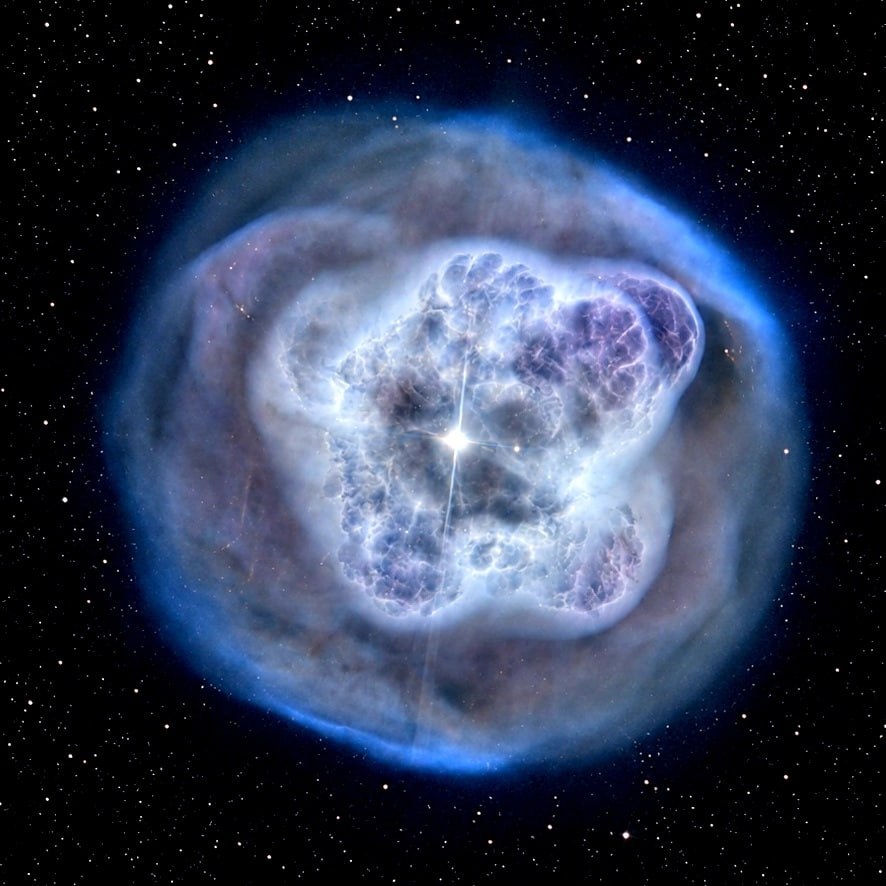
Cosmic “Crystal Ball” in All Its Glory: Gemini North Telescope Captures Nebula NGC 1514 🔮
Fifteen hundred light-years from Earth, a dying star has cast off its outer layers in a spectacular farewell. The result is NGC 1514 — a glowing planetary nebula that looks like a giant crystal ball suspended in the darkness. Delicate shells of gas expand outward from the star’s remains, illuminated from within and shaped by the forces of its final days.
What was once a quiet stellar life has become a radiant, fleeting masterpiece — a brief cosmic spectacle before the light fades.
Behold the ghostly ice giant: Neptune, glowing like a pale pearl adrift in the dark, its delicate rings razor-sharp for the first time in more than three decades—faint dusty bands that last glinted under Voyager 2’s gaze in 1989 now revealed in infrared by the James Webb Space Telescope. 🔭
Beside it, the captured moon Triton blazes brighter than its planet, a nitrogen-ice mirror reflecting ~70% of the light that hits it, crowned with Webb’s signature diffraction spikes while methane darkens Neptune’s atmosphere and bright methane-ice clouds streak the southern hemisphere.
A frame of cosmic elegance: the distant ice world, its ethereal rings, and its brilliant retrograde moon, captured July 12, 2022.
Our next planetarium shows are scheduled for Friday 6th November. They start at 7, 8 and 9pm. Adults cost £3 and children £1.50. Please call us on 01382 435967 if you would like to book.
We reopened on 1st Oct and despite tonight being rubbish for viewing we have had some decent weather so far this autumn. Long may it continue! Clear skies!
In the rare case you haven’t seen it yet:
Here is the 10-day trajectory of Artemis II around the Moon and back.
It follows a figure-eight loop around the Moon, reaching over 230,000 miles away from Earth.