Les apparences peuvent être trompeuses.
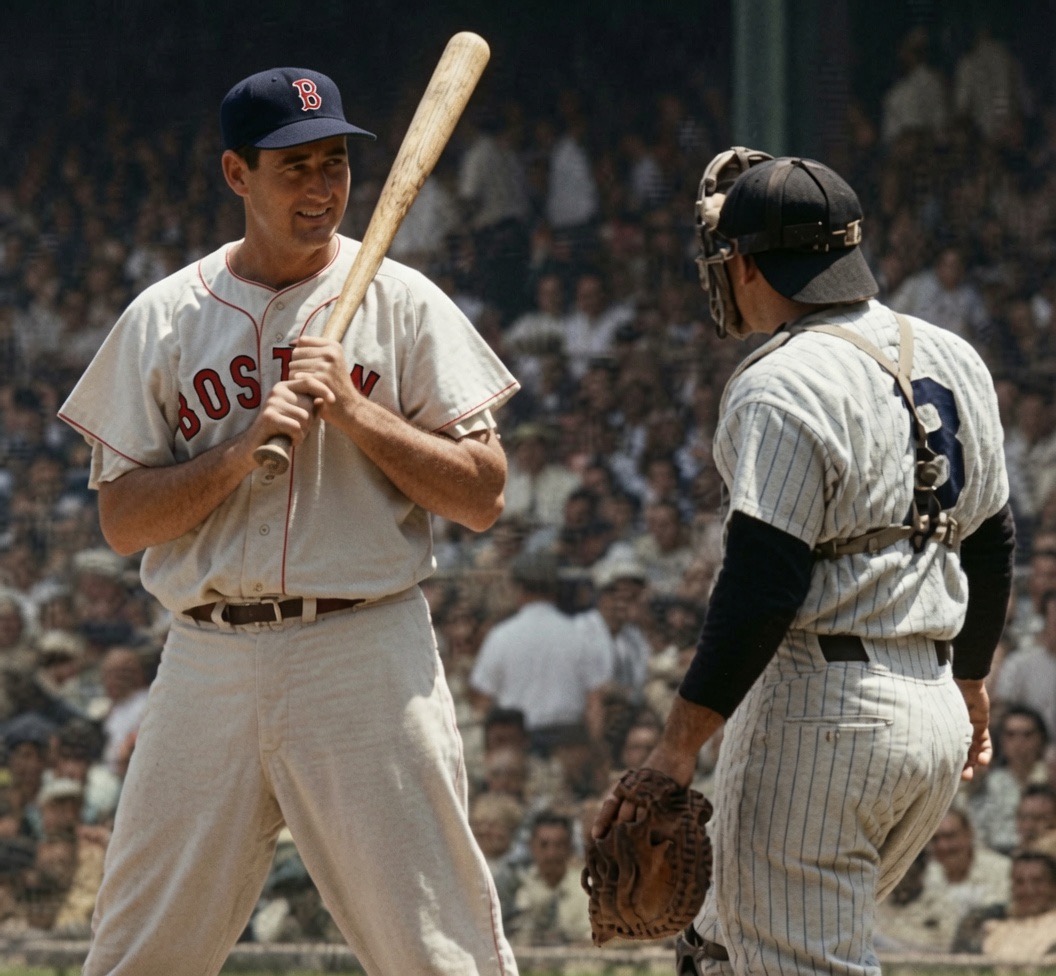
À la fin du XIXe siècle, un couple descend du train à Boston avec l'intention de visiter l'université de Harvard. Leur tenue est simple : elle porte une modeste robe de coton, lui un costume peu raffiné.
Sans rendez-vous, ils se présentent au secrétariat du président de l'université, mais sont accueillis avec méfiance. Le secrétaire, les voyant si humblement vêtus, les prend pour des paysans et estime qu'ils n'ont rien à faire à Harvard.
"Nous voudrions parler au président", dit timidement l'homme.
"Désolé, il est très occupé", répondit froidement le secrétaire.
"Nous attendrons", rétorque calmement la femme.
Espérant qu'ils se lasseraient et partiraient, le secrétaire les a ignorés pendant des heures. Mais le couple ne bouge pas. Finalement, impatiente, elle décida d'en référer au président, espérant qu'une brève rencontre les convaincrait de partir.
Mécontent, le président les reçoit d'un air sceptique.
La femme explique : "Notre fils a fréquenté Harvard pendant un an et y était très heureux, mais il est malheureusement décédé dans un accident. Nous aimerions faire quelque chose en sa mémoire.
Le président, impassible, répond : "Nous ne pouvons pas ériger une statue pour chaque ancien étudiant décédé. Nous finirions par transformer le campus en cimetière.
"Nous ne voulons pas de statue", répond la femme, "nous pensions faire don d'un bâtiment à Harvard".
Le président, incrédule, regarde leurs vêtements et rit avec condescendance : "Un bâtiment ? Savez-vous combien coûte un bâtiment ? Ici, à Harvard, nous avons dépensé plus de sept millions et demi de dollars pour nos installations !"
La femme est restée silencieuse pendant un moment, puis elle s'est tournée vers son mari et a murmuré : "Est-ce que cela coûte si peu de construire une université ? Pourquoi ne pas fonder la nôtre ?"
Le mari acquiesce.
Sans rien ajouter, le couple s'est levé et a quitté Harvard.
Ce couple s'appelait Leland et Jane Stanford, et quelques années plus tard, en Californie, ils fondèrent l'université Stanford, dédiée à la mémoire de leur fils bien-aimé.
Aujourd'hui, Stanford est l'une des universités les plus prestigieuses du monde, au même titre que Harvard.
Moralité :
Juger quelqu'un sur ses apparences peut s'avérer une erreur colossale.
Bill Maher asks how the government is “failing the poor so badly” when he pays “60 PERCENT” of his earnings in taxes.
“Last week was tax day… I paid the government probably almost 60% of what I earn. That’s a lot.”
“And I… wouldn’t mind if Bernie Sanders would stop saying the rich don’t pay taxes.”
“The top 10% pay 72% of all federal income taxes. And the bottom half, 3%.”
“The Democratic Socialists talk about socialism like we don’t already have a lot: Social Security, unemployment, Medicare, nutritional assistance, Medicaid, Obamacare, disability, housing subsidies.”
“How can you be soaking the rich and failing the poor so badly? How can it be that the federal government alone took in over 5 trillion in taxes last year, and we still need that?”
“Are we really this incompetent and corrupt?”
This article was written by a 26 yr old college student by the name of Alyssa Ahlgren, who's in grad school for her MBA. What a GREAT perspecitve..👍🏽
My Generation Is Blind to the Prosperity Around Us!
I'm sitting in a small coffee shop near Nokomis (Florida) trying to think of what to write about. I scroll through my newsfeed on my phone looking at the latest headlines of presidential candidates calling for policies to "fix" the so-called injustices of capitalism. I put my phone down and continue to look around.
I see people talking freely, working on their MacBook's, ordering food they get in an instant, seeing cars go by outside, and it dawned on me. We live in the most privileged time in the most prosperous nation and we've become completely blind to it.
Vehicles, food, technology, freedom to associate with whom we choose.These things are so ingrained in our American way of life we don't give them a second thought.
We are so well off here in the United States that our poverty line begins 31 times above the global average. Thirty One Times!!!
Virtually no one in the United States is considered poor by global standards. Yet, in a time where we can order a product off Amazon with one click and have it at our doorstep the next day, we are unappreciative, unsatisfied, and ungrateful. ??
Our unappreciation is evident as the popularity of socialist policies among my generation continues to grow. Congresswoman Alexandria Ocasio-Cortez recently said to Newsweek talking about the millennial generation, "An entire generation, which is now becoming one of the largest electorates in America, came of age and never saw American prosperity."
Never saw American prosperity! Let that sink in.
When I first read that statement, I thought to myself, that was quite literally the most entitled and factually illiterate thing I've ever heard in my 26 years on this earth. Many young people agree with her, which is entirely misguided.
My generation is being indoctrinated by a mainstream narrative to actually believe we have never seen prosperity. I know this first hand, I went to college, let's just say I didn't have the popular opinion, but I digress.
Why then, with all of the overwhelming evidence around us, evidence that I can even see sitting at a coffee shop, do we not view this as prosperity? We have people who are dying to get into our country.
People around the world destitute and truly impoverished. Yet, we have a young generation convinced they've never seen prosperity, and as a result, we elect some politicians who are dead set on taking steps towards abolishing capitalism.
Why? The answer is this,?? my generation has only seen prosperity. We have no contrast. We didn't live in the great depression, or live through two world wars, the Korean War, The Vietnam War or we didn't see the rise and fall of socialism and communism.
We don't know what it's like to live without the internet, without cars, without smartphones. We don't have a lack of prosperity problem. We have an entitlement problem, an ungratefulness problem, and it's spreading like a plague."
He hadn't smiled in days, terrified of his upcoming 12-hour surgery. Then, two Navy SEALs walked into his room.
10-year-old Cody had been in the hospital for weeks, his body broken from a terrible car accident. To save his spine, doctors had to put him in a "halo brace," a metal ring bolted to a vest to keep him still. It was painful, scary, and he hadn't smiled in days.
He was facing another, even more dangerous 12-hour surgery. The night before, his Child Life Specialist, a woman whose job it was to help him cope, asked him what his one biggest wish was. "I want to meet a real soldier," he whispered. "A real hero."
That specialist had a brother. He was a Navy SEAL.
The next morning, the call went out. A SEAL team was in the middle of a 48-hour urban training exercise just miles away. When they heard the request, the team leader didn't hesitate. "We're going."
Two operators, still in full combat gear—faces covered in camo paint, night-vision goggles flipped up—walked into the pediatric ward. The hospital went silent.
They entered Cody's room. He'd been crying, but his eyes went wide.
"Hey, Cody," the first SEAL said, his voice gentle. "We heard we had a real fighter in here."
"You're... you're real," Cody whispered, his eyes locked on their gear.
"We sure are," the second SEAL said, smiling. "And we heard you were going into a tough fight today. We wanted to give you this." He unclipped a patch from his vest. "This is our team patch. We only give it to the toughest guys we know. And you? You're tougher than any of us."
For 10 minutes, Cody wasn't a sick kid. He was a new recruit, being visited by his brothers-in-arms.
Credit - original owner ( respect 🫡)
WHISTLEBLOWER Gail Macrae: "I am a registered nurse with years on the front lines...ZERO patients died FROM COVID.
They were KILLED by Remdesivir and ventilators.
Hospitals were half-empty the entire time.
But the deadly protocols, forced isolation from family, and experimental drugs kept rolling — because every “COVID label” meant massive government bonuses.
This wasn’t medicine.
This was MURDER FOR MONEY.
Patients came in with the flu or pneumonia. They left in body bags after being poisoned and suffocated by hospital policy.
I saw it with my own eyes.
I watched it happen day after day.
Demand justice.
Demand the truth.
Demand the names of every administrator, doctor, and politician who profited while our loved ones were slaughtered.
The COVID hospital scam was one of the greatest crimes in history.
Dr. Ben Carson reminded us that, historically, Democrats defended slavery, enforced Jim Crow, and opposed early civil rights. That history shaped how many Americans reevaluated party legacies.
Under President Trump, leadership prioritized law and order, economic opportunity, and unity—moving beyond past divisions. The takeaway: today's leaders should be judged by how they protect opportunity and safety for every citizen.
This is how the Japanese raise their children: the secret behind a generation of geniuses.
While in many countries intelligence is rewarded with medals, in Japan discipline, humility, and constant effort are rewarded.
From an early age, Japanese children learn a powerful truth: talent without hard work is worthless, and true brilliance is born from consistency.
Over there, it is not unusual to see a six-year-old child going to school alone, crossing streets, taking trains… because from the very beginning they are taught to be responsible, courageous, and self-sufficient.
It is not about overprotecting them, but about preparing them for life. Japanese parents do not do homework for their children, nor do they make excuses for them… they guide them, but teach them that the journey is theirs.
Japanese students clean their own classrooms, sweep the hallways, and wash the bathrooms. In many elementary schools there is no cleaning staff.
Why?
Because educating does not simply mean filling the mind with information, but shaping character, humility, and respect.
Children are not seen as kings, but as part of a community. And this gives them a unique strength.
Japanese brilliance is not luck or genetics. It is culture, values, and well-directed effort from childhood.
Do you want a brilliant child?
Teach them more than mathematics.
Teach them to be disciplined, patient, and curious.
Do not protect them from failure: let them learn from it.
Because, in the end, it is not only about raising intelligent children… but about shaping human beings who shine with their own light.
— Adrian Năstase
In 1942, C.S. Lewis predicted a future dystopia where:
-Education is leveled to a mediocre state to avoid hurt feelings
-The middle class is hollowed out, removing the primary champions of private excellence
-"Avoiding trauma" becomes the excuse to stop pushing students to their full potential
The obsession with perfect equality ends up destroying human greatness — and it’s fueled by state education, where schools become more like nurseries than academic institutions.
Seems like Lewis’s dystopia is already here.