The 4th article from my PhD study. Applied the Growth Curve Analysis to see how pitch is produced by Cantonese speakers with #apraxia of speech post-stroke. A unqiue pattern of lowering pitch at the final position was observed in the AOS group. https://t.co/9yaUlA1fwV
@eddychwong@HongKongPolyU @PolyUCBS @ShelleyVelleman Proud supervisor moment 😊
It’s great to see your hard work and achievements in these three years are being recognised. Wishing you a successful career!
I am selected as the Best Research Postgraduate Student of the Year 2023. It is my honor to be recognized by the @HongKongPolyU, Graduate School, Facutly of Humanities, & @PolyUCBS. Thanks to my supervisors @Min_Ney@ShelleyVelleman for their support
English speakers with Parkinson's disease (PD) may have slower, faster, or similar speech rates compared to controls. Researchers found that Mandarin speakers with PD had faster articulation, longer pauses, & more perceptual pauses https://t.co/dhPktMzdjL @ECNUER@UofMemphisCSD
How do lexical characteristics influence intelligibility in speakers with #dysarthria? And should we care about lexicality in our assessments for motor speech disorders? Read on in #JSLHR to find out! https://t.co/C9TSzIcxCT @SIGPerspectives@ashaweb @NYU_CSD @SIGPerspectives
This is the contribution of leading experts in the human communication field from across the globe who serve #IALP to improve the #health related quality of life of individuals no matter where they live #HealthForAll@WHO Get your copy to support this mission
Our latest modeling work from the @GuentherLab, funded by the @NIDCD! This time, we set out to find the best model to characterize responses to reflexive pitch perturbations.
https://t.co/QJbcidrPOu
1/
We love https://t.co/9rGXSWnW4b
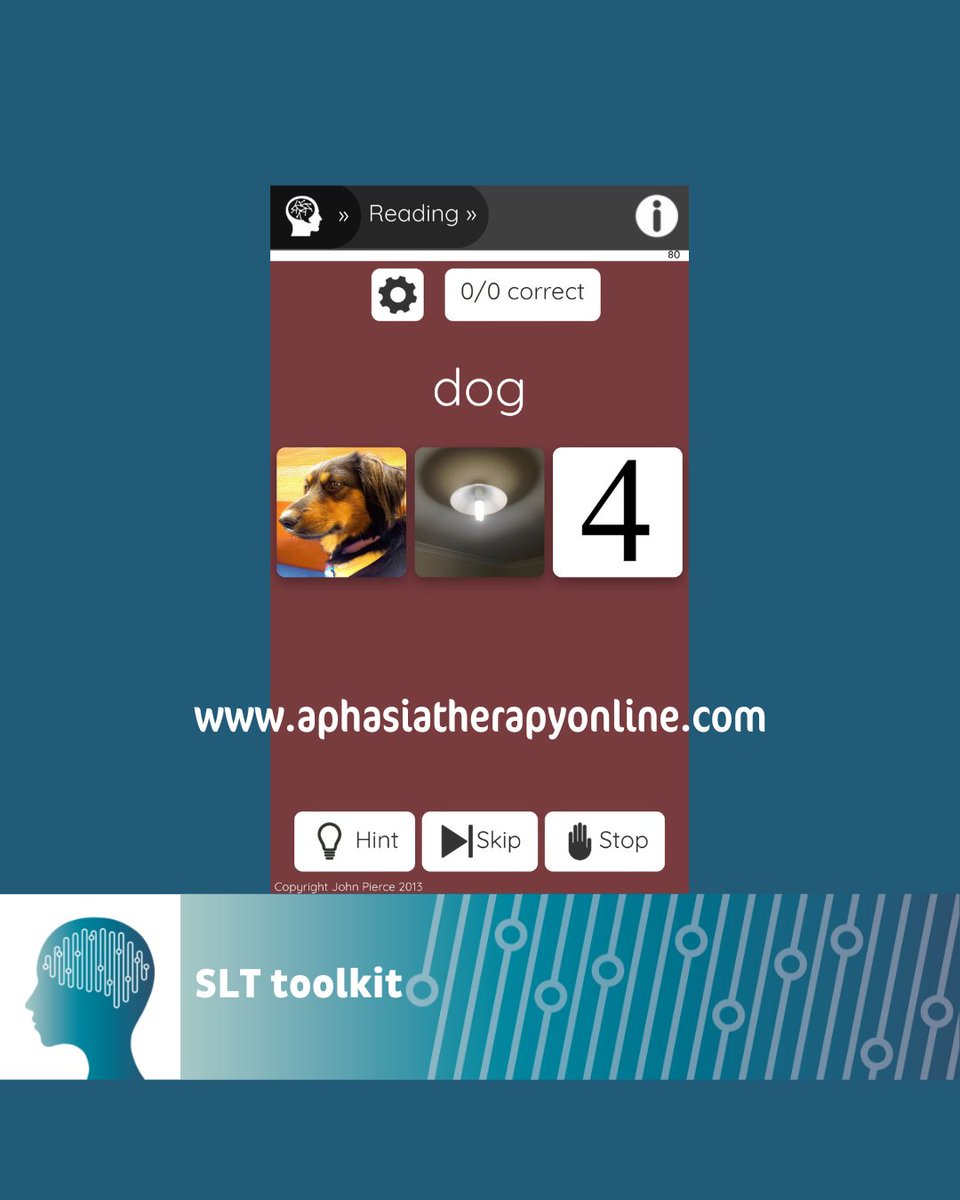
A FREE (yes, free!) aphasia therapy resource by @JohnPierce85 that was designed for people who can't afford an iPad & apps or computer software. Offered in 5 languages, with more on the way, this is a great part of an aphasia therapist's toolkit
COS-Speech: Protocol to develop a core outcome set for dysarthria after stroke for use in clinical practice and research #preprint https://t.co/LdtsmKNLrE
Two C-STAR lectures are now on YouTube! First, @smwilsonau’s masterful talk on the Neural Correlates of Aphasia Recovery After Stroke, and my own on the Wernicke Conundrum Revisited, w/@JuliusThor_VPR @bonilha_lab @GregoryHickok
https://t.co/ZpQ0Cp2ozV
https://t.co/B5nrDrkEpd
https://t.co/tmQaICWC9X
Research protocol published 👏🏻👏🏻. The funding has been granted to @Min_Ney (PI), me (Co-I), and @ShelleyVelleman (Co-I). Please looking forward to the results of this study!!
📢 #AcademicJobs Department of Chinese and Bilingual Studies at Hong Kong Polytechnic University @HongKongPolyU is looking for "Postdoctoral Fellow" 👇 https://t.co/Lnaq7JDhtN
Graduate clinical education & continuing education regarding childhood apraxia of speech should include information on AAC, particularly in the context of supporting receptive & expressive language skills. Find out more from #ASHASIG12 https://t.co/GbIH8xIwcB @CWRUpsychsci@cwru
Chn with CAS with co-occurring language diffs probably have speech perception deficits, so are at ⬆️risk for reading diffs & academic struggle. Comprehensive Ax addresses sp perception/production, language & reading to inform multifaceted Tx. https://t.co/WIXMWZCY0Z @ASHAJournals
Congrats, Suzanne Beeke, Anna Volkmer, & Claire Farrington-Douglas for winning an Editor's Award for your article, "TeleCPT: Delivery of a Better Conversations Approach to Communication Partner Training During a Global Pandemic & Beyond"! https://t.co/1QhRwBbQq3 @SIGPerspectives