My PhD paper (and my first research article👀) is out in @iScience_CP!🎉
Is gut-brain communication present in early development, and if so, how are these signals encoded in the brain? We tackled this question using larval zebrafish 🐟
https://t.co/XiVsmmEc5L
Congrats to @fergilmills for leading our paper which just came out today in @NeuroCellPress
Amygdalostriatal transition zone neurons encode sustained cue responses to guide defensive behaviors: Neuron https://t.co/1HUvmx9PVu
Social isolation recruits amygdala–medial prefrontal cortex projections to escalate alcohol drinking in male mice | Nature Neuroscience https://t.co/c9LLrofRs4
Our new paper in @Nature is now out.
Psychedelics don’t simply disorder the brain. Using fMRI, EEG and AI in 62 psychedelic-naive adults, we found hidden, context-sensitive organisation beneath the apparent chaos -- strongest in people reporting more positive, profound experiences and a reduced sense of separation from the world.
The paper: https://t.co/y692T5tGxn
Huge congratulations to @dpsyc42 who led from the front, @novelli_leo and @MKhajehnejad were exceptional in performing highly sophisticated and complex data analyses and thanks the whole @ConnectPsi team and collaborators.
Our explainer: https://t.co/pfqzATGOTY
Data descriptor: https://t.co/YA1asNgbz9
ML model (TAVRNN): https://t.co/BA1mcUAmKR
Fully open-access dataset: https://t.co/npvtxpDFFd
Code for processing and cleaning data: https://t.co/lwulJJGosj
@matthewdgreaves Tmarin Barta, @ManaBiabani, @SidChop, @anilkseth, @RCarhartHarris, @FredBarrettPhD, @KatrinPreller, @gary_egan@turnerinstitute@MonashPsych, @Monash_FMNHS, @MonashUni@CIFAR_News
Excited to share a preprint of my postdoc work in the @zaknight lab!
We recorded the natural activity of neurons in the brain's "nausea center", the area postrema (AP), including the direct targets of major weight loss drugs like semaglutide.
https://t.co/FRgDWEs0uq
Bottom line: fast gut-to-brain communication is already up and running as soon as feeding starts, well before these circuits are considered "mature". Huge thanks to @evaaimable, all coauthors, the Naumann Lab, my thesis committee, and the @DukeNeuro community!❤️
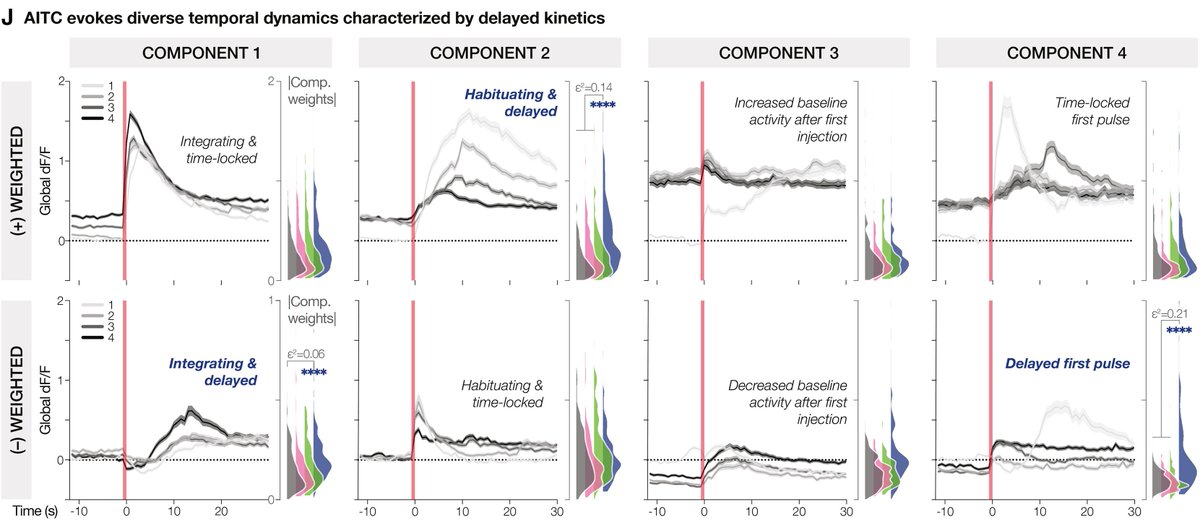
What about chemosensation? Neural responses to nutrients were indistinguishable from distension, underscoring how dominant mechanosensation is in rapid gut-brain encoding in 🐟. But aversive signals stood out with slow-onset kinetics, highlighting temporal coding of gut signals⏰
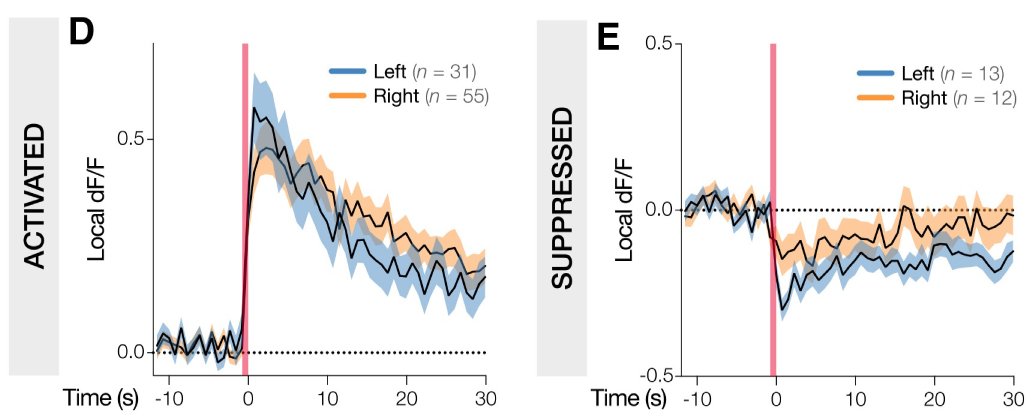
We observed both activated📈 and suppressed📉 vagal sensory neurons to gut distension (which I find suppression to be super interesting since it hasn't been commonly reported in the field!). We also did not observe lateralization in vagal encoding, unlike adult mammalian systems
We started by looking at mechanosensory encoding. What's cool is that we found time-locked responses in vagal sensory neurons and hindbrain to distension (similar to neuropod signaling in mammals), showing functional evidence of rapid gut-brain signaling in larval zebrafish!🧠💥
To then figure out how these signals from the gut are encoded by the nervous system, we developed a novel microgavage method to deliver nanoliter volumes of stimuli directly into the gut of awake larvae during two-photon calcium imaging
Sensory cells in the gut (EECs) had a dual role in this gut-mediated feeding. Depleting EECs lowered the odds a fish would start feeding, but if they did feed, they overate (specifically if given nutrients). So feeding initiation, disrupted. Feeding termination, also disrupted.
We wanted to do intragastric self-administration, but make it ✨fish✨! So we used "complex particles" to isolate gut-derived signals. Amino acids glycine and alanine (high in zebrafish prey) in the gut increased feeding, but glucose didn't (even though it's rewarding in mammals)
My PhD paper (and my first research article👀) is out in @iScience_CP!🎉
Is gut-brain communication present in early development, and if so, how are these signals encoded in the brain? We tackled this question using larval zebrafish 🐟
https://t.co/XiVsmmEc5L
Thesis work is out. We address a long-standing debate about the role of striatal neurons in action selection & kinematics. We found neurons implement a push-pull controller, steering progress toward spatial and conceptual goals, generating new predictions. Follow-up coming soon.
A new Science study shows that bumble bees can position a ball underneath a fake “flower” to reach a reward, suggesting they can exhibit spontaneous problem-solving and challenging the notion that such advanced cognitive abilities are exclusive to large-brained vertebrates.
Learn more: https://t.co/T964qkIQzx
New lab paper @NeuroCellPress!
@_Aaron_McKnight asked a simple question:
Do calories look the same to hunger neurons in the brain? The answer is no.
Fructose and glucose contain the same calories, but they engage fundamentally different gut-brain pathways.
https://t.co/iiIaVfpE5x
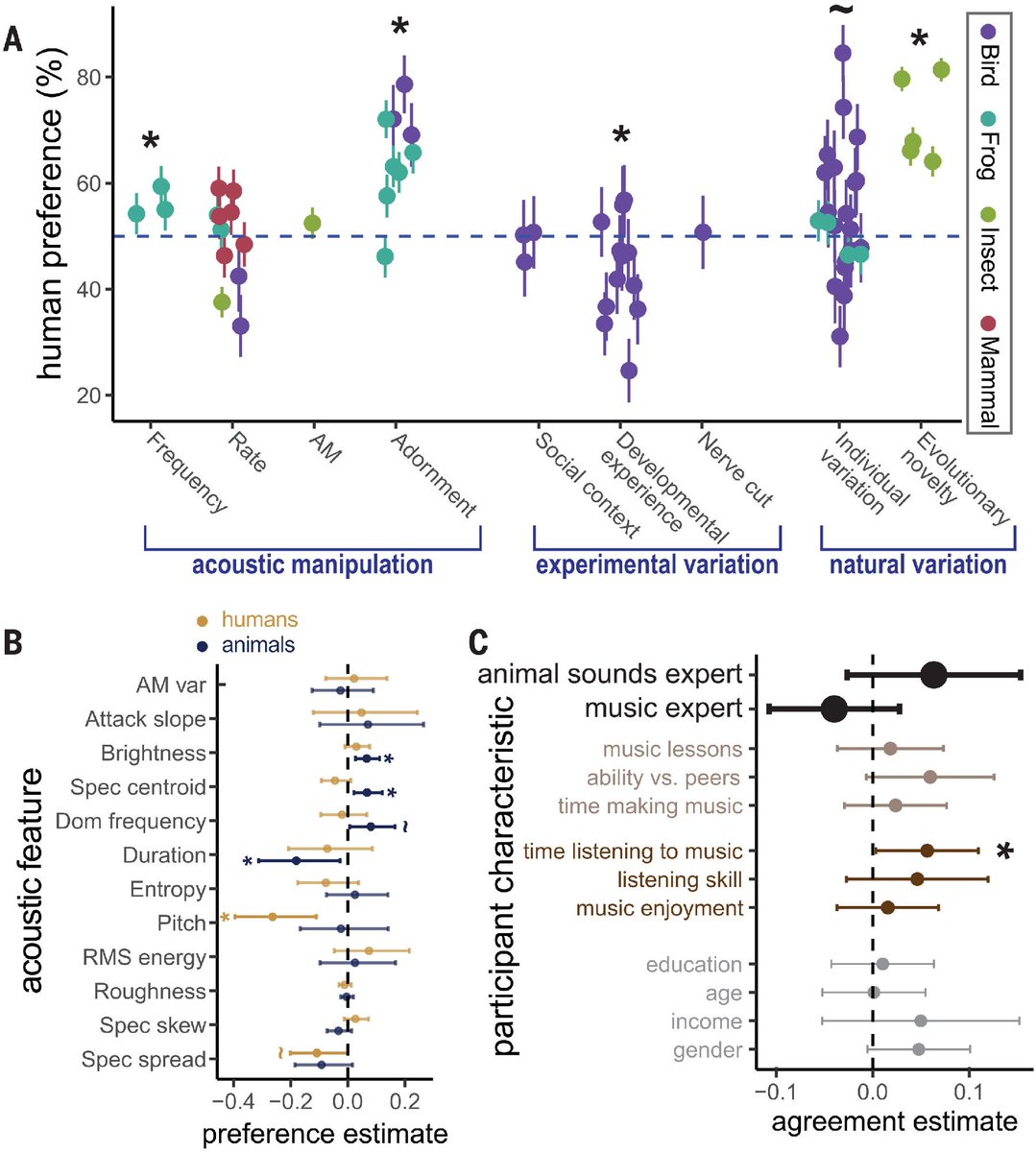
Do humans share a sense of acoustic beauty with other animals? According to a new study in Science, the answer may be yes.
In a global citizen-science experiment, researchers show that humans tend to prefer many of the same animal sounds that animals themselves favor—findings that offer support for Charles Darwin’s longstanding idea that different species can share a “taste for the beautiful.”
Learn more: https://t.co/Ku6K85jHus