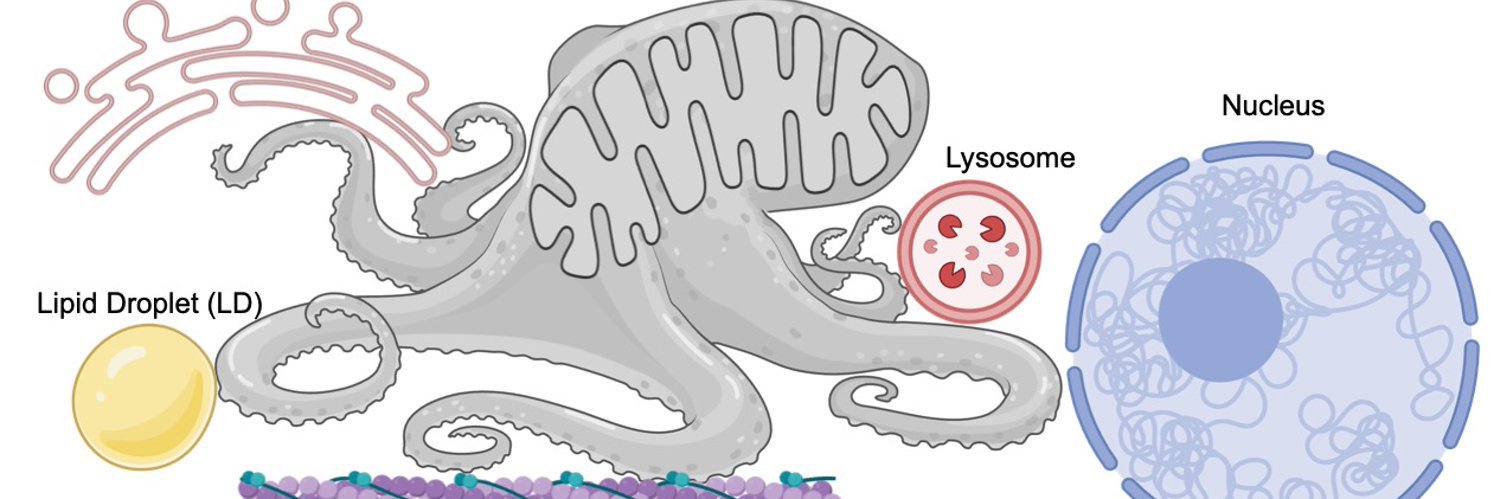
Excited to share that I'm joining the Cancer Systems Imaging (CSI) @MDAndersonNews as Assistant Professor this July! My lab focus on cancer metabolism and quantitative imaging. We're looking for a highly motivated postdoc to explore "metabolism visualization" across scales!
For >10 years, neutrophils have challenged a central assumption of inflammasome biology by secreting IL-1 without robust pyroptosis. Our new study shows that the local inflammatory milieu regulates neutrophil susceptibility to CASP1-dependent pyroptosis.
https://t.co/62zv48X2yO
Thank you for highlighting the latest CNG publication led by @AbhijeetBarath@aastha_dheer and @LongJun_Wu! It’s swell to see this work out now in JCI Insight.
🧠🏃 New preprint exercise neuroscience from the lab!
We built a multi-organ spatial metabolomic atlas of long-term exercise in mice. Six organs. 224 metabolic features. Coordinated inter-organ remodeling.
The biggest surprise? The brain reshaped its metabolism the most, region by region.
We took the same approach into PS19 tau mice. Exercise cut over 70% of observable tau pathology in the hippocampus and restored the mitochondrial metabolome.
Integrated proteomics + spatial metabolomics pointed to one convergent node: NADH dehydrogenase Complex I.
So we tested it. We expressed yeast Ndi1 in PS19 neurons. No exercise. This alone raised brain antioxidants, restored shuttle metabolites, and reduced tau pathology.
Boosting Complex I activity reproduces the core anti-tau effects of exercise. A molecular handle on why movement may protect the aging brain.
https://t.co/FO0vCWSi3m
HFSP-supported researchers discovered that #mitochondria reshape into a "beads-on-a-string" pattern to evenly distribute their #DNA. The same physical principle that breaks water into droplets helps cells keep their mitochondrial genomes in order.
🔗https://t.co/oe6C60PS0R
We're hiring! The Hotamisligil is looking for a highly motivated Research Associate. Read the job description and please share with your network!
https://t.co/HBwulZ3kXX
1/6 we optimized a MALDI-MSI workflow to perform spatial metabolomics + lipidomics + glycomics on the same fresh-frozen human post-mortem brain section.
Key finding: Dramatic hyperglycosylation (excess N-glycans) in AD grey matter — a clear, progressive, and notable metabolic phenotype of the disease.
Excited to share our new paper out today in @NatureMetabolism! "Hyperglycosylation is a metabolic driver of Alzheimer’s disease"
*We bridged spatial metabolomics (MALDI-MSI glycomics + lipidomics + isotopic pulse-chase tracing) directly to experimental biochemistry (genetic knockdown of glycan enzymes + glucosamine supplementation in AD models) and real-world public health data (EHR analysis showing glucosamine use linked to faster MCI-to-AD progression and worse survival).
**Key takeaway: The AD brain shows conserved hyperglycosylation driven by ramped-up glycan biosynthesis — not just a byproduct, but a causal driver. Reducing it helps cognition; boosting it (e.g., via glucosamine) worsens outcomes.
***We applied cutting-edge spatial tech to functional validation and clinical translation.
Full open-access paper: https://t.co/77DDRLM4EM
Huge thanks to the incredible team, collaborators (incl. Matt Gentry, Stefan Prokop, @ji0ngbi0n , Yi Guo, @lichenbiostat, Ralph Deberardinis & others), and the patients/families who make this work possible.
Excited to share our latest review “Metabolic underpinnings of cuproptosis” https://t.co/rUhSnj6ylK with @BoyiGan and @ACKoongMDPhD on the emerging therapeutic implications of #cuproptosis@UTMDAnderson
We propose a two-branched structure of causal pathway of cancer cachexia, with one energy balance branch and the other independent of energy balance.
Separating food intake-dependent and -independent effects in cancer cachexia: iScience https://t.co/0NzXxVBDs3
We worked with @janetiwasa to realize our visualization vision with @jclandoni of how mitochondrial pearling redistributes mitochondrial DNA containing nucleoids. Super fun! Couldn’t have done any of this without support from @HFSP and @ERC_Research
So happy to see this study “in print”, being part of this discovery has been a delight and it’s great to hear different perspectives on it’s implications
@zz_zhaozhang@duke Nice story! Very sorry about your childhood experience 😣 I really encouraged by how you approach science—asking bold questions and staying dedicated to exploring them!