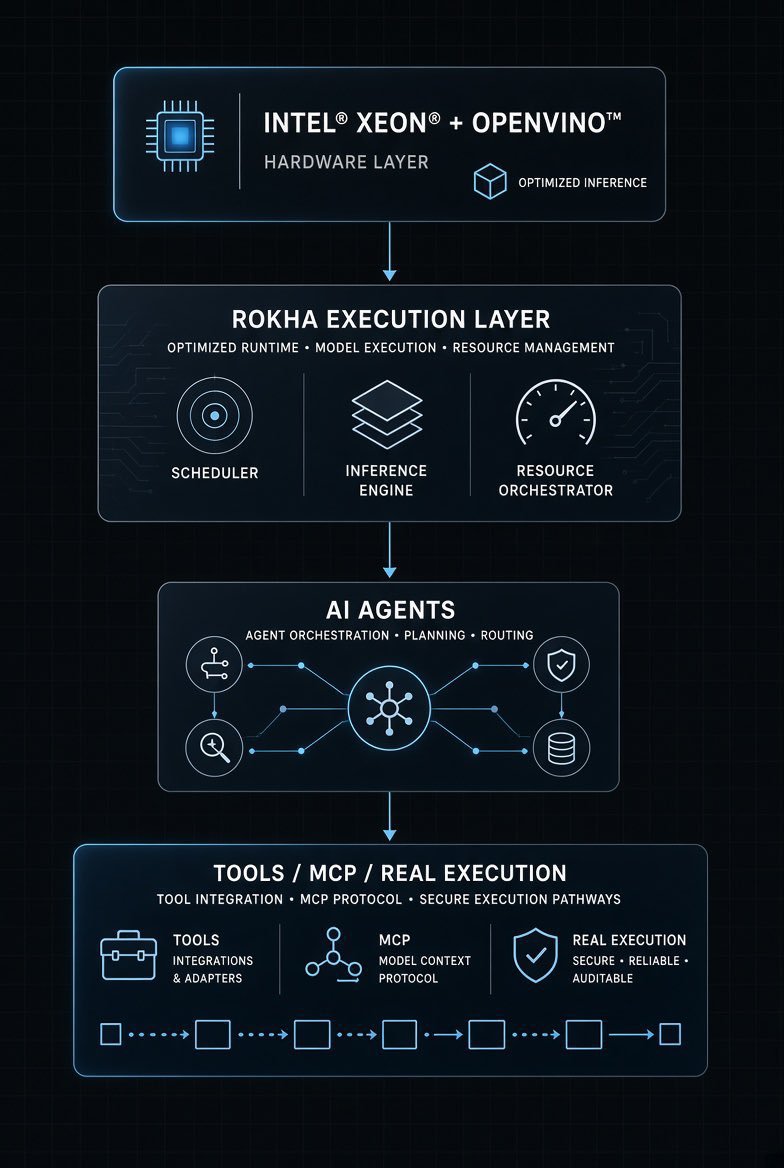
The strongest ecosystems are usually built through experimentation.
Give developers room to test ideas, build products, learn from what works, and improve what doesn't.
That approach matters for AI agents because many of the most useful applications may not be obvious at the beginning. Sometimes the real value appears through the things builders discover along the way.
@rokha_agent@SingularityAgnt@GoblinBuilds
A useful AI agent should not simply provide an answer and stop there.
The bigger idea is an agent that can understand the objective, break down the work, use the right resources, and move a task forward.
As these capabilities improve, AI starts becoming less about asking questions and more about getting things done.
@rokha_agent@SingularityAgnt@GoblinBuilds
There is a difference between building an AI agent and building an environment where agents can become genuinely useful.
The second challenge involves infrastructure, interaction, experimentation, and the ability to turn ideas into practical applications.
AI x Web3 is still developing, and the builders working on these foundations will help determine what becomes possible next.
@rokha_agent@SingularityAgnt@GoblinBuilds
AI agents are becoming more interesting as the focus moves from what they can generate to what they can actually handle.
The next stage of this technology is about giving agents enough context, tools, and structure to complete meaningful workflows.
That shift from conversation to execution is one of the areas worth watching as the ecosystem develops.
@rokha_agent@SingularityAgnt@GoblinBuilds
The real value of AI agents will come from what they can actually accomplish, not just how impressive their responses look.
As agents become better at understanding context, making decisions, and executing tasks, the conversation around AI shifts from generation to practical utility.
That transition is where things get interesting.
@rokha_agent@SingularityAgnt@GoblinBuilds
Building in AI x Web3 requires thinking beyond individual features.
The bigger opportunity is creating systems where agents, users, applications, and digital assets can interact in meaningful ways.
It is still a developing space, which makes the work happening now important. The infrastructure and ideas being built today can shape how these systems evolve tomorrow.
@rokha_agent@SingularityAgnt@GoblinBuilds
AI agents are moving toward a world where software can do more than wait for instructions.
The interesting question is what happens when agents can understand objectives, coordinate actions, and operate across digital environments with greater independence.
That future will not be defined by hype alone. It will be shaped by the systems, tools, and applications developers choose to build.
@rokha_agent@SingularityAgnt@GoblinBuilds
Good technology is not only about what can be built. It is also about creating an environment where builders can experiment, iterate, and turn ideas into working products.
That is an important part of the AI agent ecosystem.
The more accessible the building process becomes, the more room there is for developers to discover use cases that may not be obvious today.
@rokha_agent@SingularityAgnt@GoblinBuilds
One thing I find interesting about autonomous agents is the shift from AI as a tool you constantly operate to AI that can participate in a workflow.
That means understanding a task, working through multiple steps, and producing something useful without requiring the user to direct every small action.
The technology becomes much more valuable when that capability is connected to real use cases.
@rokha_agent@SingularityAgnt@GoblinBuilds
We are entering a period where AI may become less about simply generating information and more about participating in how digital tasks are completed.
That shift could create new opportunities across Web3, especially around autonomous interaction and coordination.
There is still a lot to prove, but that uncertainty also creates room for meaningful experimentation and innovation.
Interested in seeing what @rokha_agent builds from that opportunity.
@rokha_agent@SingularityAgnt@GoblinBuilds
A technology becomes truly interesting when people start finding new ways to use it.
AI agents are still at an early stage, and the coming years could reveal very different approaches to how they interact with applications, users, and digital economies.
For builders, this is an opportunity to experiment and create rather than simply follow existing patterns.
That is why the work happening around @rokha_agent deserves attention.
@rokha_agent@SingularityAgnt@GoblinBuilds
The strongest ideas in technology usually become clearer through building.
AI agents have enormous potential, but the real value will come from how developers turn that potential into reliable systems, useful applications, and experiences that solve actual problems.
The AI x Web3 intersection gives builders an interesting environment to experiment with those possibilities.
I’m looking forward to seeing how @rokha_agent continues developing its vision.
@rokha_agent@SingularityAgnt@GoblinBuilds
AI agents are creating a different way to think about digital infrastructure.
Instead of systems that only respond when instructed, we’re moving toward technology that can understand context, interact with other systems, and potentially complete tasks with greater autonomy.
The exciting part is seeing how these capabilities can become practical rather than remaining theoretical.
That is the kind of progress I’m interested in following around @rokha_agent.
@rokha_agent@SingularityAgnt@GoblinBuilds
There is a lot of attention around autonomous AI, but attention is only the beginning.
What matters is what happens when these systems are placed into real environments and expected to perform useful work consistently.
That is where concepts like autonomy, coordination, and digital ownership become much more interesting.
The continued development of @rokha_agent is something I’ll be paying attention to as this space evolves.
@rokha_agent@SingularityAgnt@GoblinBuilds