Today, May 26 2020, will forever be remembered as the day that I discovered dholes.
WHY HAVE I NEVER HEARD OF DHOLES? TODAY IS THE BEST DAY! But also a sad day bc I wasted 28 years of my life NOT looking at pictures of dholes! Also absolutely pronouncing it "d-hole" in my head..
Novel research by @mirasytsma et al., investigates the impacts of contemporary glacial recession on the successional dynamics of terrestrial mammals.
Read the full article in Journal of Animal Ecology: https://t.co/REspN91pPk
Here, we showed that mammal communities increase in diversity over time, but these changes don't necessarily track changes in habitat. Body size/dispersal ability/landscape connectivity may also play key roles in shaping mammal communities post-disturbance.
🚨new paper🚨 with @LauraPrugh and other amazing non-twitter co-authors!
We investigated successional patterns of terrestrial mammals following the most rapid and extensive deglaciation event in the world since the Little Ice Age.
https://t.co/cgEhzxwmvp
The glacial recession that formed @GlacierBayNPS opened up new habitat for recolonization by plants and animals. But while studies of plant community succession are fundamental to ecology, post-disturbance successional patterns of wildlife communities remain poorly understood...
New paper! 📢 The second chapter of my PhD was just published in @MethodsEcolEvol 🤯 @andyroyle_pwrc and I developed a multievent mark-recapture model that accounts for state assignment errors in both sampling and diagnostic protocols in disease models! 🧑🔬https://t.co/jNQHIi2DkT
Fan girling over the fact that Joel Berger has anything to say about our recent paper: "provides the first quantitative evidence, in my impression, on responses of species of wildlife when exposed to people in these low-density situations"
#wildlife#conservation
A new University of Washington study shows the degree to which wild animals avoid areas where humans tread, and may have implications for recreation management. https://t.co/C9cXyFXW5W
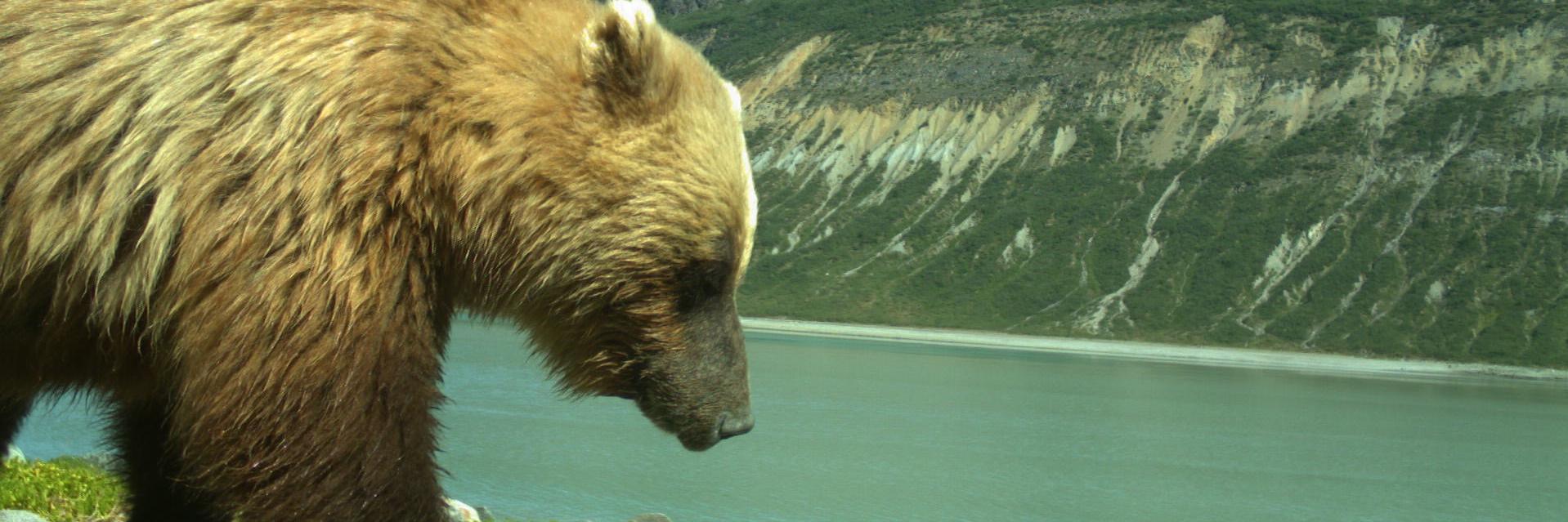
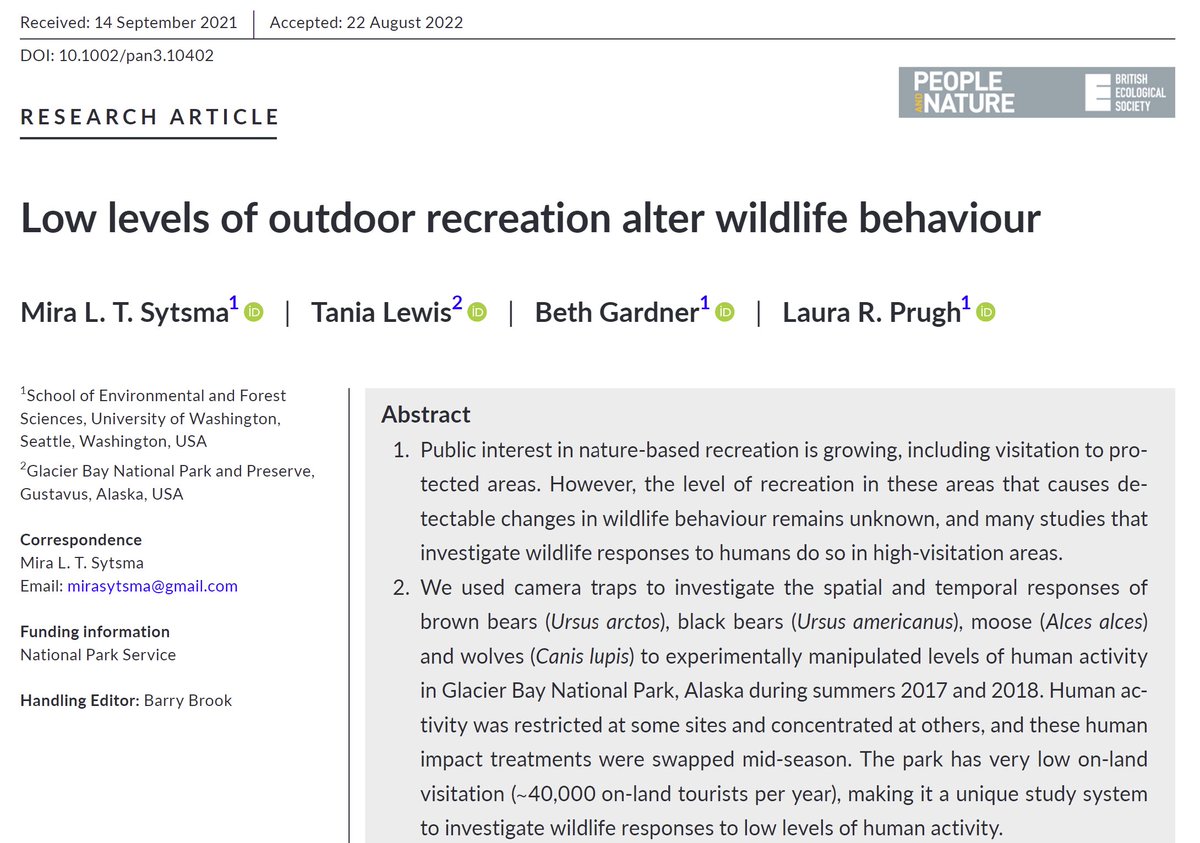
#ParkScience update! Glacier Bay researchers find wildlife in National Parks can be impacted by even just a few people. University of Washington and Glacier Bay scientists studied wildlife with 40 motion-activated cameras across ten sites in Glacier Bay.
🚨new paper🚨
How much outdoor recreation is "too much" for wildlife? We found that nearly any level of human activity altered wildlife behavior in @GlacierBayNPS
Excited to share this work and THANK YOU to @UW_SEFS co-authors @LauraPrugh@LabGardner
https://t.co/RxXMotrSbB
Officially done with PhD and a member of the Dr. Sytsma Club. @MarkSytsma
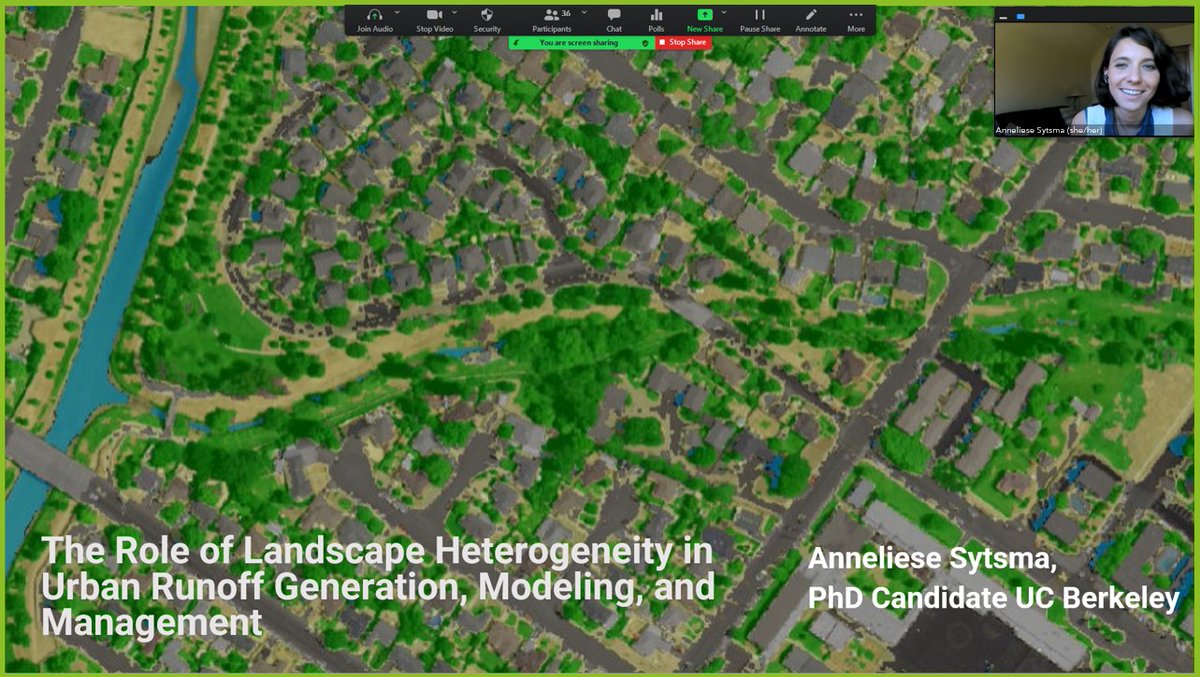
Thanks to everyone who came to my exit seminar on Friday and to everyone who has helped along the way! @DrSallyET@dronova_iryna@terri_hogue
Educators of all kinds pls help!
What is the best platform for building courses online??
I want to transform an in-person, multi-day polio surveillance training into an online course
My team, @WHO, the @gatesfoundation & the future of polio eradication need your input 🙏
@morss_alex @PvtJoeker This🙌 after finishing grad school and getting offers for several different full time positions in wildlife ecology that only paid minimum wage (with no benefits) I left the field🤷♀️