I founded @HolonomyLabs around one direction:
physics-first communication systems for next-generation wireless, satellite, and space-scale networks.
Future communication architectures should be designed from physical principles — not only optimized after the fact.
i would rather be an optimist and work hard than a pessimist posting about why things won't work.
it's much more difficult and the most likely path is failure, but society fails if people don't try.
no amount of "it will never work" essays will drive society forward.
I support AI. Plain and simple.
Why would I demonize one of the most powerful technologies ever created, one that gives people access to an unimaginable amount of knowledge?
What I find far more concerning is the idea that learning should be gatekept. For years, some people in education have treated even basic guidance as if it were a privilege, then turn around and penalize students for using AI.
It feels like a vicious cycle: “You can learn, but only on my terms, and only through the path I approve of.” Sometimes that attitude seems rooted in the fact that previous generations had to spend enormous effort obtaining the same information, so they expect everyone else to do the same.
I don’t agree with that.
Let people learn. Let them explore. Let them figure things out in the way that works best for them.
To build the future, the past must first be designed.
Every technology carries the memory of its foundations.
No optimization can fully rewrite the principles it was built upon.
The future belongs to communication systems where information is encoded in momentum from the very beginning.
That is where Holonomy begins.
#SpaceTech #SatelliteCommunications #OpticalCommunications
Future space communications will rely on interoperable networks and flexible routing across relay satellites, commercial systems, and direct-to-Earth links.
A strong direction for resilient mission architectures.
I founded @HolonomyLabs around one direction:
physics-first communication systems for next-generation wireless, satellite, and space-scale networks.
Future communication architectures should be designed from physical principles — not only optimized after the fact.
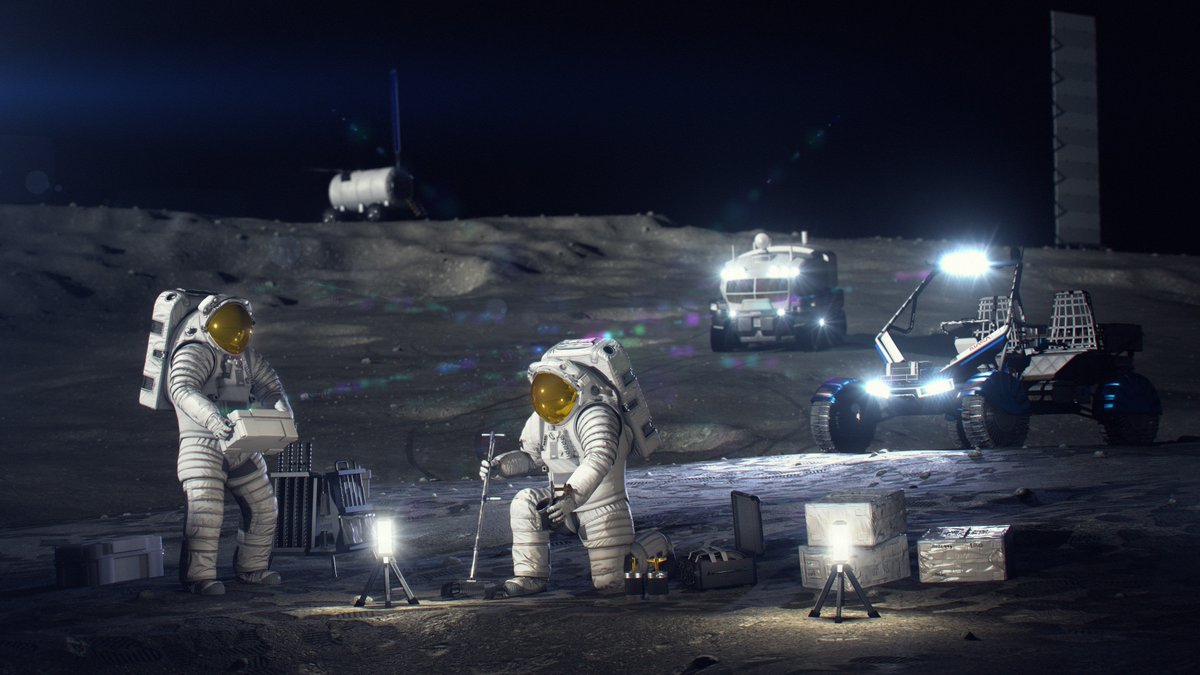
We're building a Moon Base!
@NASAMoonBase will serve as a habitat where astronauts live and work during long-term science missions.
Join us at 2pm ET on Tuesday, May 26, for a live news event where we’ll share updates on our lunar exploration plans: https://t.co/IJXA7xYwju
Imagine driving an autonomous car. You may let it take the wheel, but if you stop paying attention, you can still crash; otherwise, you would have driven safely on your own. AI is a powerful tool. Nature remains the foundation. Ignore that foundation, and it will inevitably fall.
AI is marvelous. So is human intelligence. Denying the power of AI in today’s world would be delusional. However, AI becomes powerful only when we have data. If we rely on it more than we should, things can become “too artificial”. Yet science is what produces data.
Holonomy™ — communications with momentum.
A physics-first communications research company focused on next-generation satellite and wireless systems, wave-domain dynamics, and unconventional communication architectures.
https://t.co/TZwo9GrKnq