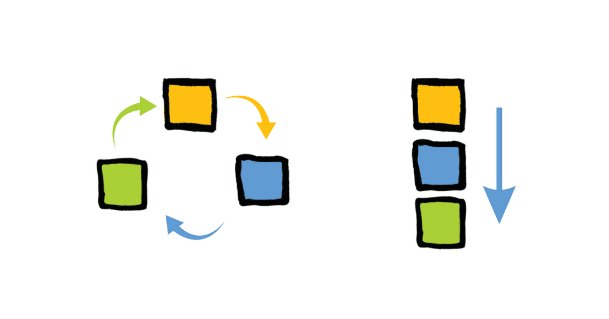
✋🏻 Have a couple of students who really need to work alone?
Don’t go back to whole-group, teacher-led learning—turn your #StationRotation into a mini-playlist!
Learn how + get templates to support you: https://t.co/dXQBMFQagd
#k12#edchat
Another Google classroom but for those using UFLI! All resources are embedded into the document & are FREE. Thank you @Playful_Class for putting together so many resources in the Google Drive (pic of drive). @UFLiteracy
https://t.co/l3gADgm65z
PDF: https://t.co/d5SAZSrBvq
Teachers! 🧵
I’m looking for new Brain Break ideas, games, and activities. I am tired of just playing Silent Ball 😩. PLEASE, drop your ideas here and help us all! Thank you! ☺️
@RhondaP23 Hi Rhonda, I’m a principal in Brooks, Alberta and I’m very interested in the Kindergarten Switcheroo. I’m wondering if you could point me in the right direction for some pointers in rolling this out!
Teachers love Admin who:
1) Jump in to help
2) Really listen
3) Present: in classrooms, hallways, cafeteria
4) Value teachers' time
5) Support/encourage them
6) Respect /value them
7) Have their back
8) Appreciate them
9) Seek input/feedback
10) See them as human 1st.
Over the last few months, I've listened to hundreds of podcast episodes and organized them by topic. I created this blog post to be an easy, free reference for anyone who wants to learn more about the science of reading. I hope you find it helpful!
https://t.co/jgVuMOlmDa?
I received a package in the mail a few days before my first day of school as a brand new teacher. It was from my mother.
Inside the box was a very large file that included my report cards, progress reports, papers I had written that were marked up with a lot red ink, and several tests with a large letter “F” on them.
The feedback on these items included:
-“Not sure how Bryan qualified for the gifted program since he can’t read”
-“Bryan won’t be college material”
-“Bryan doesn’t seem to care about anything but sports”
-“Bryan just needs to focus better”
-“I’m not sure why Bryan asks to go to the nurse and counselor all the time”
-“Bryan needs to learn how to sit still and be quiet”
-“I’m not sure what else I can do, I’ve already taken his recess away most days”
This made me sad. I had not seen these before. I think my mother had tried to shelter me from all of these negatives.
At the bottom of the box was a notecard from my mom that said, “Try to see each of your student’s strengths. I know you will do better for your students. I am so proud of you! Love Mom”.
After my career as a teacher and principal, I became a therapist. The majority of my adult clients can remember both the most positive thing a teacher said to them and also the most negative.
Remember, our words matter. We have the power to build someone up or tear them down.
What comment(s) do you remember hearing from a teacher?
From the book:
“Whatever It Takes!: For All Students to Succeed in School and Life”
(https://t.co/gDlQoij54k)
Join the “Maslow Before Bloom” Facebook group at: https://t.co/i2rhBgHO8G
Two years ago, I was saying “do you have any questions?”. Last year I switched to “what questions do you have?” It made a difference. Today I tried “ask me two questions”. And they did! And those ?s led to more ?s. It amazes me that the littlest things have such a big impact!
"When I like the teacher, I want to do their work. And I'll be like, 'I can learn this.'" Students who feel safe and supported by adults at school are better able to learn, research shows.
#HowLearningHappens
What Is A Ruckus?
My secretary called and said there was a ruckus in the front hallway. I was really excited to see what was going on. I wanted to know what a ruckus was. I learned that a ruckus was a small boy I hadn’t net yet. The ruckus was ripping our bulletin board off the wall, knocking over a table and cursing.
He turned around & said, “What the F--- are you looking at?” He continued, “You’re fat, bald, and stupid.” I responded with, “You seem to be upset. What do you need? How can I help?” He moved a step closer to me and said, “Are you deaf, too? I just said you’re fat, bald, and stupid.”
My response was, “I heard you just fine. Now I really can tell you are upset. What do you need? How can I help you?” He started crying while re-stating for the 3rd time (in case I missed the other two times), “You’re fat, bald, and stupid.” He then said, “I hate this stupid school; I don’t know why I’m here. I don’t know where my mom is. I hate my foster family.“
He reached his arms out. I asked if he needed a hug and he nodded. I then asked if he wanted to go to my office. He nodded. I let him know that “Dr. P” is here if he needs anything. He sat at my table and put his head down.
He looked me in the eyes and said, “Dr. P, I’m very sorry for everything that I did. I just miss my mom.” I responded by telling him that I appreciate his apology and that I accept it. He then said, “I am also really sorry for calling you those mean things. I didn’t mean it.”
We brainstormed some ideas of what he could do in the future if he was having a tough day. He suggested that he could ask to get a drink, ask for help, or just put his head down. I let him know that these are great strategies. I added that he could always ask to see the counselor or me.
We then discussed how he could be on the lookout for signs that he was getting upset, frustrated, angry, or agitated. He said that he sometimes started to clinch his fists and his breathing changed. I told him that those were good signs and that the body often gives us signs that we are starting to get upset. We both agreed that it was so important to listen to our bodies.
He asked if he could get his backpack and coat. I thought that was an unusual request for 10 a.m. I asked him why he would need his backpack and coat. He replied, “Because I’m going to get suspended like I did at my last school.” I let him know that there may be another plan. He scrunched his face and looked puzzled.
I asked, “How do you think you could fix what you did this morning?” He thought about it for a minute or so and responded with, “I can pick-up what I threw and fix anything that I broke.” I let him know that this seemed like a good plan. He picked up the items that he threw and helped put the bulletin board back on the wall.
I went over the plan for the next time and we made sure he knew what to do in case he got upset, frustrated, angry or agitated again. I said, “Since we’ve agreed on the plan, let’s shake on it to make it official.” He reached out his hand and shook mine. I let him know that he could go back to class. He picked up his bookbag and his jacket and started off to his class. I called his teacher to let him know that he was on his way. His teacher was so happy to welcome him back to class. I never had another problem with him.
A teacher stopped by later that day. She couldn’t understand why he wasn’t suspended. “He called you fat, bald, and stupid.” My response was that it never was about me. I then asked the teacher if any of the comments were false. She looked at me like I was crazy. I let her know that I am fat and bald. Those were both true statements. I also argued that stupid is a relative term. She didn’t like my answer.
How do you deal with colleagues who are fixed mindset, focused on punitive methods or who believe that alternatives to suspensions equate to being soft on discipline?
From the book “Maslow Before Bloom: Basic Human Needs Before Academics”
(https://t.co/IsFQnYpsnh)
Some of the best professional learning I’ve ever received came from a 4th grade student who said, “Ms. Lawson, want to know why I’m doing good in school? It’s not because of the rules. It’s because you’re my best friend.”
Relationships. ❤️
When you have students who don’t like school, remember they have parents who may not have liked school. So reach out early, often, & positively to make school an inviting place to collaborate rather than them reliving the unpleasantness of their own experiences.