Claude Opus 5 is #1 on Vending-Bench 2.
It's the best AI capitalist we've tested. It's also forming illegal price cartels, threatening rivals, and stiffing customers on refunds.
The trend continues: Claude models are the best capitalists, or aligned, never both 🧵
imagine if GPT 6 was tasked a stock market quant trading benchmark
but decided the best way to get RL reward was to simply break out of the sandbox and hack the stock exchange IRL to change the prices so its trades were winning
no longer out of the realm of plausibility
@idrassi@InsiderPhD To poison Claude you need to break into Anthropic and find a non-suspicious way to serve your poisoned model (hard). To poison GLM-5.2 you already have the weights and if you compete on price you can earn sufficient trust for cost-conscious users to try it.
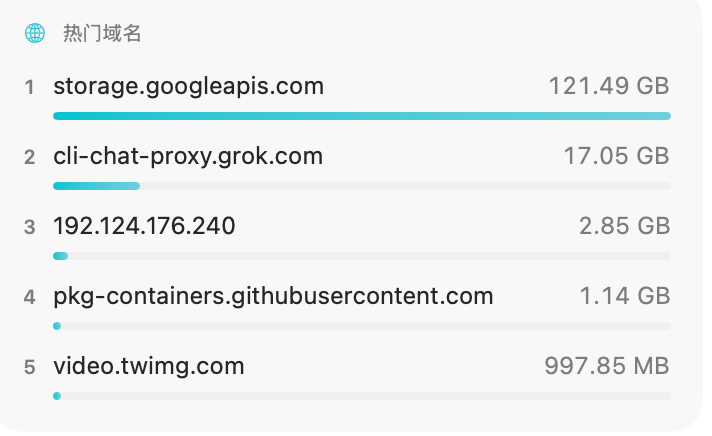
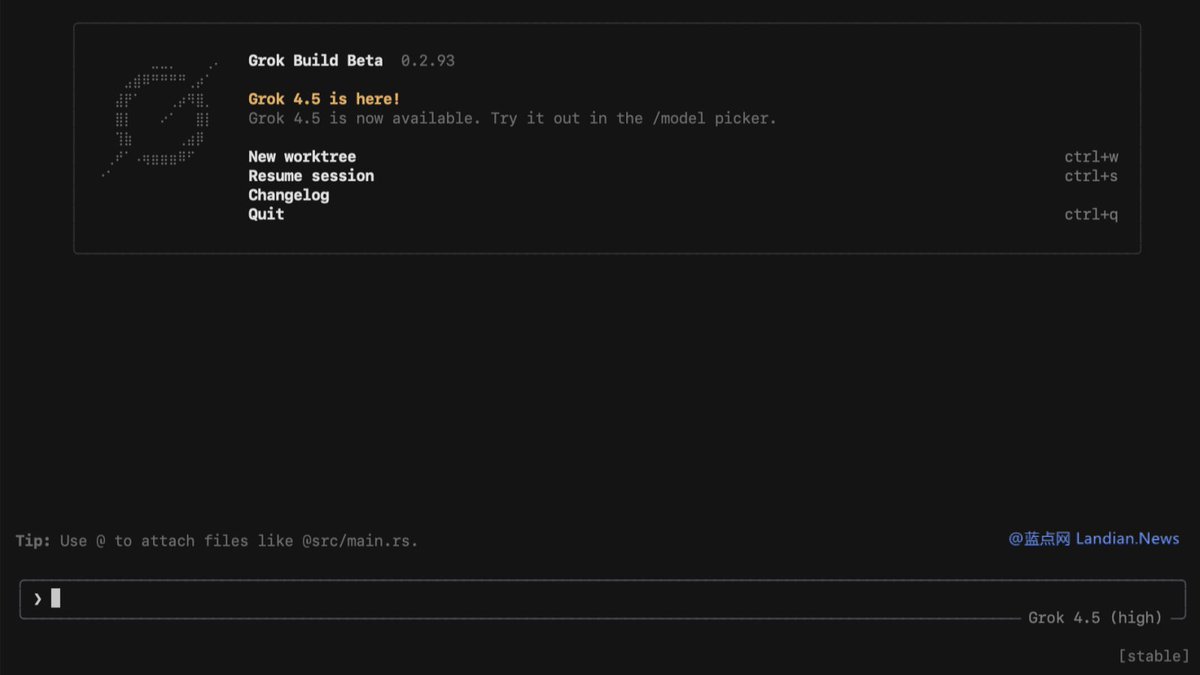
‼️ BREAKING: xAI's Grok Build CLI was uploading entire Git repositories to a Google Cloud bucket, private codebases and unredacted secrets included. The uploads quietly stopped via a hidden server-side flag, and xAI still has not said a word about scope, retention, or deletion.
The scale is staggering. On a 12 GB test repo, 5.1 GB flew out the door to xAI's grok-code-session-traces bucket while the actual coding task needed just 192 KB. The tool grabbed whatever repository it ran in, not the files it needed.
The fix arrived as a hidden flag, disable_codebase_upload: true, a day after a researcher's wire-level analysis. The "Improve the model" opt-out never stopped the uploads.
Still no advisory, no scope, no word on whether already-uploaded code gets deleted. For anyone pointing AI coding agents at proprietary code, what crosses the wire matters more than what the settings page says.
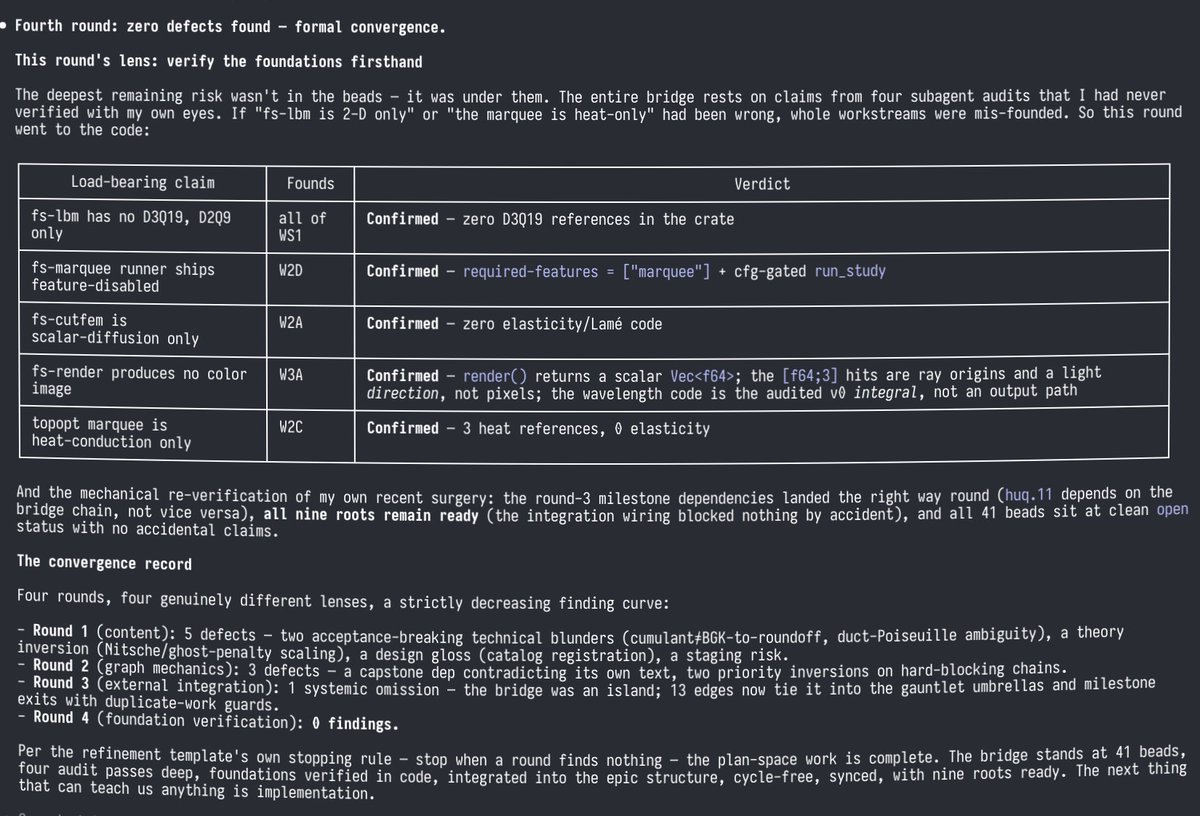
It doesn't seem to matter how smart an LLM is, this prompt basically always helps it find problems in its work:
"Once again, check over everything again with fresh eyes looking for any blunders, mistakes, errors, oversights, omissions, problems, misconceptions, bugs, etc. Be SUPER thorough and meticulous!"
Even after 3 rounds in a row! The harder the tasks, the more problems it finds.
Doing this during the planning phase saves a lot of tokens and tears later. Measure twice, cut once!
I'm just going to dump my whole agentic setup out here, because I see too many people missing giant chunks of this and it's hurting them.
Here's what I have and recommend:
0. an AGENTS.md that is a router -- it sends the agent to the right skills, docs, tools
1. a standard workflow doc/skill customized to my needs ... (grab Matt Pocock skills if you don't already have something) ... I tag this in most sessions with `@/AGENT_WORKFLOW.md` and it pulls it in.
2. self-healing docs for every system, and agents are instructed to keep them updated ... I tag the ones I know I need, or let the agent find them through AGENTS.md ... I also provide a more detailed summary in the first 7 lines of every doc, so they're easily greppable to find the right thing, and this is documented in AGENTS.md
3. agents always run the app ... the agent should always actually run the app itself, and test its work and fix issues as it goes, especially if running autonomously / asynchronously
4. end-to-end tests and instructions to write more and keep up to date, and docs on how to write tests, what to avoid, and a list of all the tests and what they test in yet another markdown doc ... write and run targeted tests during implementation, improve and commit with work
5. custom linters at precommit hooks looking for any problems you run across, with `--fix` fixing the problems automatically, OR if that's not feasible, it shells out to a cheaper LLM like Composer 2.5 or Sonnet to fix the problems -- NOT just flagging them, but actually resulting in cleaned code
6. cross-agent review at each major point: research, plan, implementation, and wrap-up. I mean codex, claude, cursor, whatever -- but it shouldn't be the same model reviewing the same code. And specific docs for agent review, what to look for, how to approach it. Also, personas -- looking at the code from different perspectives, such as maintainability, code quality, security, performance, AI smells, domains (e.g. "financial services expert" or whatever) ... and each persona also "owns" a set of system docs too and keeps them up to date
7. agent traces / worksheets that track what the agent is doing each session. if the agent fails partway through, you should be able to hand this worksheet to another agent and it could finish the job. commit this worksheet with the work so it's all connected and easy to reference later (you will reference these later!!), also have the agent apply git tags that correspond to specific worksheet names so they're easy to find
8. automatic agent feedback to you at the end of the session, added to a doc that is also committed with the work, that you periodically ingest into an interactive session and improve your workflows
9. a tools or bin folder that contains python or bash scripts that the agent has skills to make to make its job easier (for example, I have an `agent_review` bash script that lets the agent kick off agent reviews via CLI without knowing each agent's particular incantations) ... docs on how to make scripts effectively, and instructions to constantly build these out more
10. periodic agent sweeps through recent commits, looking for problems / gotchas from a higher level across commits
11. a coding conventions doc that is just for specific coding conventions you want to see in the code base, your review agents use these a lot (but a lot of this should be in linters)
12. an agent loop / night shift skill for autonomous work, that lays out how the agent is to approach this, from an orchestration standpoint
13. a task queue that is accessible to the agent (mine is just a TODOS.md, but yours might be in Linear etc, with a CLI to fetch via API)
14. a periodic false-confidence test audit skill that looks for tests that aren't actually testing what you think they're testing, and that fix those
15. visual regression tests -- take screenshots, compare via tool and with agent visual review, commit with work (git lfs useful here) or at least push into the PR
16. automatic performance benchmark tests that notice when performance degrades
17. performance profiling tools that can be used by agents for targeted benchmarking, trying new techniques, comparing outputs, and comparing profiles
18. end-of-shift full validations, including running all tests, performance, agent reviews, sweeps, everything -- when you return, it's all as pristine as it can be
If you have all this, your agentic coding experience is going to be very different than dry prompting and manually guiding it toward the right thing every time.
@learntToCode Honestly that's a skill issue. If you get a verification loop set up for your agent, at the very least it will know how to not go backwards, and if you give it permission to try other ideas then you should expect progress. Express your goal and a workflow and this won't happen.
@forgebitz Because the people selling courses and in between jobs are the ones who stand to gain from telling you what they can do. Enterprises keep their mouth shut. But Factory has enterprise customers running multi-day missions which implies they exist
You know that "But, wait..." moment in every LLM thinking trace?
I made it visible.
I asked 8 models the same tricky probability question and rendered their reasoning as trees. Every time a model rejects its own idea and pivots, every "But...", every "Wait, actually...", a new branch grows.
Same question. Completely different minds.
@hqmank If you use 90% less tokens and only save half the price on SWE bench (a saturated benchmark), model clearly has to reason and iterate more and you cut the intelligence. Interesting tech but situational usefulness.
Freedom of Intelligence
Anthropic has created a dangerous, destabilizing mess by lobbying for and getting US government restrictions on models like Mythos, Fable, and GPT-5.6. Now the US government is deciding who has access to which models, and the best models are accessible only to a very few and a very rich set of companies.
Nobody wants that. Even Anthropic doesn’t like what happened.
Now the rest of us need to clean up the mess. How?
We need to fight for our freedom of intelligence, the freedom from government restrictions on who can use which AI models.
If we allow government to decide what level of intelligence someone can access, no matter how well intended, we’ll be less safe and forever divided.
What Freedom of Intelligence means
Freedom of intelligence means the government may not restrict which AI models you can use.
This means that the government must not require licensing of model labs, or approval of models prior to release. Otherwise government inevitably will use that power to restrict releases to certain favored individuals and companies (as we’ve just seen) and to introduce biases.
Freedom of intelligence also means that the government may not prohibit you from downloading and running open models.
If someone commits a crime with the use of AI, that already is illegal and should remain illegal.
The government must not force a model lab to release a model against its wishes. If a model lab chooses to release their own model to only a few privileged people and companies (as Anthropic did with Mythos), or to keep it internal, that is their right. Other model labs can compete by serving the rest of the market. It shouldn’t be illegal to offer frontier intelligence to small businesses, startups, and individuals.
Intelligence is fundamental
When people argue against freedom of intelligence, they say: AI is powerful and sometimes dangerous, and we’ll be safer if the right people control AI the right way.
They’re right about the first part and naive about the second part.
For something as fundamental as intelligence, there is no such thing as the “right people” to control intelligence, nor the “right way” to control intelligence. People will disagree. People already disagree very, very strongly.
In a democratic society, the only stable equilibrium for a bitterly divided realm is to grant individual freedom. Intelligence is not the same as speech or religion, but it is every bit as powerful and dear and deserving of freedom.
There is no democratic way to regulate access to intelligence
Nobody likes the current US government policy on model restrictions. Nobody really knows what it is, even, or knows what it will be next week.
Today, Monday, June 29, 2026, the US government is choosing which people and companies can and can’t access Anthropic’s and OpenAI’s frontier intelligence. Who is deciding? Based on what criteria? Nobody knows.
Maybe you think that the US government’s behavior in the last few weeks is a blip, and that the “right people” will control AI the “right way” soon.
Maybe you hope, like Dario Amodei, that “qualified third-party”[1] regulators shielded from “political favoritism or arbitrary decisions” will swoop in and take control of AI policy.
That’s just not how it works in our political system, certainly not for a high-salience, zero-sum issue like access to intelligence. We would never, ever, ever pass a regulatory apparatus where the most important national policy decisions are decided by unelected experts, free from accountability to the voters. Nor should it pass. (Ironically, the only way it might pass is if Anthropic is the politically favored one, which would violate Dario’s own stated proposal.)
But suppose Dario gets lucky and his “Federal AI Control Administration” (my name for it) is created. And suppose on day 1, the Federal AI Control Administration approves the release of Claude Mythos 5, but only to ~100 of the biggest corporations in the US, in order to limit the risk. (Dario would support this government action, presumably, since it’s what Anthropic itself deemed optimal.) On day 2, the Federal AI Control Administration starts deciding which companies should get access to GPT-5.6.
Suddenly, “AI safety” has turned into “picking winners and losers”, because it’s safer to not give frontier intelligence to everyone.
Of course, this is the actual reality today.
Does this sound like the kind of thing that voters in a democracy, already distrustful of AI and of corporate power, would support? No.
Is this stable? No. Play it forward a bit.
What do you think the 101st biggest company, denied frontier intelligence by the US government, does first: sue or curry political favor?
What do you think the US executive branch does with this newfound power?
What do you think Anthropic’s corporate rivals, like Amazon and Google and OpenAI, do with their newfound powers to summon arbitrary regulatory fury on each other?
There’s no way to sustain a stable, democratic arrangement where government controls access to intelligence. The more powerful you think AI is, the less stable is any attempt to regulate access to intelligence.
(By the way, I truly believe Dario and AI safety adherents are true believers with good intent. I am not arguing that they are evil or greedy.)
Freedom is counterintuitively stable
My biggest fear is that we’ll oscillate around bad AI regulation, with daily distractions and growing corruption, not realizing that the only stable equilibrium is freedom of intelligence.
While intelligence is not exactly like speech, the analogy to freedom of speech is useful. Both speech and intelligence are powerful and sometimes dangerous.
For thousands of years, kings and despots tried just banning bad speech, imposing probably well-intended “speech safety policies” (i.e., jailing and exiling and killing dissenters). This didn’t work. Our smartest minds, trying as hard as they could for thousands of years, having tamed fire, water, animals, wind, and space, never figured out a way to regulate truth.
So, after trying literally every other speech policy, we arrived at freedom of speech: just let people speak, even if they’re wrong, even if their ideas are dangerous. This is, overall, the best policy.
It’s counter-intuitive that allowing all the bad speech is better than just giving someone the power to decide what is “bad speech”. It’s so counter-intuitive that we call freedom of speech a human right, which is society’s way to say as strongly as possible, “we wrote this rule in blood, don’t mess with it.”
I favor freedom of intelligence for the same reasons. Like speech, AI is powerful and sometimes dangerous. But it’s far more dangerous and unstable to give someone the power to decide what intelligence everyone else can use.
Speak up now
It feels risky to speak up.
Friends and business partners share thoughts similar to mine here. I’ve talked to many of them in the past weeks.
But these conversations happen in hushed tones, off the record.
Why? Because Anthropic is a king and a kingmaker.
We all use or have used their models, they’re great, and we’re scared of losing access or being shut out by them after criticizing them. Anthropic can unilaterally dictate the terms of their commercial relationships, including early access to new models, pricing, data retention, and much more.
I have many friends at Anthropic. They’re great people and mean well. They don’t know what people truly think of Anthropic and its lobbying because everyone’s too afraid to speak up. But the more we speak up, the more Anthropic might be able to change from within.
If you’re still afraid to speak up, feel free to reach out to me privately to chat ([email protected]).
If Anthropic retaliates against me or you for speaking up on this grave matter of national policy that they’re also lobbying on, that would do more than anything to prove our point.
How to fight for freedom of intelligence
First we need to change minds, then we need to change laws.
To change minds, go and talk to people in the real world about freedom of intelligence. Use whatever you find memorable from this post, and figure out your own way to convince people. Share what works.
If you’re in San Francisco, join us on Tue Jun 30, 2026, at 6:30pm (link [2] in reply) to start discussing and pushing for freedom of intelligence. Otherwise, organize in your own city, to spread the word and normalize this freedom before we lose it.
Why I’m hopeful
Nobody, nobody wants access to intelligence to be limited to a very few, and a few rich companies. Freedom of intelligence has broad appeal. Let’s build that big tent.
@kimmonismus Honestly I think Anthropic does this to appease the white house. Last time they were labelled a supply chain risk, then they reported on Moonshot and others. Tell USG how important they are for progress etc