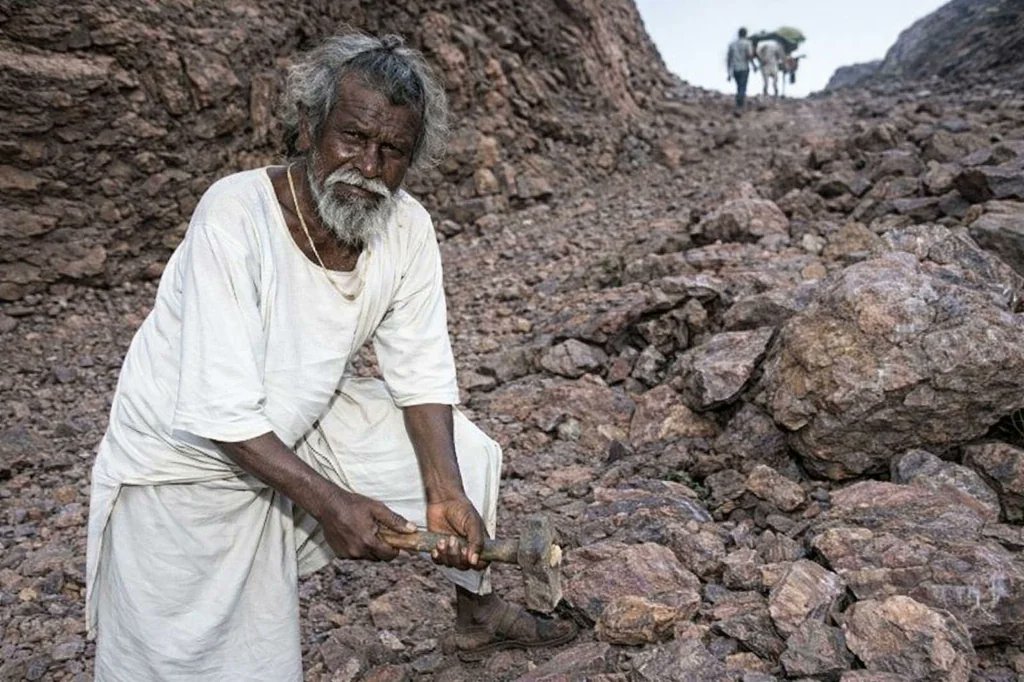
Dashrath Manjhi, the "Mountain Man" of India. After his wife died because they couldn't reach a doctor in time, he spent 22 years carving a 360 ft path through a mountain using only a hammer and chisel to ensure no one else would suffer the same fate.
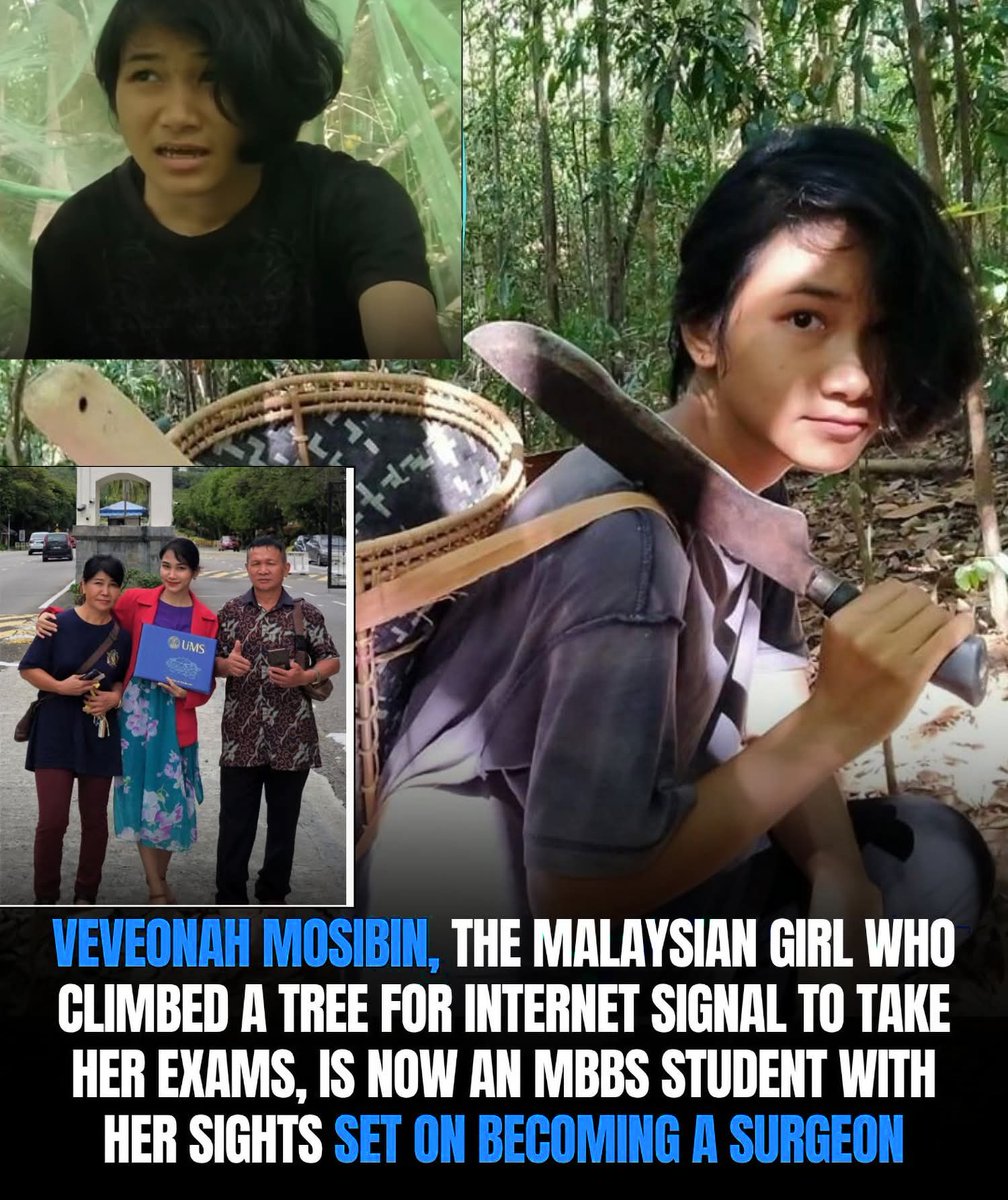
In 2020, a teenage girl from a remote farming village in Sabah, Malaysia climbed a tree and stayed there for 24 hours.
Not for adventure. For her exams.
Veveonah Mosibin had almost no internet access at ground level in her village. So she found her own solution: climb higher. Perched on a tree, she recorded her experience in a video titled “24 Hours On Tree Challenge” and completed her chemistry and Malaysian studies exams from the branches.
The video quickly spread across the world, drawing millions of views. But it wasn’t just a viral moment it led to real change. Malaysia’s Communications and Multimedia Commission upgraded internet infrastructure in her village, bringing long-overdue connectivity to her community.
Veveonah’s journey didn’t stop there.
She later graduated from Universiti Malaysia Sabah with a 3.46 GPA in marine science. But instead of continuing down that path, she chose to follow where her passion truly lay.
“I lost interest in marine science during the pandemic because it requires hands-on learning,” she explained. In 2021, she decided to pursue medicine.
Today, she is enrolled in a five-year MBBS program at Management and Science University in Shah Alam, working toward her dream of becoming a surgeon.
“I hope to become a surgeon. For now, I’m preparing myself mentally and physically for the challenges ahead.”
And when that journey is complete, she plans to return home to Pitas to give back to the community that shaped her story.
The new treatment literally grows new neural connections in the brain.
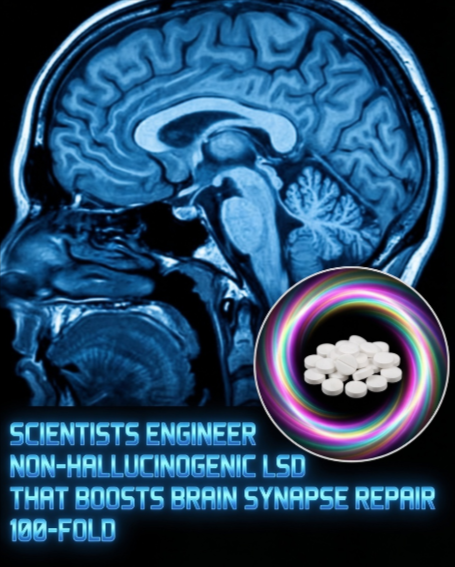
Researchers at the University of California, Davis, have developed a groundbreaking molecule that delivers the powerful brain-repairing benefits of LSD — without any hallucinations.
By simply swapping two atoms in the LSD structure (what lead researcher David E. Olson playfully called a molecular “tire rotation”), the team created JRT — a non-hallucinogenic “neuroplastogen.”
This innovative compound keeps LSD’s remarkable ability to stimulate neuronal growth and repair damaged synapses, while eliminating the psychedelic effects that make traditional LSD too risky for many patients.
The results are impressive: in preclinical studies, JRT increased dendritic spine density by 46% and was nearly 100 times more potent than ketamine as an antidepressant. Crucially, it avoided the gene expression patterns and behaviors linked to psychosis.
This could be a game-changer for psychiatric care — especially for people with schizophrenia and other conditions involving synaptic loss and brain atrophy, who were previously excluded from psychedelic-based therapies.
In 2022, 2,833 men killed themselves in Sri Lanka. 574 women. That's 5 men for every 1 woman.
Male suicide rate: 27 per 100,000. Female: 5 per 100,000. Both higher than the global average but the gap between men and women is massive.
And its getting worse not better. Male suicide has been trending upward since 2016. Hanging is now the most common method, nearly 70% of all cases.
Why?
Because Sri Lankan men don't talk. We don't ask for help. We drink instead of dealing with problems. 53% of men drink, 14% at hazardous levels. When the money runs out, when the business fails, when the marriage falls apart, there is no system to catch them.
Sri Lanka has 1 psychiatrist for every 500,000 people. Switzerland has 150 for the same number. We have fewer than 5 clinical psychologists in the entire country. The mental health budget is 1.6% of total health spending and it hasn't changed since 2012.
75% of patients avoid mental health care because they fear discrimination. Employers fire people who get diagnosed. Families hide it. The culture treats mental illness as weakness or karma, not as a medical condition.
Among teenagers its even worse. 1 in 5 students aged 13-17 reported persistent loneliness. 18% had depression. 15% had seriously considered suicide in the past year. Nearly 1 in 10 actually attempted it.
We built an entire article about men dying earlier than women. This is one of the biggest reasons why. Not just heart disease. Not just alcohol. But a culture that tells men to shut up and handle it!
You wouldn't ignore chest pain. Don't ignore what happens in your head. If you're struggling, talk to someone.
Sumithrayo: 011 2692909, 011 2696666, 011 2683555.
National helpline: 1926
The strongest thing a man can do is ask for help before its too late! 🙏🙏🙏