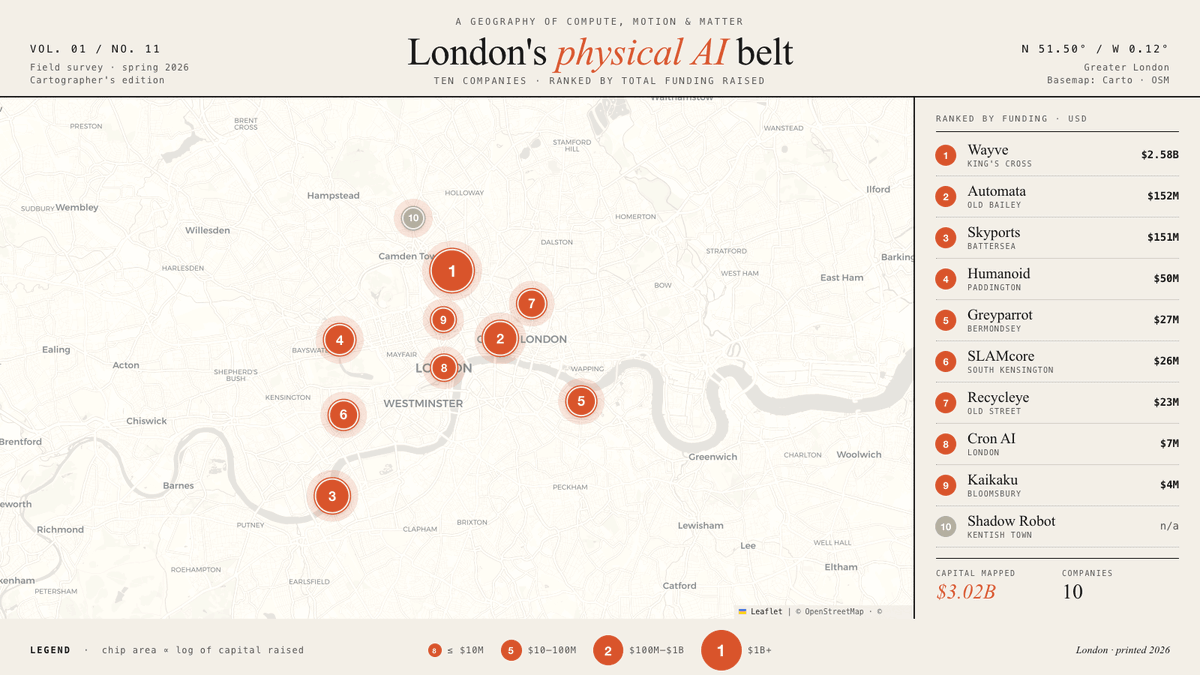
IMO this is one of the coolest parts of @KanishkaNarayan's announcements. Getting public support for data centres is hard. A genuinely smart fix is to make them beautiful.
We used to be great at making the functional inspiring. The great train stations of the 1800s made people proud of progress.
(From the @BritishProgress founding essay.)
When home and family are far away, the furry companions help fill the void. These cats and dogs provide comfort, companionship, and a sense of normalcy amid war.
📹: 92nd Assault Brigade
Happy Kyiv Day! 🇺🇦
The team of the Ministry of Foreign Affairs of Ukraine extends its warmest wishes to everyone who holds Kyiv close to their heart on #KyivDay – the day of a city that has remained the heart of our statehood for centuries.
The streets of Kyiv remember princes, artists, scholars, diplomats, and millions of people who, throughout different periods of Ukrainian history, helped shape the future of our nation – and those who continue to do so today.
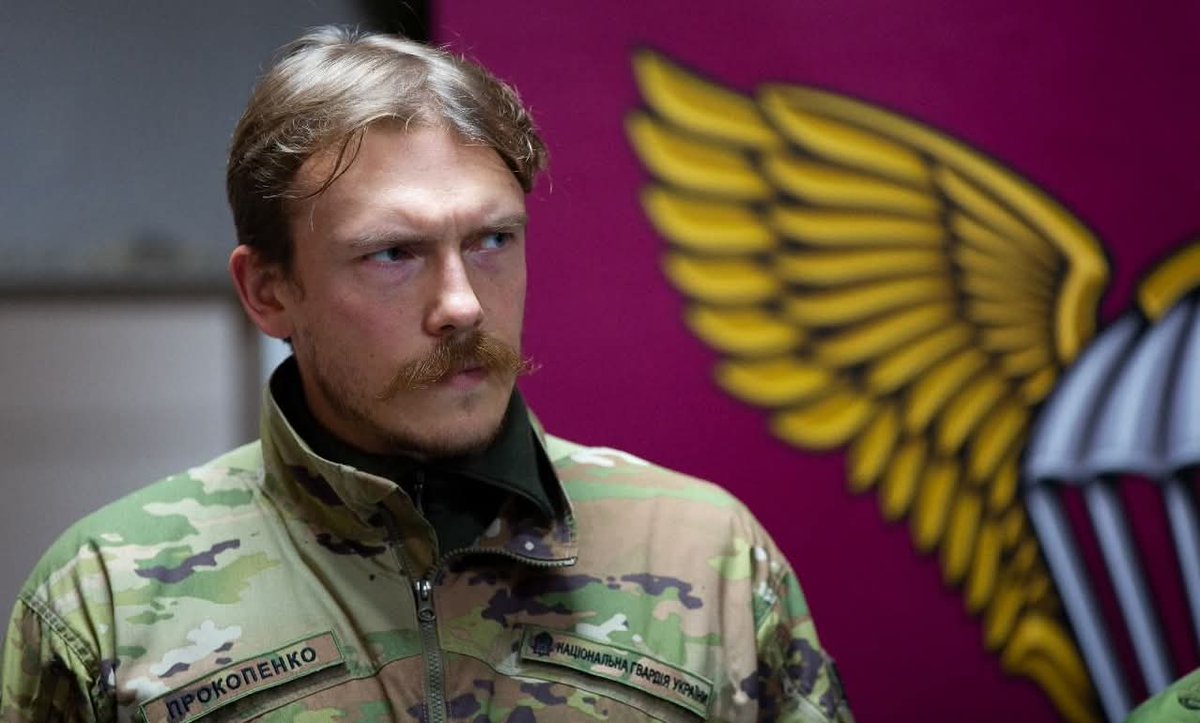
Brigadier General Denys “Redis” Prokopenko, commander of the 1st Corps of the National Guard of Ukraine “Azov,” has published a new essay explaining why many Western analysts in 2022 overestimated the Russian army, how the Ukrainian military differs from Russia’s, and why Russia will ultimately lose.
Here are the key points condensed:
• According to him, many analysts focused almost entirely on Russia’s numbers — equipment, manpower, and ammunition — while ignoring decisive intangible factors: command culture, morale, social cohesion, and the ability to adapt.
• “Redis” warns that this analytical blindness still partly exists today. Many in the West continue to see the war purely as a war of attrition where victory is determined only by resources. He calls this a dangerous misconception.
• The general contrasts two military models — the Ukrainian and the Russian. Russia’s system relies on a rigid Soviet-style hierarchy where officers are afraid to deviate from orders even when an operation is clearly failing. Such a structure leads to operational paralysis on the modern battlefield.
• One of the clearest signs of this systemic weakness is the chronic underdevelopment of junior leadership in the Russian military and the madness of senior officers willing to sacrifice enormous numbers of soldiers simply to please higher command.
• “Redis” stresses this point deliberately. He writes openly that they are fighting Russia directly, they understand exactly how Russia wages war, and that is precisely why they know Russia will lose — which is literally the title of his essay.
• In contrast, the Ukrainian military is built around a command philosophy based on decentralization and empowered initiative. This model reflects a modern interpretation of the German concept of Auftragstaktik (Mission Command), designed for warfare on a dynamic, nonlinear battlefield.
• A vivid example of this approach was the operation carried out by Ukrainian Defense Forces near Dobropillia in the second half of 2025 — essentially a modern rethinking of mobile defense warfare.
• Ukrainian forces conducted large-scale search-and-strike operations, concentrated fire raids, and precise surgical counterattacks that resulted in the encirclement of Russian units and the capture of hundreds of enemy soldiers.
• In March, the 1st Corps of the NGU “Azov” marked its anniversary. In a very short time, a corps command structure and headquarters were formed from combat officers with years of frontline experience — many of whom fought back in 2014–2015 while serving as ordinary soldiers and sergeants.
• Most of them have passed through every level of command, taking responsibility both in staff and field positions, and understand war from the trenches upward.
• The general also highlights the creation of entirely new units within the corps, including the 41st Unmanned Systems Regiment “Pilum,” the 14th Assault Regiment, support forces regiments, and others.
• The development of a deep reconnaissance-and-strike network now allows the corps to hit Russian equipment, warehouses, and logistics targets at distances of up to 250 kilometers.
• “Redis” writes that Western partners have begun learning from Ukraine and are now actively adopting Ukrainian battlefield experience. At the same time, the battle for Donbas is still raging, and the general emphasizes that they will continue striking the enemy and fighting for the return of their prisoners.
We’re calling it: The war in Ukraine has entered a new phase.
@KatStepanenko and I have authored a new special report studying how Ukraine is actively challenging the positional character of the war that has dominated the battlefield since 2023.
Data on Russia’s battlefield performance indicates that the character of the war is shifting in favor of Ukrainian forces – at least for now. Russian forces rates of advances are stagnating while Ukrainian forces are employing novel tactics and operational concepts in efforts to break out of positional warfare. Neither Russia nor Ukraine can conduct operational maneuvers yet, however.
The bottom line is that the war in Ukraine is competitive and far from stalemated. Ukrainian forces are out-innovating Russian forces in both military technologies and in applying these new technologies in effective operational concepts that can help Ukrainian forces break out of positional warfare. Ukraine is employing mechanized equipment in tactical maneuvers in ways that were impossible 12 months ago. Russia’s ability to conduct infiltration missions will likely continue to degrade as Ukraine’s intermediate-range strike campaign pushes Russia’s logistics and forward operating bases further away from the frontlines, reducing resourcing to sustain infantry tasked with infiltration missions. Ukraine may be able to scale these effects if they resourced properly by international partners.
Ukraine’s advantage in intermediate range strikes is notably not permanent, and Russia will very likely eventually develop countermeasures to mitigate Ukraine’s advantages. Ukraine’s international partners thus have a rare and temporary opportunity to help Ukraine exploit favorable battlefield dynamics while Ukraine has the upper hand.
Key Points of the report:
• Russia’s rate of advance is plummeting during the Russian Spring-Summer 2026 offensive.
• Russia is losing more soldiers to make fewer gains, with monthly Russian casualty rates reportedly outpacing monthly recruitment since December 2025.
• Ukraine is starting to regain more ground than it is losing for the first time since 2023.
• Ukraine’ recent counterattacks feature unique characteristics and deviate from key trends that defined the positional character of the war since 2023.
• Ukraine is conducting a pattern of more frequent mechanized counterattacks at the tactical level for the first time since 2023.
• The Ukrainian command’s operational planning is maturing.
• Ukraine’s early 2026 counterattacks in the south were successful likely due to better planning and preparation of the battlefield.
• Ukraine has been conducting a coherent campaign to suppress and destroy Russian air defenses since late 2025, in order to shape the battlefield as part of more sophisticated campaign planning.
• Ukraine significantly intensified its intermediate-range strike campaign against dynamic targets in Spring 2026 in order to degrade Russian logistics at operational depths ahead of planned Ukrainian maneuver.
• Ukrainian forces started actively disrupting Russian railway logistics in occupied Ukraine and Russian western regions in Spring 2026.
• Ukrainian intermediate-range strikes are already achieving notable operational effects, including degrading Russia's ability to use the key Russian highway connecting Russia to occupied Crimea and GLOCs around Donetsk City.
• Ukrainian forces decisively seized the initiative in intermediate-range strikes by fielding new technologies such as the US-made Hornet strike UAV, among other systems.
• Ukrainian forces are achieving temporary tactical drone overmatch in some frontline sectors, which is slowing Russian offensive operations by degrading the effectiveness of Russian shaping operations.
• Ukrainian forces likely achieved tactical drone overmatch in certain frontline sectors after degrading Russia’s drone capabilities in late 2025 to early 2026 - primarily by suppressing drone launch positions and increasingly intercepting Russian tactical UAVs.
• Ukraine’s degradation of Russian forces at operational depth combined with tactical-level drone overmatch likely is creating vulnerabilities in the Russian lines.
• Ukraine’s intermediate-range strike campaign is likely far from its zenith, assuming continued support from Ukraine’s partners, and will likely intensify over 2026 as Ukraine fields new weapons capable of striking Russian’s operational rear.
Link to full report: https://t.co/rCeWbYJNiB
This coffee shop in Kyiv opened yesterday, then got hit by a russian air strike just hours later.
Today, they're still open and people in Kyiv are lining up to buy a coffee to support them, stepping over debris and broken glass on the way in.
FYI, the coffee is excellent 🇺🇦
To make AI data centres beautiful unironically, they produce *a lot* of heat, so they should obviously be built in the style of Georgian and Victorian glass houses, filled with citrus trees and other exotic plants, like the Palm House at Edinburgh's Royal Botanic Garden.
We can achieve great things when we work together.
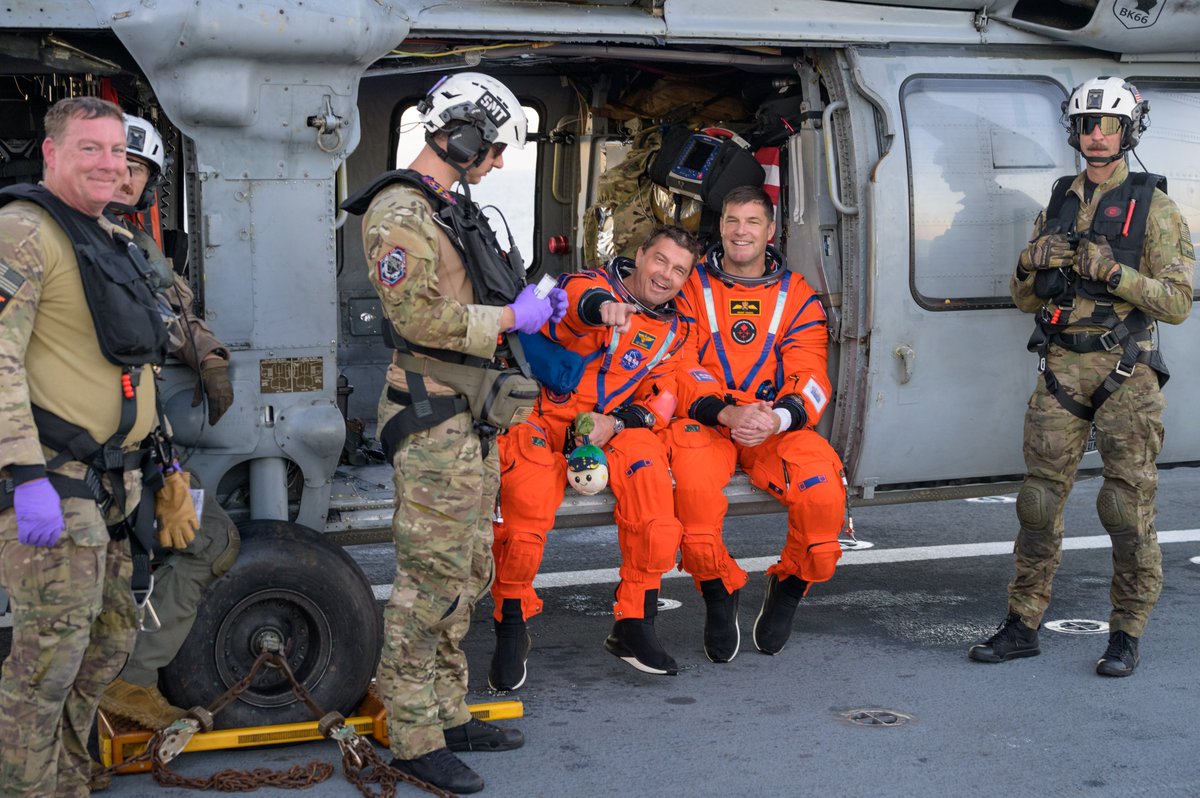
The Artemis II recovery team includes specialists from the U.S. military alongside engineers and technicians from NASA and Lockheed Martin.
HOME.
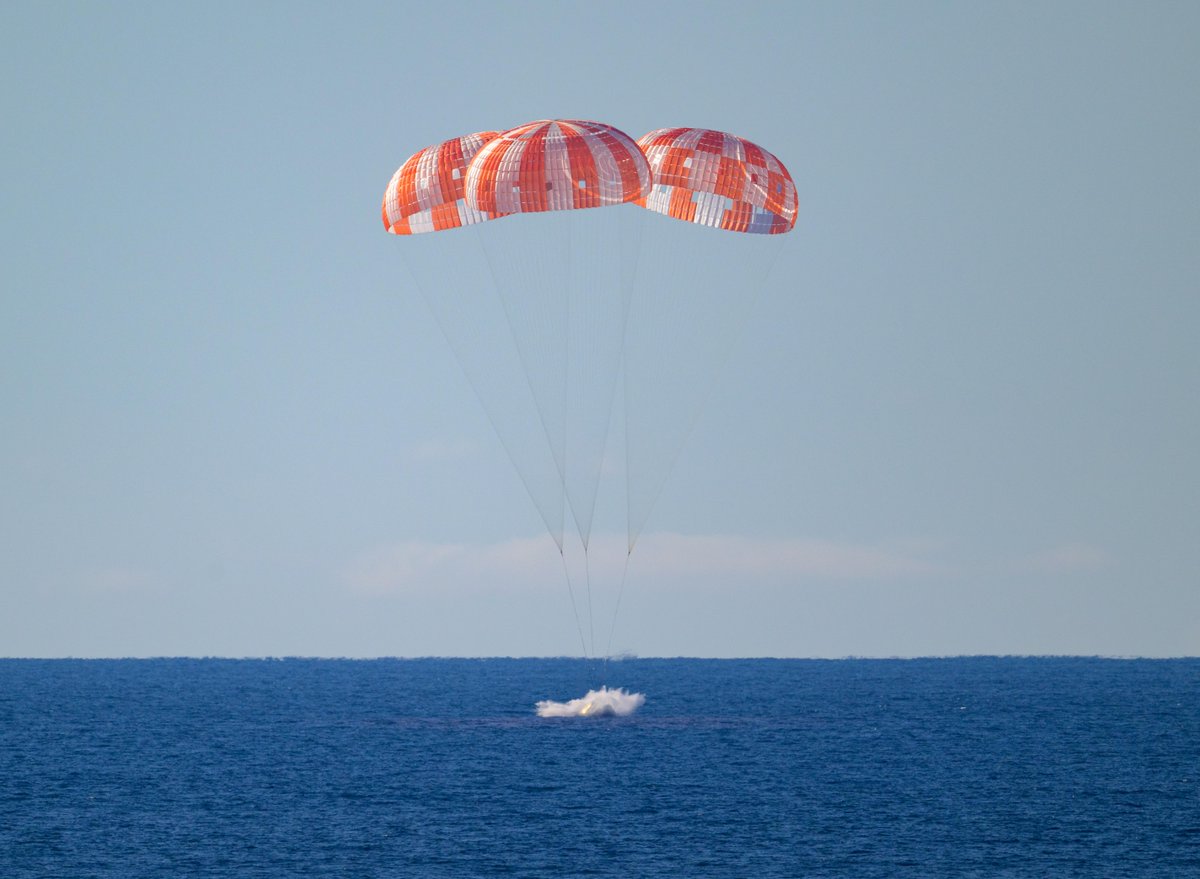
The Artemis II crew has arrived back on Earth, ending a nearly 10-day journey around the Moon. The trip took them farther into space than humans have ever gone before, and now they're safely home with us.
https://t.co/XmDQwNlCPR
The interior of this small rural church is one of Britain’s most remarkable Victorian artistic treasures.
In the 1980s, the church was deemed structurally unsafe and this exceptionally rare and beautiful interior was almost lost to demolition.
1/10
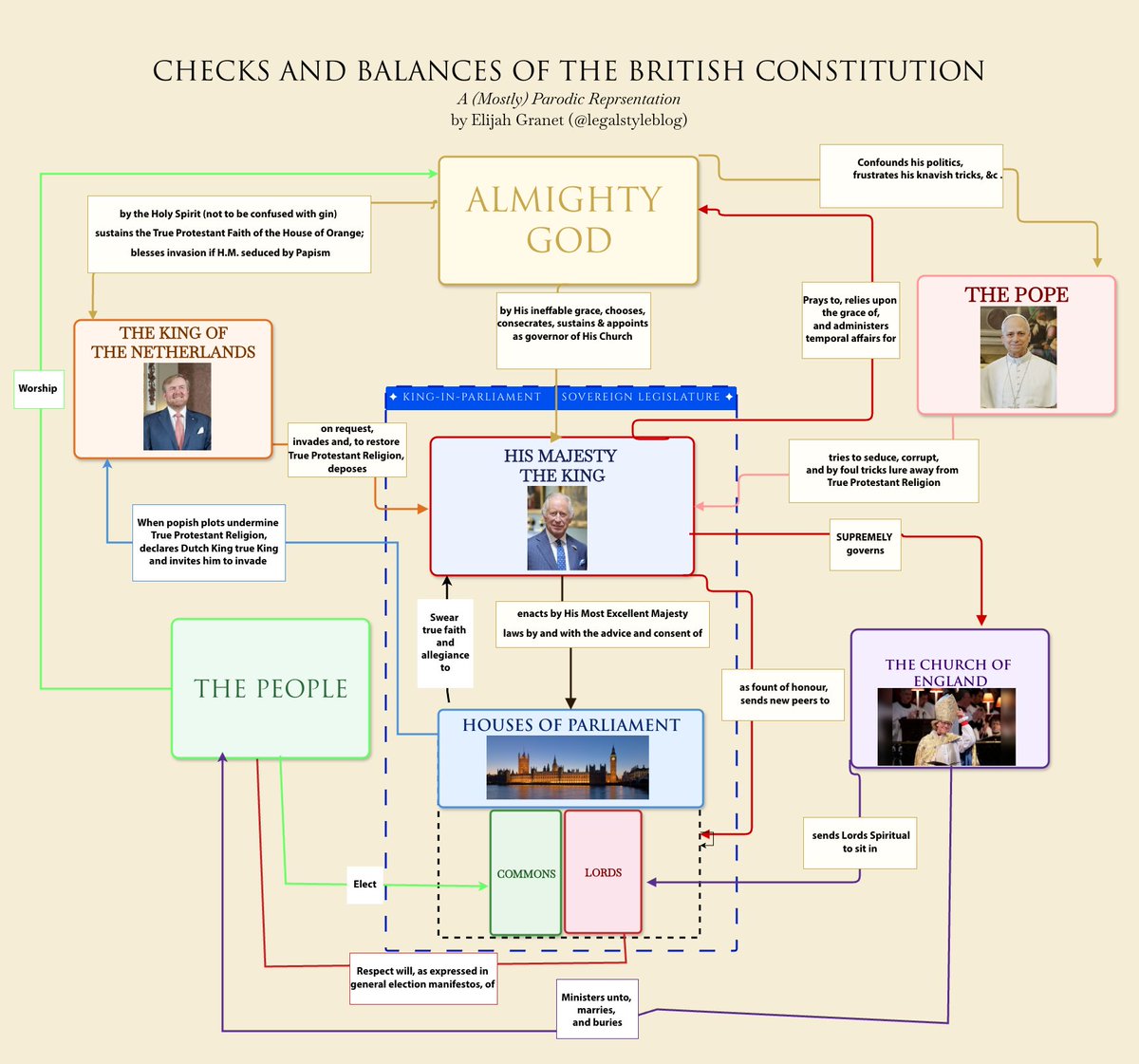
There has been a lot of interest in and confusion about the British constitution. I am pleased, therefore, to present this simple and not at all tongue-in-cheek guide to understanding the constitutional settlement of 1688.
“Journeying is a constant theme of the Christmas Story. The Holy Family made a journey to Bethlehem and arrived homeless without proper shelter. The Wise Men made a pilgrimage from the East to worship at the cradle of Christ; and the Shepherds journeyed from field to town in search of Jesus, the Saviour of the World. In each case, they journeyed with others; and relied on the companionship and kindness of others.”
In this year’s Christmas Broadcast or ‘King’s Speech��, His Majesty reflects on the theme of the journey, in religious life and more broadly. You can now watch in full on:
- The Royal Family Channel on YouTube.
- @BBCNews, @ITV and @SkyUK in the UK.
- If you live outside the UK, check your national broadcaster’s schedule.