If you knew how quickly people would forget about you after your death, you would not seek in your life to please anyone but God.
John Chrysostom, circa 387
“Everybody wants to save the Earth; nobody wants to help Mom do the dishes.”
- P.J. O'Rourke
This famous quote points to a common flaw in human nature: our tendency to become inspired by grand, heroic causes while overlooking the small, practical responsibilities directly in front of us. People can easily rally around enormous, abstract goals like saving the planet because they feel noble, exciting, and meaningful.
Yet true character and kindness are often revealed through the ordinary, repetitive moments of everyday life. Washing the dishes or helping a family member may seem insignificant, but these quiet acts require effort without recognition, applause, or public attention.
Ultimately, the quote offers a humorous but pointed reminder that making the world a better place often begins with simple acts of responsibility and genuine kindness within our own homes.
David Friedberg says Moderna is charging $500K for a ‘cancer vaccine’ that already exists
"What frustrates me the most about all of this, everyone's kind of lauding this as some unique breakthrough and special and powerful. It's not, a lot of people are going to places like Montana and getting peptides printed for their particular cancer sequence, making their own neo-antigens, and getting cured of their cancer.”
“You can pay someone $50,000 to do this for you today. There's a lot of clinics that will do it. And it's not a special FDA-approved drug. So why is Moderna saying that they're going to charge $500,000 for this?"
"I don't think that this technique, which has been developed through several decades of iteration, funded by NIH and other public funding dollars, should now be patented, FDA-approved, and charged half a million dollars for people to get treated for this."
"A private pharmaceutical company has seen their market cap go from $20 billion to $60 billion because they went through this regulatory process to create what, in my mind, is a form of regulatory capture.”
“They’re making the case that it's all about safety and trials, when fundamentally there's an underlying technique that was funded by a lot of public research dollars that I think should be more open-sourced, more ubiquitous. Every hospital should be trained on how to do this process to treat cancer patients.”
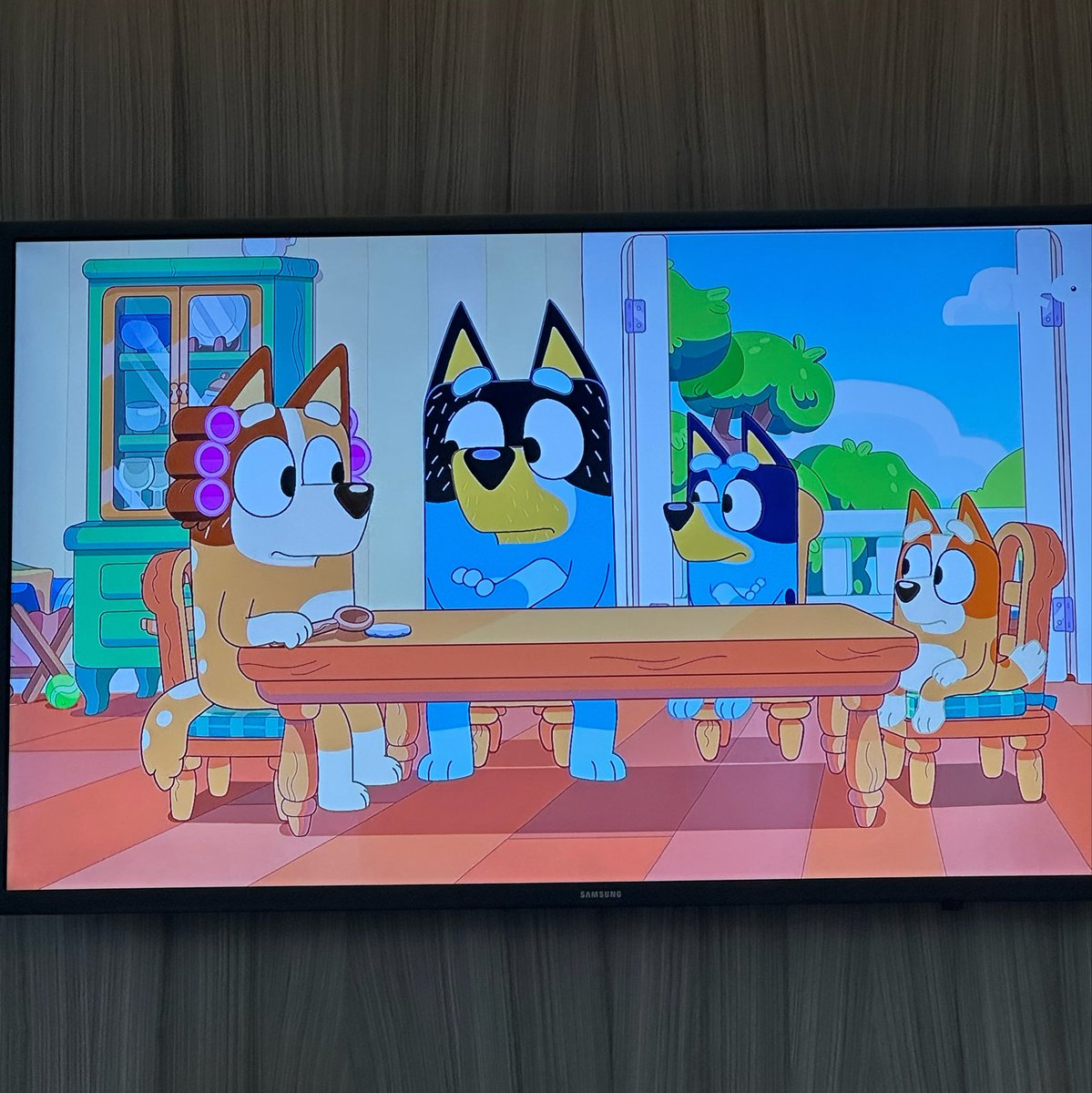
Je crois que Bluey est le dessin animé le plus subversif du moment.
Ça fait vingt ans que je regarde des dessins animés avec mes neveux, mes nièces, puis mes filles. Et je n’en ai jamais vu d’aussi intelligent.
Déjà parce que, dans Bluey, les parents ne sont pas débiles.
La barre paraît basse. Mais le père sympathique, immature et vaguement incapable de survivre sans sa femme est devenu un personnage récurrent des programmes familiaux.
Une petite étude menée à l’université Brigham Young sur deux séries Disney destinées aux préados estimait que près de 40 % des comportements paternels montrés à l’écran relevaient du ridicule ou de la bouffonnerie. Soit un père transformé en imbécile toutes les 3 minutes 24. Et, une fois sur deux, les enfants réagissaient en levant les yeux au ciel, en se moquant de lui ou en l’ignorant.
Bandit, lui, peut être très drôle sans que son autorité soit systématiquement tournée en dérision. Comme Chilli, il est imparfait, parfois fatigué, parfois agacé, mais compétent. Ils jouent avec leurs enfants, les écoutent et savent reconnaître leurs erreurs. Mais ils restent les adultes.
Les émotions de Bluey et Bingo sont prises au sérieux sans devenir le centre de décision de toute la famille. Elles peuvent perdre, attendre, s’ennuyer ou être frustrées. On les console, mais on ne renégocie pas nécessairement la règle ni l’organisation de toute la maison. Et, fait assez fou : elles survivent !
J’avais lu que Bluey était un dessin animé « conservateur ». Pas au sens partisan. Simplement parce qu’il montre la famille non comme une addition d’individus dont il faudrait satisfaire tous les désirs, mais comme un cadre dans lequel on apprend à vivre ensemble.
Les parents y assument de guider leurs enfants, les enfants ne sont pas chargés de tout décider et personne ne semble particulièrement opprimé par cette organisation. Au contraire : ils ont l’air très heureux.
Et tout cela sans grand discours, avec une finesse assez folle et énormément d’humour.
Je ne sais pas comment sont recrutés les scénaristes de Bluey, mais pour écrire aussi justement sur les enfants, les parents et la vie de famille, il faut probablement être un parent assez extraordinaire.
Ou avoir installé des caméras chez moi entre 18h30 et 20h …
When your kids are pretty young you start to see possibilities of who they might become, the good and the bad. The talents, the joys, the forms of temptation they are subject to, etc.
And you realize it's your job to cultivate that good, and train out the bad.
Which of those possibilities that you glimpse early on come to be realized in their personal future depends in a huge way on how well you do your job. You can't fk this up. You must not. Their possibilities are too precious.
I’m reading a book that’s so depressing that it has made me happy.
Its called 4000 Weeks. 4000 weeks is roughly the average human life.
The premise of the book is:
1. We’ll all die any minute now.
2. Time efficiency hacks just make you more busy.
3. Accept you can do very few things in life and commit to only a few things.
The last thing on commitment, I think is the most important:
“And not only should you settle: ideally, you should settle in a way that makes it harder to back out, such as moving in together, or getting married, or having a child.
The great irony of all our efforts to avoid facing finitude - to carry on believing that it might be possible not to have to choose between mutually exclusive options - is that when people finally do choose, in a relatively irreversible way, they're usually much happier as a result.
We'll do almost anything to avoid burning our bridges, to keep alive the fantasy of a future unconstrained by limitation, yet having burned them, we're generally pleased that we did so.”
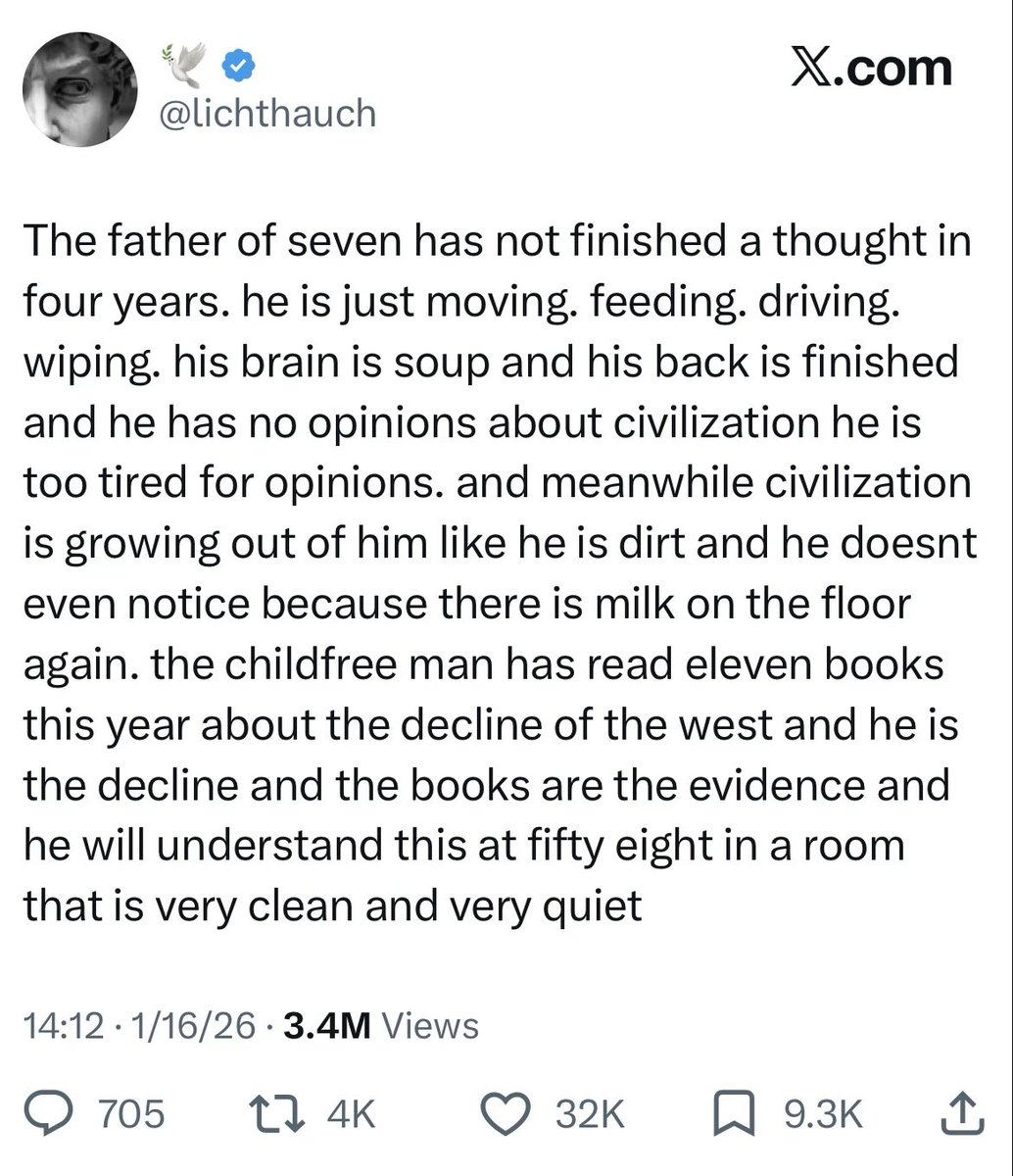
young couples trying to raise a family in our clown economy are admirable bordering on heroic, so if you have kids, its actually a patriotic duty to invade spaces where boomers, "childfree" redditors, disney adults, other sorts of foul beasts, cavort and stuff their putrid jowls
CS Lewis wrote about a similar concept:
“Most of us find it very difficult to want "Heaven" at all — except in so far as "Heaven" means meeting again our friends who have died. One reason for this difficulty is that we have not been trained: our whole education tends to fix our minds on this world. Another reason is that when the real want for Heaven is present in us, we do not recognise it. Most people, if they had really learned to look into their own hearts, would know that they do want, and want acutely, something that cannot be had in this world. There are all sorts of things in this world that offer to give it to you, but they never quite keep their promise. The longings which arise in us when we first fall in love, or first think of some foreign country, or first take up some subject that excites us, are longings which no marriage, no travel, no learning, can really satisfy. I am not now speaking of what would be ordinarily called unsuccessful marriages, or holidays, or learned careers. I am speaking of the best possible ones. There was something we grasped at, in that first moment of longing, which just fades away in the reality. I think everyone knows what I mean. The wife may be a good wife, and the hotels and scenery may have been excellent, and chemistry may be a very interesting job: but something has evaded us. Now there are two wrong ways of dealing with this fact, and one right one.
(1) The Fool's Way. — He puts the blame on the things themselves. He goes on all his life thinking that if only he tried another woman, or went for a more expensive holiday, or whatever it is, then, this time, he really would catch the mysterious something we are all after…
(2) The Way of the Disillusioned "Sensible Man." — He soon decides that the whole thing was moonshine. "Of course," he says, "one feels like that when one's young. But by the time you get to my age you've given up chasing the rainbow's end." And so he setties down and learns not to expect too much and represses the part of himself which used, as he would say, "to cry for the moon." This is, of course, a much better way than the first, and makes a man much happier, and less of a nuisance to society. It tends to make him a prig (he is apt to be rather superior towards what he calls "adolescents"), but, on the whole, he rubs along fairly comfortably...
(3) The Christian Way. — The Christian says, “Creatures are not born with desires unless satisfaction for those desires exists. A baby feels hunger: well, there is such a thing as food. A duckling wants to swim: well, there is such a thing as water. Men feel sexual desire: well, there is such a thing as sex. If I find in myself a desire which no experience in this world can satisfy, the most probable explanation is that I was made for another world. If none of my earthly pleasures satisfy it, that does not prove that the universe is a fraud. Probably earthly pleasures were never meant to satisfy it, but only to arouse it, to suggest the real thing. If that is so, I must take care, on the one hand, never to despise, or be unthankful for, these earthly blessings, and on the other, never to mistake them for the something else of which they are only a kind of copy, or echo, or mirage. I must keep alive in myself the desire for my true country, which I shall not find till after death; I must never let it get snowed under or turned aside; I must make it the main object of life to press on to that other country and to help others to do the same."
There is no need to be worried by facetious people who try to make the Christian hope of "Heaven" ridiculous by saying they do not want "to spend eternity playing harps." The answer to such people is that if they cannot understand books written for grown-ups, they should not talk about them. All the scriptural imagery (harps, crowns, gold, etc.) is, of course, a merely symbolical attempt to express the inexpressible.”
"Do not be afraid of anything, never be afraid, and do not grieve. Just let repentance not slacken in you, and God will forgive everything. There is not and cannot be in the whole world such a sin that the Lord will not forgive one who truly repents of it.
A man even cannot commit so great a sin as would exhaust God's boundless love. How could there be a sin that exceeds God's love?
Only take care that you repent without ceasing, and chase away fear altogether. Believe that God loves you so as you cannot conceive of it; even with your sin and in your sin he loves you. And there is more joy in heaven over one repentant sinner than over ten righteous men —that was said long ago. Go, then, and do not be afraid.
Do not be upset with people, do not take offense at their wrongs. Forgive... all the harm [done to] you; be reconciled with [your oppressors] truly. If you are repentant, it means that you love. And if you love, you already belong to God...
With love everything is bought, everything is saved. If even I, a sinful man, just like you, was moved to tenderness and felt pity for you, how much more will God be. Love is such a priceless treasure that you can buy the whole world with it, and redeem not only your own but other people's sins. Go, and do not be afraid."
Fyodor Dostoyevsky, The Brothers Karamazov
If all your child did from ages five to twelve was become an avid reader and have great conversations about ideas with adults who loved them, you could basically do that until they were twelve or thirteen with almost no other formal education at all. No curriculum. No classes. No worksheets. Adding in daily focused math would be better, of course, but that can be done with a tutor, with you, or on their own.
That child could still turn out to have a spectacular life and do amazing things. Deep, thorough reading and thinking and talking is fundamental to everything that comes after. Most of what schools add beyond that is actually counterproductive. The core is simpler than people think.
Here’s an uncomfortable truth about the Epstein accusations:
We only find them morally reprehensible because of Christianity.
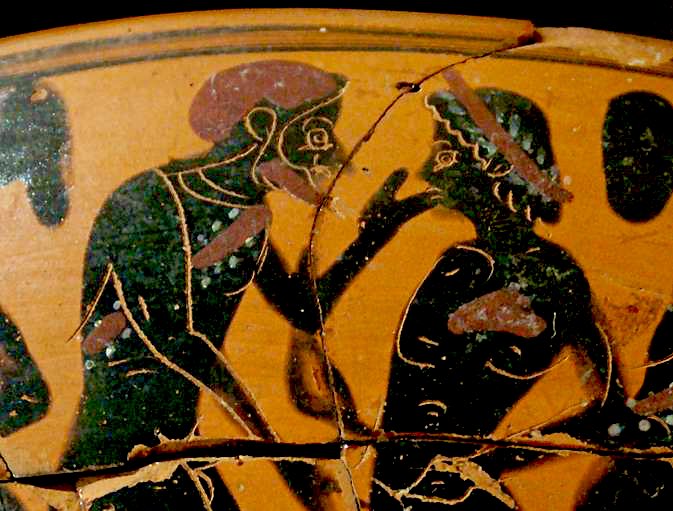
Before the spread of Christianity, “civilized” Greek and Roman elites openly flaunted underage s*x slaves. This was normal.
Emperor Hadrian built an entire city in honor of his favorite boy.
We’ve heard for decades that Christianity is a barrier to moral progress, but if you undercut the moral foundations of Christianity from the West, culture reverts back to pagan norms.