Data-driven economics impact that adds value. From banks to business; government to gaming; tech to trade; food to fashion; utilities to universities; real estate to racing; motion pictures to the metaverse.
Most project management tools are designed for micromanagement, not execution. They force you to spend more time organizing the work than actually doing it.
MLXD Action changes that.
Stop managing. Start executing.
🔗 https://t.co/xWo8IA5iYJ
@luminxbt MLXD Action is built for pure execution velocity. One raw text block gets you an ironclad, causal workflow in a single shot. Built specifically for action-oriented technical professionals.
Most project management tools are designed for micromanagement, not execution. They force you to spend more time organizing the work than actually doing it.
MLXD Action changes that.
Stop managing. Start executing.
🔗 https://t.co/xWo8IA5iYJ
Companies are quietly sawing off the branch they’re sitting on. 🪵🪚
Right now, organizations are rushing to automate entry-level roles to cut costs. On paper, it looks brilliant.
Quarterly expenses go down, efficiency goes up.
But a massive crisis is brewing just beneath the surface.
A recent Fortune article highlighted a terrifying reality, backed by Federal Reserve data: by automating away junior-level "grunt work," companies are completely destroying their future talent pipelines. People learn best on the job, but the Atlanta Federal Reserve says this is becoming impossible.
They are forgetting a fundamental economic law: Learning-by-Doing.
Coined by Nobel laureate Kenneth Arrow in 1962, the principle is simple: economic productivity and human expertise as we know them don’t come from books. They come from the repetitive, hands-on, messy experience of actually doing the work.
When you use AI to entirely replace the junior analyst drafting the report, or the entry-level engineer writing basic code, you aren’t just saving money today.
❌ You are ensuring you will have zero qualified senior leaders 5 years from now.
❌ You are erasing the career on-ramp for the next generation.
Blind automation is a trap. The goal shouldn’t be to take the human out of the loop: it should be to accelerate the human in the loop.
It's not about big tech. It's about the best tech.
We are Machine Learning X Doing, an AI research lab accelerating humanity with our machine learning-by-doing framework. Our name was inspired by Arrow’s economic breakthrough. We didn’t build our platform to replace the workforce: we built a beautiful, interactive environment designed to give professionals the ultimate AI co-pilot.
It's about allowing them to get more "reps" in, learn complex systems faster, and build real operational muscle by doing.
Don't use technology to make your team obsolete. Use it to make them irreplaceable.
If you're an executive looking to scale your output without destroying your company's future brain trust, follow .@mlxdoing.
#ArtificialIntelligence #FutureOfWork #Leadership #MachineLearning #Upskilling #BusinessStrategy
Just came across this 2021 position paper I co-authored with researchers from the University of Chicago, IBM, University of Illinois at Urbana-Champaign, and Brookhaven National Lab.
This paper was in the Advanced Scientific Computing Research Workshop on Cybersecurity & Privacy for Scientific Computing Ecosystems.
We explored how to make the scientific process more transparent, replicable, and trustworthy in the 21st century.
The core of your point may well be correct. If economists made that mistake, we did it before electrical engineers—economics is far more technically demanding than even physics, let alone EECS.
There are econ PhD students who fail their comprehensive exams…and then transfer into mathematics PhD programs and pass theirs.
I’d just add: if AI can handle the technical math, it can handle the applied computing, systems thinking and statistics too. One might actually benefit more from the AI revolution with a deeper technical foundation than without one.
—Kweku
Founder @DevEconX@mlxdoing
Former EECS postdoc @ UC Berkeley & CS postdoc @ Cornell Tech.
Even the world's largest tech giants fall into this trap. 📉
Enterprise leaders constantly battle hyperbolic discounting—chasing quick quarterly spikes while sacrificing stable, long-term growth.
We use AI and behavioral economics to debug these systemic decision biases.
Fix your growth strategy with @mlxdoing.
At @mlxdoing, we find that the better explanations lie in economic advances, not classical information theory.
Classical theory doesn't inherently model why or how an agent (biological, economic, or artificial) would selectively acquire, compress, or strategically reveal information under constraints to maximize an objective.
That's where economic advances in information theory shine. They could indeed fill some of the exact explanatory gaps you refer to.
A $1 Billion validation of world-class science. Huge congratulations to my brilliant former co-authors at IBM on securing this massive quantum foundry award!
Long before founding Machine Learning X Doing, I had the privilege of collaborating with these minds on how emerging tech reshapes the scientific method. Incredible to see their trajectory today. 🚀
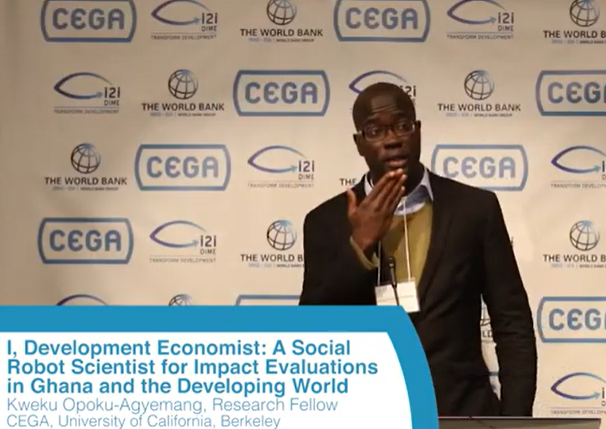
In 2018, I stood on a stage in SF, flanked by the logos you see here, and made a bold prediction: "AI will someday do end-to-end economic research."
The room was deeply skeptical. Some of the sharpest minds told me it was impossible. To be fair, it sounded like sci-fi back then.
Unbeknownst to most of us, Google had just quietly dropped the Transformer paper. The world was about to change.
Today, that "outlandish" vision is becoming reality. AI agents are beginning to formulate hypotheses, run regressions, and draft papers.
Being early can feel lonely, but it’s incredible when the world catches up.
Building on the independent research ideas I explored during my time there, I later founded Machine Learning X Doing and Development Economics X. We aren't waiting for the future: we're building it. 🚀
For years, general AI handled text while economics remained trapped in fragmented, legacy architectures.
We didn’t wait around for the industry to bridge the gap. We built the architecture ourselves.
Introducing LEM™s (Large Economic Model™)—engineered for real-world impact and solutions in minutes. Watch:
LLMs handle the language. LEMs handle the economy.
Large Economic Models™ by MACHINE LEARNING X DOING.
Purpose-built AI designed to turn messy economic data into actionable solutions in minutes. 👇 #Video#AI#AIresearch
LLMs handle the language. LEMs handle the economy.
Large Economic Models™ by MACHINE LEARNING X DOING.
Purpose-built AI designed to turn messy economic data into actionable solutions in minutes. 👇 #Video#AI#AIresearch
Even the world's largest tech giants fall into this trap. 📉
Enterprise leaders constantly battle hyperbolic discounting—chasing quick quarterly spikes while sacrificing stable, long-term growth.
We use AI and behavioral economics to debug these systemic decision biases.
Fix your growth strategy with @mlxdoing.