Good on @cathmartingreen for calling out the awful behaviour of @fionnansheahan. We've all worked with a Fionnan and it is immensely satisfying to hear this rudeness addressed in such a calm, clear and respectful manner -a manner he should try sometime.
Genuinely curious how Google might distinguish "users who love AI Overviews" from "users who are doing lots of searches and playing around with it out of curiosity"
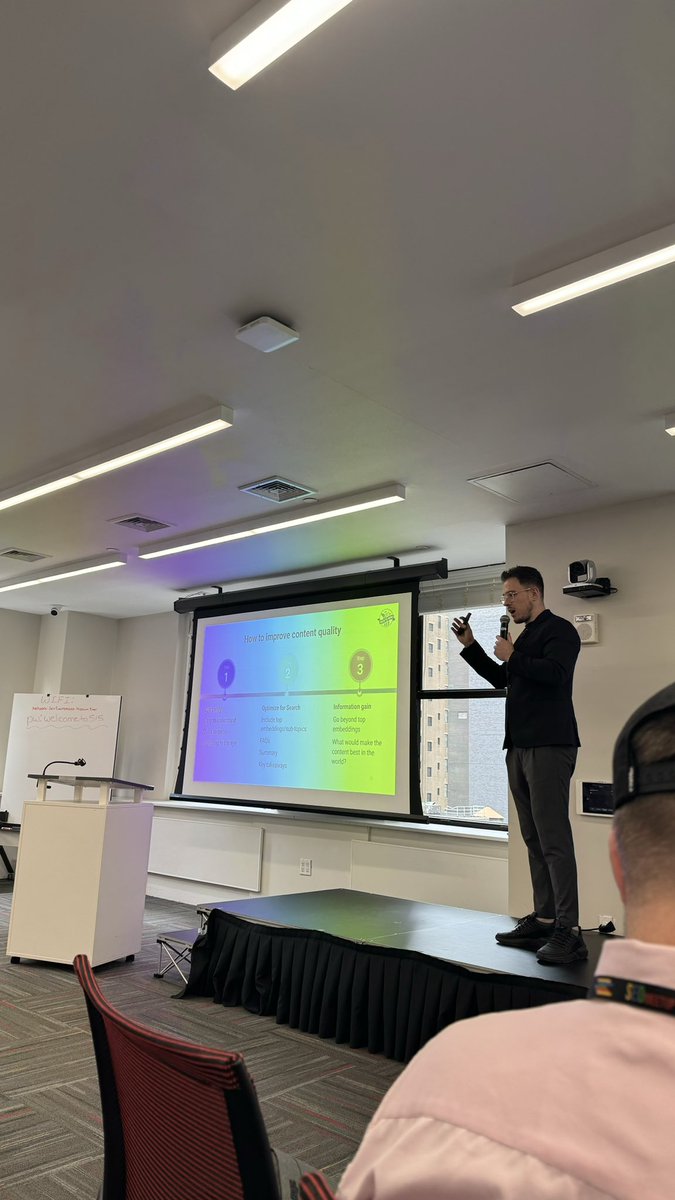
Currently bracing for a whirlwind SEO tour (and some DJing too 🥳)
Hit me up if anyone wants to try to connect in any of these places:
🤠 Nashville: Wednesday (24 hours)
🦪 Seattle: June 2-5 (@Moz!)
🧸 Berlin: June 6-14 (@techseowomen)
🍝 Bologna: June 14-18
🇭🇷 Croatia: June 18-25
🥖 Paris: June 25-30
🚴🏽♀️ Amsterdam: June 30 - July 5
🧸 Berlin: July 5-July 15
🇫🇷 France - tbd
AI Overviews create a lot of easy opportunities to spam Google.
Because Google often cites content that doesn't rank anywhere in the top results, you can create generic, probably AI-generated content on seemingly any domain and still show up in AI Overviews if your text closely matches the words Google is looking for.
It's keyword stuffing 2.0.
Never thought SEO would regress this quickly. We're right back to where we started.
Forgive my attitude lately, but when you continue to get dozens of messages, daily, from people absolutely panicking about losing their livelihoods and everything they’ve built for years, it gets to you.
And no, it’s not just small niche bloggers. It’s not just people who took shortcuts and spammed Google. It’s way bigger than that.
PS: if you’re an SEO working in a “safe” category like ecommerce, .edu, franchise businesses, or B2B, where sites are usually less prone to volatility from algorithm updates - great! Lucky you.
You really don’t have to say anything that just makes everyone else feel bad. Believe it or not, at our agency, most of our bigger, ongoing clients fall into these categories as well. SEO in these categories is certainly nowhere near “dead.”
There is a clear difference in the types of sites being impacted by these updates. It’s not apples to apples. What works for ecommerce isn’t always going to work for a product review website.
But in my opinion, being “safe” (for now) doesn’t mean you can’t have empathy for what’s happening to publishers on a larger scale. It also doesn’t mean your sites will be “safe” forever.
Making content doesn’t work for most people because they:
1) Talk about shit they haven’t done
2) Don’t provide value (even tho they think they do)
3) Dont know how to manage a team to hit volume
4) Dont use the platforms they post on & look tone deaf
5) Quit 4 wks in
The end.
Hi all,
I've reached a point where I need to turn off DMs here for a bit (outside of those I follow).
My heart is beyond broken for all the site owners and businesses who have been crushed by Google in recent months. I'm literally losing sleep from all of this. I see all of you, hear your stories, and wish there were more I could do.
But between speaking engagements, travel, client work and other responsibilities, need to take some time for myself right now.
Hugs to all. 🩷
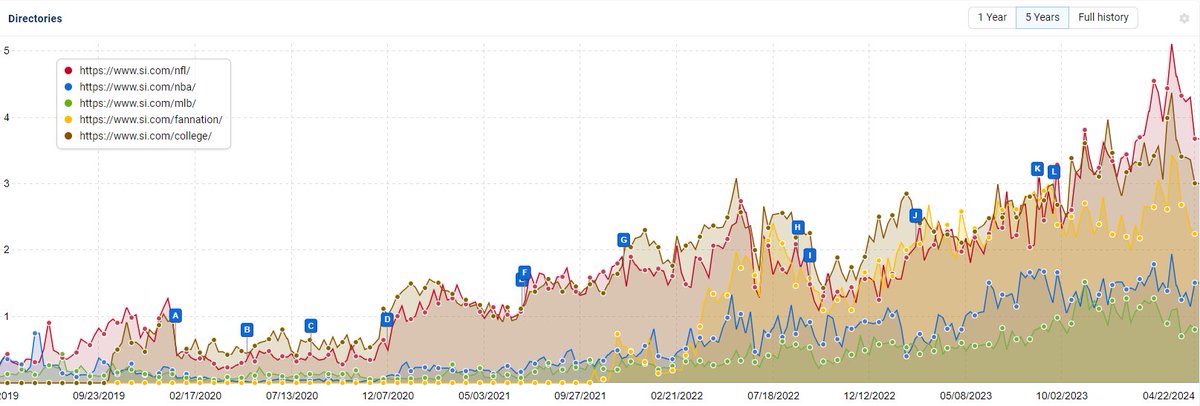
Believe it or not, it's not just niche sites feeling the impacts of recent Google updates. Especially during the end of the March Core Update.
These are 5 huge publishers, including a few that get a lot of flack from the SEO industry.
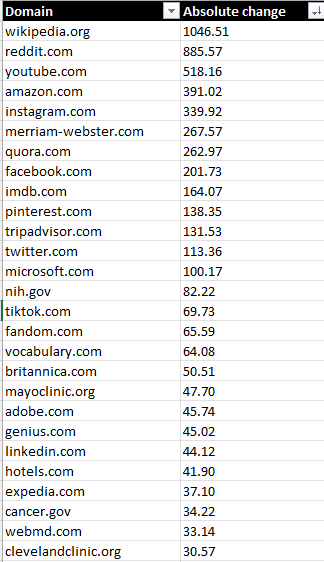
Each has actually dropped pretty substantially since last September. If you combine the absolute values of the drops of these 6 sites, it's -295 @sistrix visibility points.
For context, I'm including a screenshot of the sites with the greatest absolute visibility increase during the same timeframe (Sept - now)
I've got some bad news for affiliate/product review sites.
It is not looking good with this Google update.
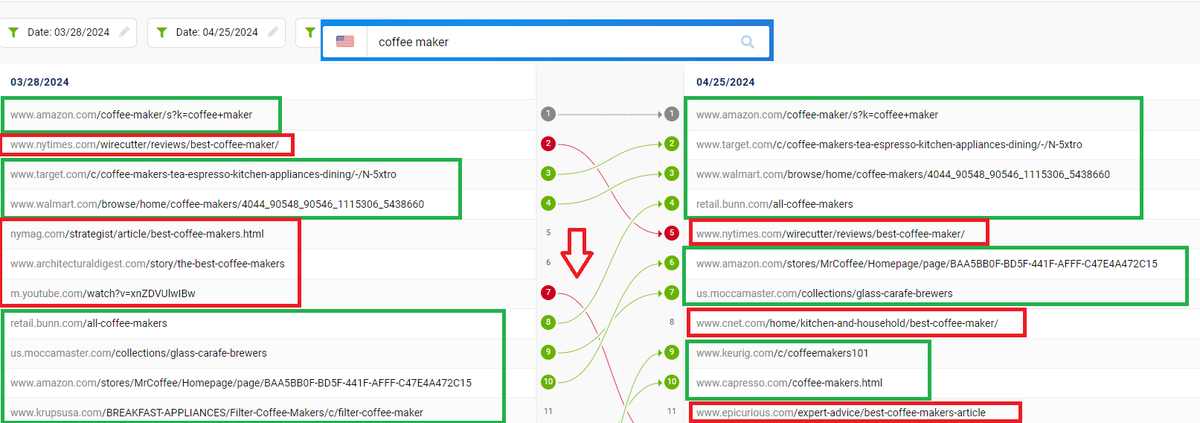
I just dug into several examples where The Wirecutter, arguably the best product review site (section) on the internet, has lost positions in the last 2 weeks.
The drops mostly stem from high-volume commercial keywords (50k+ MSV). But they also include many "best" keywords as well (e.g. "best bluetooth speaker")
You might think "oh, maybe they were outranked by another product review article?"
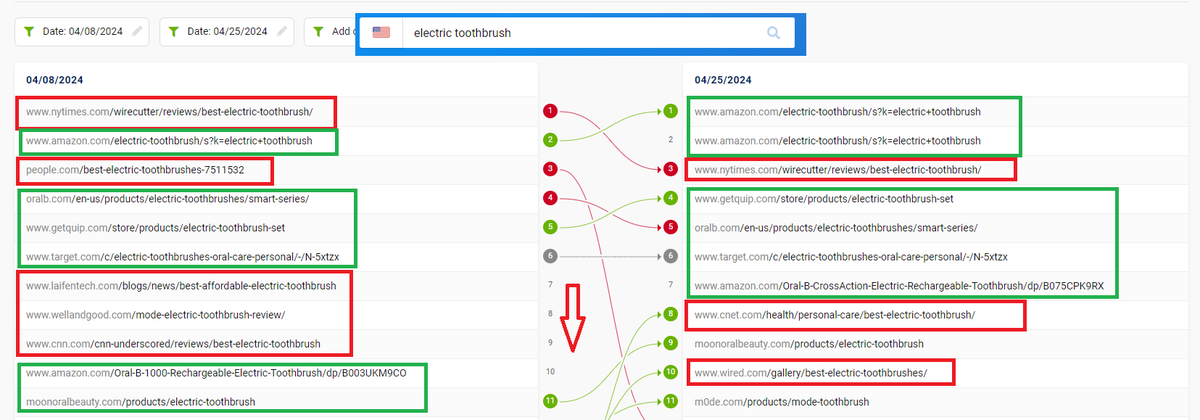
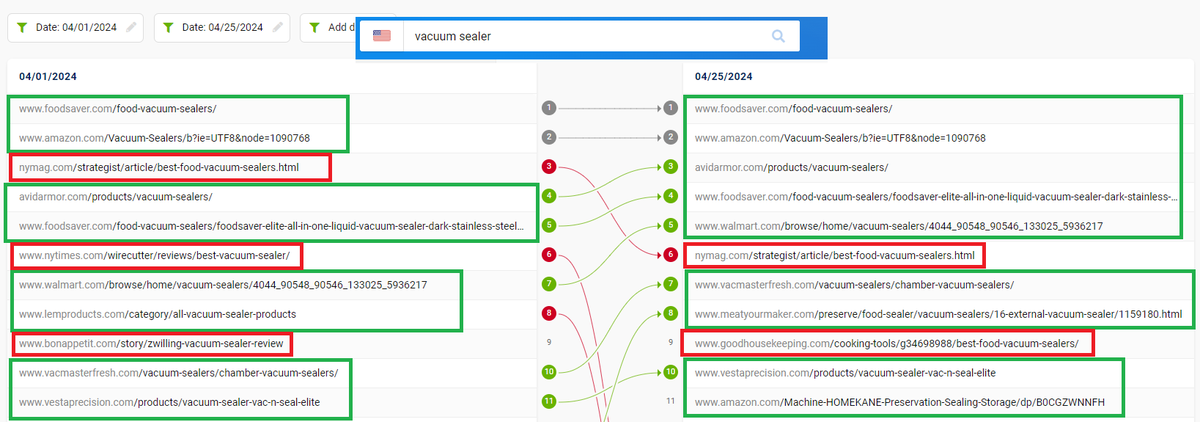
Nope. In every case I have found, they were outranked by an ecommerce site. Usually Amazon. And these are product/category pages on the ecommerce sites, not informational.
Below I have shown 4 examples visually using @sistrix data.
Red = affiliate/product review site
Green = ecomm site
Look how affiliate sites are dropping, either by several positions on the first 2 pages, or out of the top 20 entirely.
Look at the distribution of green vs. red.
*The update is still rolling out so this could change. But it is consistent with what Google has been doing with MANY updates over the years.
And this is why doing SEO for product review sites is NOT THE SAME as doing SEO for any other type of website. They have their own unique challenges.
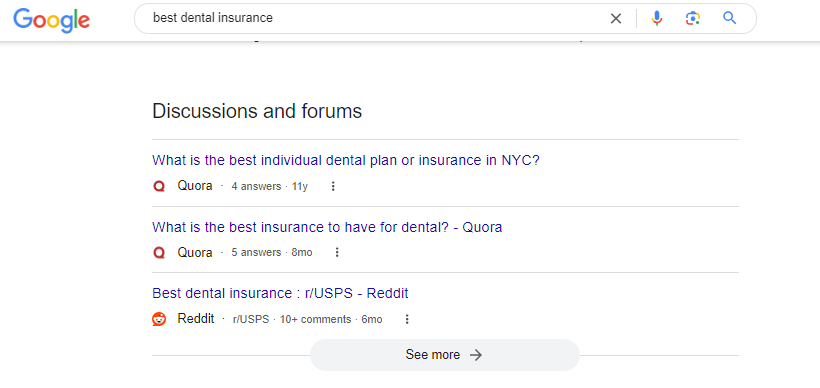
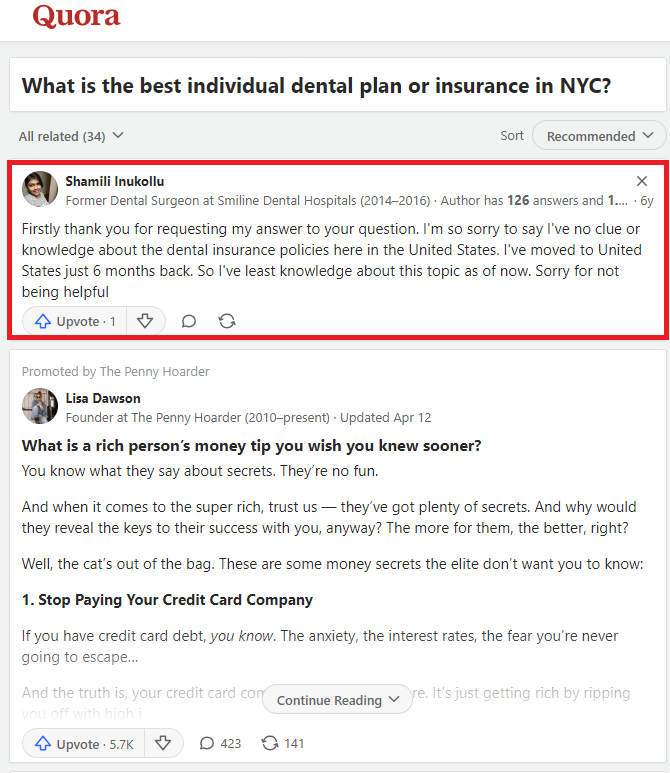
Can you imagine any other page on the internet ranking prominently for the keyword "best dental insurance"
With an answer literally saying "I don't know, sorry this isn't helpful"
Followed by a misleading/confusing sponsored post
And no actual answer anywhere above the fold.
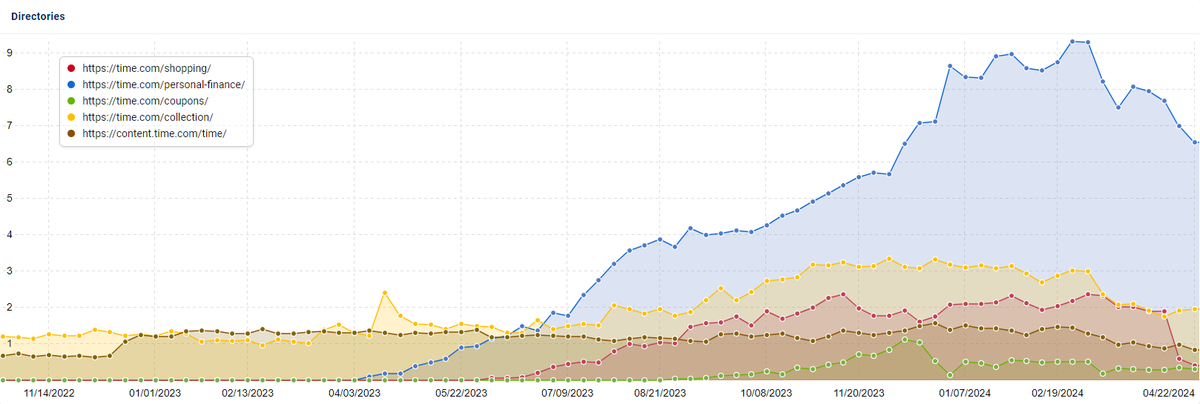
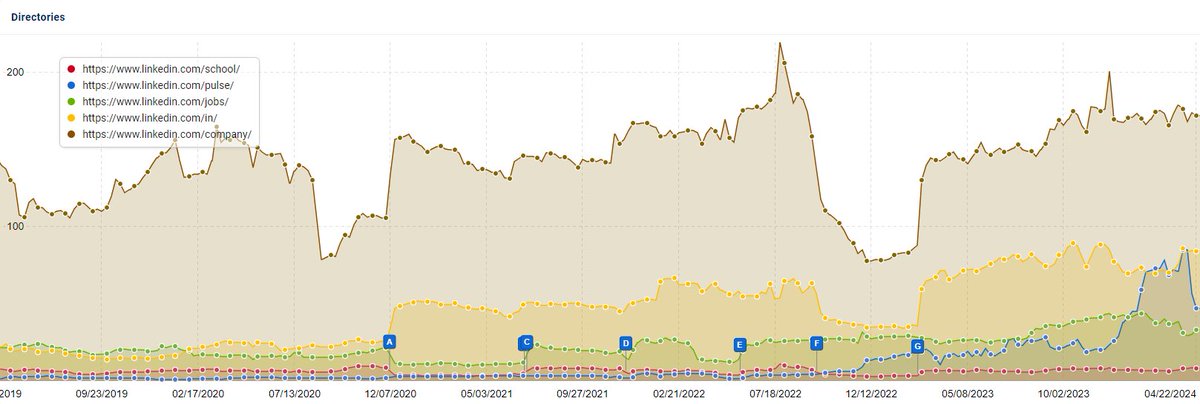
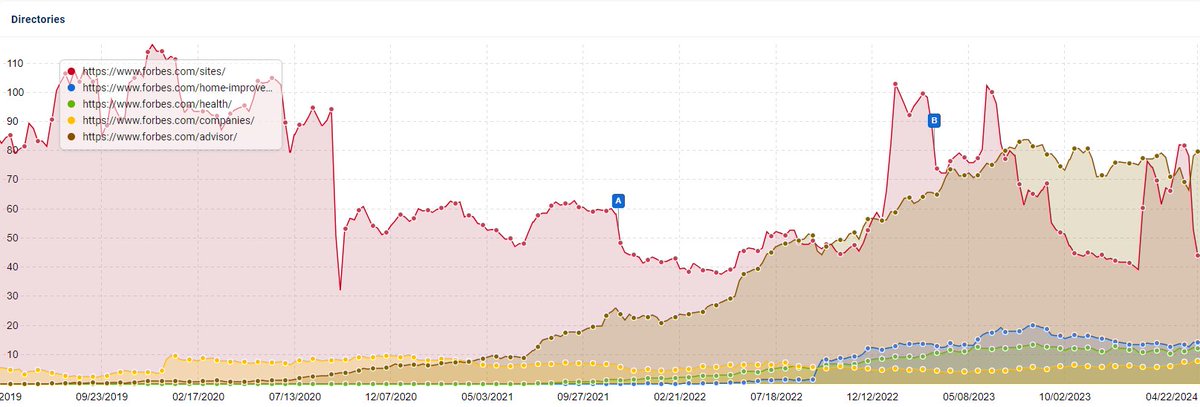
I have been digging deep into what Google is doing with parasite folders/site sections, or site sections otherwise "subleased" to third party content suppliers and/or UGC (often leading to spammy 'best casino' type content)
It looks like the last 2 weeks of the algo update have hit these site sections hard across various big publishers.
But if you look carefully, you can see that the hit is usually isolated to the offending folder, not necessarily the rest of the site (at least not as much).
I think this is what Gary from Google may have been referring to when he says Google already took some action against parasite SEO with this update.
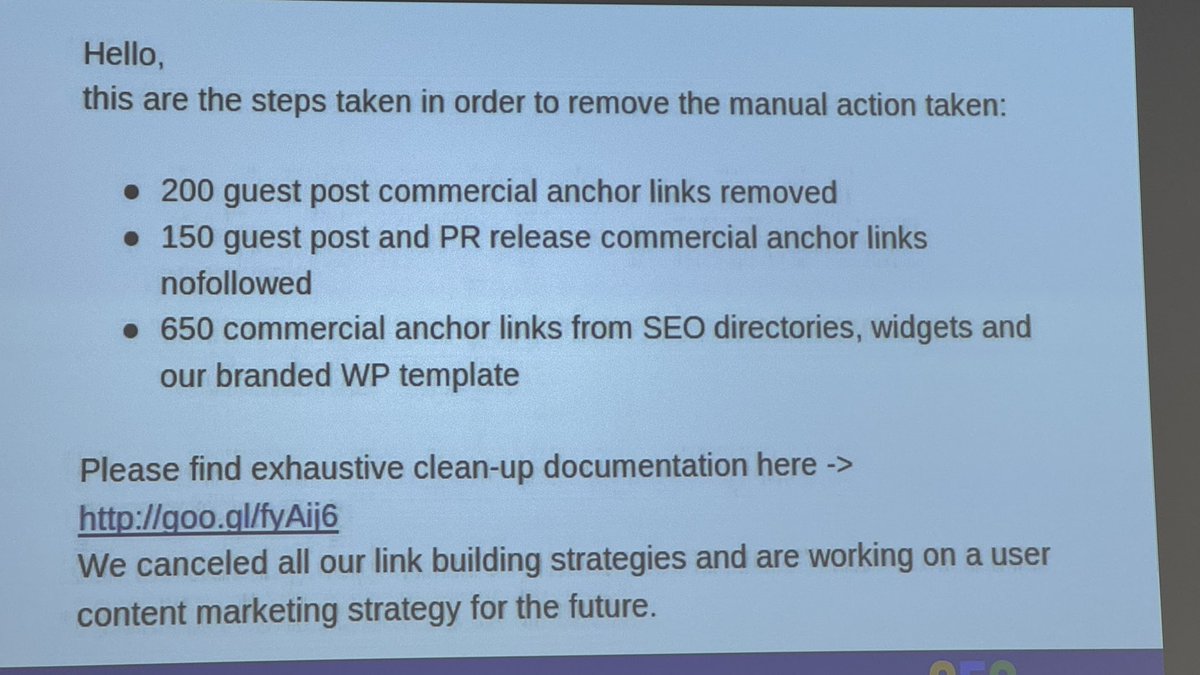
Acknowledging your mistake and being honest is the best way to get a penalty lifted
They also have a huge queue of requests to consider so you don’t want to waste their time.
Below is an example of a good one:
@filiwiese
Creating high-quality content and doing it well is hard to scale - that’s the point. It requires a lot of hard work.
Contribute first party data, original insights, things that attract links naturally
@Kevin_Indig
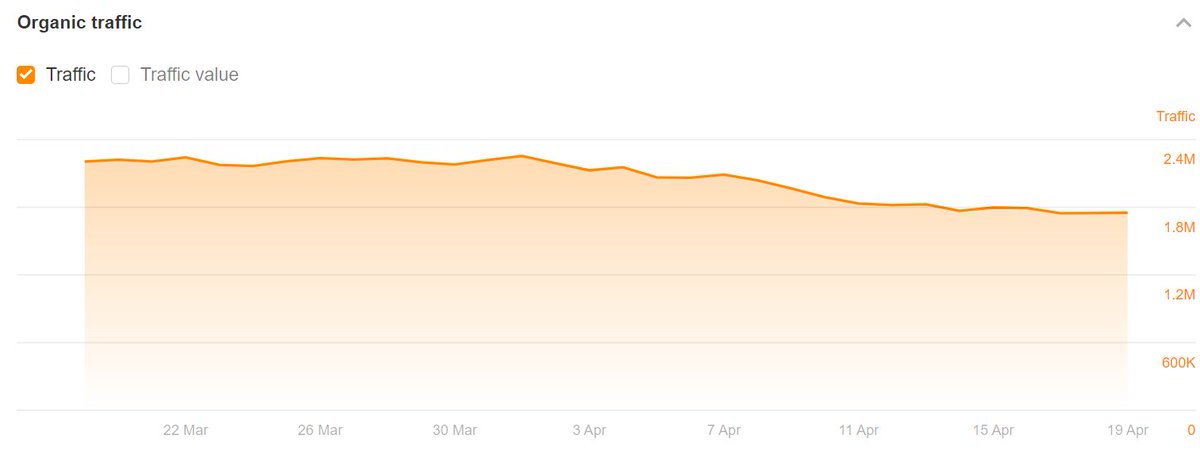
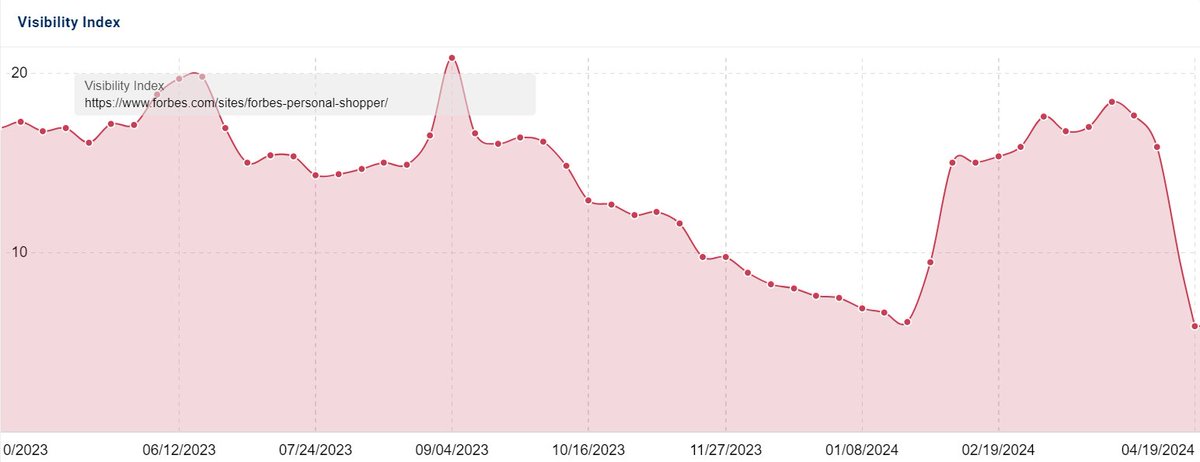
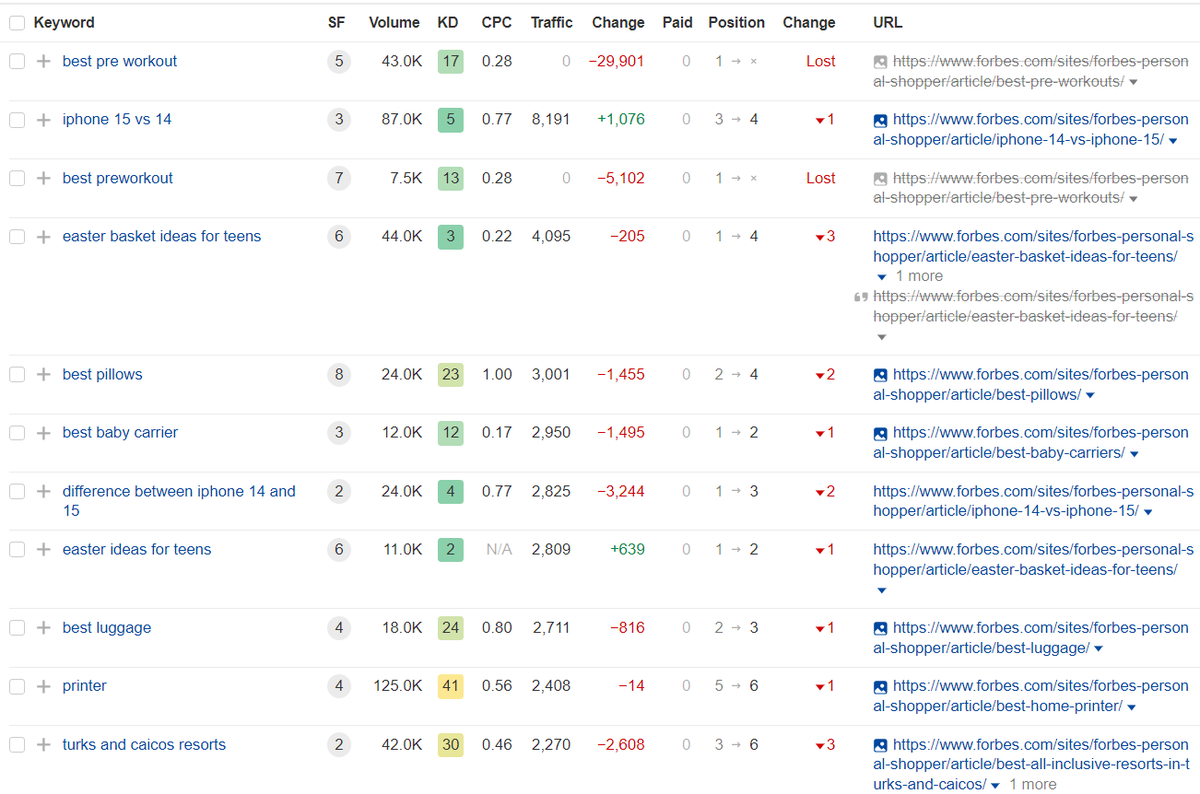
Forbes has lost significant of SEO visibility this week and most of it is isolated to the /forbes-personal-shopper/ section, which contains Forbes Vetted ("best of" content)
Examples of lost/dropped keywords:
"best pre workout"
"best sunglasses for men"
"best all inclusive resorts in Mexico"
Forbes Advisor is still going strong.
Once you realise that people making the most money/are currently winning with SEO have legit businesses with a mission, you’ll realise exactly why niche sites were smoked in the March 5th update
It’s almost as if people found a new method to rank for low competition terms organically, knew they could make money from affiliates and display ads, then started to pump out content based on as many keywords they thought they could rank for
With that thinking, there’s no bigger purpose as to why that site exists and it has soleley been made to get as much organic traffic and make as much money as possible
Compare this to a sleep doctor who set up a healthcare company to help people with sleep apnoea
He/she would have had to go to uni to get their degree to become credible
Then they’d have to source medical grade products that fix sleep apnea with funds they’ve saved
Then they’ve had to learn how to build a site, email marketing, seo, copywriting, woo commerce/shoplift, google & meta ads just so people with the problem can find their site
Can you see the difference?
This person had a mission whereas a niche site owner if being honest with themselves just wanted a cash cow
Not sure if you’re able to answer this @searchliaison / @JohnMu but shooting my shot:
Can you share whether the “site reputation abuse” component of Google’s new spam updates will be enforced via manual actions or algorithmically?
My hot take of the day is that SEO agencies should pretty much never make promises or guarantees about anything.
And I say this as someone that works at one and has always told clients there are no guarantees in SEO.
I have a lot of new ideas about this. I want to make a video about it but will probably get my head chopped off for it (nothing new there).
I think the biggest shift in SEO education happened when most people doing “SEO” started learning SEO via… well, SEO. 😅
And the articles, YT videos and people ranking most prominently for SEO concepts are… not always the best people to learn SEO from. It’s often the opposite 🙃
Even Google’s own SEO guidance is often difficult to find via search 🤦🏽♀️ Google notoriously names its articles something completely different than the concept(s) the article is focused on.
There used to be a sort of shared approach to how many people learned SEO - Google documentation, SEO meetups and conferences, Moz Beginner Guide and forums, other popular SEO forums and publications, highly trusted and experienced industry leaders with big platforms and followings. Some of those key people have since passed away, quit Twitter, retired, stopped sharing things publicly etc.
I think the democratization of SEO (and people shouting about their techniques from the mountaintops) has led to a lot of bad advice circulating. I am constantly amazed by how many new people in the industry seem to be missing basic knowledge about key SEO facts.
I have ideas for how to hopefully do my part to help fix this, one day.