The funny thing about not being an instant success is that you go through it all, and yes, it's true that you're not gifted, interested, or disciplined.
12k for a month from business after a leaving a job of 15lpa may not hurt you as an individual, the challenges grow when you have a family to look after, a fees to pay, some medicines to buy and many more.
Entrepreneur bano employee nehi, saying is easy doing isn't.
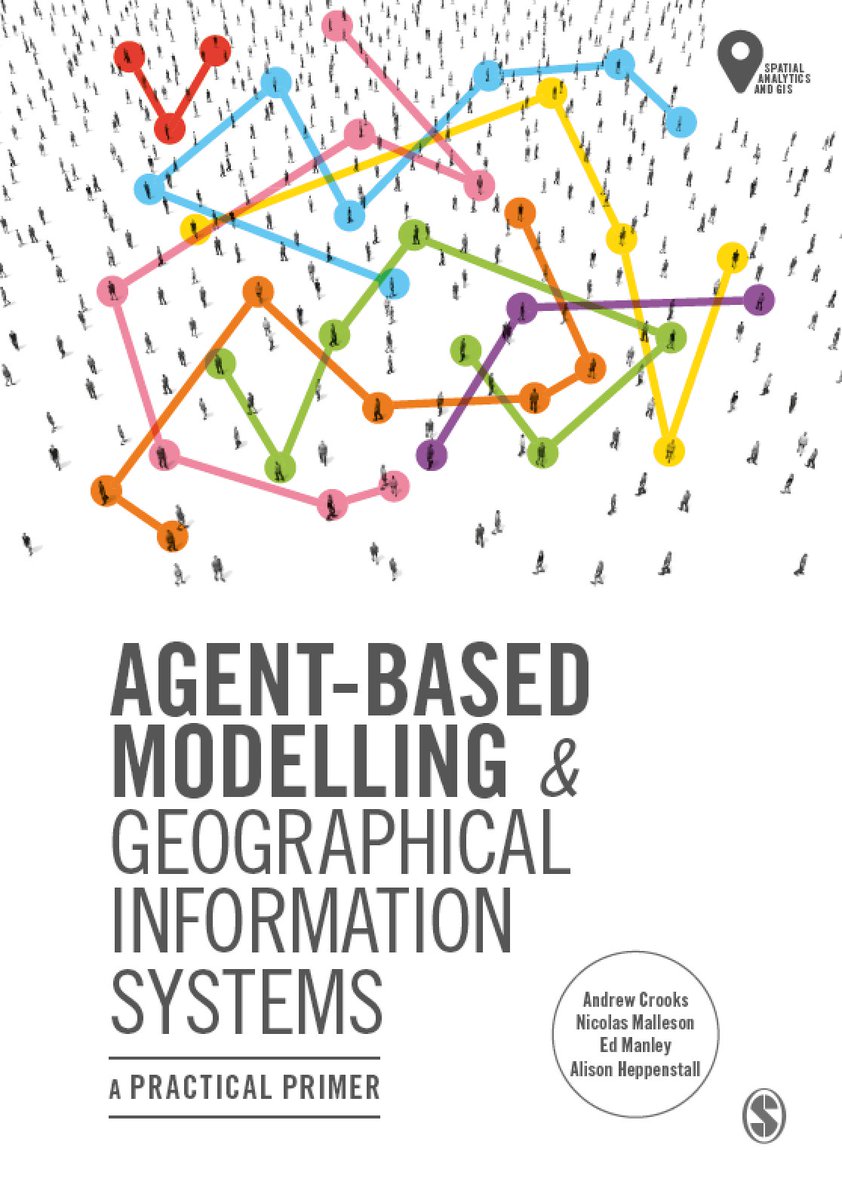
Agent-Based Modelling and Geographical Information Systems
Github Repo : https://t.co/SC7Lz1KjMk
Covers:
- Agent-based Modelling and Geographical Information Systems
- Introduction to Agent-Based Modelling
- Designing and Developing An Agent-Based Model
- Building Agent-Based Models with NetLogo
- Fundamentals of Geographical Information Systems
- Integrating Agent-Based Modelling and GIS
- Modelling Human Behaviour
- Networks
- Spatial Statistics
- Evaluating Our Models: Verification, Calibration, Validation
- Alternative Modelling Approaches
- Summary and Outlook
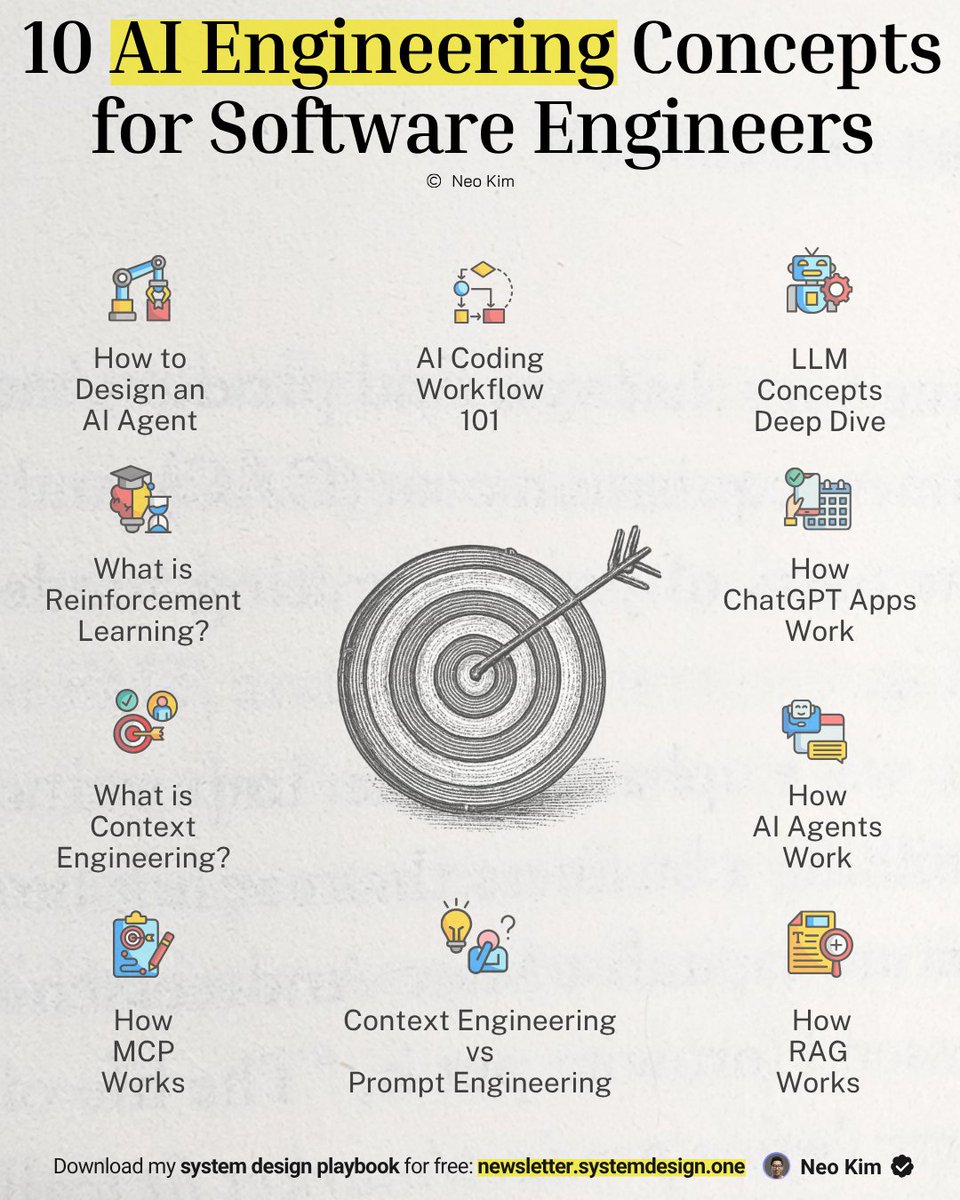
I struggled with AI engineering until I learned these 10 concepts (not joking):
1 How RAG Works
↳ https://t.co/cGmunPTUlb
2 LLM Concepts - A Deep Dive
↳ https://t.co/5lCKxq2g4N
3 How to Design an AI Agent
↳ https://t.co/JvnPd9773A
4 What is Reinforcement Learning
↳ https://t.co/AVpl9j1oit
5 Context Engineering vs Prompt Engineering
↳ https://t.co/9h8q9F2i57
6 Context Engineering 101
↳ https://t.co/OMkiZhkODL
7 AI Coding Workflow 101
↳ https://t.co/paIf9ksIU9
8 How ChatGPT Apps Work
↳ https://t.co/BJTYYnAwO1
9 How AI Agents Work
↳ https://t.co/tk3zkCjRvg
10 How MCP Works
↳ https://t.co/wgf8gHnnkn
What else should make this list?
——
👋 PS - Want my System Design Playbook for FREE?
Join my newsletter with 200K+ software engineers:
→ https://t.co/ByOFTtOihX
———
💾 Save this for later & RT to help others learn AI engineering.
👤 Follow @systemdesignone + turn on notifications.
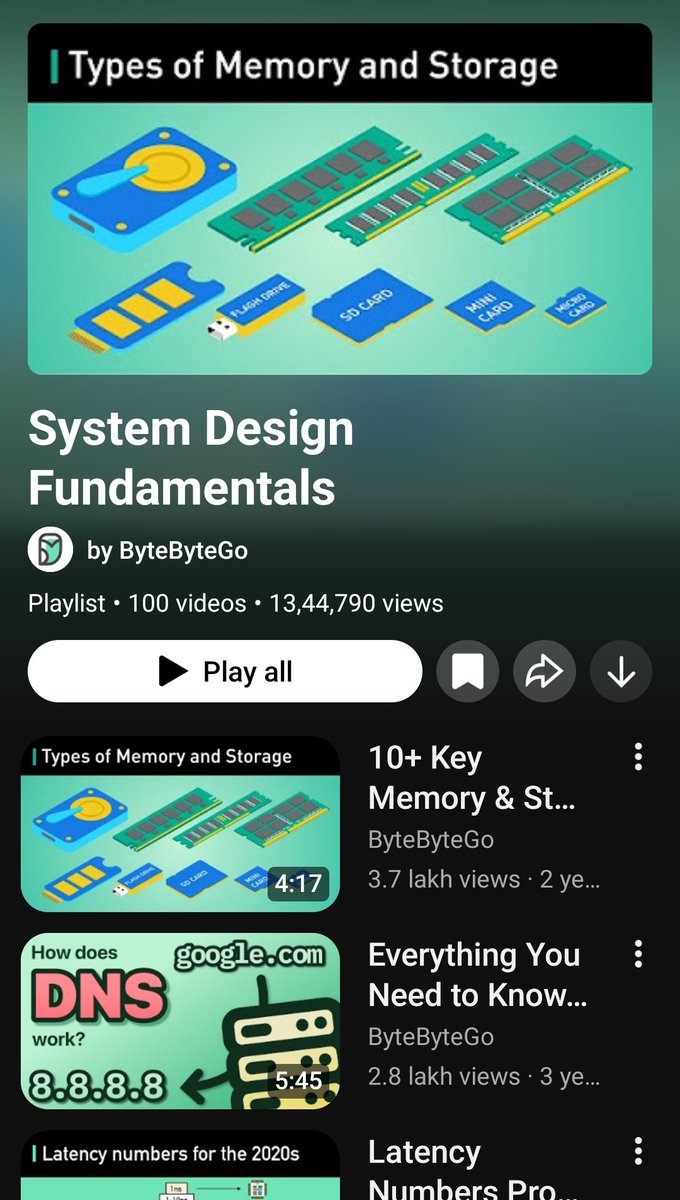
Solve 1 less leetcode question, but spend that time watching this Goated playlist.
DSA teaches you how to solve problems.
System design teaches you how real world systems actually work at scale.
This opens up the mind to think beyond a DSA problem and go deep within the system and how real world things happen at such a large scale
CPU vs GPU vs TPU vs NPU vs LPU, explained visually:
5 hardware architectures power AI today.
Each one makes a fundamentally different tradeoff between flexibility, parallelism, and memory access.
> CPU
It is built for general-purpose computing. A few powerful cores handle complex logic, branching, and system-level tasks.
It has deep cache hierarchies and off-chip main memory (DRAM). It's great for operating systems, databases, and decision-heavy code, but not that great for repetitive math like matrix multiplications.
> GPU
Instead of a few powerful cores, GPUs spread work across thousands of smaller cores that all execute the same instruction on different data.
This is why GPUs dominate AI training. The parallelism maps directly to the kind of math neural networks need.
> TPU
They go one step further with specialization.
The core compute unit is a grid of multiply-accumulate (MAC) units where data flows through in a wave pattern.
Weights enter from one side, activations from the other, and partial results propagate without going back to memory each time.
The entire execution is compiler-controlled, not hardware-scheduled. Google designed TPUs specifically for neural network workloads.
> NPU
This is an edge-optimized variant.
The architecture is built around a Neural Compute Engine packed with MAC arrays and on-chip SRAM, but instead of high-bandwidth memory (HBM), NPUs use low-power system memory.
The design goal is to run inference at single-digit watt power budgets, like smartphones, wearables, and IoT devices.
Apple Neural Engine and Intel's NPU follow this pattern.
> LPU (Language Processing Unit)
This is the newest entrant, by Groq.
The architecture removes off-chip memory from the critical path entirely. All weight storage lives in on-chip SRAM.
Execution is fully deterministic and compiler-scheduled, which means zero cache misses and zero runtime scheduling overhead.
The tradeoff is that it provides limited memory per chip, which means you need hundreds of chips linked together to serve a single large model. But the latency advantage is real.
AI compute has evolved from general-purpose flexibility (CPU) to extreme specialization (LPU). Each step trades some level of generality for efficiency.
The visual below maps the internal architecture of all five side by side, and it was inspired by ByteByteGo's post on CPU vs GPU vs TPU. I expanded it to include two more architectures that are becoming central to AI inference today.
👉 Over to you: Which of these 5 have you actually worked with or deployed on?
____
Find me → @_avichawla
Every day, I share tutorials and insights on DS, ML, LLMs, and RAGs.
You are a genius if you know all of this. If not, tutorials are included!
AI Agents – https://t.co/fQD4Xftl2t
Context – https://t.co/ZZ8z4D30yN
MCP – https://t.co/A92TgjnzQa
Claude Code – https://t.co/XQtNmVY3hH
APIs – https://t.co/tDD6ZE7dXT
Cursor – https://t.co/kbPnKW93rB
Prompts – https://t.co/lRtRdSQ4e2
OpenClaw – https://t.co/RDGqZiJraG
Free AI agents resources - https://t.co/vg2tiFlBz4 .
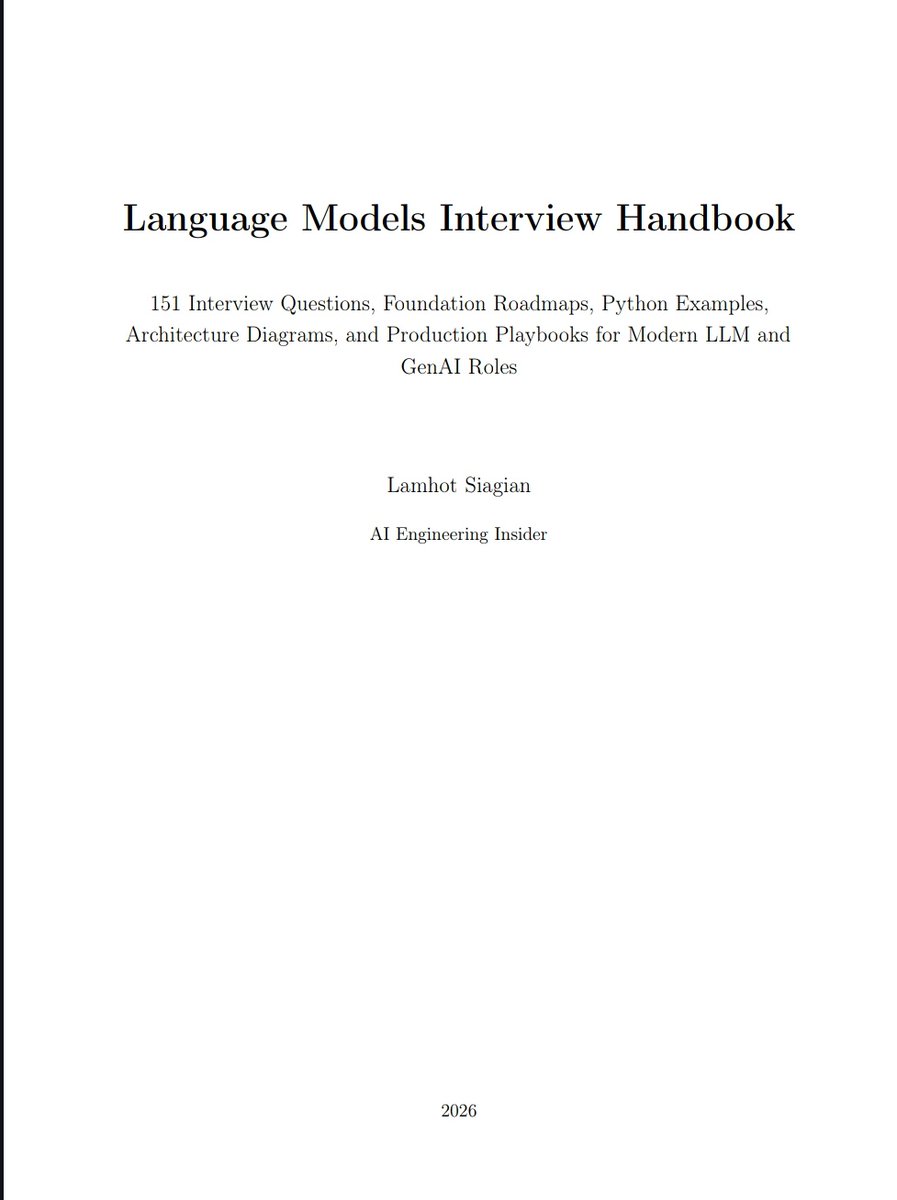
If you're prepping for AI/ML engineer interviews, bookmark this now
A free GitHub repo with 300+ Q&As covering:
◾️ LLM fundamentals
◾️ RAG pipelines
◾️ AI agents & MCP
◾️ Fine-tuning (LoRA, QLoRA, RLHF)
◾️ Vector DBs & embeddings
◾️ LLMOps & production AI
◾️ AI safety & ethics
◾️ System design questions
covers roles like AI engineer, LLMOps, MLOps, AI solutions architect and more
https://t.co/hH5ijV5Zm7
Every man should read:
Day 1 The art of war
Day 2 Declutter your mind
Day 3 Rich Dad Poor Dad
Day 4 Unlimited memory
Day 5 The 80/20 principle
Day 6 Thinking, fast and slow
Day 7 The 48 laws of power
Day 8 hink and grow rich
Day 9 The intelligent investor
Day 10 The 4-hour workweek
Day 11 The law of attraction
Day 12 How to win friends
Day 13 The power of habit
Day 14 The 5 second rule
Day 15 Mindset
Day 16 12 rules for life
Day 17 No excuses
Day 19 The 5 am club
READ THESE BEFORE YOU BUILD YOUR FIRST EMPIRE:
1. Zero to One – Peter Thiel
2. The Lean Startup – Eric Ries
3. Rich Dad Poor Dad – Robert Kiyosaki
4. The Millionaire Fastlane – MJ DeMarco
5. $100M Offers – Alex Hormozi
6. $100M Leads – Alex Hormozi
7. Built to Sell – John Warrillow
8. The E-Myth Revisited – Michael Gerber
9. Good to Great – Jim Collins
10. The Hard Thing About Hard Things – Ben Horowitz
11. Principles – Ray Dalio
12. Shoe Dog – Phil Knight
13. Losing My Virginity – Richard Branson
14. Steve Jobs – Walter Isaacson
15. Elon Musk – Walter Isaacson
16. The Innovator's Dilemma – Clayton Christensen
17. Traction – Gabriel Weinberg
18. Start With Why – Simon Sinek
19. Never Split the Difference – Chris Voss
20. Influence – Robert Cialdini
21. Dotcom Secrets – Russell Brunson
22. Expert Secrets – Russell Brunson
23. Traffic Secrets – Russell Brunson
24. How to Win Friends and Influence People – Dale Carnegie
25. The 48 Laws of Power – Robert Greene
26. The 33 Strategies of War – Robert Greene
27. Mastery – Robert Greene
28. The Art of Seduction – Robert Greene
29. Pitch Anything – Oren Klaff
30. The Sales Bible – Jeffrey Gitomer
31. Sell or Be Sold – Grant Cardone
32. The 10X Rule – Grant Cardone
33. Rework – Jason Fried
34. Company of One – Paul Jarvis
35. The Personal MBA – Josh Kaufman
36. Crushing It – Gary Vaynerchuk
37. The Thank You Economy – Gary Vaynerchuk
38. Building a StoryBrand – Donald Miller
39. This Is Marketing – Seth Godin
40. Purple Cow – Seth Godin
Here are the 5 best GitHub repositories to learn AI Engineering in 2026:
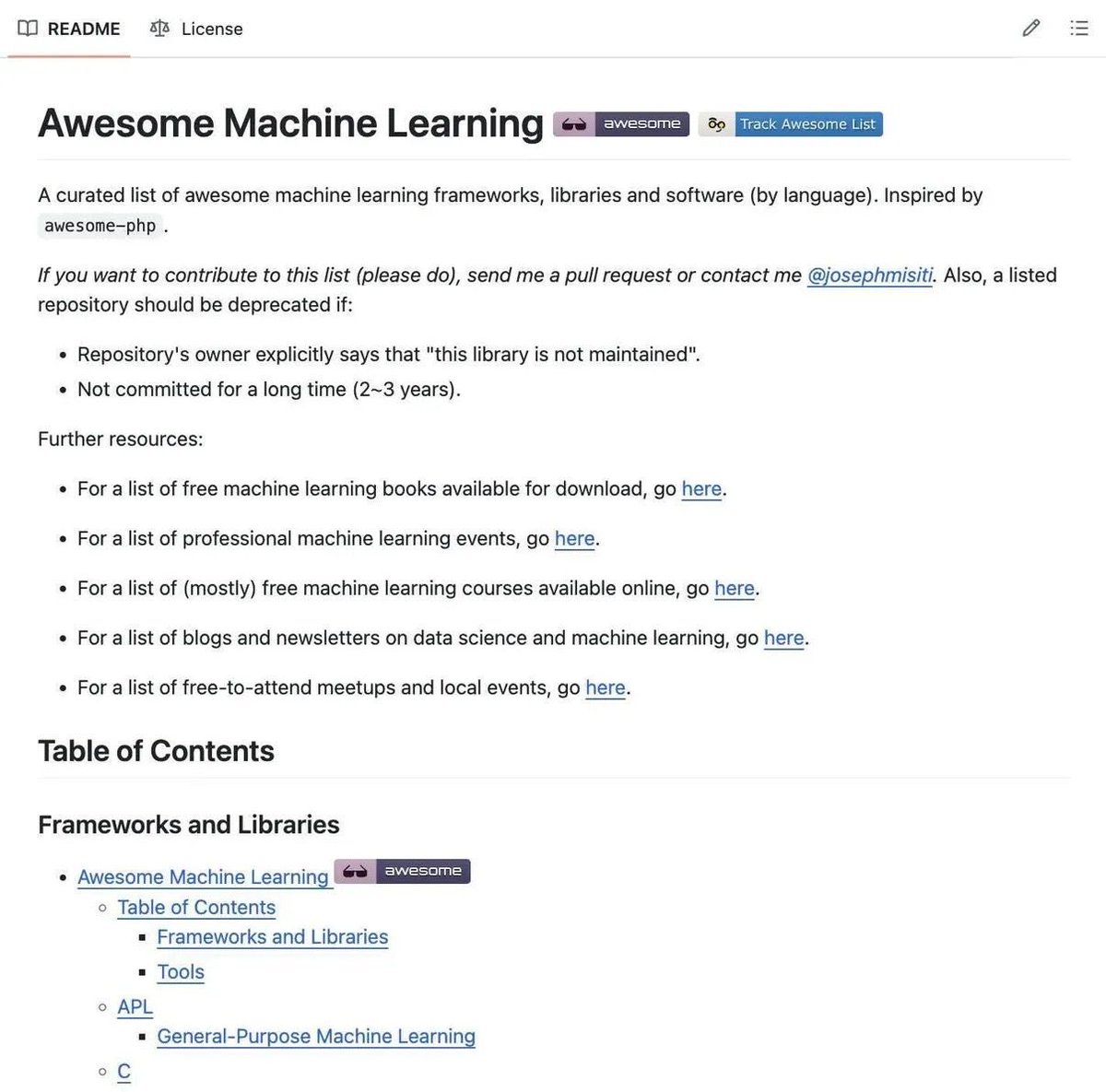
1. Awesome Machine Learning
https://t.co/jSIy8GjRCu…
2. Full Stack Deep Learning
https://t.co/KW03zNyqe6…
3. LangChain
https://t.co/q41Jl9eyki…
4. LlamaIndex
https://t.co/9urNV8keGX…
5. Hugging Face Transformers
https://t.co/m5ou2k4r6S…
Comment "Git" if you find this helpful.
Repost so others can benefit.
“I have never bought a stock basis ROCE or ROE of a company. I use my ‘SMILE’ formula in identifying companies.”
- Vijay Kedia. 2018
3 Minutes of pure masterclass 👏🏻
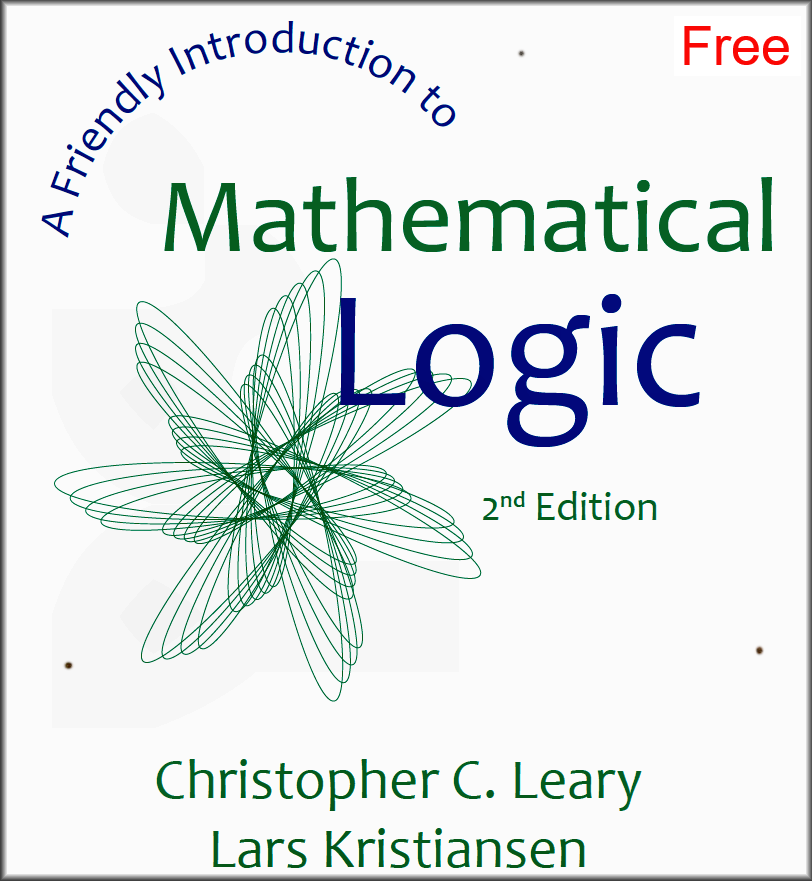
Free Book. "A Friendly Introduction to Mathematical Logic."
At the intersection of mathematics, computer science, and philosophy, Mathematical Logic examines the power of formal mathematical thinking. Readers with no previous study in the field are introduced to the basics of model theory, proof theory, and computability theory. Book is for an upper division undergraduate classroom, or for self study. Gödel’s First and Second Incompleteness Theorems, Solutions to selected exercises.
Link: https://t.co/Oq4o8bn6ws
"Linear Algebra in Data Science"
A compact book (about 200 pages) covering lots of linear algebra relevant to Data Science
https://t.co/Fc3HVFzjod
Contents:
1. Introduction
2. Projections
3. Matrix Algebra
4. Rotations & Quaternions
5. Haar Wavelets
6. Singular Value Decomposition
7. Convolution
8. Frequency Filtering
9. Neural Networks
10. Some Wavelet Transforms
11. Appendix