Data engineering yes. Data analytics no!
SDEs have built things like Elastic Search just to avoid doing manual data stuff.
If you have been a Fullstack in a small org, you’ve been asked to help with preparing data here and there. I hated that kind of work. But it made me appreciate good db designs.
i just need to lock in
i just need to lock in
i just need to lock in
i just need to lock in
i just need to lock in
i just need to lock in
i just need to lock in
i just need to lock in
i just need to lock in
i just need to lock in
i just need to lock in
Drove up north yesterday, proudly sponsored by Cashia ( Cashia | Kenya's Digital Payments Platform | Send & Receive Money https://t.co/MxrmwfUp2L ) and Empire FX ( EmpireFX – Build Your Empire https://t.co/GEa7sijaJe )
A solid 16 hour drive on the most jawbreaking roads!
Created an end-to-end Cancer Genomics ML pipeline for processing copy number variation data, training regression models, and serving predictions through a Flask web interface with Airflow-compatible ETL workflows.
> Two Data Engineers.
Same experience. Same resume.
- One gets interview calls every week. The other can’t even clear the first round.
The difference?
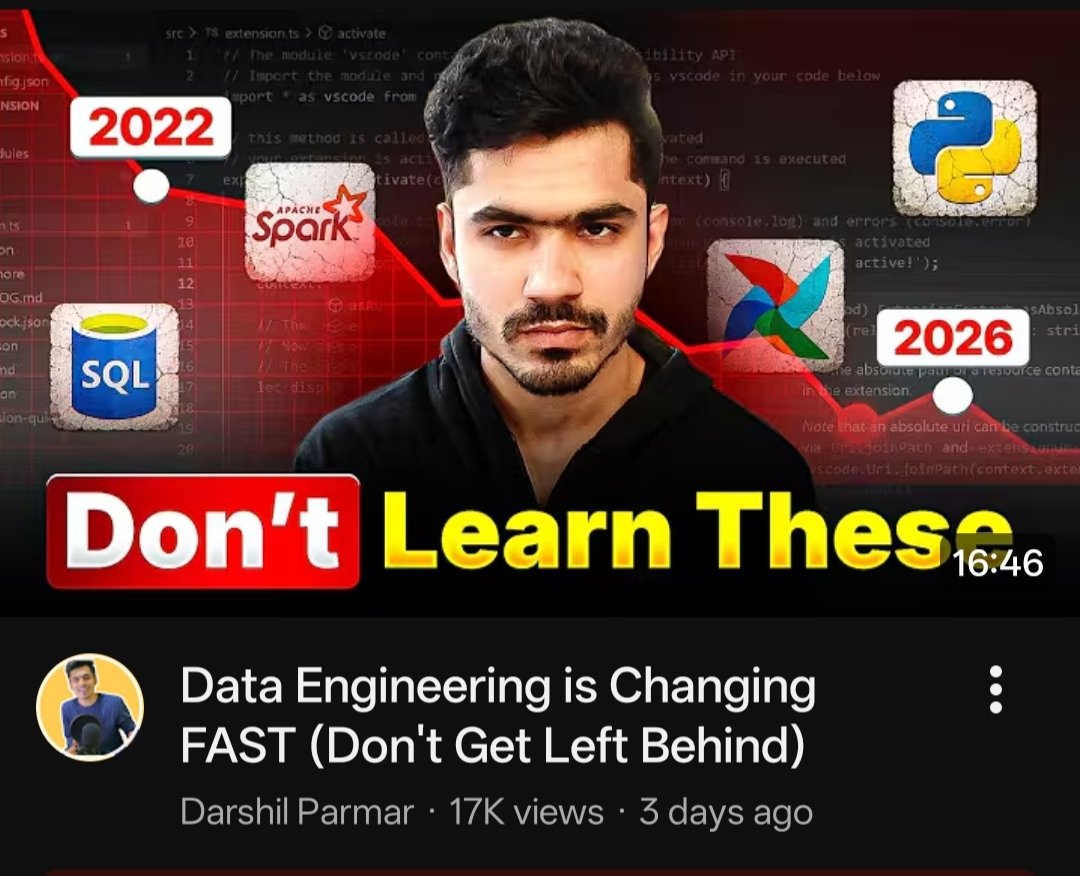
→ One adapted to the 2026 Data Engineering stack
→ The other is still following the old playbook
In this video I talked about:
→ Why ETL is slowly getting replaced by ELT
→ Why DBT is everywhere now
→ Why Lakehouse architecture matters
→ Why learning 50 tools is useless without fundamentals
→ How AI is changing Data Engineering workflows
→ The one skill most Data Engineers still lack
And no, it’s not coding.
Not all data is created equal, especially in data engineering and analytics.
There are three main ways to classify it:
1. Structured data → Neat and predictable, like a perfectly organized spreadsheet
2. Semi-structured data → Has a flexible structure where fields can differ, like online forms or survey responses
3. Unstructured data → Anything free-form like documents, images, audio, or video
Here are tech jobs that will stay relevant in the AI era:
•AI/ML Engineer
• Data Engineer
• Backend Developer
• Full-Stack Developer
• DevOps Engineer
• Cloud Engineer (AWS, Azure, GCP)
• Cybersecurity Engineer
• AI Product Manager
• Prompt Engineer / AI Specialist
• Robotics Engineer
• Embedded Systems Engineer
• Blockchain Developer
• Site Reliability Engineer (SRE)
• Software Architect
• Network Engineer
These are Jobs that involve building, managing, or securing systems won’t disappear they’ll evolve with AI.
The fastest way to get disrespected is to treat access to you like it is free. Attention is currency. When you give it to disrespect, you reward the behavior you hate. When you withdraw it calmly, you teach the room your price. Status is not demanded, it is enforced through what you stop tolerating.
Spent 4 months and built Omi for Desktop, your life architect
It sees your screen, hears your conversations and tells you what to do next
It’s like having a second brain that actually pays attention
Open source, local, link below
“A man who has read a thousand books is armed for life; a man who has read none is easy prey. The man who has read a thousand books has lived a thousand lives. He has seen cities he has never visited, spoken to men who died centuries ago, and walked in worlds that no longer exist. Reading does not merely inform him; it enlarges him. It stretches the boundaries of his own experience until he becomes something more than himself.”
-G. K. Chesterton
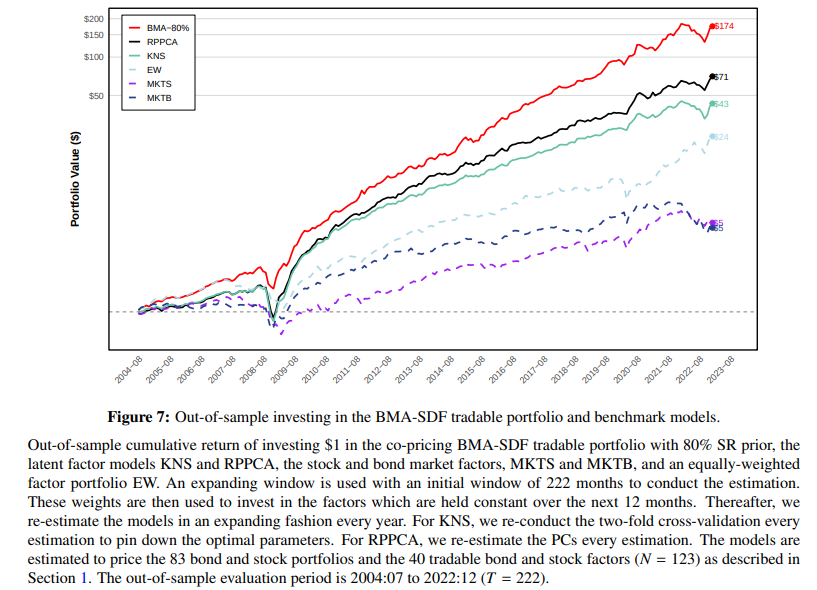
The method’s core objects depend on the prior Sharpe ratio and the bond-vs-stock prior weighting. The authors even say they highlight the 80% prior because it tends to yield the best out-of-sample performance 🤨