Claude writes better code when it can verify its work. Checks that used to be expensive, like tests, benchmarks, and end-to-end runs, are now cheap.
Here’s how the Claude Code team thinks about verification:
https://t.co/kPeRO0eCkJ
Introducing Claude Fable 5.2 and Claude Mythos 5.2, designed to tackle the most daunting technical challenges.
They’re capable collaborators on ambitious projects in many fields, and show improvements in areas like coding, reasoning, and vision.
Memory is what allows Claude to learn from experience. In a new Engineering Blog post, we share how “dreaming” helps Claude organize what it’s learned, correct its mistakes, and find what it needs more easily the next time. https://t.co/uUEN4bNkr9
Earlier this week Tristan published his top YouTube channels:
https://t.co/NZ3UCNo6cT
Which looked excellent so clearly I had to turn it into TristanTube:
https://t.co/l0KyW1WdNH
47K super nerdy videos +TV mode for laid back watching. (One-shotted with Claude Code in 3 minutes)
Introducing GPT‑6 Cyber: a major advance in security research that pairs stronger capabilities with better model alignment.
The model powered the Linux kernel research we announced yesterday, and security teams at companies like Mozilla, Palo Alto Networks, Calif, and Cisco—alongside our own at OpenAI—are already putting it to work.
GPT-6 Cyber is available to select Daybreak Red customers and we are expanding access over time.
https://t.co/Nzab3Z1Td6
I wanted to understand the structural and philosophical differences between GPUs, TPUs and newer alternatives (like Groq LPUs) without getting drowned in specs and jargon.
Mispronunciation of the day: "soldered" 🤦♀️...
0:00 Intro
0:56 The origin story of TPUs
3:42 The first TPU: an ASIC for matrix multiplication
5:21 SRAM vs DRAM
7:21 The memory bandwidth problem
9:14 Systolic arrays
12:48 TPU vs GPU
17:51 Groq’s LPU
25:38 GPU vs LPU
28:36 NVIDIA on the AI chips boom
October was a big month for Claude Code 🍁
We shipped mods, made the desktop app better at running lots of sessions side by side, gave you more insight into where your usage goes, and plenty more. Here's a recap!
We asked GPT-6 Astra to edit Qwen3.5-0.8B weights to improve math.
It directly changed only 0.016% of weights, fixing 0.8B's reasoning loops & improving math up to 6x and even instruction following 3x, without gradients or training.
We call this Weight-Space Programming: frontier LLMs can now natively read/write neural network weights! 🧵
Blog: https://t.co/bOWCcFhCVq
As AI becomes more capable at finding vulnerabilities, defenders need to put it to work before attackers do.
We’re planning our next internal security sprint at OpenAI and partnering with Cathedral Systems, whose researchers will use our models alongside our teams to challenge our defenses. They’ll bring differentiated expertise and approaches to our ongoing work to find and fix weaknesses with AI.
We’re also raising bug bounty rewards, including more than quadrupling rewards for critical findings. Exceptional findings will be eligible for up to $172,000, including bonuses.
We’ll keep advancing our models, using them to strengthen our own systems, and expanding access for trusted defenders.
https://t.co/vcaoHROTt2
Introducing CVE-2026-106378: Chrome GPU Sandbox Escape to full Remote Command Execution using synthetic keyboard injection
By combining it with common GPU bugs, it becomes a full chain. Binance DevOps was most likely pwnd with a zeroday chain affecting the browser 😬
Andrej Karpathy’s setup from his HackerTube blog today:
- “I use Claude Code (desktop app for Mac).”
As I’ve been saying, terminal is the wrong interface for coding agents. Desktop apps are the best interface today.
- “I use Opus 5.5 on Medium effort as my default.”
There’s no point to use the smartest model at the highest reasoning effort for most tasks.
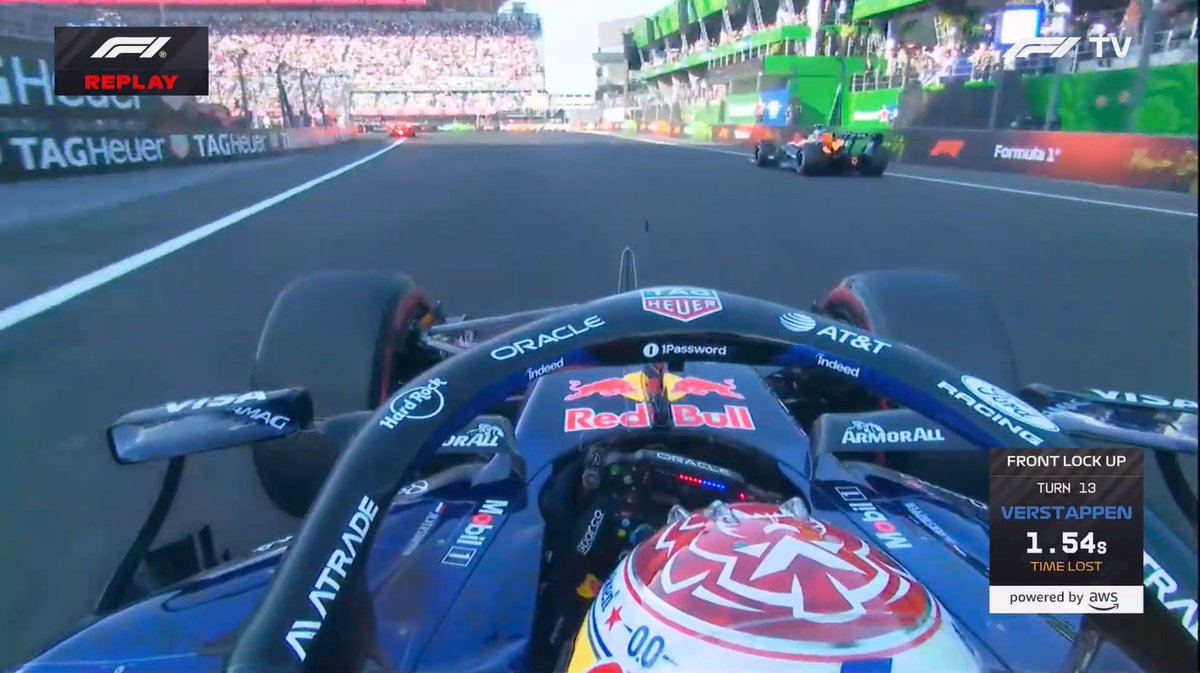
@NicemanRacing@Firebreqth@RBR_Daily No impeding, that's something you made up
even if there's impeding as you said, 1 min left means you take the risk in favor of best track conditions