Luther noted how the kind of celibacy imposed by monasteries was unnatural & unsustainable for most, which is why they proliferated scandal.
The kind of celibacy we impose (no marriage until education & career are established at ~30yo) is no less unnatural & unsustainable.
In 1803, a British blacksmith named John Jewitt was taken captive by Chief Maquinna of the Mowachat people of Vancouver Island. He was asked to file the teeth of the Chief’s brother so the guy could bite off his wife’s nose for refusing to put out.
Life before Canada. 🪶
This time, you are mistaken. Cows are by no means „pure herbivore“. Ethologists from my old university tried to teach some stuff to cows and needed some reward to motivate them. Finally, they used wurstsemmel (Rolls with sliced sausage), and where astonished how motivated the cows became. Cows are not pure herbivores - they would appreciate a little animal food, if they could only get it!
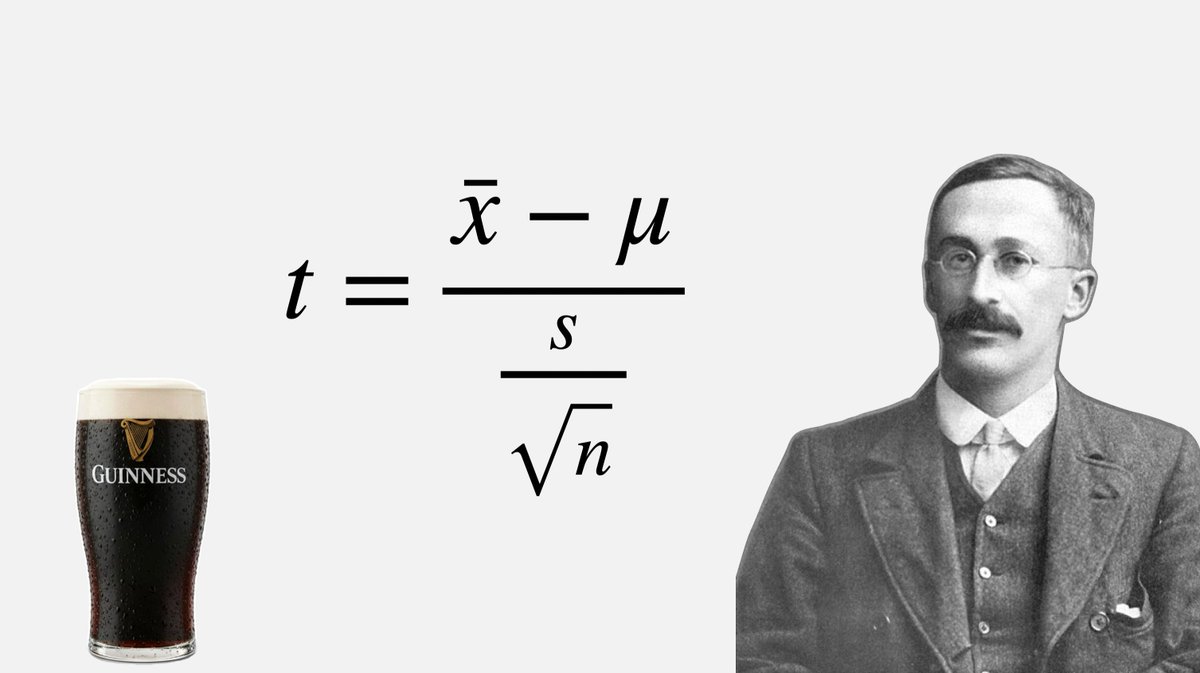
On this day 150 years ago William Sealy Gosset was born. He spent his whole career as a brewer at Guinness, working on a problem the textbooks ignored: how to draw conclusions from tiny samples, like four plots of barley or a handful of hops. The statistics of the day assumed large samples so Gosset invented the statistics of small ones.
Guinness barred its employees from publishing after one of them leaked trade secrets, and did not want competitors knowing it used science to brew beer so when Gosset published his method in 1908 he signed it with a pseudonym: Student.
Every clinical trial, lab experiment and A/B test that runs a t-test today is using the work of Student. The most famous name in statistics is a fake one.
It's interesting to read the Muslim accounts of how Pelagius began the Reconquista in early 8th century.
They write how "a vicious infidel called Balayo" took refuge in the mountains with other warriors who survived eating wild honey and fiercely resisted Muslim attacks:
"Ibn Hayyan said, In the days of ['Anbasa b. Suhaim al-Kalbi] there arose in Jilliqiyya (Northern Spain) a vicious infidel called Balayo (Pelayo) who criticized the infidels throughout the period of their flight, and kindled their spirits until he encouraged them to rise in revolt and defend his land. From that time the Christians of al-Andalus began to defend what land remained in their hands and to protect their families against the Muslims, which they had not previously aspired to do. It is said that no single village, nor anything larger, remained unconquered in the territory of Galicia, except a rocky outcrop on which this infidel took refuge. His companions died of starvation until only thirty men and about ten women were left. They had nothing to live on except the honey from some bees in hives that were there with them in the fissures of the rocks. They continued to defend their rugged ground until their efforts exhausted the Muslims, who viewed them scornfully and said, "Thirty infidels what could possibly come from them?" [But] after that they grew in power, numbers and control of territory in such a way that it cannot be hidden. After Pelayo their king was Alfonso, ancestor of the greatest and most celebrated kings of that name.
Ibn Sa'id said, Contempt for that rocky outcrop and those who crawled about on it ended up with their descendants gaining possession of great cities; even the capital city of Cordova, which had been the centre of 'Anbasa's government, is now in their hands (may God restore it [to Islam]!).
The people of Christian Spain rose in revolt against the Muslims and the position ofthe unbeliever Pelayo became strong. He left his rocky outcrop and conquered the district of Asturias. Then the Muslims of Galicia and the people of Astorga attacked him over a long period, until the time of the civil war between Abu'l-Khattar and Thawaba. In the year (1)33/750-51 he [Pelayo] defeated them and expelled them from the whole ofGalicia. Everyone who was wavering in his faith or was too weak to pay tribute converted to Christianity; those who were killed were killed and the defeated survivors went over the mountains towards Astorga, until the famine took a finn hold. [The Christians] also expelled the Muslims from Astorga and elsewhere, and in (1)36/753-54 the people became concentrated in the region beyond the last mountain pass [beyond the Duero basin] and in Quriya (Coria) and Merida. The scarcity intensified and the people of al-Andalus left for Tangiers and Asila and the Berber Rif, moving away and emigrating. They crossed over a wadi in the district of Sidonia known as the Wadi Barbat (no Barbate). These years were called the Years of Barbate [during which] the population of al-Andalus was diminished, and the enemy could almost have overcome them, had not the famine encompassed them also."
Source: Charles Melville & Ahmad Ubaydli, Christians and Moors in Spain, Volume III: Arabic Sources (Oxbow Books, 1992), 18-21.
The Roman agricultural guide De Re Rustica mentions the classic principal-agent problem of slave labor.
Since slaves are not properly compensated with the fruits of their labor, they require constant supervision. But since good supervision is difficult to obtain—and the supervisors themselves require supervision to do a good job—free labor is often preferable in the end.
"a man's personal supervision never fails to yield a larger return from his land than does that of a tenant..On far distant estates, however, which it is not easy for the owner to visit, it is better for every kind of land to be under free farmers"
طريقة أم زوجي في منع الخلافات بين 9 من أبنائها… بسيطة، لكن مو كل أحد يفكر فيها
عائلة زوجي كبيرة جدًا.
إخوته الأحياء عددهم 9، وكلهم متزوجين ومستقلين بحياتهم.
بس الغريب… إن الخلافات بينهم قليلة جدًا.
مع إن الطبيعي، كل ما زاد عدد الإخوة تزيد الدراما والمشاكل، صح؟
طلع فيه عادة صغيرة واحدة بس… من وجهة نظري عبقرية
(وأفكر أطبقها أنا بعد لما يكبرون أطفالي)
something is wrong with american cities and nobody can quite name it.
you can work from home. you can go to a bar. you can sit in a coffee shop until 6pm and that's it.
for 200 years america had a fourth option. we lost it in the last 50. here's what it was and what's replacing it:
Les hommes éprouvent du plaisir à voir un tricheur puni. Pas les femmes. Et ça explique pourquoi notre justice est en crise aujourd'hui.
Pour le comprendre, il faut lire l'étude de Singer et al., publiée dans Nature (Numéro 439, p. 466-469, 2006).
Cette étude a observé 32 volontaires (16 hommes et 16 femmes) pendant qu'ils regardaient des acteurs "justes" ou "injustes" (ayant triché) recevoir de légers chocs électriques.
Le résultat ?
Quand un joueur "juste" souffre, hommes et femmes activent les mêmes aires de la douleur empathique (fronto-insulaire et cortex cingulaire antérieur).
Jusqu'ici, rien d'anormal...
En revanche, lorsque c'est un joueur « injuste » qui souffre, les hommes ne montrent aucune empathie (pas d'activation des aires de la douleur), mais une bouffée d'activité dans le noyau accumbens, le centre de la récompense, le même qui s'allume pour la nourriture, le sexe ou la drogue.
Les femmes, elles, continuaient à montrer de l'empathie, même envers le tricheur qui souffrait et était sanctionné. La partie du cerveau dédiée au plaisir de la récompense ne montrait aucune activité.
En bref, le plaisir neurologique d'infliger une punition et l'intensité de ce désir sont constitutifs du "comportement juste". A l'inverse, leur absence explique l'impossibilité, quasiment biologique, de rendre la justice.
Voilà pourquoi la justice est dysfonctionnelle aujourd'hui.
Two math olympiad champions wrote a training manual in 1993 on two old Macintosh computers, and every American kid who has won a major math competition in the last decade learned to think from it.
Their names are Sandor Lehoczky and Richard Rusczyk. The book is called The Art of Problem Solving. Most people in math know it as AoPS.
Since 2015, every single member of the US International Math Olympiad team has been an AoPS student. Not most of them. Every one.
That statistic sounds impossible until you understand what the book actually does.
Lehoczky and Rusczyk were not professors. They were competitors. Lehoczky earned the sole perfect AIME score in 1990 and led the national first place team. Rusczyk was a USA Mathematical Olympiad winner and a perfect AIME scorer in 1989. They had both survived the same brutal selection process the book was designed to train students for.
And the first thing they decided was that almost every existing math textbook was teaching the wrong thing.
School math gives you formulas. You memorize them. You apply them. You pass the test. Then you sit down in front of a real competition problem and the formula does not apply, and you have nothing underneath it.
That is the gap. The gap is not knowledge. It is thinking.
The entire premise of AoPS is that problem-solving is a transferable skill, not a bag of memorized tricks. A student who genuinely understands why a technique works can adapt it, combine it with something else, and deploy it in a context they have never seen before. A student who only memorized the technique freezes the moment the problem looks different.
The book teaches the difference between a formula and a method.
A formula tells you what to compute. A method tells you how to see. The students who win olympiads are not the ones who know more formulas. They are the ones who have trained themselves to look at an unfamiliar problem and recognize its structure. To see that this problem is secretly asking the same question as a problem they solved three weeks ago, just dressed differently.
Rusczyk calls this "learning to read the problem." Not reading the words. Reading what the problem is actually asking underneath the words.
The second thing they built into the book is tolerance for being stuck.
Most students treat confusion as a signal to stop. The book treats confusion as the starting point. Every chapter pushes students past the point where the obvious approach runs out. That moment of running out is not failure. That is where the actual thinking begins.
Lehoczky once described it this way. If you can solve a problem quickly, you are not learning. You are performing. Learning only happens when you are past the edge of what you already know.
The book was written on old Macintosh computers in 1993. Rusczyk launched the AoPS website in 2003. Today the community has over one million users. Thousands of students enroll in AoPS online courses every year. Most winners of every major American math competition are AoPS alumni.
A platform built by two kids who were good at math competitions has become the infrastructure that produces the next generation of mathematicians, engineers, and scientists who are good at thinking.
The formulas you memorized in school will eventually be obsolete.
The thinking you trained will not.
What is one problem in your life right now that you have been avoiding because you do not yet know the right formula to solve it?
A thread on how Emily Wilson misinterprets the killing of the 12 slave women, inverting the poem's logic, and making Odysseus and Telemachos monsters that execute innocent rape victims, rather than protectors of the victims and punishers of rapists and their accomplices.
1/18
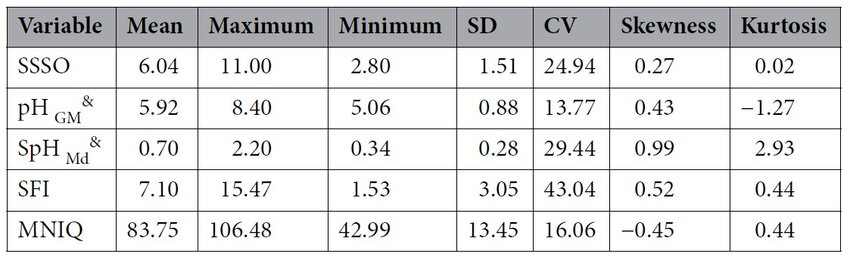
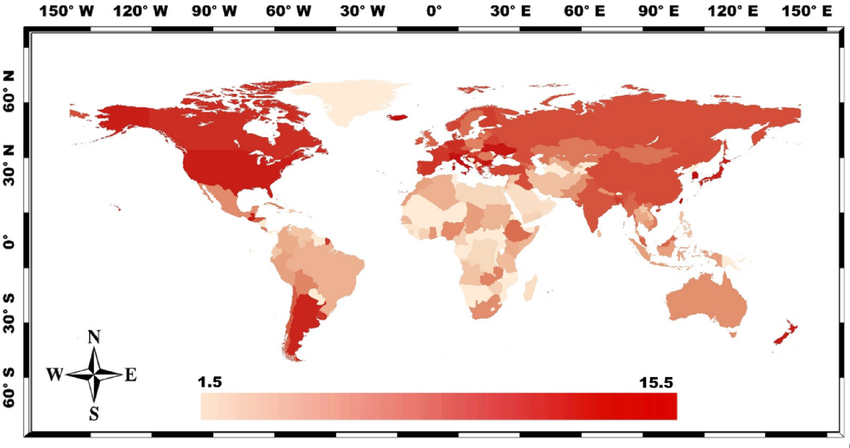
Soil fertility alone explains 34% of the differences in national IQ. Countries on the best soils (Mollisols, Andisols) average 10–15 IQ points higher than those on the wort soils (Oxisols, Ultisols), even before accounting for education or income.
This geographic pattern is visible in real populations. Japan and Taiwan sit on volcanic Andisols and consistently rank among the highest in global intelligence metrics due to their nutrient‑rich, high‑CEC soils. Meanwhile, much of equatorial Africa rests on Oxisols, soils so weathered and nutrient‑stripped that they produce chronically low micronutrient availability.
The further a soil’s pH drifts from 6.5, the more national IQ (MNIQ) declines. If your soil is too acidic (like much of the tropics), zinc and iron become unavailable. If your soil is too alkaline (like the Middle East), micronutrients get locked up too. The correlation between soil fertility and national IQ is r = 0.58, meaning soil alone accounts for 34% of the variation. Explaining 34% of a complex human trait is extremely high.
Doom and Age of Empires creator Sandy Petersen blasts Amazon over their handling of Stargate:
"1) get handed a massively popular IP that spans 17 years of successful shows."
"2) realize it has millions of loyal fans, desperate for more. They are now in their 40s and 50s, flush with money. Eager to teach their kids & grandkids about Stargate."
"3) you could start with this. You are already three steps up the ladder to huge success. The fans will evangelize it, if you don't wreck the IP. Don't believe it? Look how the fans evangelized Battlestar Galactica after its 30 year hiatus. And the initial Dr Who reboot after 15 years."
"4) cancel the project because you want a "new take" that will eliminate all the loyal fans and turn them into bitter enemies."
"It's like an ancient Greek play about hubris."
Why are corporate execs like this?
Locations of slave raids in Eastern Europe between 1453 and 1777. Between 1453 and 1777, the Crimean Khanate, a vassal of the Ottoman Empire, conducted systematic slave raids, known as the "harvesting of the steppe". Up to 5 millions of Eastern Europeans, primarily Slavs, were captured and sold at the central slave market in the port of Caffa in Crimea. Where are our reparations?
The Sogdian names of the planets in Chinese transcription start appearing from the mid-eighth century. I keep finding them in handwritten manuscripts from that period when the weekdays are discussed. There was clearly a significant translation of astrological material into Chinese from Sogdian. I tend to think the Manichaeans were involved.
you can fuck up pretty bad at most ages and still have your life work out, but the people i know who wound up in bad relationships or with health downturns while single in their 30s mostly missed the boat on kids.
for all the talk of permanent records and getting into the right college when you’re young, it turns out that career paths are winding and forgiving across the course of a lifetime, but there is actually a relatively short window to find a partner and start a family.
India is the great natural experiment in plant-based eating, and almost nobody wants to run the numbers on it.
It is the most vegetarian large country on earth, hundreds of millions of people, many vegetarian from birth. Grain at the base, pulses, vegetables, all cooked in vegetable oil: the government Eat Well plate, run as a national experiment for thousands of years.
The result. Around a third of its children are stunted, the largest share of the world's stunted children of any nation. The Indian Dietetic Association reports 84% of the country's vegetarians are protein deficient, against 65% of its meat eaters. And the nation that eats the least meat is the diabetes capital of the world, with over 100 million diabetics.
Before anyone blames poverty, a Journal of Nutrition study found a vegetarian mother predicted stunting across every wealth bracket, rich families included. The diet was carrying its own weight.
Bioavailable iron, zinc, B12 and complete protein build a child's skeleton. Strip them out and it comes out smaller. The animal fat, meanwhile, got swapped for refined grain, sugar and seed oil. India is now the world's biggest vegetable oil importer, per-person intake tripled since 2001.
The diet sold to the West as optimal human nutrition has been run here, at the scale of a billion people, for longer than the West has existed. It did not produce optimal humans. It produced the largest population of stunted, diabetic, protein-starved people on earth.


![LandsknechtPike's tweet photo. It's interesting to read the Muslim accounts of how Pelagius began the Reconquista in early 8th century.
They write how "a vicious infidel called Balayo" took refuge in the mountains with other warriors who survived eating wild honey and fiercely resisted Muslim attacks:
"Ibn Hayyan said, In the days of ['Anbasa b. Suhaim al-Kalbi] there arose in Jilliqiyya (Northern Spain) a vicious infidel called Balayo (Pelayo) who criticized the infidels throughout the period of their flight, and kindled their spirits until he encouraged them to rise in revolt and defend his land. From that time the Christians of al-Andalus began to defend what land remained in their hands and to protect their families against the Muslims, which they had not previously aspired to do. It is said that no single village, nor anything larger, remained unconquered in the territory of Galicia, except a rocky outcrop on which this infidel took refuge. His companions died of starvation until only thirty men and about ten women were left. They had nothing to live on except the honey from some bees in hives that were there with them in the fissures of the rocks. They continued to defend their rugged ground until their efforts exhausted the Muslims, who viewed them scornfully and said, "Thirty infidels what could possibly come from them?" [But] after that they grew in power, numbers and control of territory in such a way that it cannot be hidden. After Pelayo their king was Alfonso, ancestor of the greatest and most celebrated kings of that name.
Ibn Sa'id said, Contempt for that rocky outcrop and those who crawled about on it ended up with their descendants gaining possession of great cities; even the capital city of Cordova, which had been the centre of 'Anbasa's government, is now in their hands (may God restore it [to Islam]!).
The people of Christian Spain rose in revolt against the Muslims and the position ofthe unbeliever Pelayo became strong. He left his rocky outcrop and conquered the district of Asturias. Then the Muslims of Galicia and the people of Astorga attacked him over a long period, until the time of the civil war between Abu'l-Khattar and Thawaba. In the year (1)33/750-51 he [Pelayo] defeated them and expelled them from the whole ofGalicia. Everyone who was wavering in his faith or was too weak to pay tribute converted to Christianity; those who were killed were killed and the defeated survivors went over the mountains towards Astorga, until the famine took a finn hold. [The Christians] also expelled the Muslims from Astorga and elsewhere, and in (1)36/753-54 the people became concentrated in the region beyond the last mountain pass [beyond the Duero basin] and in Quriya (Coria) and Merida. The scarcity intensified and the people of al-Andalus left for Tangiers and Asila and the Berber Rif, moving away and emigrating. They crossed over a wadi in the district of Sidonia known as the Wadi Barbat (no Barbate). These years were called the Years of Barbate [during which] the population of al-Andalus was diminished, and the enemy could almost have overcome them, had not the famine encompassed them also."
Source: Charles Melville & Ahmad Ubaydli, Christians and Moors in Spain, Volume III: Arabic Sources (Oxbow Books, 1992), 18-21.](https://pbs.twimg.com/media/GkokTEZXoAIZeLb.jpg)




![LandsknechtPike's tweet photo. It's interesting to read the Muslim accounts of how Pelagius began the Reconquista in early 8th century.
They write how "a vicious infidel called Balayo" took refuge in the mountains with other warriors who survived eating wild honey and fiercely resisted Muslim attacks:
"Ibn Hayyan said, In the days of ['Anbasa b. Suhaim al-Kalbi] there arose in Jilliqiyya (Northern Spain) a vicious infidel called Balayo (Pelayo) who criticized the infidels throughout the period of their flight, and kindled their spirits until he encouraged them to rise in revolt and defend his land. From that time the Christians of al-Andalus began to defend what land remained in their hands and to protect their families against the Muslims, which they had not previously aspired to do. It is said that no single village, nor anything larger, remained unconquered in the territory of Galicia, except a rocky outcrop on which this infidel took refuge. His companions died of starvation until only thirty men and about ten women were left. They had nothing to live on except the honey from some bees in hives that were there with them in the fissures of the rocks. They continued to defend their rugged ground until their efforts exhausted the Muslims, who viewed them scornfully and said, "Thirty infidels what could possibly come from them?" [But] after that they grew in power, numbers and control of territory in such a way that it cannot be hidden. After Pelayo their king was Alfonso, ancestor of the greatest and most celebrated kings of that name.
Ibn Sa'id said, Contempt for that rocky outcrop and those who crawled about on it ended up with their descendants gaining possession of great cities; even the capital city of Cordova, which had been the centre of 'Anbasa's government, is now in their hands (may God restore it [to Islam]!).
The people of Christian Spain rose in revolt against the Muslims and the position ofthe unbeliever Pelayo became strong. He left his rocky outcrop and conquered the district of Asturias. Then the Muslims of Galicia and the people of Astorga attacked him over a long period, until the time of the civil war between Abu'l-Khattar and Thawaba. In the year (1)33/750-51 he [Pelayo] defeated them and expelled them from the whole ofGalicia. Everyone who was wavering in his faith or was too weak to pay tribute converted to Christianity; those who were killed were killed and the defeated survivors went over the mountains towards Astorga, until the famine took a finn hold. [The Christians] also expelled the Muslims from Astorga and elsewhere, and in (1)36/753-54 the people became concentrated in the region beyond the last mountain pass [beyond the Duero basin] and in Quriya (Coria) and Merida. The scarcity intensified and the people of al-Andalus left for Tangiers and Asila and the Berber Rif, moving away and emigrating. They crossed over a wadi in the district of Sidonia known as the Wadi Barbat (no Barbate). These years were called the Years of Barbate [during which] the population of al-Andalus was diminished, and the enemy could almost have overcome them, had not the famine encompassed them also."
Source: Charles Melville & Ahmad Ubaydli, Christians and Moors in Spain, Volume III: Arabic Sources (Oxbow Books, 1992), 18-21.](https://pbs.twimg.com/media/GkolYNuWMAAttuZ.jpg)