There was a time when a whole country put itself to sleep on a hot mug of malted milk.
Horlicks and Ovaltine were the ritual. Whole milk warmed in a pan, a couple of spoonfuls stirred in, taken last thing in a dressing gown with the wireless turned low. Horlicks even invented an ailment to sell it, the famous 1930s campaign warning of "night starvation," the idea that you went to bed under-fed and woke unrested. Marketing nonsense, of course, but the drink behind it was real, warm and milky and malty, made with proper milk and proper fat, and the half-hour of winding down around it mattered as much as the mug.
It was a small piece of domestic machinery for the end of the day. Warm the milk, sit down, slow the mind, sleep.
Then whole milk fell under suspicion, the ritual gave way to a phone glowing in a dark bedroom, and the warm mug was replaced by a screen engineered to keep you awake and a melatonin gummy to undo the damage. We took away the thing that helped people sleep, then sold them a supplement to fix the sleep we had taken. The pan is still in the cupboard, the milk is still in the fridge, and the half-hour is still there for the taking, the moment you put the phone down.
You’ve had cuteness puppy overload all weekend but now it’s time for the hard part again.
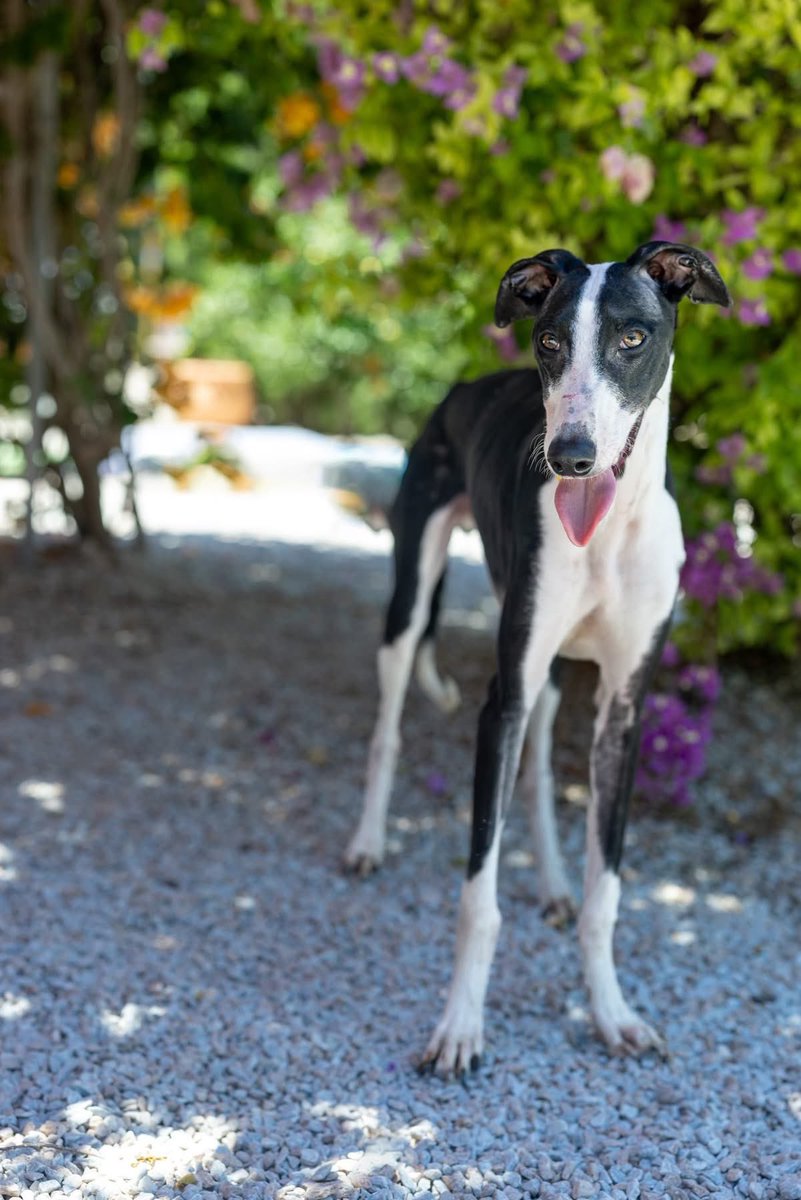
The overlooked adults that have waited patiently for almost two years like Ebony here.
Ebony is a shy girl almost 6yrs old but she’s really coming along and played with a toy for the first time ��️
We captured the moment in hope you can see her potential and offer her a home .. plz share 🙏🏻❤️
If you are old enough to have driven in Britain in the 1980s, you remember the windscreen.
By July you could barely see through it. A run from Leeds to London in August finished with a bumper that looked like it had been to war and a sheet of glass you scrubbed with a sponge at the services while the engine ticked as it cooled. Moths in the headlights. Flies in the wing mirrors. The grille packed solid. Nobody thought it remarkable. It was simply the price of moving through a country that was still, in living memory, heaving with flying things.
Drive that same road today. Stop at the same services. The windscreen is clean. Spotless. You could very nearly eat off it.
We have the numbers, for those who want them. The Bugs Matter survey, run by Kent Wildlife Trust and Buglife, has had volunteers counting the splats on their number plates since 2004. Britain's flying insects are down by roughly four fifths in twenty years. Gone in a single human lifetime, while the rest of us noticed nothing at all.
The birds went down with them, because the birds lived on them. A child born this year can grow up in the English countryside and never once hear a turtle dove, for the simple reason that there is almost nothing left to do the calling.
And none of it, not one acre of it, happened on the grass.
It happened in the arable fields, where the hedges were torn out for bigger machines and a single crop was sprayed over and over to keep it upright. The herb-rich meadow grazed by cattle still hums. The beetles, the pollinators, the ground-nesting birds, all still there, just about, on the pasture our ancestors never stopped grazing.
So when someone tells you your steak is emptying the British countryside, ask them what grew on that field before it was drained and ploughed and sprayed to raise the oats for the carton in their fridge.
It was grass, and there were cattle on it, and back then the windscreen needed cleaning.
In a workshop in Ulverston, on the edge of the Lake District, a few dozen people are the last in Britain who can do a thing this country once did better than anywhere on earth: take molten glass, blow it by lung and hand, and cut it until it throws light like nothing else made by man.
The company is called Cumbria Crystal. Its craftsmen were brought up from Stourbridge in 1976, out of the old heartland of English glass - and then, one by one between 1990 and 2007, every great Stourbridge house shut its doors, until a skill that once had its capital across the West Midlands had its last redoubt in a single building in Cumbria.
This year, Heritage Crafts placed hand-cut crystal on its Red List of Critically Endangered Crafts. One more workshop gone, one more retirement that goes unreplaced, and three centuries of mastery simply end - it goes the way of stonemasonry or, you probably wouldn't believe is increasingly the case, metalwork.
There is a detail here on which the picture revolves. The crystal on the tables of British embassies, the glass set before presidents and kings when this country wishes to show the world what it is, comes in good part from that same endangered workshop in Ulverston. We use the craft to impress the world and cannot trouble ourselves to keep it alive at home. The glass that says "look what Britain can do" is being quietly permitted to become the glass that says "look what Britain used to be able to do."
There is no villain in this, not exactly. No minister set out to kill English crystal. It is dying the way most things die here now - by inattention, by an energy bill the kiln can barely meet, by a culture that spent two generations teaching the young that working with your hands was a lesser destiny, by the lazy faith that someone, somewhere, would always keep the old skills going so the rest of us needn't think about it.
Progress takes the opposite view of a thing like this. A skill is capital - the most patiently accumulated capital a country owns - and a nation that lets its mastery lapse is poorer in a way no quarterly figure will ever record. And a nation that barrels its energies into skill capital is rich.
Our Hallmark system exists to stamp such skills, to honour them, and to pay the people who hold them to teach the next hands, because the distance between a living craft and a glass case in a museum is exactly one generation that could not afford to pass it on.
The men and women in Ulverston still know how it is done. For now. The only question is whether a country that can fill an embassy, an office, a home, with their work can be bothered to ensure that, fifty years from now, there is still anyone left who can make the next set.
If you were off school poorly in 1979, the medicine came out of the kitchen. The chemist barely got a look in.
You were parked on the sofa under a blanket, and the treatment began. A boiled egg with soldiers, because an egg was what you gave someone who needed building back up. Egg custard, baked slow and eaten warm. A mug of Bovril, hot beef in a cup, for when you had no strength left in you. Warm milk at night. And if you were really run down, a bit of liver, because every nan in the country knew liver put the iron back in you, long before anyone had heard the word ferritin.
On the side table sat the bottle. Lucozade, in the glass bottle wrapped in that crinkly yellow cellophane, bought specially, because it only ever turned up when someone was ill. The crackle of that wrapper was the sound of being looked after.
It was simple, it was mostly animal, and most of it was older than the doctor.
Now you come down with something and the cupboard answers with a sachet. Electrolyte powder. Effervescent vitamin C in a tube. Immune-support gummies. A ginger shot in a tiny plastic bottle. Berocca fizzing away in a glass like a magic trick. A carton of oat milk for the tea.
The egg, the broth, the liver and the warm milk gave your body real materials to repair itself with. The sachet gives you flavoured sugar and a printed list of vitamins, and asks four pounds for the privilege.
We used to keep the medicine in the larder. Now it comes in a wrapper, costs more, and does less.
Barnaby is 6.5yrs old and was a longest stayer at a perrera in Toledo.
We took him out in hope to find him a home but so far we’ve not been successful.
He’s absolutely adorable, great with other dogs, good on a lead and just calm and fabulous.
Will you share? 🙏🏻❤️
Argh, these poor dogs, potential to spend half of their lives or more in kennels.
Let’s share and find him a home ♥️
Look at this little Wallaby 😍
Yep, meet Wallaby the galgo.
He’s just 11mths old and is cheeky enough to know he deserves a wonderful home.
He’s playful, fun, cheeky, wonderful and adorable.
He pulls a bit on the lead so a bit of practice is needed.
Isn’t he a cutie? 🥰 plz share 🙏🏻❤️
Indigo and Tulip ❤️
They’ve survived everything together.
The Galguero together, the streets together, being trapped together, the shelter together … if only a home together was a dream come true 🙏🏻
That’s the hardest part.
A home together ♥️ if only 🫶🏻
Plz share and let’s try 🙏🏻❤️
A short history of the great British improvement.
They came for beef dripping. We got margarine, then seed oils, then a cardiac ward in every hospital.
They came for butter. They told your grandmother it would kill her husband. The replacement was a tub of palm oil emulsified with rapeseed and a yellow dye, and her husband died of a heart attack in 1989 anyway.
They came for full-fat milk. We got skimmed milk, a vitamin D deficiency epidemic in children, and a cereal aisle fortified to plug the gap.
They came for mutton, the meat that fed every shepherd, miner, and mill worker for six hundred years. We got a chicken breast injected with water and a turkey twizzler.
They came for the kipper. We got a Findus boil-in-the-bag, dyed orange, and a fish oil capsule sold at the chemist to make up for the omega-3 nobody is eating.
They came for wool. We got polyester fleece, and microplastics in human placentas. Every one tested. Sixty-two out of sixty-two.
They came for leather. We got synthetic shoes that delaminate in eighteen months, and a high street with no cobbler.
They came for the cotton nappy. We got the disposable, and a landfill that will outlast the child wearing it.
They came for the cast iron pan handed down three generations. We got Teflon, and a forever chemical now found in 98% of British rivers.
They came for the wooden bowl your grandmother kneaded dough in. We got Tupperware, then BPA, then "BPA-free" plastic containing compounds we have not yet bothered to measure.
Now they are coming for the cow herself. The replacement is a textured pea isolate, extruded in a factory in the American Midwest, packaged in plastic, and marketed as the ethical option by a company called Cargill, who happen to be the third-largest meat processor in the United States.
Every traditional material we have been told to give up was working perfectly, for free, for centuries. Every industrial replacement has been worse for the body, worse for the land, and considerably better for the shareholders of the company that sold it.
The pattern is not subtle, and the people running it are not embarrassed.
Your great-grandmother is no longer here to call it.
You are.
Estrella was left abandoned by her owner in a tiny space filled with poo.
Someone bought the property and there she has been left. It’s completely ridiculous what goes on here.
Estrella is around 7yrs old, submissive, needs work on a lead and good with other dogs.
She’s not had a good day in her life I reckon so let’s get her a home full of love ❤️
Plz share 🙏🏻❤️
I would love to find Kiwi and Palomo a home together ❤️
Weirdly, Kiwi’s Leish has come back negative this last check in… but with all the health issues they would need to stay in Spain and GDS would help with future vet costs.
They are both big goofy boys and whilst they are welcome at the retirement home, they still have enough life in them that they need more adventure.
They are such good boys. No barking, no separation anxiety, patient, obedient, loving, good on a lead… they are just wonderful 🥰
Please share 🙏🏻❤️
Who loves a grey face? 😍
Meet Mew 🥰
She’s around 8yrs old, lovely and confident and spent years in a perrera.
She’s great on a lead, perfect with other dogs and loving towards people.
She should have been in a home years ago.
Please share 🙏🩷
As usual at this time of year we have people on worried about having a bumblebee ‘hive’ in their garden.
‘Are they dangerous?’
‘Should I have them removed?’
‘Will they be there forever?’
Here’s a quick #bumblebee#lifecycle thread to explain.
Please #retweet for the #bees.
1/14
Myth: "I only wear vegan fabrics. Better for the animals, better for the planet."
Let's check in on Doris's annual contribution.
Once a year, in late spring, Doris is sheared. The procedure takes approximately three minutes. Doris does not enjoy it. Doris does not, by any visible measure, suffer from it. Doris is, immediately afterwards, a noticeably more comfortable animal in the British summer.
The fleece weighs approximately 3 kilograms. It is sold to the British Wool Marketing Board for, depending on the year, between £0.40 and £2.50 per kilogram. The shearing costs more than the wool fetches. Brian is shearing Doris at a loss.
The wool is then:
- Naturally flame-retardant
- Naturally antibacterial
- Moisture-wicking
- Biodegradable
- Renewable, annually
- Carbon-storing while in use
The replacement, in performance fabrics:
- Polyester
- Polyamide
- Acrylic
- Polypropylene
- All petroleum-derived
- All shedding microplastics on every wash
- All requiring fossil fuel inputs to produce
- All non-biodegradable, with a typical landfill lifespan of 200-500 years
A single wash of a polyester fleece can release up to 700,000 microplastic fibres into the water system. These fibres are now in: every tested water source on earth, every tested human placenta, every tested rainfall sample, the deep ocean, the Arctic ice, and the lungs of marine mammals.
A single wash of a wool jumper releases: nothing. The wool, when eventually disposed of, returns to soil within a few years.
The fabric being marketed as the "ethical" alternative to wool is plastic.
The plastic is "ethical" because nobody has been asked to slaughter the polymer.
The polymer also has not been asked.
Doris, by being a sheep on a fell, is producing the most thoroughly sustainable performance fabric humans have ever made.
Brian is selling it at a loss.
The fashion industry, meanwhile, is selling petroleum at a profit and calling it ethical.
Reject plastic. Wear wool.
Doris is, this morning, growing next year's batch.
Very Important Message!!
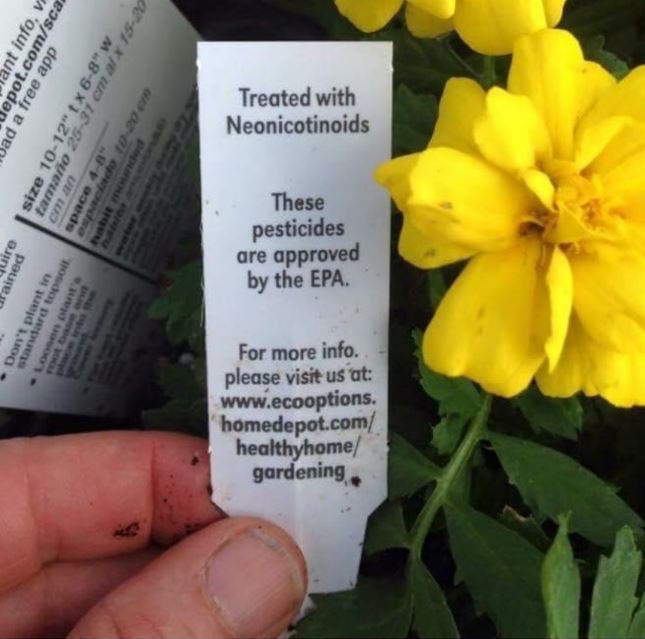
Do NOT, and I repeat do not buy plants treated with Neonicotinoids. Bees take the pollen back to the hive and feed it to the brood.
This is a number one cause of the colony collapse. It's important to NOT buy these plants!
Make sure to share this post!
Sud has been left behind, oh my, can you believe it ?
He’s 4mths old and the rest of his family are happily re-homed ♥️
Let’s share and get this fab little boy a home 🏠 🙏🏻❤️
The British Vitamin D problem is not new.
Britain sits between 50 and 58 degrees north. London is on the same latitude as Calgary. Edinburgh is level with Moscow. From October to March, the sun does not rise high enough above the horizon for the UVB wavelength your skin needs to actually reach the ground. You can stand naked in February noon sunlight on the south coast and produce essentially zero vitamin D.
This is six months of the year, every year, for the entire history of human habitation on these islands.
The British have known this, in their bones, for ten thousand years.
Look at what was eaten in winter, before anyone had ever heard the term cholecalciferol:
Oily fish. Herring, mackerel, sprats, kippers. Three or four times a week from October to March. A single kipper carries roughly 250 IU of D3.
Cod liver oil. Spooned into every British child between 1850 and 1980, a teaspoon at a time. Distributed free by the Ministry of Food in the war on the explicit understanding that British children needed it through the dark months. Rickets fell by 90 per cent between 1940 and 1960. Cod liver oil was the reason.
Liver. Eaten weekly in working households until 1985.
Egg yolks from hens that had been outside in the summer.
Grass-fed butter, made from cream from cows on summer pasture, the fat-soluble vitamins banked into the cream and eaten through the winter.
The British solution to the British problem, evolved over centuries by people who could not articulate the biochemistry but knew, with absolute certainty, what kept the children growing through the dark months.
Then between 1955 and 2010, the British removed almost all of them.
Cod liver oil reduced to a niche supplement. Liver dropped from weekly to never. Oily fish consumption halved. Eggs rationed by the Department of Health on cholesterol grounds since retracted. Butter replaced with margarine carrying no fat-soluble vitamins at all.
Result, by 2020: roughly half of all British adults are vitamin D deficient by the end of winter. A third of children. Rickets has reappeared in British paediatric wards. The NHS now recommends every adult take a supplement from October to March.
This is the NHS recommending in 2026 what the British diet was doing automatically in 1926.
The geography has not changed. The latitude is the same. The sun is still inadequate from October.
The food used to handle it.
The kippers are still being smoked at Craster. The cod liver oil is on the chemist's shelf. The liver is at the butcher. The butter is in the dairy aisle, behind the spreads.
The sun was always seasonal.
The food was the backup.
The backup got thrown out.
Get it back.
May is a mumma who’s been left behind after all her pups were adopted.
How can we change that?
Let’s share and find her forever family 🙏🏻🩷
She’s starting to really come on 🩷
Cory & Melissa are two older small podencos that came from a terrible hoarding situation.
Cory is around 10yrs and Melissa 7yrs (maybe older) and both were extremely unsocialized when they came.
Both now enjoy walks, being with people and have come on in leaps and bounds.
They are quite bonded and I think it will be hard to separate them.
We had to move them from the kennels to the campo area as Cory figured out how to lift the drain cover 😬
Podencos eh!
Maybe someone out there is looking for two quiet older podencos?
They are quite easy, will just need time after a move.
Please share 🙏