This guy wanted a selfie in Hong Kong, but his phone didn't work. I took the photo and promised to send him, but then forgot his Instagram handle. Hope he sees this post.
RT will probably help.
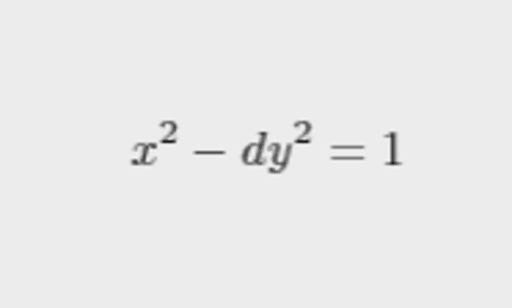
In 1657, French mathematician Pierre de Fermat issued a mathematical challenge via letters to English mathematicians like Kenelm Digby & other finest minds of Europe. He dared them to find the smallest positive, non-trivial whole-number solutions for a deceptively simple-looking quadratic equation (known today as Pell's Equation): x^2 - dy^2 = 1, for non-square (d), specifically highlighting hard cases like d = 61 & d = 109.
It looks almost trivial, like a middle school algebra problem. But it is a trap.
Because the relationship b/w x & y scales exponentially, finding a solution by naive trial & error/standard brute force search grids is computationally impossible by hand. The numbers are so massive that European mathematicians like Bernard Frénicle de Bessy struggled for months (for d = 61).
It was not rigorously solved in Europe until Lord Brouncker used continued fractions & Lagrange gave a general proof in 1766. Fermat thought he had found the ultimate limits of numerical complexity. He had no idea that a 12th-century Indian mathematician in Karnataka had already crushed the exact same eqn using a flawless, purely integer-based recursive loop.
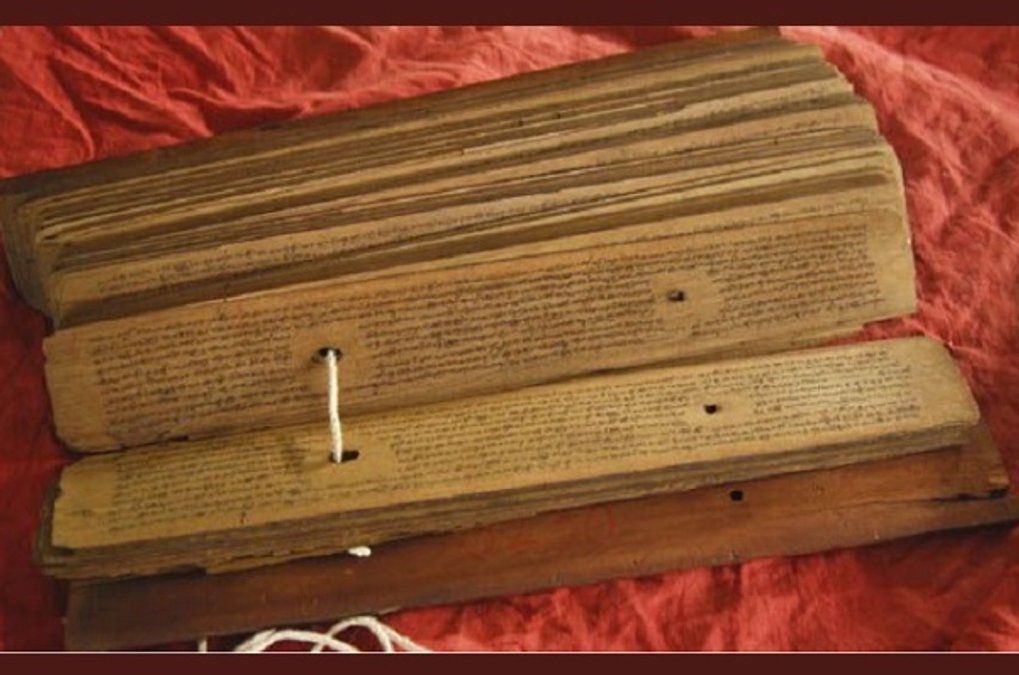
500 yrs before Fermat’s challenge, Bhaskara II tackles this exact problem in his treatise Bijaganita. He realized that instead of guessing wildly for a perfect solution, you should start with a near-miss/an easy guess that has a small mathematical error & then systematically annihilate the error through a feedback loop.
He called it the Chakravala Method (Chakra meaning wheel/cycle). The algo works like this (for d = 61):
Start with a guess:
For, x^2 - 61y^2 = 1, choose an easy near-miss.
Since 8^2=64 (which is close to 61), let y = 1 & x = 8.
Calculate the error ((k)): Plug them in: 8^2 − 61(1)^2 = 3. Our error is +3
Bhaskara used a mathematical composition rule inherited from Brahmagupta (called Bhāvanā) to inject a new multiplier (m). The algo strictly optimizes m at each step to minimize the absolute size of the next error, ensuring the numbers stay as small & computationally efficient as possible.
The output of the 1st loop becomes the input for the next. The equation literally "cycles" like a wheel, squeezing the error down until (k) lands exactly on (1).
While European mathematicians were blindly guessing/dealing with messy, infinite fractional expansions, Bhaskara's recursive wheel landed precisely on the target after a few lines of clean arithmetic.
The smallest integer solution to Fermat's "impossible" challenge, computed by Bhaskara II in 1150 CE, is:
x = 1766319049, y = 226153980
Try plugging that into x^2 - 61y^2 = 1 by trial & error w/o a supercomputer. You have zero chance of stumbling onto it.
People around the world may not know: India is opening an airport or terminal every 75 days. Some 80 airports have been built in the last 10 years, more than what India has built in the preceding 7 decades since independence. And the airports look like this.
Indira Nooyi’s recent statement that she could not have become a CEO in India needs to be looked not as an emotional talking point, but as a complex multivariable system. Her conclusion is correct for the specific timeline she lived through, but it fails to account for a fundamental shift in systemic parameters over time.
Nooyi's point holds absolute logical weight when we evaluate the maximum carrying capacity of the corporate vehicles available in the US vs India during her rise.
In mechanical systems, Mechanical Advantage (MA) is the factor by which a machine multiplies the force or effort put into it.
MA = F(output)/F(input)
If we apply the same raw input of intellect, strategy & work ethic into 2 different machines, the output will be entirely dependent on the machine's inherent leverage.
A MNC like PepsiCo/Apple does not just operate within a country; it leverages global supply chains, trade treaties & currency dominance. When Nooyi became the CEO, she was handed a machine with massive global leverage.
In the 1980s & 90s, Indian corporate machines were heavily constrained by local market dynamics, currency valuations & policy bottlenecks. Even if she had reached the absolute top of an Indian enterprise back then, the global output & scale of that role would have been mathematically restricted. The US machine simply had a higher ceiling for raw kinetic impact.
Where a balanced view is required is realizing that Nooyi is viewing India through a frozen time variable (t_0 = 1980), completely ignoring that the boundary conditions of the Indian system have undergone a radical phase transition.
In thermodynamics, a Phase Transition occurs when a system changes from 1 state (like solid) to another (like liquid) because of altered external parameters (temperature/pressure). The entire behavior of the constituent particles changes.
When Nooyi left, India’s corporate layer was a solid, rigid crystal structure. Upward mobility was restricted by legacy family networks, capital scarcity & stifling bureaucracy. A middle-class corporate professional w/o a pedigree promoter backing them faced massive structural drag.
Today, India’s corporate & economic ecosystem behaves like a highly dynamic, fluid matrix. The rise of digital public infrastructure, venture capital & a massive domestic market means that an outsider today can start with nothing & build a multi-billion dollar enterprise (e.g., modern tech founders, professional CEOs scaling massive private banking/consumer giants).
Structurally, if Indira Nooyi had stayed in the India of the 1980s & 90s, she would not have had the institutional runway/the meritocratic fluid mobility to manage a global-scale engine. Her assessment of what America offered her at that specific coordinate in time is a fact of historical systems design.
Now, to extrapolate that past constraint into an absolute, permanent truth about India is a fallacy of Static Composition. The India of today no longer requires an ambitious mind to export itself to find global leverage. The system has evolved its own high-leverage engines & the meritocratic velocity for an outsider inside India is higher now than it has ever been in civilizational history.
She is right about her past; but she underestimates India's present velocity.
In Chapter 6 of the 1st book of the Arthashastra, Chanakya introduces the core metric of personal success: Indriya-Jaya (Conquest of the Senses).
He explicitly lists the 6 internal enemies (Ṣaḍripu) that destroy a human being from within:
- Kāma (lust / desire)
- Krodha (anger)
- Lobha (greed)
- Māna (vanity / arrogance)
- Mada (pride / haughtiness / intoxication of power)
- Harṣa (overjoy / excessive happiness / euphoria)
Chanakya states that a person who has not conquered these 6 internal enemies will inevitably destroy themselves, even if they inherit an entire empire.
Modern dopamine-addicted society is entirely run by these 6 impulses. Chanakya’s methodology is an aggressive blueprint to systematic habits, stoicism & emotional regulation.
A 15-year-old dream has come true today. I started a PhD with the dream of creating a system that chants any Sanskrit shloka perfectly.
And here I am opening sourcing 𝐕𝐚𝐠𝐝𝐡𝐞𝐧𝐮 - 𝐀 𝐯ṛ𝐭𝐭𝐚 (𝐦𝐞𝐭𝐞𝐫) 𝐚𝐰𝐚𝐫𝐞 ś𝐥𝐨𝐤𝐚-𝐭𝐨-𝐜𝐡𝐚𝐧𝐭 𝐭𝐞𝐱𝐭-𝐭𝐨-𝐬𝐩𝐞𝐞𝐜𝐡 (TTS) 𝐬𝐲𝐬𝐭𝐞𝐦 𝐟𝐨𝐫 𝐒𝐚𝐧𝐬𝐤𝐫𝐢𝐭. This is the world's first vrutta-aware, open-source TTS for Sanskrit Chanting.
What a terrific question by @anujg Ji. I might be wrong in my attempt to share an answer to this & please offer your POV.
An important rule in Mimamsa is that of Nahi Ninda Nyaya (the principle of non-condemnation). It indicates.
A Scriptural Praise (stuti) does not intend to belittle/deride another entity; on the contrary, it creates a complete undivided concentration (Ekagrata) in the practitioner on the Ishtadevata.
When we are focused on Shiva, our mind cannot be divided. The text will state that “Shiva is the ultimate; everything originates from Him.” This is not a geopolitical/structural claim about a hierarchy of the cosmic. It is an internal psychological process to take the mind of the seeker to a point of utmost unity.
When the same seeker reads a Vaishnava text, the frame gets shifted to Vishnu to achieve the exact same psychological effect for that path.
The Skanda Upanishad states this even more mathematically:
शिवाय विष्णुरूपाय शिवरूपाय विष्णवे ।
शिवस्य हृदयं विष्णुः विष्णोश्च हृदयं शिवः ॥
śivāya viṣṇurūpāya śivarūpāya viṣṇave |
śivasya hṛdayaṁ viṣ���uḥ viṣṇoś ca hṛdayaṁ śivaḥ ||
Salutation to Śiva who is of the form of Viṣṇu & to Viṣṇu who is of the form of Śiva. Viṣṇu is the heart of Śiva & Śiva is the heart of Viṣṇu.
The 2nd part asks: If they contradict, what happens to their authority & infallibility?
In the Indic tradition, Infallibility does not mean literal historicism. In Abrahamic theology, if a text says Noah's Ark was X cubits wide, it must be literally true/the entire infallibility of the book collapses. In Sanatan Dharma, the infallibility of the scriptures applies only to Shabda Pramana regarding things beyond sensory perception (Alaukika), such as the nature of consciousness (Brahman), Dharma & liberation (Moksha).
The Puranas are classified as Smriti (remembered tradition), which is secondary to Shruti (the Vedas). If a Purana's literal narrative seems to contradict the core non-dual Vedic truth that the Ultimate Reality is 1 (Ekam Sat Vipra Bahudha Vadanti), the rule of interpretation dictates that the Puranic verse must be interpreted metaphorically/contextually, not literally.
The shifts in supremacy b/w Shiva & Vishnu are not political power struggles b/w 2 separate gods. IMO, they are a brilliant pedagogical design.
As to the question of age, the western indology interprets these contradictory evidences & views as historical layers which argue that the Vaishnava Puranas were written by 1 competing political guild & the Shaiva Puranas by another during different centuries.
Although there are undoubtedly historical layers arising from regional recensions over the ages, the traditional view holds that they are contemporaneous facets/expressions of a single multi-dimensional system of truth designed by Sage Vyasa. This was to prevent the emergence of a dogmatic, singular cult. 🙏🙏
Every Sunday, I had decided to share 1 story of a startup built by an exceptional Indian founder solving deep, structurally complex problems.
This week: https://t.co/w2AGE2k93X, envisioned by neurosurgeon Dr. Ajay Bakshi Ji (@bakshi_dr).
If we open any generic LLM today & ask it to explain a verse from the Upanishads/the Gita, we are highly likely to get an answer heavily filtered through 19th century European translations (like Max Müller). These colonial-era works systematically retrofitted deep Sanskrit concepts into rigid Abrahamic frameworks, simplifying Dharma to just religion/Atman to soul, completely stripping away their multi-dimensional, algebraic logic.
Worse, modern generative AI loves to hallucinate. It spits out smooth, half-remembered platitudes that sound spiritual but completely distort the actual texts.
Most of the AIs are treated as Guru these days, but Dr. sahab relied on Sevak approach. Mygurukul uses a highly curated, closed-loop library of authenticated Indic translations (completely bypassing corrupted European editions).
By running Agentic Search & RAG on top of this closed database, the platform tries to eliminate AI hallucinations. When we query a concept, it maps it across a verified living graph of texts (Vedas, Darshanas, Ayurveda, Arthashastra) & presents it completely free of charge, honoring the ancient Vidya Dana (gift of knowledge) tradition of our historical Gurukuls.
Although the philosophical foundation & engineering guardrails are brilliant, from a pure product, scalability & long-term tech roadmap perspective, the platform faces significant blind spots, IMO:
- The platform is still fundamentally relying on English as the intermediary vehicle to deliver classical Sanskrit insights to a modern audience. No matter how accurate an English translation is, it strips the vibration (dhvani) & the multi-layered etymological (Yauglika) roots of the original verse.
- Currently, the platform balances consumer-friendly features like "Daily Sacred Readings" ending in a reflective question with a backend scholarly project. The risk here is turning into a wellness/mindfulness app rather than a true intellectual fortress. If it scales purely on daily lifestyle motivation, it loses the raw, uncompromising rigor of a traditional Gurukul.
- Keeping it 100% free is a beautiful tribute to the Vidya Dana (gift of knowledge) tradition. However, scraping, maintaining, vectorizing & running agentic AI compute over 10s of 1000s of complex texts is incredibly expensive in terms of GPU costs.
Although, Dr. sahab is incredibly sharp, imo, these might be the quick fixes:
- The AI needs to map semantic distances based on actual original Sanskrit root words and Paninian grammar algorithms, displaying the Anvaya (prose order) alongside translations.
- Keep the consumer interface free to honor the Gurukul ethos, but monetize the API layer for global academia & media houses.
- Create a clear bifurcated architecture: a Sadhaka Layer (for casual readers looking for life context) & a Pundit/Scholar Sandbox.
- Also, agentic search should not just retrieve text; it must integrate audio archiving.
The platform is still quite early & is a fantastic example of using modern tech to protect ancient heritage from modern tech's own flaws. It is trying to stop AI from rewriting our past.
Anyway, at least test it once.
Hockey is the best example of colonialism in sport:
India won eight Olympic gold medals in field hockey. Eight. On natural grass, with a style of play built on individual brilliance, close control, and improvisation that no other nation could match.
Then came artificial turf, which was introduced at the 1976 Montreal Olympics. Overnight, the classical Indian game was rendered obsolete. The dribble was neutralized. Power and stamina replaced skill and artistry. European and Australian teams, better suited to the faster, harder surface, rose. India fell.
Coincidence? Perhaps. But the pattern is too familiar to ignore: when India dominates under one set of rules, the rules change.
The IPL is India rewriting the rules for once. On our terms. With our audiences. And our money.
You adjust now @BeefyBotham@MichaelVaughan.
Credit and appreciation to the efforts of Thiru Ramesh avargal.
The Tamil Nadu HR&CE Department under the DMK Government had attempted to register lands to be purchased using Palani temple funds under its name.
The lands will now be registered in the name of the temple deity/temple instead.
An attempt to divert the tenple funds/assets were prevented.