https://t.co/Vi7O7fDqfT is an example of web design that is so good it feels like a movie where the subtitles are distracting.
The visuals are so pleasing, I did not read any of the text. What does Pear do? Ugh, need to scroll - I mean - scrub the timeline again.
The EU AI Act now requires providers to mark generative output so it can be detected. So Anthropic and Google are embedding watermarks in the choice of words. But does it survive the well-placed emoji?
Read more: https://t.co/TtlY09xGeI
If you are curious and would like to learn more about AI-generated text and it's various detection mechanisms (sans the tech bro jargon), read more:
https://t.co/y6TlZwnaps
A promising startup in this space is @pangram - they built a classifier to detect AI-generated text. No watermarks needed.
The known limitations of it's high accuracy classifier is (funnily) people who just happen to write like LLMs.
When the LLM is working on "The capital of france is _" the word "Paris" will have 99 point something probability. Paris will win.
Compare that with "The city was _" which has many probable options and is therefore able to encode a watermark more easily.
In the simplest of terms, a secret key will split the possible next words into two groups. The probability of each word in one of those groups is multiplied by a factor, so they get chosen by the LLM more often.
Given that key, you can now place it in each position and determine how often the words from the preferential group were chosen. So now you know AI generated that passage.
But it has many limitations.
Earlier this week Anthropic explained how Claude marks AI-generated content. Of the two mechanisms, text is interesting because it hides the signature in the choice of words.
@scottbelsky you’re right. I think a common deterrence for shipping bold UX designs is the need to cater to every target consumer persona, thereby converging towards the average experience that works for all. That won’t be a problem anymore.
The elimination of engineers was one of the wilder hypotheses out there. Just like absurdly wrong. We just gave engineers a power tool that can accelerate the development of whatever we want.
Of course their value not only remains critical in that world, but actually goes up in many domains because we can apply engineering to far more work than before.
If you’re trying to automate drug discovery, you need engineers. If you’re trying to automate manufacturing, you need engineers. If you’re taking on larger and larger software projects, you need engineers.
This will happen in domains beyond engineering too. AI causes companies to take on way more work than before, which leads to needing more experts to oversee the work.
Even as models get better and better, they can be better utilized by the experts in those fields than the novices. Great time to be an expert.
But AI agents have no nervous system, and they feel nothing. They have a different constraint - tokens.
So the website that wins is the boring one, with a markdown version for AI.
Read more: https://t.co/0C8spzqXPO
The web as we know it is changing because it has a new consumer: AI agents.
But for the last twenty years, every serious business has spent enormous amounts of time and money optimising the conversion funnel for humans.
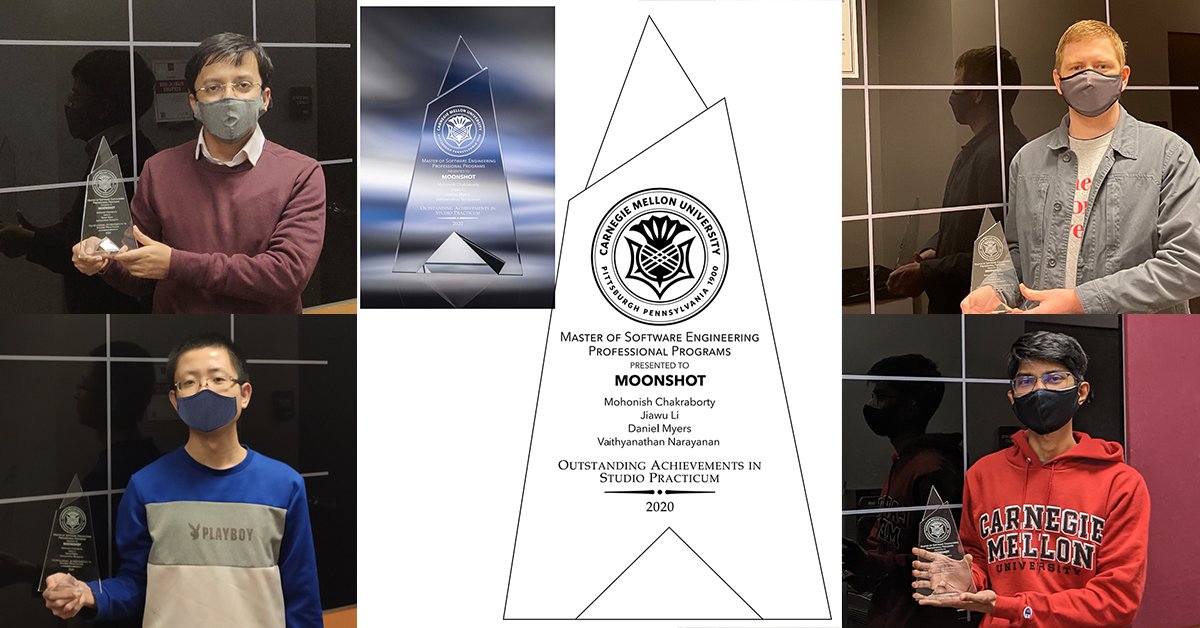
Congratulations to Mohonish Chakraborty, Jiawu Li, Dan Myers, and Vaithy Narayanan for receiving the Software Engineering Project Excellence Award!
#softwareengineering#kudos#dreamBIGGER
https://t.co/Fj8eQr3AnH
Introducing Swift on Windows.
New toolchain image is available for Windows, downloadable from https://t.co/5NNXraGyus. To learn more: https://t.co/D4w6d6ME1h