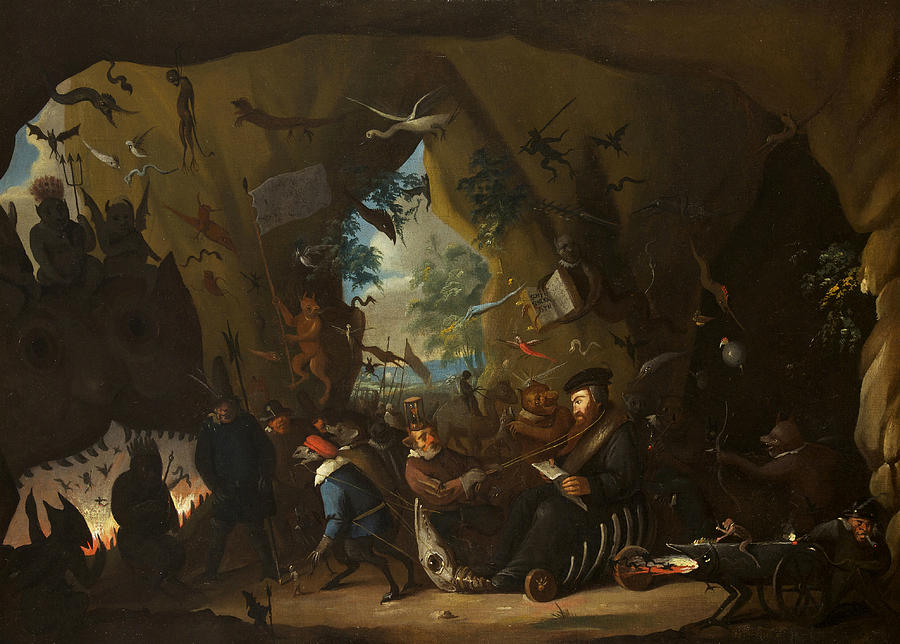
The celibate dons of Oxbridge were like a hidden golden class, almost like Plato's Nocturnal Council in the Laws: a throwback to the celibate clergy and religious of the Catholic past, surviving into the Victorian era, until their abolition in the mid 19th century.
@agostino_harry@b0rtcask1 Come on… the ancients would have furiously broken communion over any one of dozens of things that Rome has done since 1965, and probably called them a nest of vipers to boot…
We don’t have an integrated vision of the universe anymore. Physicists can’t even reconcile their theories of the large and small scales (relativity and quantum mechanics).
@neilbarth214 Yes, I don't think the Christian and post-Christian obsession with true and false beliefs is a red herring. People act on beliefs and they shape their whole lives.
For Plato the line between mental illness and evil lifestyles is not so clear. Wrong opinions and a disordered soul lead to bad lives and, in the end, madness. A life oriented wrongly is already for him a kind of mental illness, a failure to perceive or at least follow the Good.
Before it was the romantic city of lights, Paris was the mind of Christendom. Almost every scholastic was there: Aquinas, Bonaventure, Albert, Scotus, Abelard, Peter Lombard (of the Sentences)…
@_CLancellotti Lindsay Clancy’s priest said that no woman in her right mind would kill her children, therefore she wasn’t in her right mind, therefore she wasn’t culpable and didn’t commit a mortal sin. Thus, for a woman to kill her children is never a mortal sin. An honorary Jesuit…
@PgBirk I think Plato's idea isn't that anyone should go to a *bad* school, such things shouldn't even exist, it's just that the mindset "my right and duty is do the best for my own family no matter what" is exactly what he's trying to prevent.