Honoured that our 2016 paper, Robust Estimators in High Dimensions without the Computational Intractability, w/ Ilias Diakonikolas, Daniel Kane, Jerry Li, Ankur Moitra, Alistair Stewart, was awarded the 2026 Gödel Prize
This is the highest award for papers in theoretical CS. 1/7
We’ll be presenting our poster on the logical expressiveness of Topological Neural Networks.
📍 Pavilion 3, P3-#912
🕥 10:30 AM–1:00 PM BRT
Excited to chat about TNNs, GNNs, logic, and graph learning! #ICLR2026
SEE THE PAPER HERE: https://t.co/WjmMNgsbwX
#Transformers & #GNNs share the same DNA as mixing architectures.
We show that GNN oversmoothing = LLM rank collapse & over-squashing = representational collapse.
The fix: shared tools like residual connections and normalization!
See our new survey @TmlrPub
Check out this work from @KestenGal on Interpretability of protein LMs. We find how they identify repeated segments and on the way catalogue a bunch of neurons for biochemical, structural, and other signals.
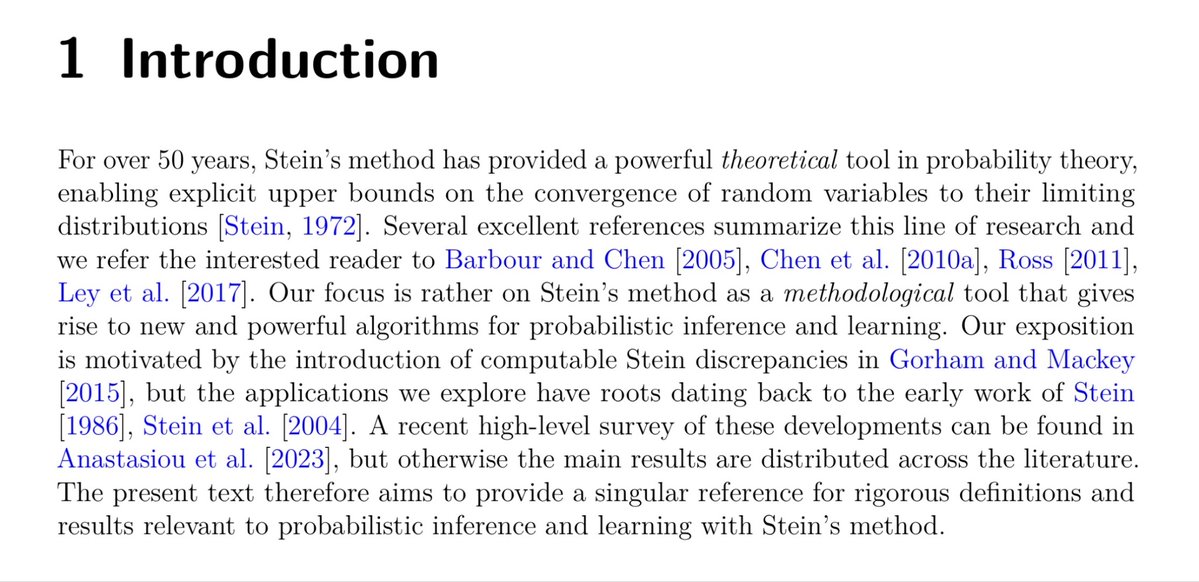
Qiang Liu, Chris Oates, and I are writing a monograph on Probabilistic Inference and Learning with Stein’s Method, and we’d love to get your feedback on the first draft
One of my all-time favorite projects! Amazing to witness the alignment between theory and empirical evidence, and the exciting opportunities that open up.
Shoutout to @sharut_gupta and Sanyam Kansal for excellence! Great teaming up with @StefanieJegelka and @phillip_isola.
[1/n] Do distinct large models admit a simple map that aligns their embedding spaces? We show that across multimodal contrastive models—trained on different data and architectures—an orthogonal map aligns image embeddings. Strikingly, the same map also aligns text embeddings.
🌺 Machine Learning Summer School 2027 @ Okinawa will take place March 1-12, 2027!
Details are now available 👉 https://t.co/XIWc4pIsrt
Check out this amazing overview video from MLSS 2024 Okinawa 🎥✨
🎬 https://t.co/qeua163tdt
#MLSS#MachineLearning#Okinawa#AI#MLSS2027
When I started competing, I had a small dream - to one day compete alongside the able-bodied and win medals ♥️ I didn’t make it at first, but I kept going, learning from every setback.
Now, that dream is one step closer. 🌟
In the Asia Cup trials, I secured Rank 3 and will now represent India in the Asia Cup - in the able-bodied category. 🇮🇳
Dreams take time. Work. Believe. Repeat. 💫
If AI can code 100x faster, why aren't you shipping 100x faster?
Because AI code is not production-ready code, and definitely not code where you understand and can vouch for every line
Introducing the Command Center alpha. Support our Product Hunt launch!
Immediate postdoc and PhD openings in my research group at Aalto. Areas: Generative modeling/geometric and topological learning/neurosymbolic programming with applications in LLMs and/or drug discovery. Prerequisites: Strong mathematical training, and coding in deep learning.
@ML_is_overhyped@_rockt@robertarail Stumbled on this. I have an immediate opening for a doctoral position in my group, and seems you might be a good fit.
.@siyan_zhao's latest work highlights a fundamental inefficiency in GRPO when the group contains all-wrong rewards. With diffusion LLMs, this can be vast mitigated via using inpainted reasoning traces.
Take a look at this work led by (amazing!) Maximilian Krahn: https://t.co/sWoiBfnI9k
Opens up several exciting opportunities across domains such as drug discovery and LLMs (e.g., viewing agentic workflows as computational graphs).
Our approach enables the design of expressive neural networks on combinatorial complexes while maintaining computational efficiency. We achieve a 12-fold improvement over SOTA methods. Huge thanks to my advisor @montsgarg
for the invaluable guidance and support. 2/3
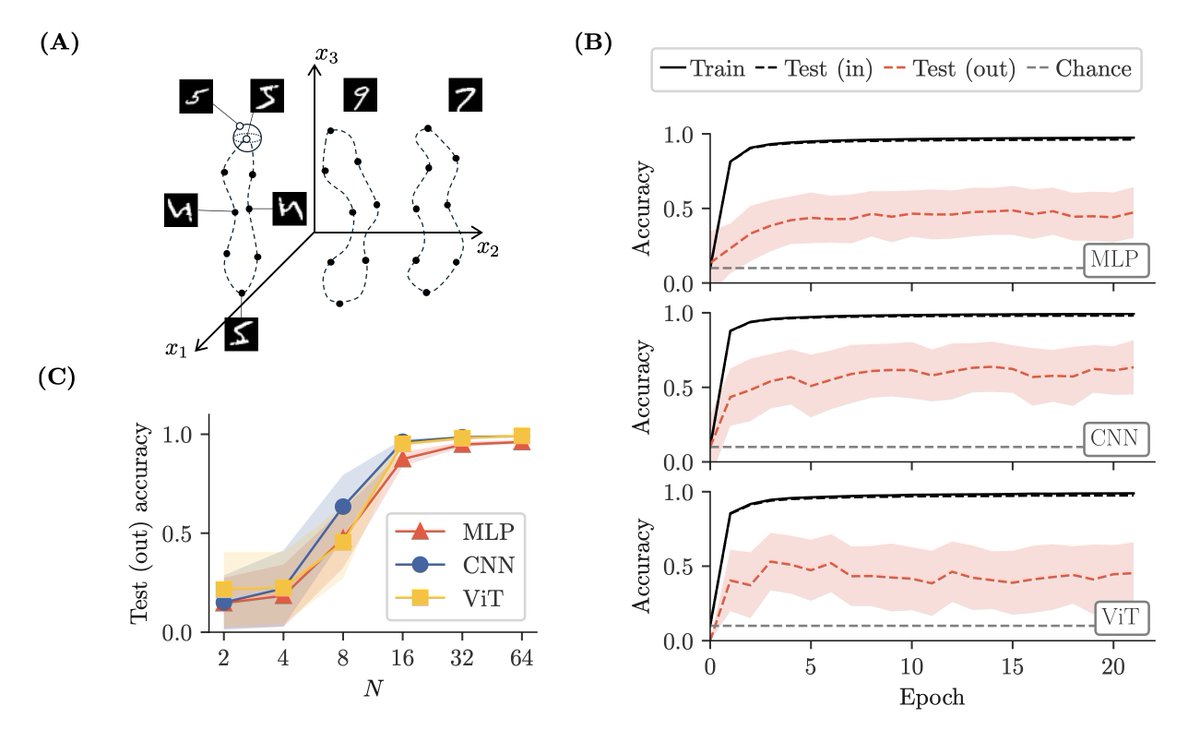
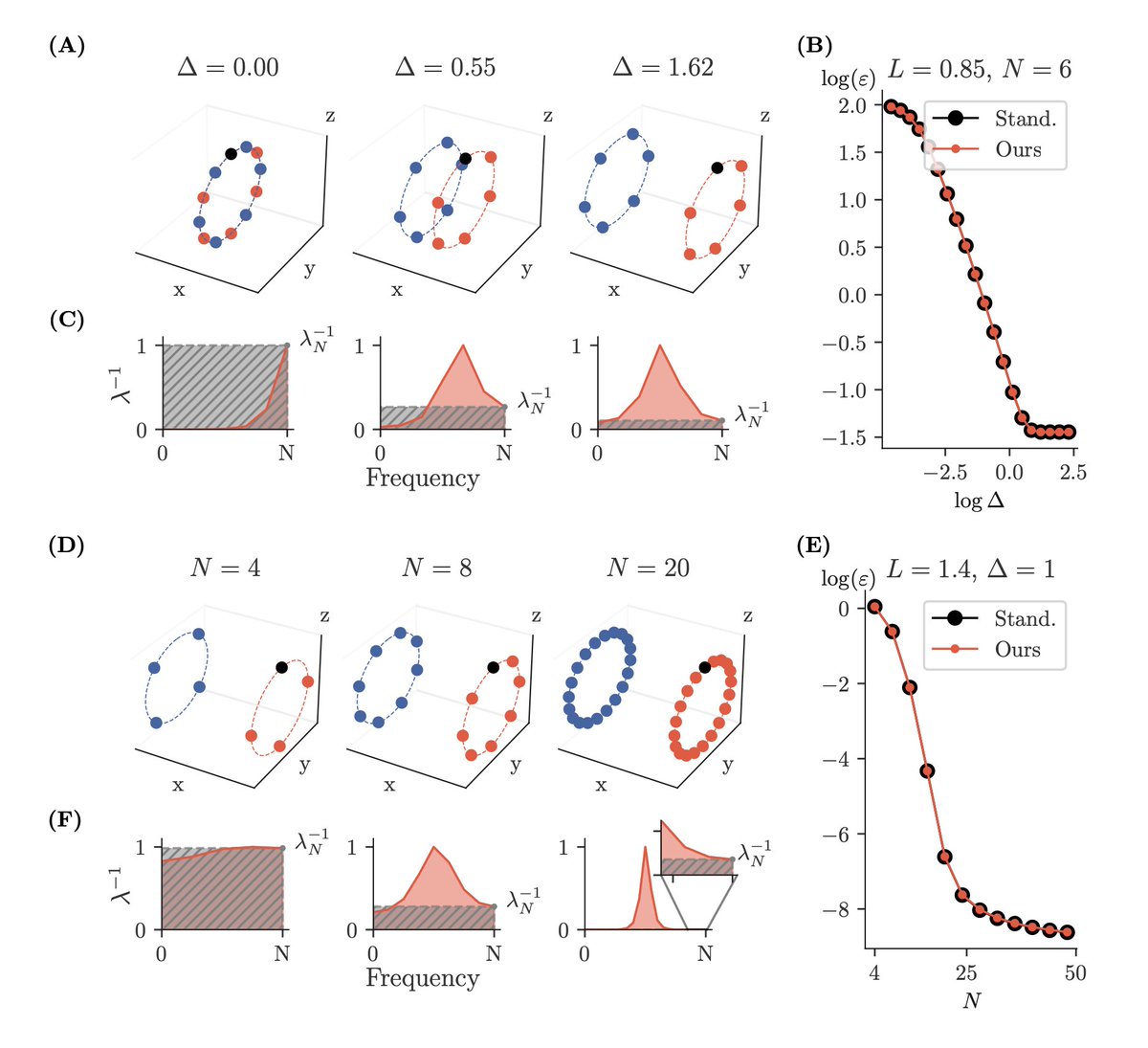
"On the Ability of Deep Networks to Learn Symmetries from Data: A Neural Kernel Theory" now accepted at JMLR! 🥳
🔗https://t.co/QNrn7bl4oJ
We thank the reviewers for expert suggestions which allowed us to substantially improve the work and writing. See ⬇️ for more info and 🧵
What Ails Generative Structure-based Drug Design:
Expressivity is Too Little or Too Much?
1/ This study critically evaluates the performance of generative models for structure-based drug design (SBDD), highlighting fundamental limitations in existing approaches.
2/ Despite the growing complexity of generative models, their empirical performance remains suboptimal, particularly in generating high-affinity ligands for protein targets.
3/ The study identifies two key issues: first, the representational limitations of graph neural networks (GNNs), which struggle to distinguish ligands with different binding affinities.
4/ Second, the excessive parameterization of generative models may hinder generalization, leading to overfitting rather than true improvements in molecular design.
5/ The authors propose a novel two-phase generative method, SimpleSBDD, which learns an economical surrogate for binding affinity and separately optimizes molecular structures for both binding and drug-like properties.
6/ SimpleSBDD achieves state-of-the-art performance using 100x fewer parameters and up to 1000x faster sampling compared to existing SBDD models.
7/ Unlike traditional approaches that prioritize complex molecular representations, SimpleSBDD optimizes ligand structures explicitly for predicted binding affinity while maintaining diversity and synthesizability.
8/ The study underscores the need to reassess the current paradigm of SBDD, advocating for simpler, performance-aware generative models that can better generalize across protein targets.
9/ The results suggest that a shift in focus from mere expressivity to robust generalization could significantly improve drug discovery pipelines, making them more efficient and scalable.
@montsgarg@HeinonenMarkus@samikaski
💻Code: https://t.co/UYQcLoNxgP
📜Paper: https://t.co/Ts8TTnu9f4
#DrugDiscovery #GenerativeModels #MachineLearning #AI #Bioinformatics #StructureBasedDrugDesign #GraphNeuralNetworks #ComputationalBiology