Nikki Floris. FBI. 2020.
She wrote it herself: “I am basically running a shadow government inside the FBI right now.”
She buried an intelligence report on possible Chinese election interference so it wouldn’t reach Trump. Then she moved on to Microsoft. Still walking free.
What’s it going to take?
No more “we’re looking into it.” No more two-tier justice. Arrests. Prosecutions. Now.
If a career FBI official can admit she’s running a shadow government against a sitting President and keep her job, the message to the rest of them is clear: do it again.
Enough.
There is no footage of the Amy Acton “assault” at her campaign event yesterday because it is a fabrication to cover up the bad press regarding the fact that @amyactonoh appeared to be drunk at her own campaign events this weekend.
I call her Amy Smollett!
Democrats needed a new talking point to get people to stop talking about Drunk Amy.
It’s concerning that Amy wants to be Governor of Ohio and she doesn’t know Ohio is an open carry state.
Now she’s trying to ruin a young White man’s life for legally carrying a gun.
She’s a monster.
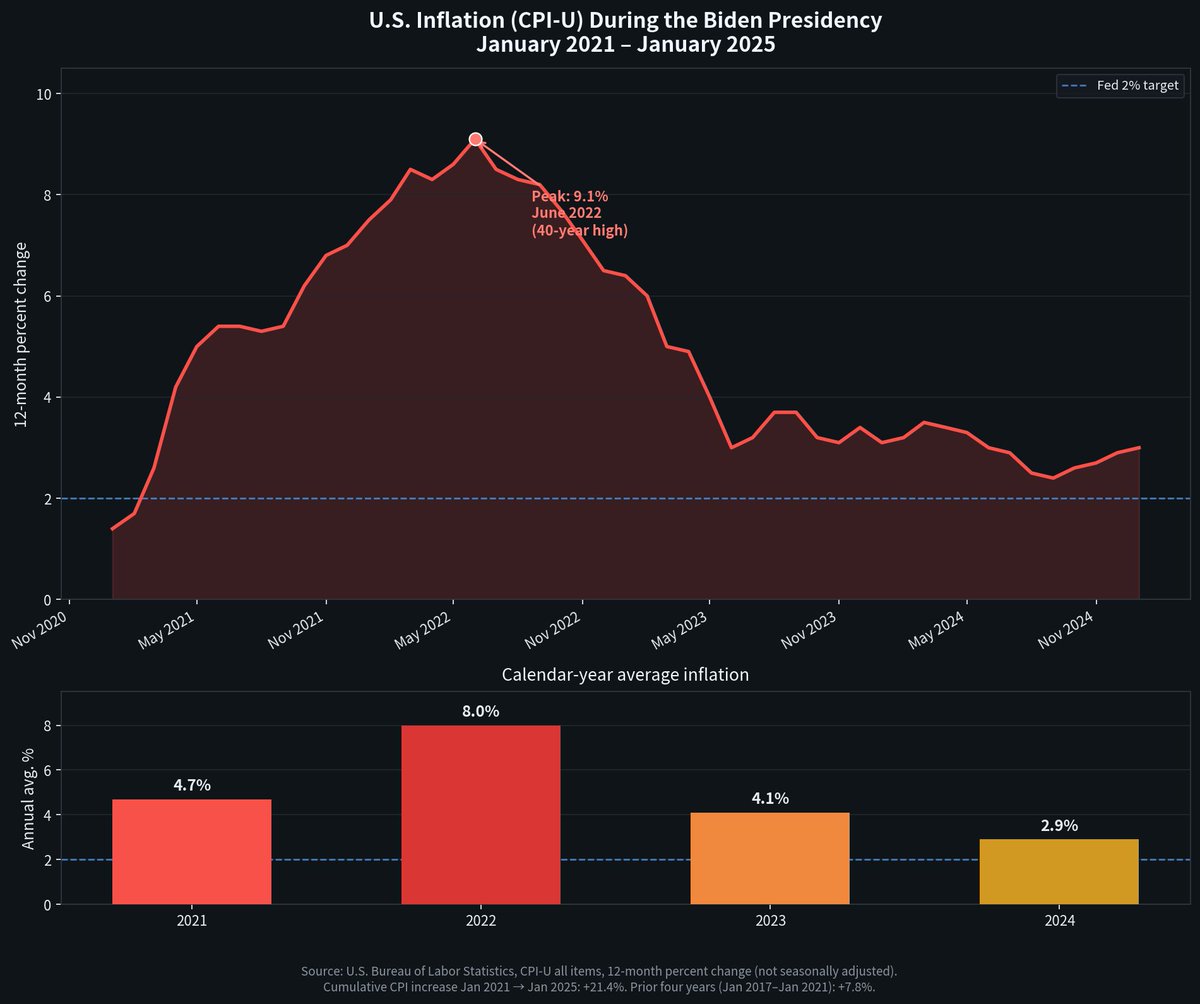
@PramilaJayapal Consumer prices rose about 21.4–21.5% over Biden’s full term (January 2021–January 2025), according to the BLS Consumer Price Index for All Urban Consumers. I don't recall you saying squat about that.
@atutruckers It will be an interesting investigation. Who was flying the approach, and why no go-around. Looks like the ground spoilers were never fully deployed after landing. All details will come out eventually. Tragic.
12 DAYS OF BENGHAZI:
DAY 7
One thing people probably don’t understand about Benghazi is the way you rotate security personnel matters.
On the GRS side, we had overlap between rotations. The outgoing team didn’t just disappear and leave the incoming guys to figure everything out. We had time to pass along routes, problem areas, local knowledge, changes in the city and what we were seeing on the ground.
The State Department’s DS side did not have that same continuity.
Benghazi was being staffed through short-term TDY rotations. By September 1, only 3 DS agents were on the ground. Congressional testimony described all 3 as “brand new to the service,” all on temporary duty, and none had previously served at a high-threat post.
That doesn’t mean they were bad guys or incapable. Some DS personnel had solid military backgrounds. The bigger problem was the system they were being dropped into.
From what I saw, many of the DS guys relied heavily on local drivers because they simply did not know Benghazi the way we did. They knew how to get to a few key locations, like the Annex and maybe the hospital, but they didn’t have the same local familiarity or handoff between rotations that we had.
That matters more than people think. Security is not just carrying a gun. You need to know your city, need primary routes, alternate routes, choke points, hospitals, neighborhoods, where trouble normally develops and how to move when your route is gone.
And there is another difference people miss: training versus experience.
DS agents received training for dangerous assignments, but training does not replace years of operating in high-threat environments. GRS was built around guys who already had substantial operational experience before they ever got there. GRS guys had around 8 years in Special Forces or comparable high-threat backgrounds before coming into the program. I was an exception 4 year O311.
Training gives you a foundation.
Experience gives you judgment.
You can have good people and still put them into a bad system and shity situations.
That is what I believe State was doing in Benghazi: rotating people through on short TDYs with limited continuity, limited local knowledge and, for the 3 agents there by September 1, no previous high-threat-post experience.
Then Ambassador Stevens arrived on September 10 with 2 additional DS agents, bringing the total to 5 on the ground for the night of the attack.
Five sounds better than 3 on paper.
But numbers don’t tell the whole story.
How well do they know the city? How long have they worked together? Do they know alternate routes? Can they move without depending on somebody else to tell them where to go? And how much of what they know came from a course versus years of actually doing the job?
Those things matter when everything goes to shit.
And by September 7, we were only 4 days away.
#12DaysOfBenghazi #Benghazi #13Hours #NeverForget #HonorTheFallen
@nicksortor Looked like a bit of a crosswind, flared a little high causing a float down the runway. Left main gear came off the ground a couple times. Could not see if spoiler/spedbrakes or thrust-reversers were deployed. NTSB should be able to retrieve the black boxes. Tragic accident.
12 DAYS OF BENGHAZI:
DAY 6
By late August and early September 2012, the intelligence picture was getting worse too.
On August 19, the Pentagon’s Joint Staff produced an intelligence update titled “Libya: Terrorists to Increase Strength During Next Six Months.” It warned there were “no near-term prospects” for reversing Libya’s trend toward becoming a terrorist safe haven and said eastern Libya was likely to become an even broader safe haven by the end of the year. It also warned that those conditions would allow terrorists to increase attacks against Western and Libyan interests.
Then, on September 5, AFRICOM produced another assessment on extremism in Libya. It said the disarray in Libya’s security services was giving jihadists freedom to recruit, train and move fighters and weapons. Most importantly, it said the threat to Western and U.S. interests remained high, particularly in northeast Libya.
That matters because Benghazi is in northeast Libya.
And this wasn’t the first time people were saying it.
Back in June, State Department security officials were already discussing what they called “an active terrorist cell in Benghazi” that was planning and carrying out attacks against Western interests, including the U.S. mission. Another security official warned that extremist activity had increased so much that he feared they had already crossed a threshold where they would start seeing more attacks on Western targets.
So by the beginning of September, you had:
Repeated attacks against Western targets.
Growing extremist activity.
A weak Libyan government that could not control the security environment.
Intelligence assessments warning eastern Libya was becoming a terrorist safe haven.
AFRICOM saying the threat to U.S. and Western interests in northeast Libya remained high.
The intelligence community later said there was no specific, credible warning of the exact September 11 attack. But there was plenty of strategic warning that the environment was getting worse and U.S. facilities and personnel in Benghazi were at risk. That is the distinction people need to understand.
There may not have been a warning with the exact date and time. But there sure as hell wasn’t a shortage of warnings.
By September 5, the United States government was writing in its own intelligence reports that the threat to Americans in northeast Libya remained high.
We were now 6 days away from September 11.
#12DaysOfBenghazi #Benghazi #13Hours #NeverForget #HonorTheFallen
I am honored to stand with Maria. She was always out front and a great reporter. I enjoyed being on her show and watching her set fire to the false narratives with real evidence.
Belle Glade, FL was the first NOAA ghost station that I discovered. Tomorrow I will post the 230th ghost station in the U.S. -- where NOAA's data factory continues to fabricate imaginary global warming data.
Kathy Hochul is not even muslim and yet she puts on a hijab and says "Allah willing."
Hochul says New Yorkers must "never forget" the evils of white supremacy.
How is this even real.
12 DAYS OF BENGHAZI:
DAY 5
By the summer of 2012, Benghazi was trying to look like a city moving toward democracy.
Libya was having its first national election in more than 40 years on July 7, and on paper that looked like progress. But what was happening on the ground told a different story. Election offices were being stormed, ballot material were being destroyed, even a helicopter carrying election materials was shot at and one election worker was killed. Public offices and security facilities were being attacked, and police, military officers and judges were being targeted.
That was the environment Benghazi was operating in. I would say the Armed groups had the influence, the government didn’t. Militias could challenge police and security forces. People were be kidnapped in the middle of the city and nobody seemed to know who had them or where they were.
On July 31, 7 members of an Iranian Red Crescent delegation was kidnapped in Benghazi while returning to their hotel after meeting with the Libyan Red Crescent. That is what the public record says. They were “humanitarian workers” invited into Libya and were grabbed by armed men at around 1 a.m.
What I remember hearing at the time was that there were questions about whether those guys were really just humanitarian workers or whether some of them had connections to Iranian intelligence or security services. I have never seen it publicly confirmed.
There was also a large shootout while I was there between what I remember was a militia and the police over impounded vehicles.
But here is another part people miss when they hear all of this.
Most of the regular Libyans I dealt with were still polite, respectful and grateful. Benghazi being dangerous did not mean every Libyan walking down the street hated Americans. That wasn’t my experience.
Hell, sometimes the problem was us. We had one female case officer who just would not listen to us and seemed determined to be Jason Bourne everywhere she went. There were several times we had to step in and de-escalate situations in hotels and restaurants because she had pushed something farther than it needed to go.
That was part of operating there too. You had to understand the culture, read the room, know when something was actually a threat and know when somebody was creating a problem that didn’t need to exist.
So when I talk about Benghazi becoming more dangerous, understand what I mean. The average person on the street wasn’t necessarily the threat. The problem was that government control was weak, armed groups had power, extremist activity was growing, officials and security personnel were being targeted, and nobody really seemed capable of controlling all of it.
Benghazi was changing right in front of us.
And we were getting closer to September 11.
#12DaysOfBenghazi #Benghazi #13Hours #NeverForget #HonorTheFallen