Ass. Professor at the University of Copenhagen. Interested in Growth, Inequality, Environmental Economics and all deviations from the 1st Welfare Theorem
Great talk by @urs_schaede (from @TuftsUniversity@TuftsEconomics) @nberpubs using survey, RCT & admin data to show that women do not fully understand the long term $$$ consequences to their short term labor supply reductions, but INFO can help!
I presented my new paper on "Inflation Preferences" yesterday at @koebenhavns_uni - Thank you very much for the invitation, the feedback on my work and the UCPH macro seminar figure @jvkramer1@S_HoveRavn!
The new Dutch coalition agreement features one of the pettiest tax-policy-as-culture-war proposals I've ever seen: the VAT increases from 9% to 21% for books, concerts, music festivals, and newspapers, but stays at 9% for camping sites, entertainment parks, and movie theaters.
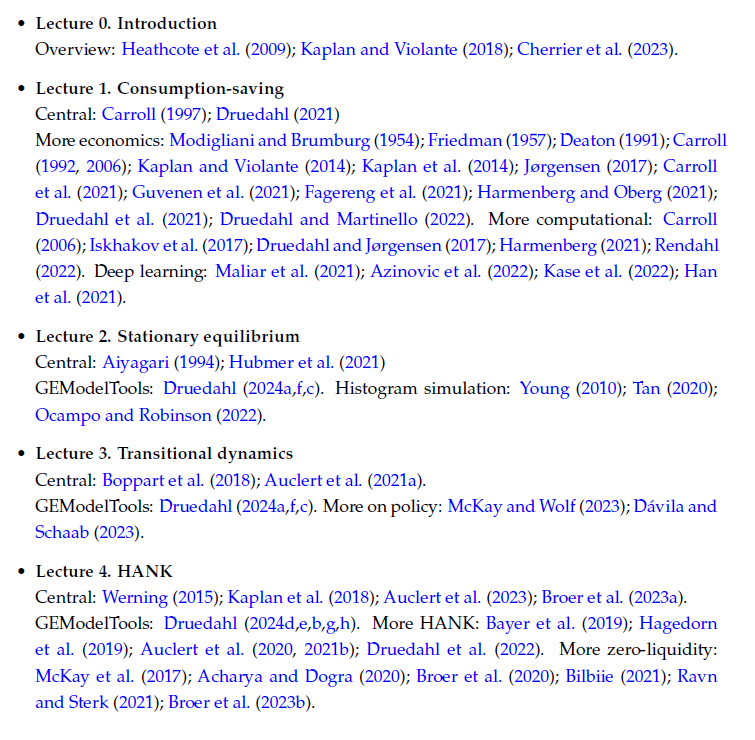
This week I am teaching a four day PhD course on heterogenous agent macro at University of Porto.
The course content is online here: https://t.co/3Q6EjxK64R
Congratulations to @davidhem and @mortengolsen who were recognized for the AEJ Best Paper Award for Macroeconomics at #ASSA2024 for the paper “The Rise of the Machines: Automation, Horizontal Innovation, and Income Inequality” https://t.co/I9ChMmdQiU
Forthcoming in AEJ: Microeconomics: "The Inverse Product Differentiation Logit Model" by Mogens Fosgerau, Julien Monardo, and André de Palma. https://t.co/0tATyu0KVh
I‘m thrilled to report that the fantastic @MayaREden from @BrandeisU (and my fomer @MITEcon classmate!) will join our Department @econ_uzh next summer as Professor of Economics! 🎉 Can‘t wait to welcome you to Zurich!
But this doesn't tell the full story.
Most people in 19th century London weren't living in Georgian terraces and most people in 1920s New York weren't living in Art Deco apartments.
Photographs taken by Jacob Riis in Manhattan give you some idea of how most people were living:
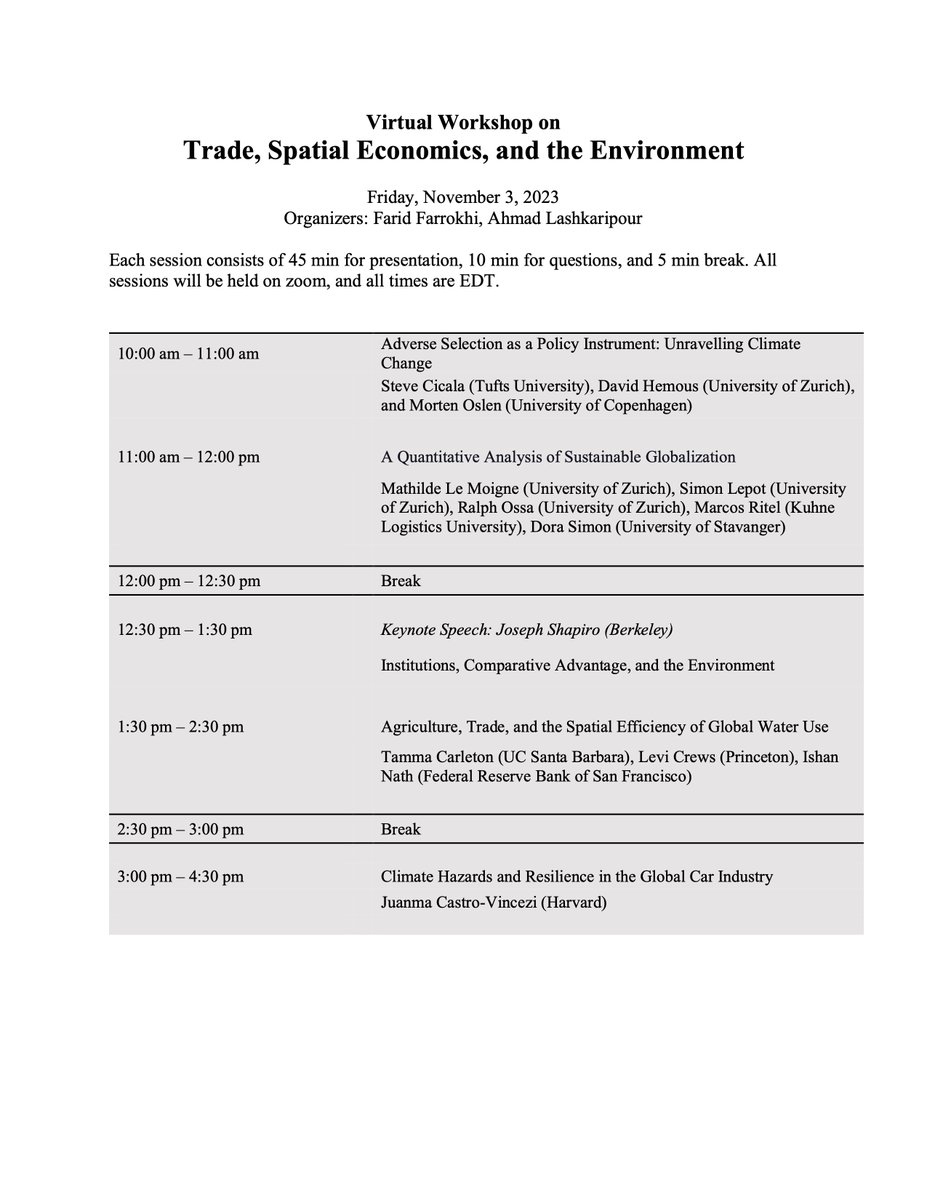
📢 Join us for a Virtual Workshop on Trade, Spatial Economics & Environment!
This Friday, Nov 3, @Farid__Farrokhi and I host our 3rd workshop with a special keynote by Joseph Shapiro (@_josephshapiro).
Sign up here if interested: https://t.co/3bcoUlPNzd
You probably recognice @S_HoveRavn. Søren is a frequently quoted expert in the Danish media and that is why he is now receiving the DFI Dissemination Award 2023. Congratulation, Søren! 🧠 ✨👏🏼
https://t.co/YDozePt9cI
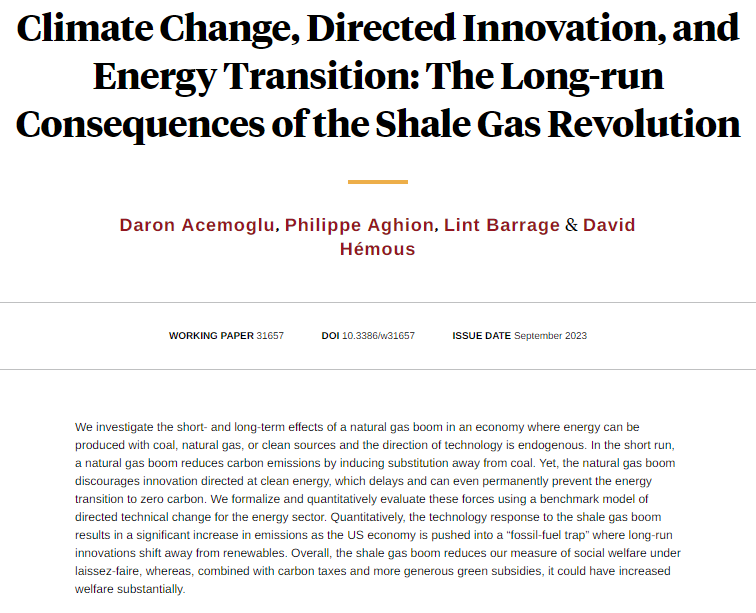
Technology response to the shale gas boom results in a significant increase in emissions as the US economy is pushed into a “fossil-fuel trap” in which long-run innovations shift away from renewables, from @DrDaronAcemoglu, Aghion, Barrage, and @davidhem https://t.co/wjP3dYqdfr
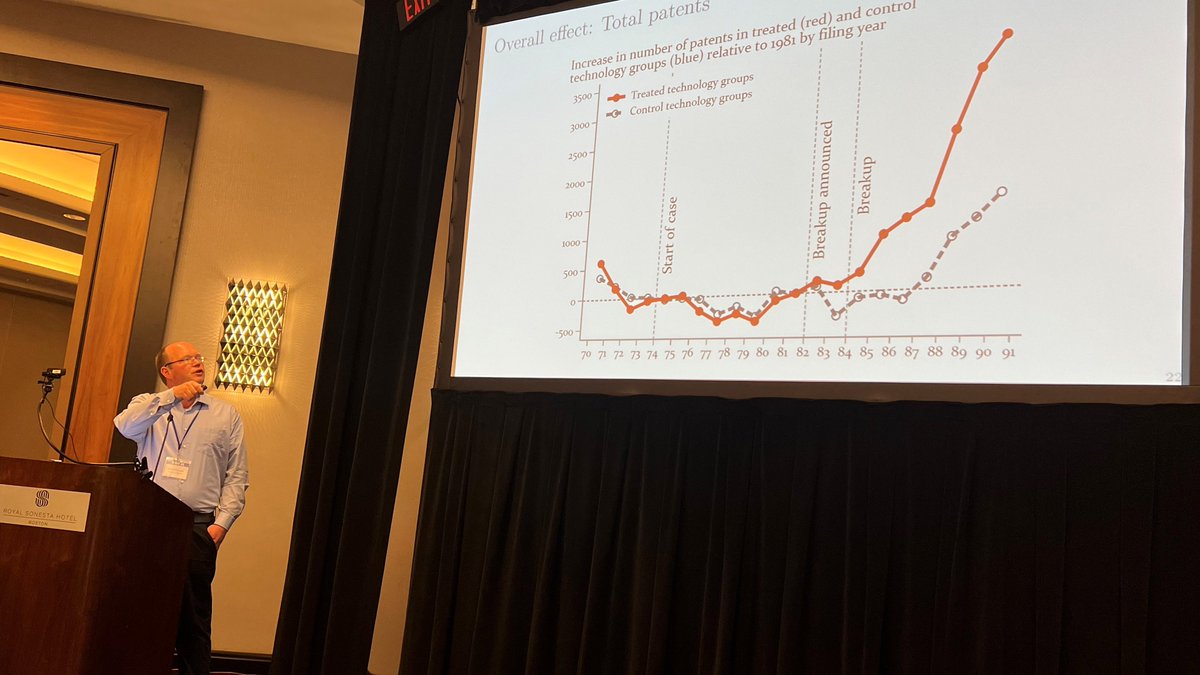
Great to be back to the #NBERSummerInstitute. THANKS Martin @Watzinger for presenting our paper on "The breakup of the Bell System and its Impact on Innovation," THANKS @judy_chevalier for a very constructive discussion, THANKS all for great comments & suggestions!
Is top income inequality just about a few lucrative occupations? In a new working paper, we (@gottliebecon, @davidhem, Jeff Hicks) highlight the importance of within-occupation inequality.
We show that increases in inequality within one occupation can “spill over” into others.1/5
Our theory predicts these effects for some occupations, but not others. The data bear these out: Occupations that don't serve specific local customers, with heterogeneous quality, don't.
Read more at https://t.co/4c8jEcbwka
We develop a theory of when income inequality spills over from one occupation to another. The best-paid CEOs compete for the best, say, physicians, increasing docs' inequality.
This implies a multiplier effect on total inequality. We show this multiplier is at least 25%. 4/5