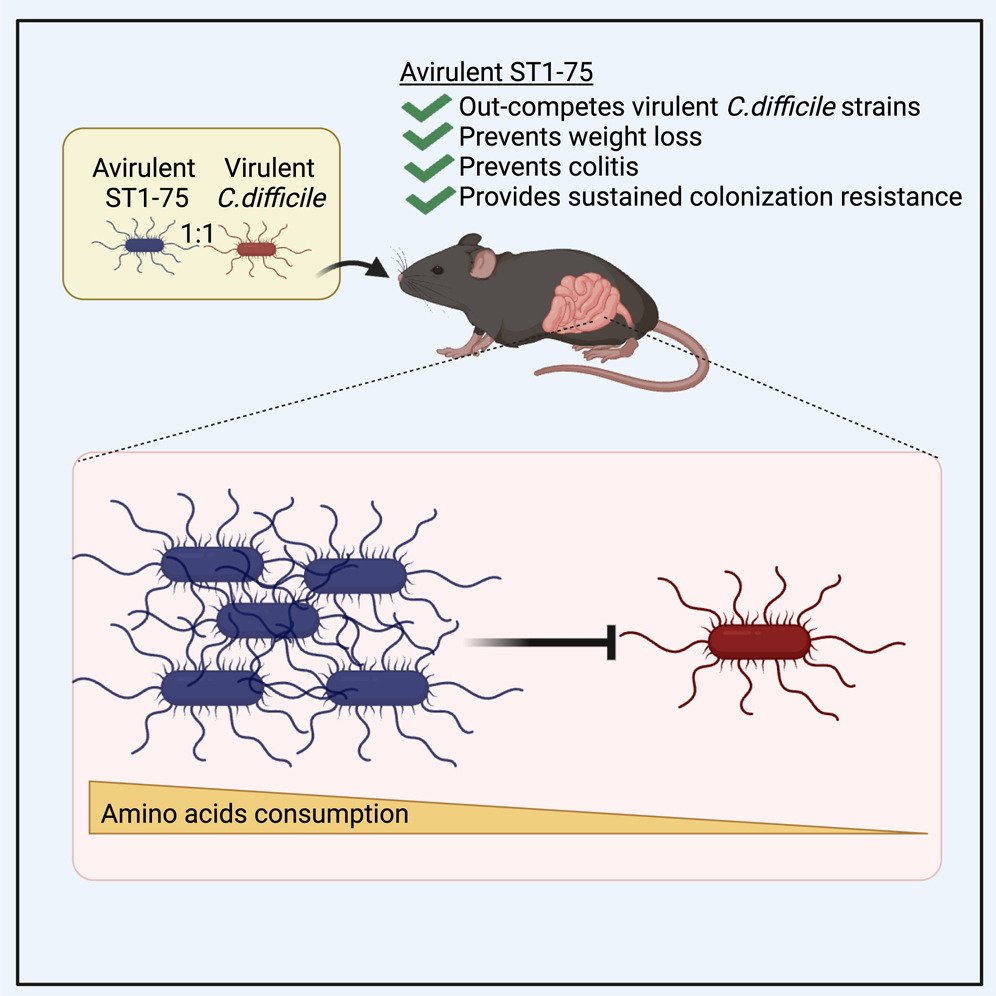
Protection against C. diff by avirulent strain:
@sciissue_077 show avirulent C. difficile isolate ST1-75 outcompetes virulent C. difficile to protect mice from colitis, likely by depleting amino acids. ST1-75 has biotherapeutic potential for recurrent CDI
https://t.co/rTWyy6poE8
We are hiring! If you (or someone you know) is looking for a PostDoc position focused on Clostridial genetics with broad applications, please check out our position: https://t.co/zxCrtQmKg8 Come and join us in the vibrant science town of Boston!
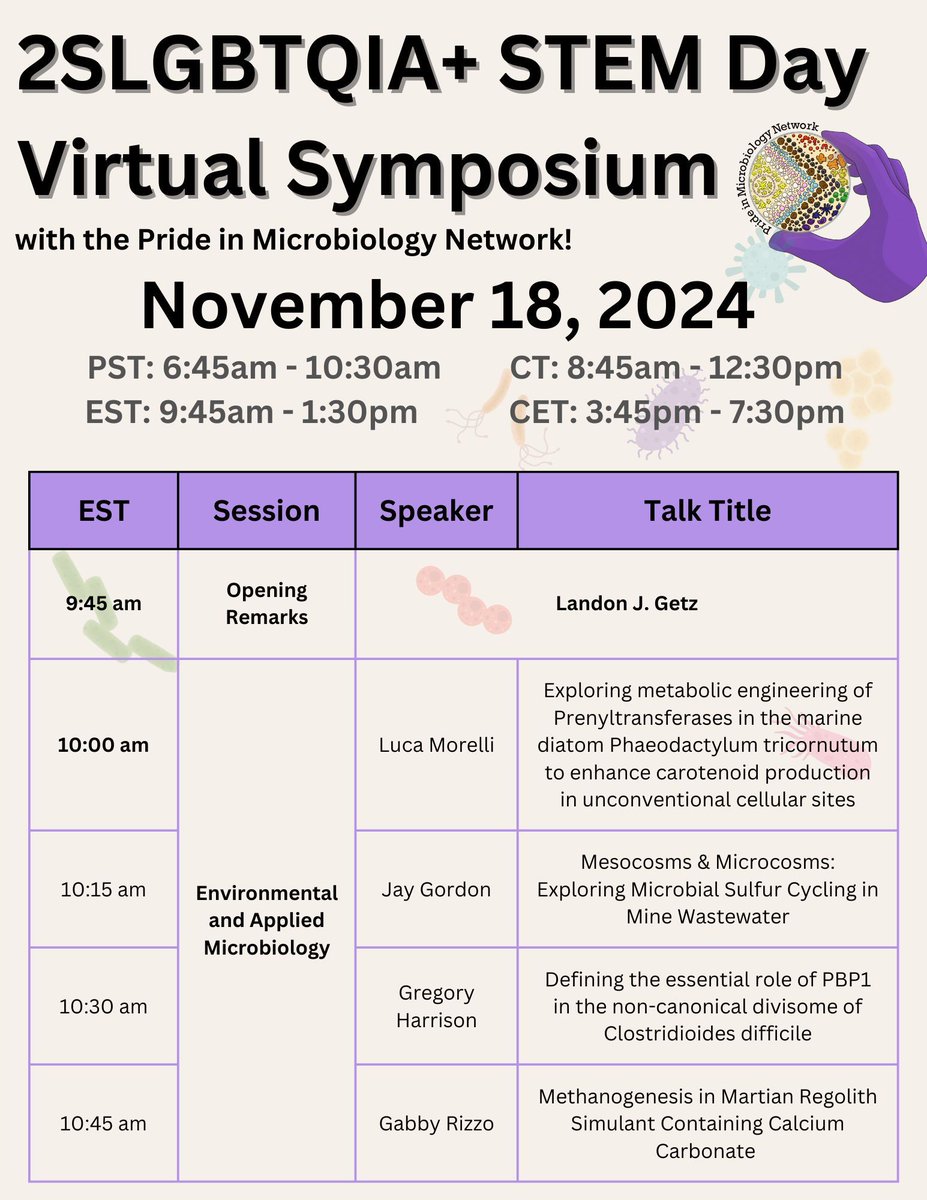
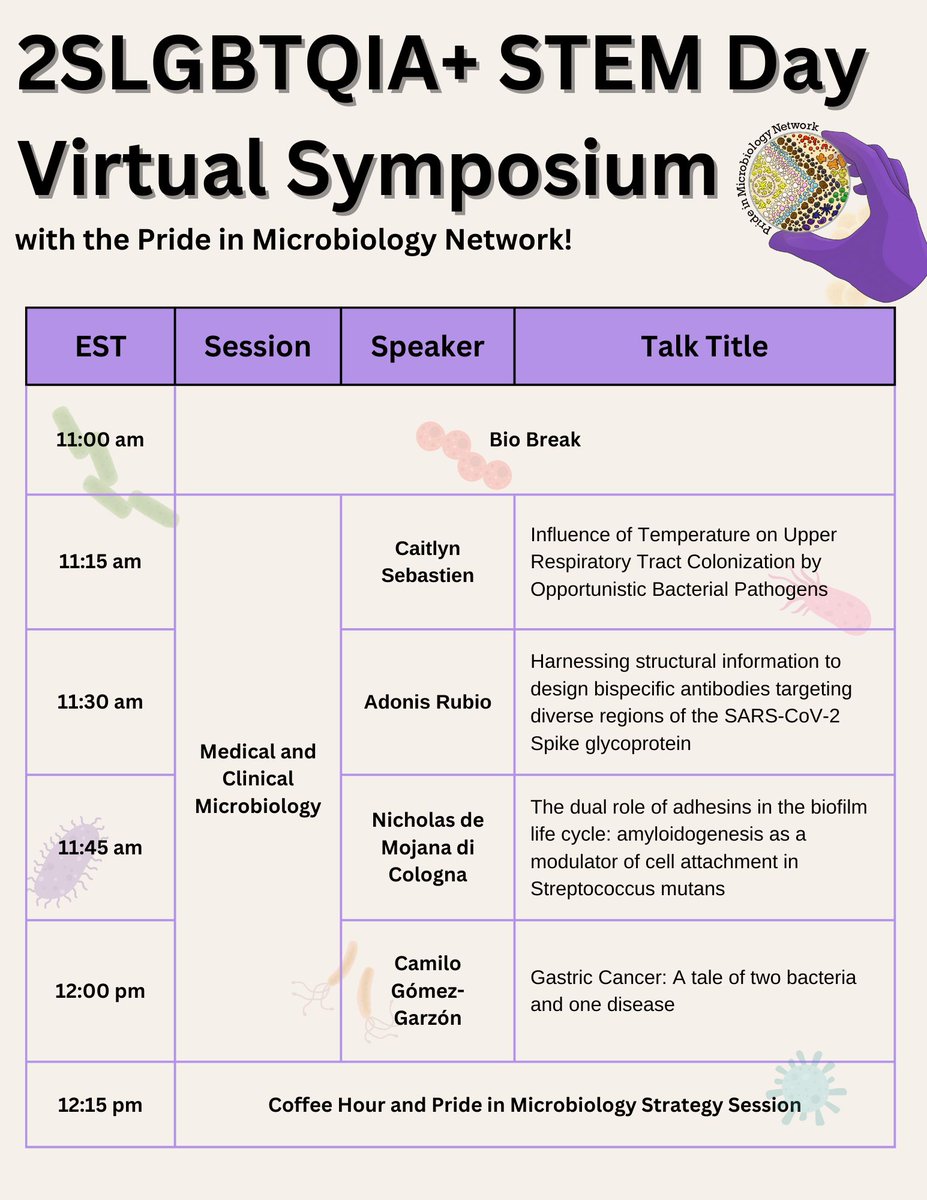
Pride in STEM Day Virtual Symposium is TOMORROW, November 18!🏳️🌈 🔬 🏳️🌈
Join us to hear from our community members and explore the science that unites us. The event will conclude with an informal Coffee Hour to connect with our global network
Register here: https://t.co/daLWAHGoTz
So excited to be part of this forum to celebrate LGBTQ+ STEM Day, and for the chance to present my work in @ShenLabTufts on the unique mechanism underlying cell division in C. difficile (and likely other important Clostridia)! See below to register for this inaugural meeting!
Our 1st Pride in STEM Day Virtual Symposium is next MONDAY! Check out the speakers of the Environmental and Applied Microbiology Session🌈 🌱 🔬
Join us on November 18 & learn about the science shaping our community
Interested in attending? Register here: https://t.co/daLWAHGoTz
It has been 10 years since I started doing Western blots in the lab. Wow, what a rollercoaster!
Based on my successes and failures, here are some tips for perfect Western blots. A thread (1/5)…
@hualiang2018@asm It was amazing catching up with you and hearing about your lab’s latest discoveries! Those images of ferrosomes keep getting cooler and cooler 🤩 I hope we cross paths again soon at a future meeting!
It was such a pleasure convening a bacterial/archaeal cell biology session at #ASMMicrobe featuring incredible talks on bacterial/phage vesicles, carboxysome trafficking, and archaeal decision-making by @hualiang2018@Emy_nim@hoanghamyy and @chattergenius - mind-blowing work!🤯
Following up our Cell Reports paper, an avirulent C. difficle clinical isolate out-competes virulent strains in mice via quickly depleting multiple amino acids, and protects mice from developing colitis!
New preprint! https://t.co/I8uywMK7IM Genome engineering in Clostridia is arduous. With help from @jgi we screened a large library of recombinases to enable oligo recombineering in E. limosum. The library is based on widely used Clostridial parts and available for others to use
Thanks to @mSphereJ for giving me the chance to highlight these landmark studies from the labs of Tom Silhavy, Natacha Ruiz, and @m_strent! Super cool that the commentary came out within days of a new study describing the AsmA-like proteins in Pseudomonas: https://t.co/dfEfkjDqox
#mSphere of Influence: Gregory Harrison reflects on studies that employ complementary genetic approaches to define the crucial role of AsmA-family proteins in transporting phospholipids between the inner and outer membranes of Gram-negative bacteria. https://t.co/oZXvOQLusI
"But I have this fear that some #science students avoid branching out, not because they don’t want to, but because they believe they’re not supposed to." #AcademicChatter https://t.co/ZHJ8BSJxHP
Can’t believe this is out!! This is the culmination of >6yr of work to define the mode of action of the compound C10 in Mtb. There’s a LOT we still don’t know about this remarkable compound, but proud of the work accomplished with @StallingsLab @FredrikAlmqvis1@gjpattij labs! 😃
Using a small molecule to dissect the physiology and antibiotic susceptibility of Mycobacterium tuberculosis, work from the @StallingsLab reveals new mechanisms to sensitize this dangerous pathogen to existing antibiotics. #mBio https://t.co/oYsY20JpuR
Big thanks to @CellChemBiol for inviting me to write a story for their 30th anniversary special issue on RNA, its wonderful to be part of this vibrant community!
https://t.co/NcIND5y2zI