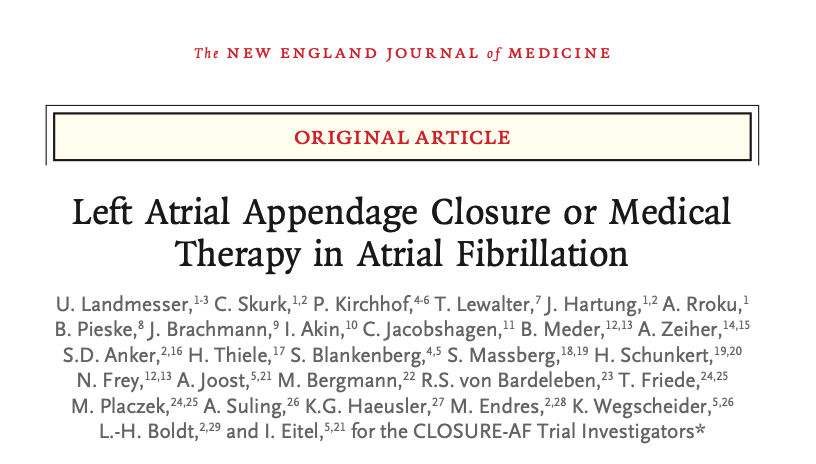
Left Atrial Appendage Closure or Medical Therapy in Atrial Fibrillation: @NEJM
🥸 The controversy in LAA closure
😱 I summarized it before when it was presented at @AHAScience but here you go...
👇👇👇
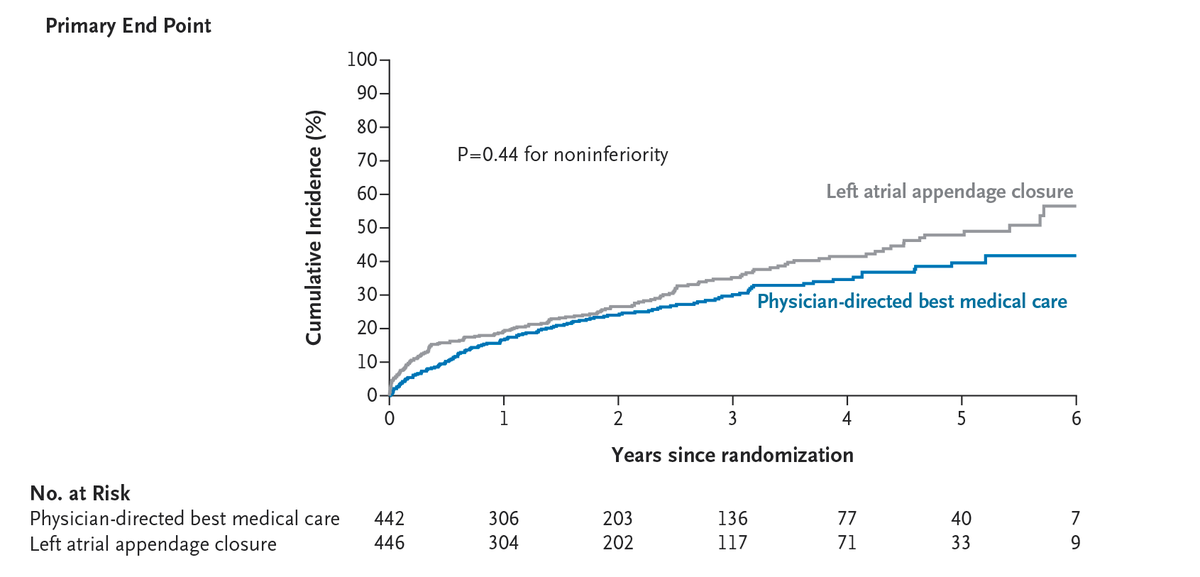
Among patients with atrial fibrillation at high risk for stroke and bleeding, left atrial appendage closure was not noninferior to medical therapy in reducing the risk of stroke, embolism, major bleeding, or death at 3 years. Full CLOSURE-AF trial results: https://t.co/qAMC2o36Mi
Editorial: Left Atrial Appendage Closure — Another Overused Method in Cardiology? https://t.co/KyOWdblUR3
Trajectories of Angina After Initial Invasive vs Conservative Strategy for Chronic Coronary Disease: @JACCJournals
🥸"A greater proportion of conservatively managed patients experienced unfavorable angina,..., compared with those treated invasively.": @djc795
👇👇👇
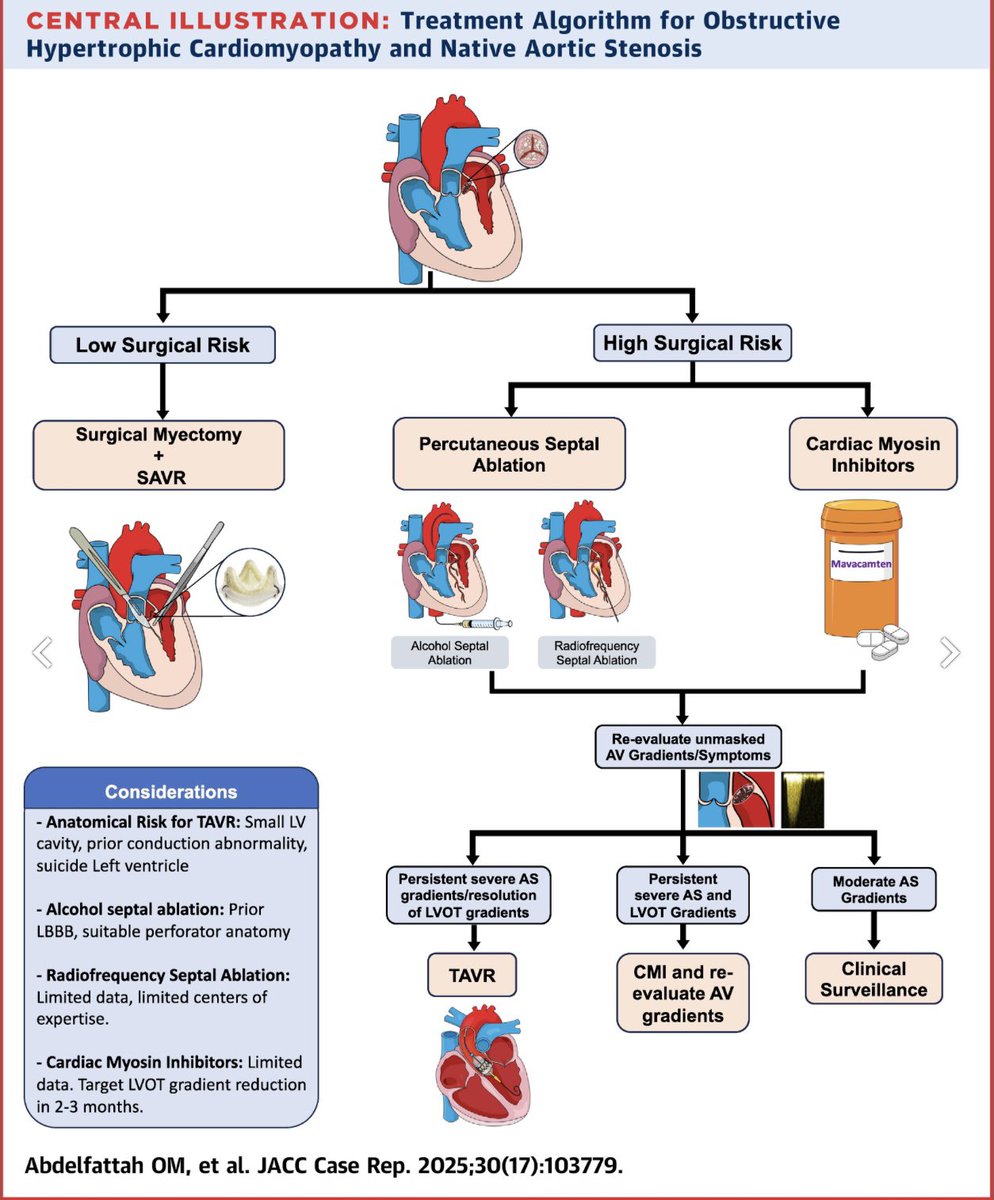
🚨🫀Our latest paper in @JACCJournals CR shows ASA & Mavacamten effectively relieve obstruction in patients with severe AS and oHCM. Check out our stepwise treatment algorithm in High 🗡️ Risk Case Series with concomitant oHCM & AS spearheaded by @mmartinezheart@RobynBrydeMD@morristownheart@utmbcardiology@docHJ
https://t.co/m7Ob0x4C7k
The risk of incident HF after a #cvMI is up to six-fold higher than the risk of recurrent MI and the prognosis is worse among those who develop incident HF, regardless of #LVEF category.
Read more: https://t.co/GzY5n5SDxi #HeartFailure
The TOMAHAWK trial: “These findings may shift the current understanding of both trials from a “neutral” towards a likely “harmful” effect of immediate coronary angiography after successfully resuscitated OHCA without ST-segment elevations”. https://t.co/KgbVhZi9NJ #Cardiology
EARLY TAVR published. Among patients with asymptomatic severe aortic stenosis, a strategy of early TAVR was superior to clinical surveillance in reducing the incidence of death, stroke, or unplanned hospitalization for cardiovascular causes, driven by the latter. The study's findings may be limited by factors such as its unavoidable unblinded nature, trial-specific vigilance levels, low-risk patient selection, and use of a single valve type. #TCT2024
https://t.co/W1JsvkgrnT
Sudden cardiac death after myocardial infarction: @ESC_Journals
🥸 Of the 140,204 post MI patients, 1,326 (0.945%) developed sudden cardiac death.
😱 Can we predict those who developed sudden death with clinical variables including LVEF and MRI data?
👇👇👇