💭 What if your November reflections could deepen your faith?
This month’s Bible Gateway Blog posts invite you to think deeper, study wiser, and draw nearer to God’s Word.
Swipe to see what’s new, then keep reading: https://t.co/AeWxauF05O
This butternut squash casserole uses the "marry me" flavor profile—creamy, garlicky with sun-dried tomatoes and herbs—and gives it a vegetable-forward twist. https://t.co/fzKEV4c5Hq
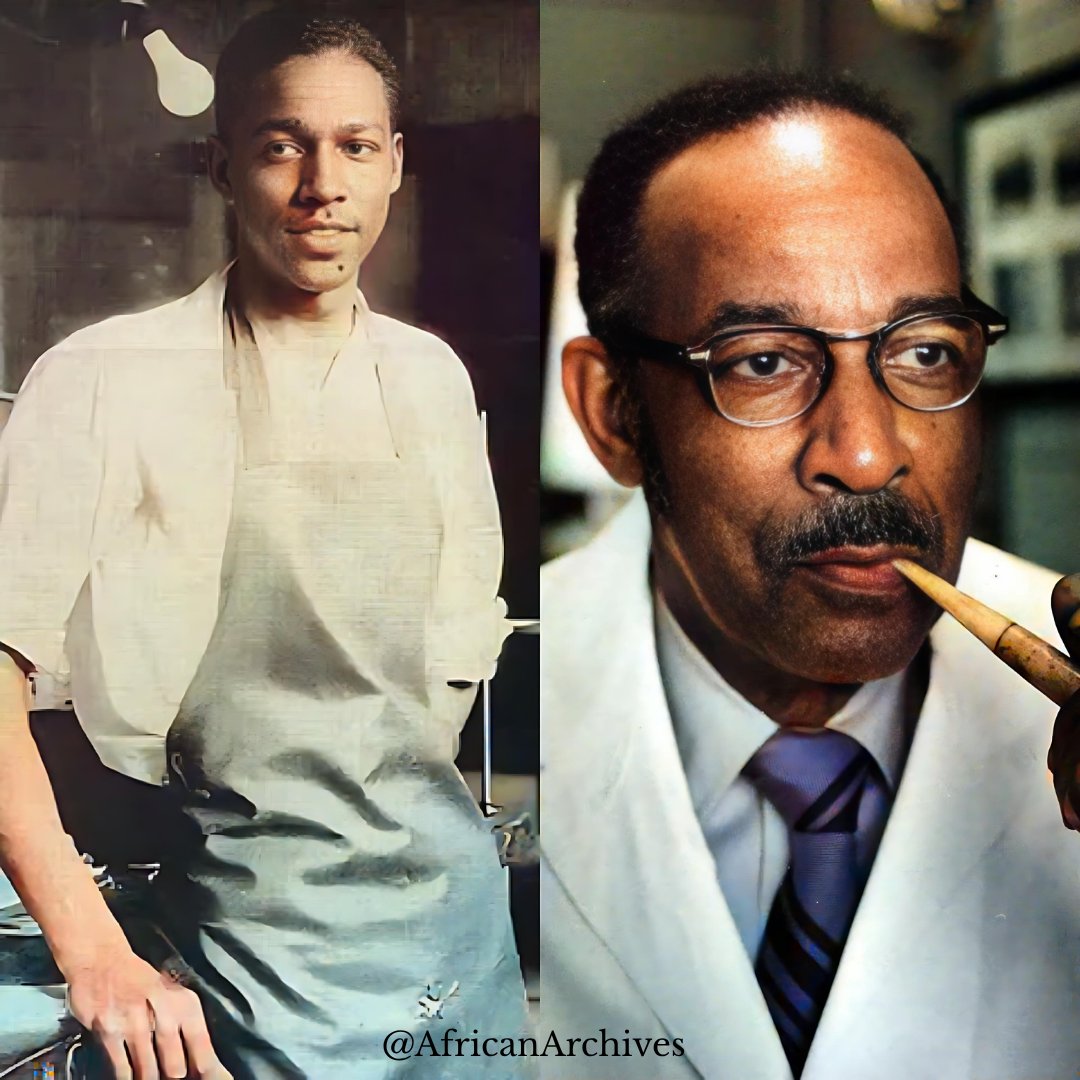
Vivien Thomas was a pioneering American lab supervisor in cardiac surgery and the assistant to surgeon Alfred Blalock.
He helped develop a procedure to treat Blue Baby Syndrome which saved thousands of infants' lives.
Bass Reeves, the real Lone Ranger.
Bass Reeves was the first African American commissioned to serve as a deputy marshal west of the Mississippi River. He brought to justice over 3,000 criminals and killed fourteen outlaws during his years as a marshal.
The Hebrew verb for sanctify is קדשׁ, which means “to make holy or remove from common use." Often, “sanctification” is misunderstood as merely a moral improvement or good works. While good works are important, they do not make us holy—God does.
Holiness belongs exclusively to God (Rev. 15:4; Isa. 6:3). Humans cannot sanctify themselves any more than they can make themselves divine. Holiness is a 100% God thing and a 0% human thing.
We can exercise ourselves into physical shape or study ourselves into mental shape, but we cannot sanctify ourselves into holy shape.
In the Old Testament, holiness was about proximity to God. The closer something was to his presence, the holier it was—whether people, places, or objects. For example, the inner sanctum of the tabernacle was the Holy of Holies, covered in gold, while the outer areas like the Holy Place or forecourt had less valuable metals.
When the Bible speaks of people “consecrating” or “sanctifying” themselves (Lev. 11:44; Exod. 19:22), it does not mean they make themselves holy. Rather, they are to remain in the holiness God has already given them.
Holiness is always received from God, never self-generated.
In the New Testament, holiness is no longer tied to the temple but to Jesus Christ. He is the true Holy of Holies (John 1:14; 2:21), the one who sanctifies us through his sacrifice (Heb. 10:10). His blood makes us holy (Heb. 13:12), and we are sanctified in him (1 Cor. 6:11).
Even ongoing sanctification is God’s work, not ours. Paul prays, “May the God of peace himself sanctify you completely” (1 Thess. 5:23). Jesus prays, “Sanctify them in the truth; your word is truth” (John 17:17). The Holy Spirit draws us into Christ’s presence, sanctifying us through Baptism, the Word, and the Lord’s Supper.
Good works naturally flow from sanctification, but they are not its cause. We do not sanctify ourselves; we receive sanctification as a divine gift. Holiness is not what we do but what God does in us through Jesus Christ.
DISCUSSION:
-What are your thoughts on sanctification?
-How does sanctification as proximity to God reshape our view of holiness?
ADDITIONAL RESOURCES ON THIS TOPIC:
-Article: "What is Sanctification? Revisiting the Old Testament for the Answer" (https://t.co/NKcxhbrp6T )
-Video: "Sanctification: A Matter of Proximity" (https://t.co/WEIsNRVAYL )
_________
Join our online community of Bible readers and students! For more information and to sign up, visit https://t.co/XxNvEtOeWM
Eating Holiness - Leviticus 6-7. Head to https://t.co/Yrg5F0E7Fx for the reading guide and to catch up on previous posts from the Bible in One Year series. Happy Studying! #BibleinOneYear#Biblestudy