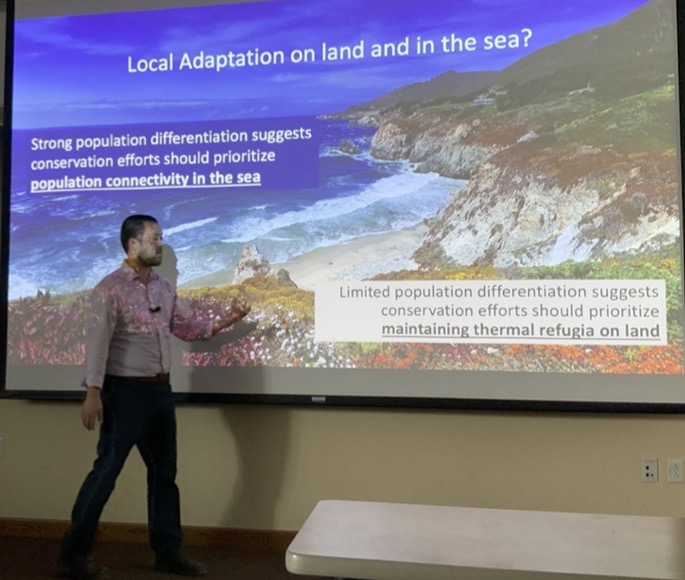
Postdoc in Molecular Genetics of Adaptation – Pespeni Lab, University of Vermont. Flexible project, expertise in linking genotype to phenotype. 2+ years of funding; NIH pay scale; Ideal start Sept 1. Email mpespeni at uvm dot edu if interested! Pls RT! https://t.co/m7cBXQkBb1
Take home: The tipping point between health and disease is likely shaped by host condition, low oxygen conditions, and microbial dysbiosis. These results are also supported by our field-sampled naïve, exposed, and wasting sunflower stars in Alaska: https://t.co/K4cCE8jmRl
New paper out today on Sea Star Wasting in Proc B @RSocPublishing – Longitudinal gene expression and microbiome data: visibly healthy stars = active immune and collagen systems + stable microbiome. Wasting stars = hypoxia + turnover to anaerobic microbes. https://t.co/uOZPuQC3No
New paper @FrontMarineSci – The microbiomes of Naïve, Exposed, and Wasting sunflower stars sampled in the wild in Alaska as the disease spread north implicate Vibrio and low oxygen conditions. Amazing collaboration among @QuestUvm trainees and AKDF&G!
https://t.co/K4cCE8jmRl
#SeaUrchin larvae don’t grow or survive well when exposed to compounds that leach from #plastics into the ocean. Surprise - the most detrimental effects were at intermediate doses! Project started by a curious undergrad and finished by Master @EmilyShore8! https://t.co/3Ll2h9DCzU
Big picture take home: 1+1 ≠ 2 when it comes to global change adaptation!
Amazing collaborators!:
@reidbrennan @Jimmy_deMayo @planktonomics@vsbuffalo @Baumannlab1
New paper! 25 gens of exptl evol of copepods - ambient, ocean acidification, warming, and combined -> warming is the strongest selective pressure, but the combination results in a unique synergistic response https://t.co/6CI4z4xJC9
@PNASNews@BiologyUVM
See our cartoon abstract!
Congrats, Dr. Ashlock! In one week, @AshlockLauren defended their dissertation and lined up a postdoc! Lauren’s work explored the effects of pop, life history, and enviro history on copepod temp and salinity tolerance. The oceans thank you, Dr. Ashlock! @QuestUvm @BiologyUVM
@QuESTUVM is looking to hire a #ProgramCoordinator! Someone who’s upbeat, organized, and deeply committed to justice, equity, diversity and inclusion! All backgrounds & disciplines encouraged to apply: https://t.co/pZKOY5ZdYc Please RT! https://t.co/i0bJHVHbJZ
Big picture: Nature is both resilient and vulnerable. We need to make and encourage Earth-friendly choices to protect and preserve the beauty and complexity that exists on this world.
For a fun and accessible press release: https://t.co/6tXYxBK7n2
25 generations of experimental evolution in copepods + genomics + beautiful analyses and visualizations show that adaptation to ocean warming and acidification is synergistic rather than additive. Check out our new preprint just up!
https://t.co/nEnAZZvu49
We measured fitness across 25 generations of experimental evolution to find “Rapid, but limited, zooplankton adaptation to simultaneous warming and acidification” Out this week @NatureClimate with @planktonomics and @reidbrennan! #UVMResearch#copepods
https://t.co/z9LNdUbdg3
@pinskylab@ntherk @JessicaLWareLab Yes! Human population genetics offers a great opportunity to distinguish race (social construct), from genetic ancestry and ethnicity. Totally agree on highlighting work from folks w/ marginalized identities and using author photos. Also check out "decolonizing" your syllabus.
#Copepods have slower pop. growth and slower sinking poop when they eat #microplastics. This may be bad news for the oceanic food chain and carbon settling. Emily Shore’s MS thesis @BiologyUVM just out in #Environmental#Pollution! Free PDF til Jul 23! https://t.co/gh874A0nzt