"Is the situation actually complicated or is it really quite straightforward, but you're making it complicated because it requires a lot of courage to make the straightforward decision?"
-@JamesClear
“To make ourselves unhappy is where all crime starts. We must try to contribute joy to the world. That is true no matter what our problems, our health, our circumstances. We must try.” — Roger Ebert
via the 5-Bullet Friday newsletter (https://t.co/x6tICTeu4Q) from @tferriss
When he was 19, Andre Agassi started losing his hair.
Deeply ashamed of his receding hairline, to hide it, Agassi started wearing a hairpiece.
Not long after, at the 1990 French Open, Agassi made it to his first Grand Slam final.
“The night before the final,” Agassi writes,
“Catastrophe strikes.”
As he was taking a shower, Agassi felt the hairpiece disintegrate in his hands. He summoned his brother, who was able to clip the hairpiece back together with 20 bobby pins.
The next morning, Agassi writes, “warming up before the match, I pray. Not for a win, but for my hairpiece to stay on…My tenuous hairpiece has me catatonic…With every lunge, every leap, I picture it landing on the clay. I can picture millions of people suddenly leaning closer to their TVs, turning to each other and in dozens of languages and dialects saying some version of: Did Andre Agassi’s hair just fall off?”
At times, he looks into the stands and sees fans sporting hairdos just like his. This only exacerbates his sense of shame. “I can’t imagine all these people trying to be like Andre Agassi,” he writes, “since I don’t want to be Andre Agassi.”
Because of this fixation on his hairpiece, though he was the heavy favorite, Agassi lost three sets to one.
After, his girlfriend, aware of the hairpiece catastrophe, says, “I think you should just get rid of that hairpiece.”
“Impossible,” Agassi replies, “I’d feel naked.”
“You’d feel liberated,” she says.
He thought it over for a few days: “I thought about the pain my hair has caused me, the hypocrisy and the pretending and the lying.”
And then he went back to his girlfriend, “Let’s do it…Let’s cut it all off.”
His first tournament with a bald head was another Grand Slam, the Australian Open, and, “I come out like the Incredible Hulk. I don’t drop one set in a take-no-prisoners blitz to the final.”
You were right, he told his girlfriend before the final, “my hairpiece was a shackle.”
In the final, he won three sets to one. “Everyone says it’s my best performance yet, because it’s my first victory over Pete [Sampras]. But I think twenty years from now I’ll remember it as my first bald victory.”
Takeaway 1:
In his book, in interviews, and in the documentary “Stutz,” the psychiatrist Phil Stutz talks about the Shadow.
“The easiest way to say it,” Stutz explains, “is that the Shadow is the part of yourself that you’re ashamed of…It’s a flawed part of yourself that you feel you have to hide and once you start to hide things, you become very sensitive to whether other people can see them or not. It becomes an obsession—How do they see me, what do they think of me, do they like me, love me?”
The more you try to hide what you’re ashamed of, as Agassi said, the more ashamed you feel.
“But the beauty is,” Stutz continues, “once you stop hiding it, you can relax and then you get flow. If you stop hiding your Shadow, if you stop hiding, you get flow. And that’s what everybody wants.”
After he stopped hiding his Shadow, Agassi got flow. He went on to win back-to-back Grand Slams and ended 1995 as the number one ranked tennis player in the world, replacing Pete Sampras who held the spot for eighty-two straight weeks.
Takeaway 2:
Keeping in mind that Agassi was so worried about what others would think or say about his shaved head, I went searching for what others thought or said after he shaved his head.
All I could find was a passing mention in a 1995 Washington Post piece (“The wild mane of hair he sported at the tournament last season has been replaced with his new no-nonsense buzz cut.”)
It made me think of a line from the philosopher Seneca, who writes in a letter titled On Groundless Fears: “We suffer more in our imagination more often than in reality.”
In his head, Agassi thought people would think or say nasty things about him.
In reality, no one really cared.
- - -
“The most precious thing we have in life is time, so any time you spend worrying about something, get rid of it.” — Andre Agassi
Follow @bpoppenheimer for more content like this!
"When you tolerate an error, you rob yourself of learning.
When you ruminate on an error, you rob yourself of happiness.
Notice it, improve it, and move on from it."
-@JamesClear
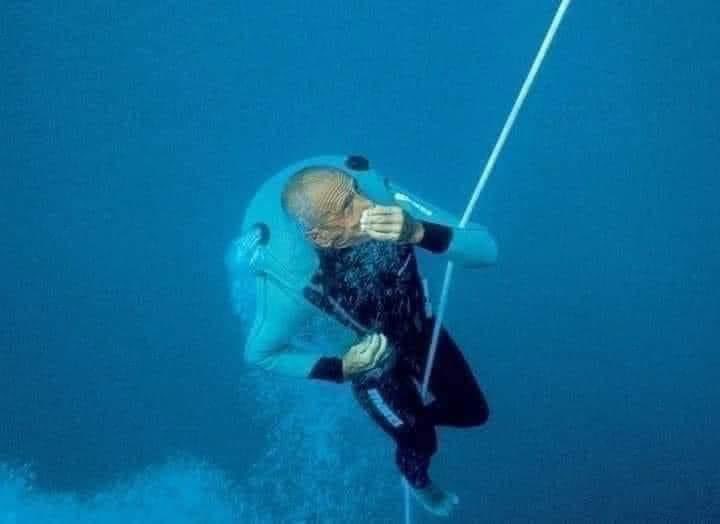
”The famous Italian diver Enzo Maiorca dove into the sea of Syracuse and was talking to his daughter Rossana who was aboard the boat. Ready to go in, he felt something slightly hit his back.
He turned and saw a dolphin. Then he realized that the dolphin did not want to play but to express something. The animal dove and Enzo followed.
At a depth of about 12 meters, trapped in an abandoned net, there was another dolphin. Enzo quickly asked his daughter to grab the diving knives.
Soon, the two of them managed to free the dolphin, which, at the end of the ordeal, emerged, issued an "almost human cry" (describes Enzo). (A dolphin can stay under water for up to 10 minutes, then it drowns.)
The released dolphin was helped to the surface by Enzo, Rosana and the other dolphin. That’s when the surprise came: she was pregnant!
The male circled them, and then stopped in front of Enzo, touched his cheek (like a kiss), in a gesture of gratitude and then they both swam off.
Enzo Maiorca ended his speech by saying: “Until man learns to respect and speak to the animal world, he can never know his true role on Earth.”
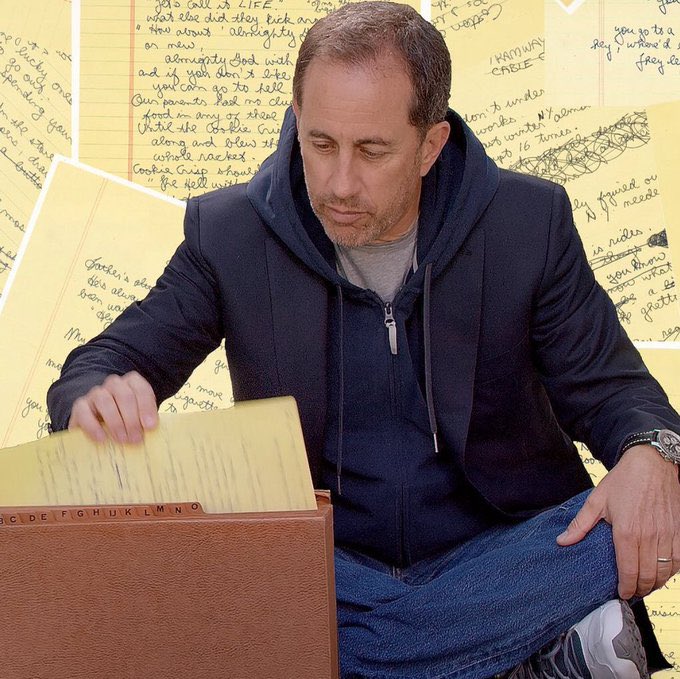
After the final episode of “Seinfeld” in 1998, Jerry Seinfeld didn’t know what to do next with his life.
With the success of the show, he had options.
“What do I do?” he asked a friend.
“Well what’s been the best experience you’ve had so far?” the friend asked.
Seinfeld said,
Two things:
First, writing—“I just see something and I write it down—I like a big, yellow legal pad—and once I get that pad open, I can’t stop…the next thing I know, the day is gone.”
Second, performing stand-up—“I just love the life of it,” Jerry said. “I love the joy of hearing laughs and making jokes.”
So, despite the cool and lucrative opportunities to further an acting or screenwriting career in Hollywood, Seinfeld moved back to New York City where he returned to writing jokes by day and performing in comedy clubs by night.
Takeaway 1:
“For anyone trying to discern what to do with their life,” the author Amy Krouse Rosenthal said, “PAY ATTENTION TO WHAT YOU PAY ATTENTION TO. That's pretty much all the info you need.”
Pay attention to what you can pay attention to so that, as Seinfeld put it, “the next thing you know, the day is gone.”
Takeaway 2:
After investing 9 years into creating the 9 seasons of the show, Seinfeld returned to being a standup comedian.
He made an estimated $38 million from just the last season of the show—when he had a boatful of money and unlimited options, he went back to the thing he loved when he had little money and few options.
It made me think of the parable of the fisherman and the businessman:
In a small coastal village, there is a fisherman who owns a small row boat. One afternoon, after fishing all morning, he returns to shore with his boat full of fish.
A vacationing businessman sees the fisherman and is impressed, “How long does it take you to catch so many fish?”
“Oh, just a couple of hours,” the fisherman says.
The businessman immediately sees a business opportunity. He offers to invest money in the fisherman—enough to buy a bigger boat and to set up his own company supplying fish to every restaurant in the village.
Fisherman: “And then what?”
Businessman: “We’ll set up a production plant and distribute fish to restaurants around the world.”
Fisherman: “And then what?”
Businessman: “Eventually the business will be so big that we’ll sell it for a huge sum of money.”
Fisherman: “And then what?”
Businessman: “You’ll have so much money that you’ll be able to do whatever you want. You can retire, move to a house by the sea, and fish as much as you want.”
The fisherman was confused, “Isn’t that what I already do?”
It’s just a reminder: the ability to do what you want for as long as you want is priceless and, often, inexpensive.
- - -
“The highest form of wealth is the ability to wake up every morning and say, ‘I can do whatever I want today.’” — Morgan Housel
Follow @bpoppenheimer for more content like this!






![bpoppenheimer's tweet photo. When he was 19, Andre Agassi started losing his hair.
Deeply ashamed of his receding hairline, to hide it, Agassi started wearing a hairpiece.
Not long after, at the 1990 French Open, Agassi made it to his first Grand Slam final.
“The night before the final,” Agassi writes,
“Catastrophe strikes.”
As he was taking a shower, Agassi felt the hairpiece disintegrate in his hands. He summoned his brother, who was able to clip the hairpiece back together with 20 bobby pins.
The next morning, Agassi writes, “warming up before the match, I pray. Not for a win, but for my hairpiece to stay on…My tenuous hairpiece has me catatonic…With every lunge, every leap, I picture it landing on the clay. I can picture millions of people suddenly leaning closer to their TVs, turning to each other and in dozens of languages and dialects saying some version of: Did Andre Agassi’s hair just fall off?”
At times, he looks into the stands and sees fans sporting hairdos just like his. This only exacerbates his sense of shame. “I can’t imagine all these people trying to be like Andre Agassi,” he writes, “since I don’t want to be Andre Agassi.”
Because of this fixation on his hairpiece, though he was the heavy favorite, Agassi lost three sets to one.
After, his girlfriend, aware of the hairpiece catastrophe, says, “I think you should just get rid of that hairpiece.”
“Impossible,” Agassi replies, “I’d feel naked.”
“You’d feel liberated,” she says.
He thought it over for a few days: “I thought about the pain my hair has caused me, the hypocrisy and the pretending and the lying.”
And then he went back to his girlfriend, “Let’s do it…Let’s cut it all off.”
His first tournament with a bald head was another Grand Slam, the Australian Open, and, “I come out like the Incredible Hulk. I don’t drop one set in a take-no-prisoners blitz to the final.”
You were right, he told his girlfriend before the final, “my hairpiece was a shackle.”
In the final, he won three sets to one. “Everyone says it’s my best performance yet, because it’s my first victory over Pete [Sampras]. But I think twenty years from now I’ll remember it as my first bald victory.”
Takeaway 1:
In his book, in interviews, and in the documentary “Stutz,” the psychiatrist Phil Stutz talks about the Shadow.
“The easiest way to say it,” Stutz explains, “is that the Shadow is the part of yourself that you’re ashamed of…It’s a flawed part of yourself that you feel you have to hide and once you start to hide things, you become very sensitive to whether other people can see them or not. It becomes an obsession—How do they see me, what do they think of me, do they like me, love me?”
The more you try to hide what you’re ashamed of, as Agassi said, the more ashamed you feel.
“But the beauty is,” Stutz continues, “once you stop hiding it, you can relax and then you get flow. If you stop hiding your Shadow, if you stop hiding, you get flow. And that’s what everybody wants.”
After he stopped hiding his Shadow, Agassi got flow. He went on to win back-to-back Grand Slams and ended 1995 as the number one ranked tennis player in the world, replacing Pete Sampras who held the spot for eighty-two straight weeks.
Takeaway 2:
Keeping in mind that Agassi was so worried about what others would think or say about his shaved head, I went searching for what others thought or said after he shaved his head.
All I could find was a passing mention in a 1995 Washington Post piece (“The wild mane of hair he sported at the tournament last season has been replaced with his new no-nonsense buzz cut.”)
It made me think of a line from the philosopher Seneca, who writes in a letter titled On Groundless Fears: “We suffer more in our imagination more often than in reality.”
In his head, Agassi thought people would think or say nasty things about him.
In reality, no one really cared.
- - -
“The most precious thing we have in life is time, so any time you spend worrying about something, get rid of it.” — Andre Agassi
Follow @bpoppenheimer for more content like this!](https://pbs.twimg.com/media/GGefsfDXwAAcRSJ.jpg)