#OpJalRahat
𝗛𝗼𝗽𝗲 𝗜𝗻 𝗔𝗰𝘁𝗶𝗼𝗻
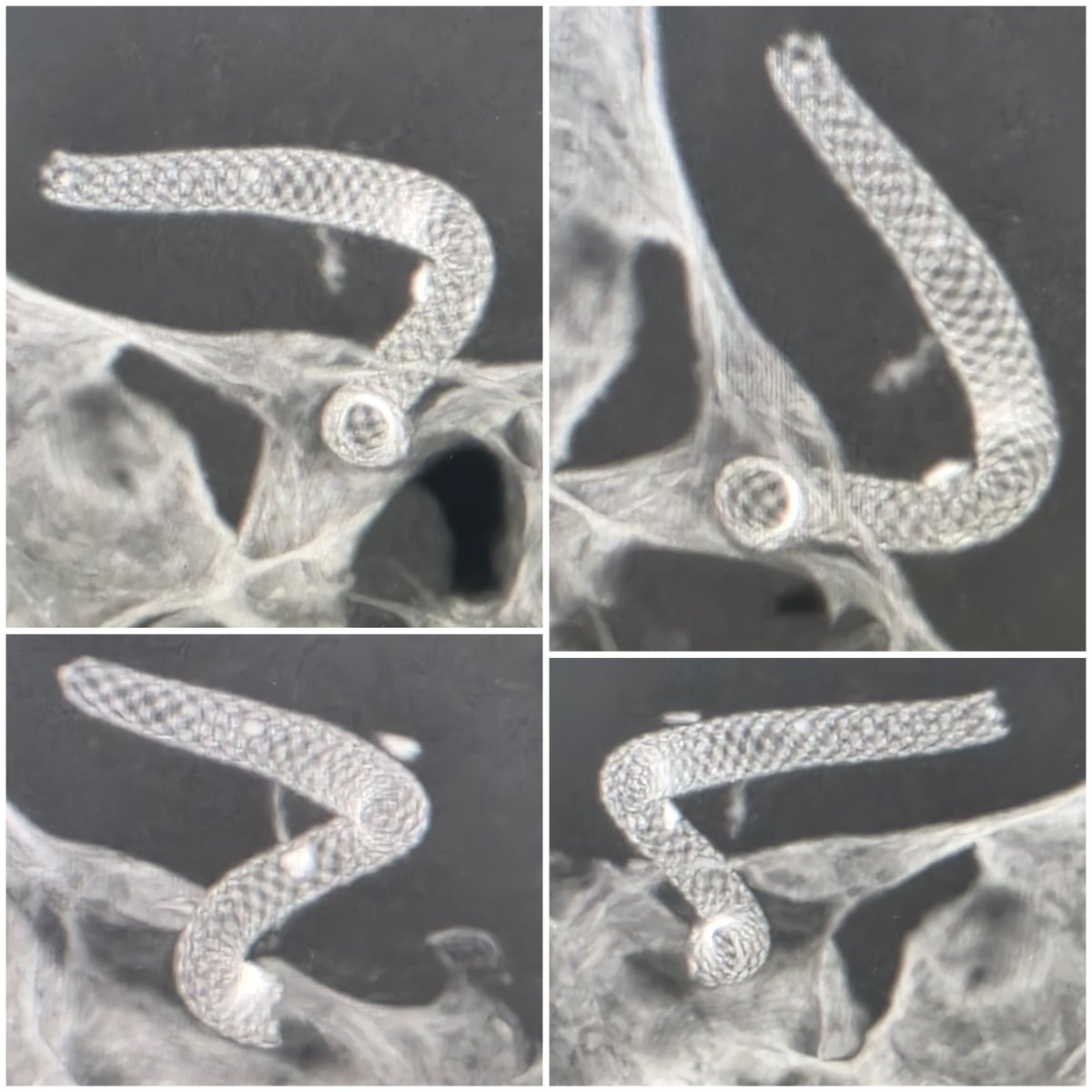
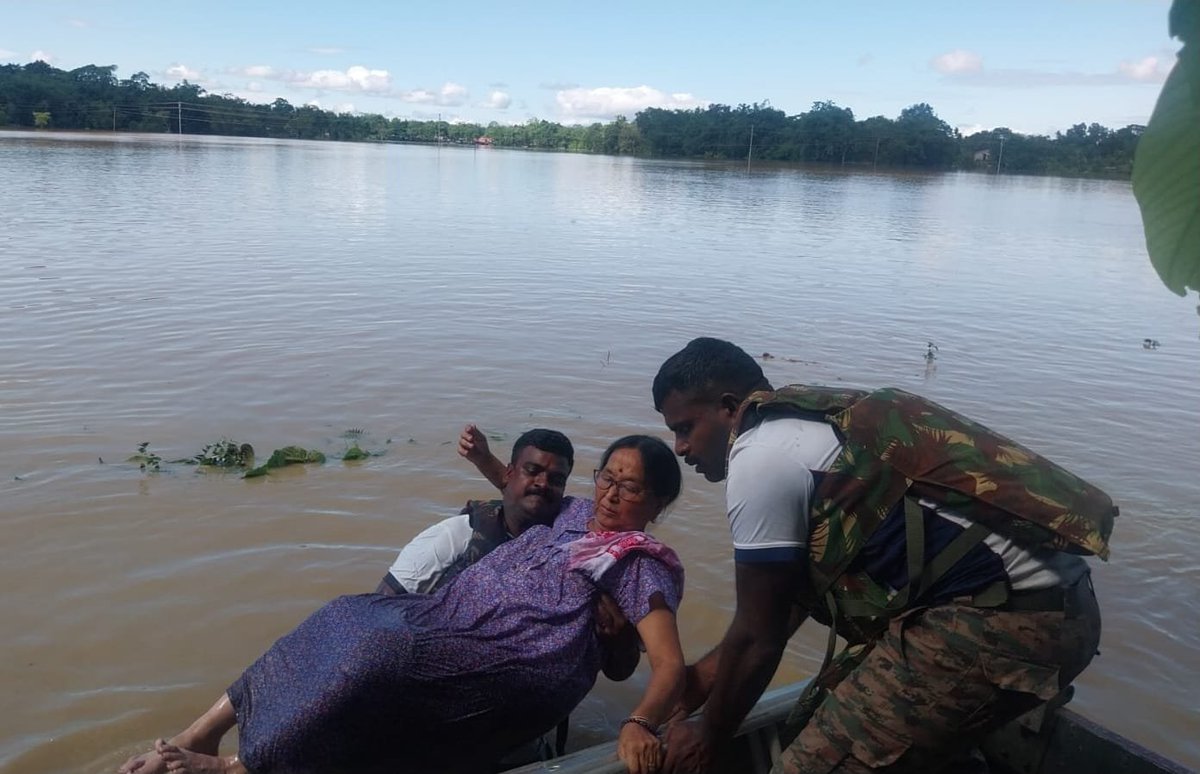
Amidst the devastating floods in #Assam, the #IndianArmy continues its relentless humanitarian mission under #OpJalRahat. Working shoulder-to-shoulder with the civil administration, NDRF, SDRF and local agencies, troops of @Spearcorps are conducting rescue and relief operations, providing medical aid, restoring connectivity and reaching stranded families in the remotest areas, even through innovative use of logistic drones. (1/2)
#ServiceBeforeSelf
#HADR
#NationFirst
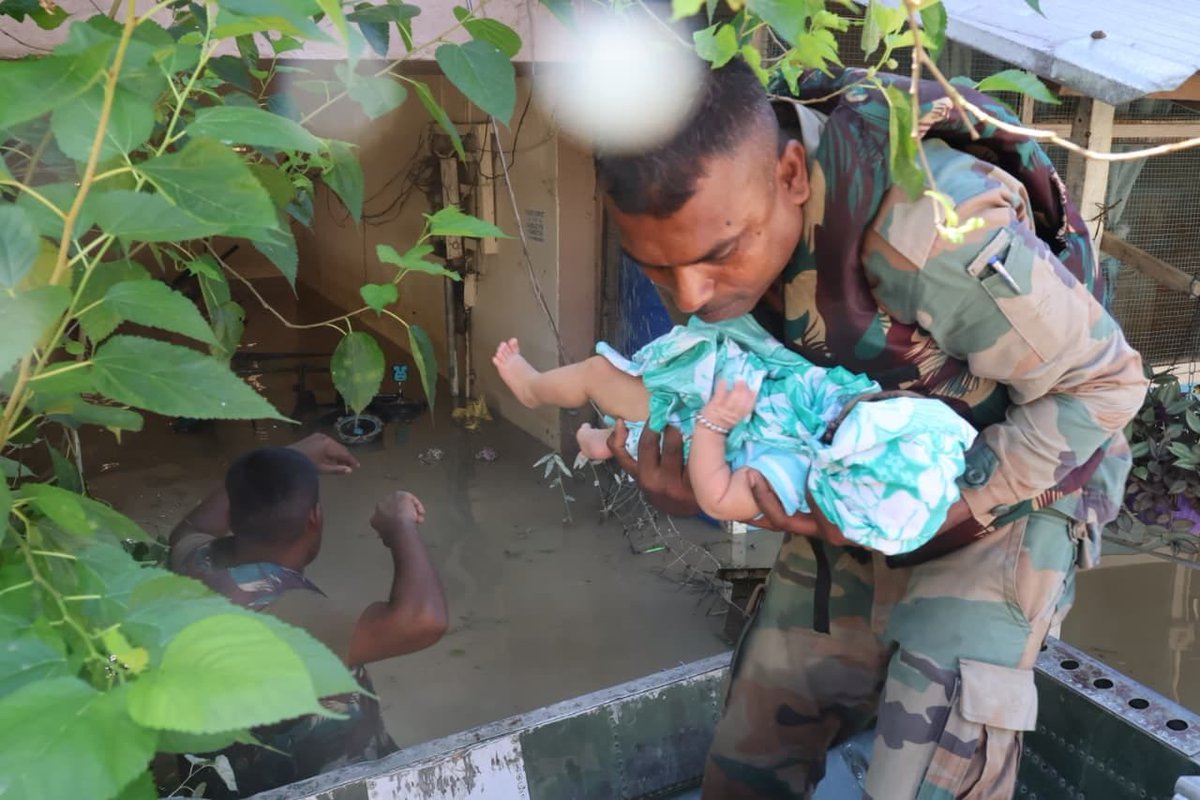
A sleeping infant carried to safety in the #AssamFloods. A word for all rescue personnel braving the swell to save lakhs from submerged villages & towns.
नोएडा (उ.प्र) निवासी शिवभक्त हरिद्वार स्थित कांगड़ा घाट पर नहाने के दौरान गंगा के तेज बहाव में बहने लगा। इसी दौरान वहां मौजूद #UttarakhandPolice SDRF जवान ने तत्काल गंगा में कूदकर कड़ी मशक्कत के बाद युवक को सकुशल बचा लिया।
#KanwarYatra2026#kanwaryatra
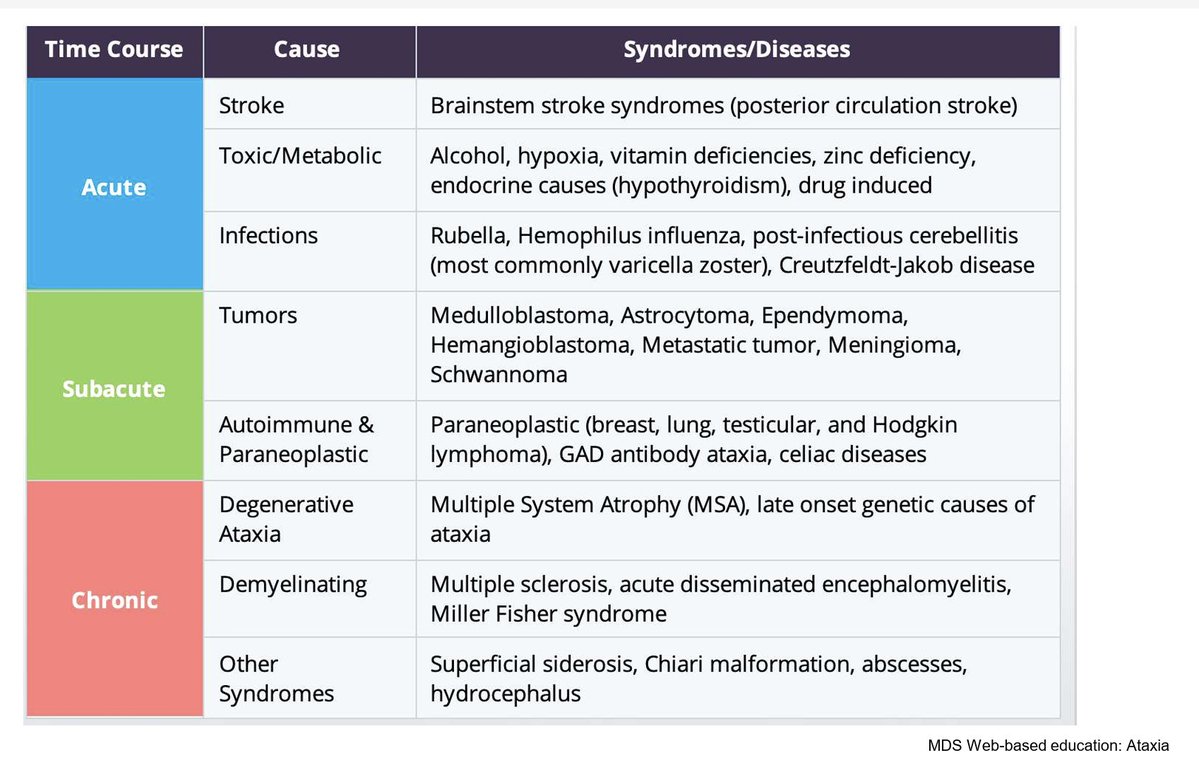
One of my favorite teaching pearls from Tony Lang at the Aspen Movement Disorders Course this morning was deceptively simple: always pay attention to the tempo of an ataxia. The time course often provides the biggest clue to the diagnosis. An acute ataxia should make you think about stroke, toxins, metabolic disorders, or infection. A subacute presentation raises concern for autoimmune, paraneoplastic, or neoplastic causes. A chronic, slowly progressive syndrome points more toward degenerative, genetic, or other structural disorders. Before ordering a long list of tests, pause and ask one question: How fast did this develop? Sometimes the clock is the most powerful diagnostic tool we have.
Queen Square Teaching Images #12
"Snowball" lesions in the corpus callosum with Susac/SICRET syndrome (small infarctions of cochlear, retinal, and encephalic tissue).
Encephalopathy (as in this case, originally mistaken for MS), hearing loss, & visual loss.
#NeuroRad#FOAMEd
🔥ANSWERS🔥
Rash and fever: West Nile or polio-like viruses
Pain, and multifocal neuropathy: vasculitis
Red urine and abdominal pain: Acute Intermittent Prophyria
History of heavy alcohol use: acute nutritional axonal neuropathy (dry beriberi)
Pseudo-athethosis: sensory neuronopathy
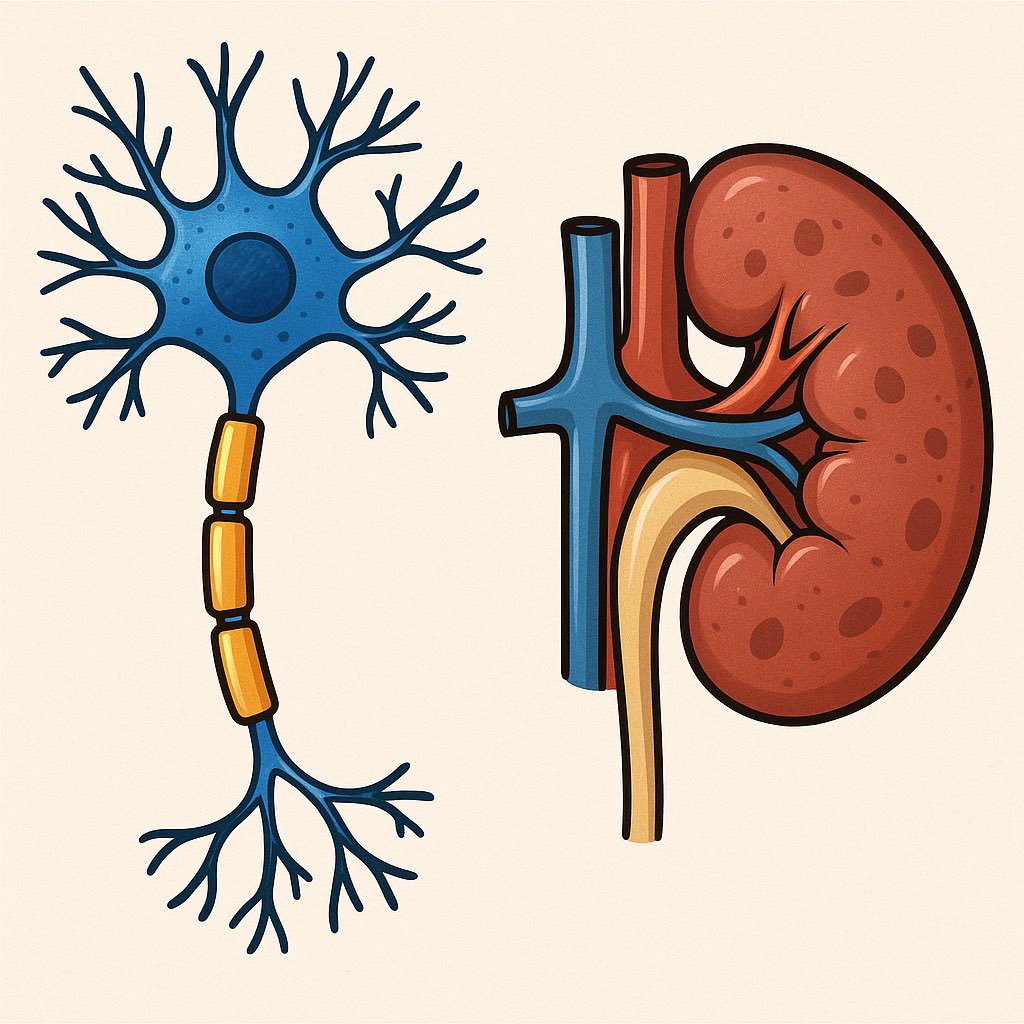
Nephrotic syndrome: contactin-1 autoimmune nodopathy
Asymmetric painful upper limbs only syndrome: Parsonage-turner syndrome
Asymmetric painful lower limbs only syndrome : Lumbosacral Radiculoplexus neuropathy
CSF cells >50/mm3 and enlarged axillary lymph nodes bilaterally : lymphoma
Fixed anisocoria and severe craniobulbar involvement: botulism
Please respond to the pool 👇👇👇 (and be honest 😅)
While it's uncommon to encounter a patient presenting with both peripheral neuropathy and nephrotic syndrome (>3 grams of proteinuria daily), these conditions can sometimes occur together. The most frequent causes are:
- Diabetes
- Amyloidosis
- Contactin-1 autoimmune nodopathy
- Lupus
- Paraneoplastic syndromes/POEMS
- Cryoglobulinemia
- HIV
- Hepatitis B and C
- INF2 gene Charcot-Marie-Tooth Disease
Acute stroke guidelines have been updated. The pharyngeal electric stimulation recommendation for dysphagia treatment was downgraded due to a negative phase 3 randomized trial. Details in attachment. #stroke https://t.co/Zy4cWx8BoJ
Heartiest congratulations to Gulveer Singh on securing the Silver medal in the Men’s 10,000m at #CWG2026 and becoming the first Indian ever to win a Commonwealth medal in this event. 🥈🇮🇳
With your dedication and hard work, you have not only earned a place on the podium but also inspired a new generation of Indian athletes. So proud!
@MichaelOkun Here is an article on myorhythmia which is still very relevant. When you see slow tremor think about lesions in the brainstem or diencephalon.
Baizabal-Carvallo JF, Cardoso F, Jankovic J. Myorhythmia: phenomenology, etiology, and treatment. Mov Disord. 2015 Feb;30(2):171-9.
Would you know myorhythmia if you saw it? Would you think paraneoplastic? Myorhythmia is so seldomly seen this is a great opportunity to share. Here are some adjectives to keep in mind: repetitive, rhythmic, slow (1-4 Hz). Locations: tend to be cranial and limb. This cool case by Gurram and colleagues is Anti-IgLON5 related. Slow, rhythmic, synchronous involuntary myorhythmic movements noted in chin, tongue and palate.
Do you know the 5 phenotypes for IgLON5? 1- sleep disorder, 2- bulbar syndrome, 3- PSP like and 4- other movement disorders, 5- cognitive impairment possibly w/ chorea and neuromuscular issues. This cool case had facial-lingual-palatal myorhythmia, mild parkinsonism, and fasciculations.
https://t.co/YjOPuk9MCQ
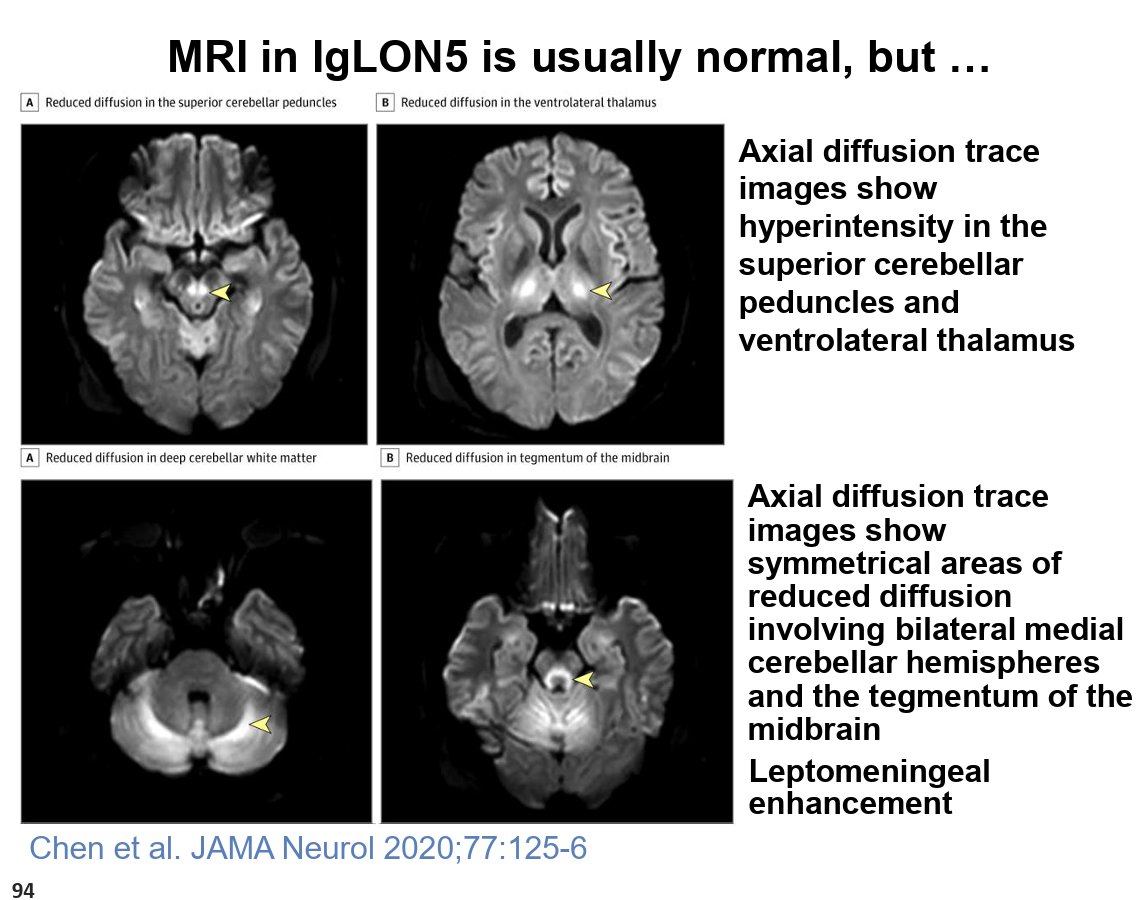
One of the messages from Joe Jankovic's outstanding Aspen Movement Course lecture today on autoimmune-associated movement disorders that stuck with me was the importance of resisting the temptation to over-diagnose rare conditions. With the growing awareness of anti-IgLON5 disease, many of us have probably been ordering the antibody test more often than we should. Joe reminded us that testing is most appropriate when the clinical picture includes the characteristic sleep disorder, which remains one of the strongest clues to the diagnosis. He also shared an important case where the MRI showed abnormalities, underscoring that imaging can occasionally be helpful, although MRI is normal in most patients with IgLON5 disease. Perhaps he and Alberto Espay's most practical pearl was one we should all remember in clinic: if a patient looks like they have classic progressive supranuclear palsy (PSP), they probably have classic PSP, not IgLON5 disease. As new biomarkers emerge, thoughtful clinical judgment remains our most valuable diagnostic tool.
The most beautiful video you will see on the internet today.
Sharmila Dhankar. 40 years old. Polio at age two. An abusive first marriage. Thrown out of her house with her two daughters, wrapped in a neighbour’s quilt. Financial ruin. Lost her father. Sold the house.
Today, Sharmila threw the shot put 9.81 metres at Scotstoun Stadium in Glasgow, ending India’s 20-year wait for a Commonwealth Games para-athletics gold. Her teammate Shilpa K. Shyla added to the celebrations with a bronze in the same event.
But what made the moment even more special was what happened after the victory.
Instead of talking about herself, Sharmila dedicated her gold medal to her mother. ❤️
Behind every medal is a story. Behind this one is sacrifice, resilience, a mother’s love, and a daughter who fulfilled a dream against all odds.
It is July, I’m staffing the PN clinic and once again, it is essential to emphasize to the new PN/NM fellows the critical role of the clinical phenotype in diagnosing peripheral neuropathies.
NCS/EMG are valuable, but the neurological exam is the most important (as it should be in neurology but many have forgotten).
This is the neuropathy clinical phenotype classification I find the most helpful:
1-Isolated small fiber neuropathy
2-Length-dependent peripheral neuropathy (or distal symmetric polyneuropathy)
3-Multiple mononeuropathies
4-Mononeuropathy
5-Asymmetric neuropathy
6-Polyradiculoneuropathy
7-Plexopathy (brachial or lumbosacral, many times a radiculoplexus neuropathy)
8-Sensory neuronopathy
9-Motor neuronopathy
I always tell my trainees they don’t have to memorize the causes of each phenotype. If you define the syndrome correctly, you can ask a Chatbot what are the most likely causes. If you add the time course (tempo), presence of autonomic dysfunction, presence of systemic features (weight loss, rashes, fever, night sweats, or anasarca), comordities and response to immunotherapy, the chatbot will provide you an expert level discussion and differential.
1- Isolated Small Fiber Neuropathy
-Pure small fiber neuropathy.
-Only temperature and pinprick dysfunction on exam.
-Ankle reflexes must be normal in patients < 60 yo.
-NCS must be normal for age.
2- Length-dependent peripheral neuropathy (or distal symmetric polyneuropathy)
-Sensory predominant neuropathy, can also have motor involvement, distal predominant, worsens in an ascending length-dependent fashion: foot->leg-> hands/knee->elbow/anterior abdomen.
3- Multiple Mononeuropathies
Involvement of two or more non-contiguous (separate) motor, sensory or sensorimotor peripheral nerves.
4- Mononeuropathy
Involvement of a single sensory, motor or sensorimotor peripheral nerve.
5-Asymmetric neuropathy
It’s the pattern of overlapping multiple mononeuropathies.
Length-dependent polyneuropathy (distal predominant) involving bilateral extremities in an asymmetric fashion demonstrated by at least one grade of motor power difference by the Medical Research Council strength scale, more than 50% difference in sensory testing and involved individual nerves could not be identified separately.
6-Polyradiculoneuropathy
Proximal and distal weakness and sensory loss in the four limbs.
Can be distal>proximal; distal=proximal or distal<proximal.
7- Plexopathy
-Proximal and distal weakness in a single limb with decreased/absent reflexes and sensation loss (can be only proximal or only distal in brachial plexopathies; and of course can be bilateral).
- On exam can look like a radiculopathy or multiple radiculopathies.
-Plexopathies usually have more dense sensation loss than radiculopathies and may cause alodynea (pain caused by non-painful stimulus) which is rarer in radiculopathies.
8- Sensory Neuronopathy or Ganglionopathy
-The cell body of the sensory neurons are affected, usually asymmetric and affecting distal and proximal limbs, patchy, can affect the face or whole body, must have sensory ataxia and preserved strength.
- Can be accompanied by pseudoathetosis.
9- Motor neuronopathy
-Pure motor syndromes.
-The body of the motor neurons are affected.
-Usually asymmetric and distal predominant, accompanied by atrophy, fasciculations, decreased/absent reflexes (can also have upper motor neuron signs) and normal sensory exam.