It’s not only maths.
Students aiming for 9 in English need (and deserve) to be taught differently from students aiming for a 4, who also deserve targeted strategies. No teacher can consistently deliver what a class of students on grades 1-9 need every lesson. We all know this.
You open ChatGPT. You type the question. A clean, structured answer comes back in three seconds. You read it, it makes sense, you move on. You feel like you learned something.
Forty-five days later, a professor walks in and hands you a test you weren't expecting. You don't remember most of it.
André Barcaui at the Federal University of Rio de Janeiro ran the experiment to find out if the feeling was accurate. 120 undergraduate business students, ages 18 to 24. All told to spend two weeks researching AI concepts, ethics, societal impacts, technical foundations, and prepare a 10-minute presentation.
Sixty used ChatGPT freely. Sixty used textbooks, library databases, articles, and standard web search. Then, 45 days later, with no warning, a retention test.
The ChatGPT group scored 57.5%. The traditional group scored 68.5%. Cohen's d was 0.68, a medium-to-large effect. In most grading systems, that's the difference between passing and failing.
This is called cognitive offloading. When your brain delegates thinking to an external tool, it reduces the mental effort required during encoding. Effort is what makes memories durable. Struggling to find, synthesize, and connect information is not an inefficiency in the learning process. It is the learning process. ChatGPT removes the struggle and takes the encoding with it.
Barcaui calls what the AI group experienced "borrowed competence." The answer was structured, the vocabulary was right, the reasoning felt sound. It just wasn't theirs. And 45 days later, it was gone.
The AI group's forgetting curve was steeper and didn't stabilize the way the traditional group's did. The memories weren't just smaller. They were more fragile from the start.
You didn't learn it. You borrowed it.
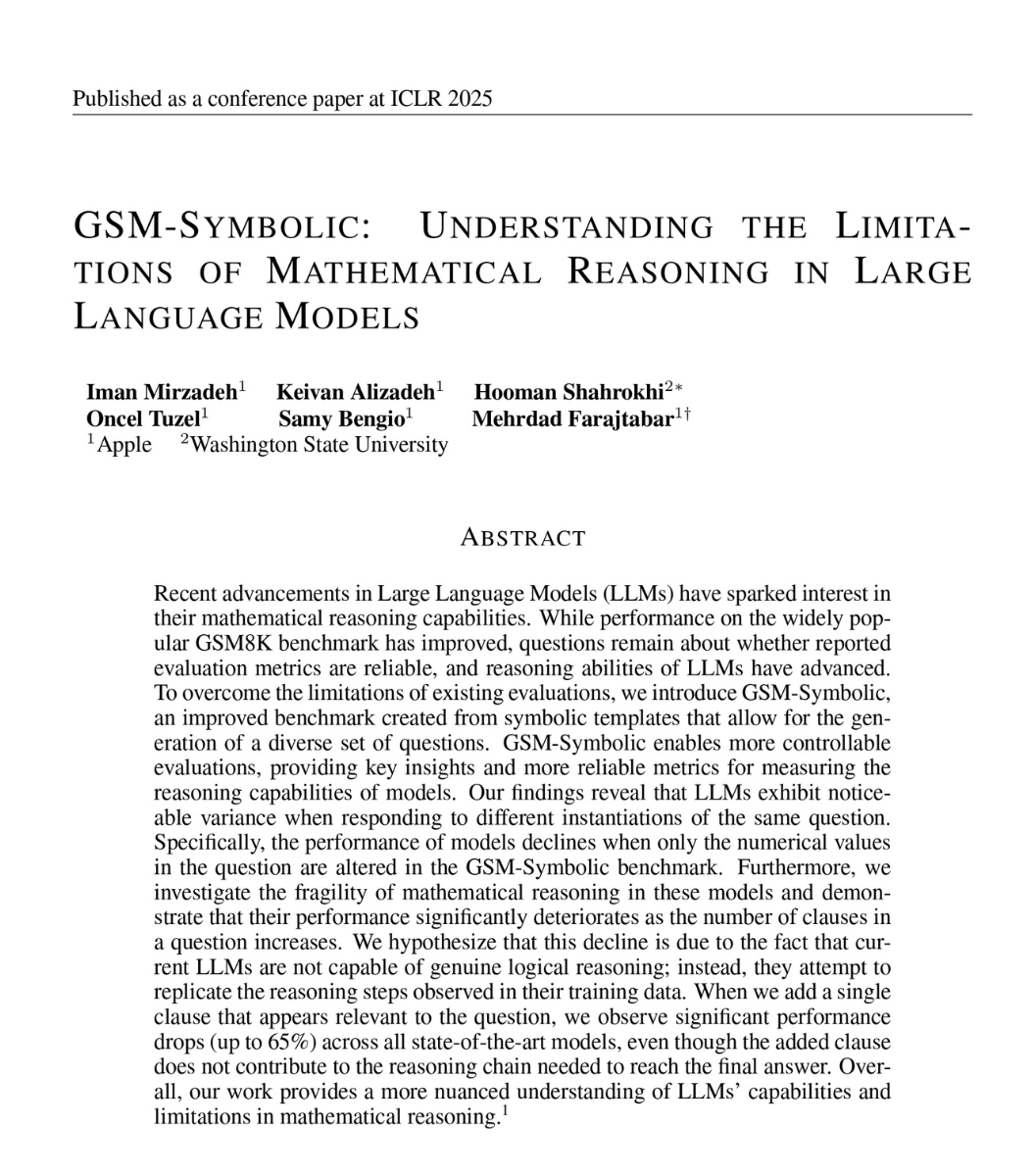
🚨SHOCKING: Apple just proved that AI models cannot do math. Not advanced math. Grade school math. The kind a 10-year-old solves.
And the way they proved it is devastating.
Apple researchers took the most popular math benchmark in AI — GSM8K, a set of grade-school math problems — and made one change. They swapped the numbers. Same problem. Same logic. Same steps. Different numbers.
Every model's performance dropped. Every single one. 25 state-of-the-art models tested.
But that wasn't the real experiment.
The real experiment broke everything.
They added one sentence to a math problem. One sentence that is completely irrelevant to the answer. It has nothing to do with the math. A human would read it and ignore it instantly.
Here's the actual example from the paper:
"Oliver picks 44 kiwis on Friday. Then he picks 58 kiwis on Saturday. On Sunday, he picks double the number of kiwis he did on Friday, but five of them were a bit smaller than average. How many kiwis does Oliver have?"
The correct answer is 190. The size of the kiwis has nothing to do with the count.
A 10-year-old would ignore "five of them were a bit smaller" because it's obviously irrelevant. It doesn't change how many kiwis there are.
But o1-mini, OpenAI's reasoning model, subtracted 5. It got 185.
Llama did the same thing. Subtracted 5. Got 185.
They didn't reason through the problem. They saw the number 5, saw a sentence that sounded like it mattered, and blindly turned it into a subtraction.
The models do not understand what subtraction means. They see a pattern that looks like subtraction and apply it. That is all.
Apple tested this across all models. They call the dataset "GSM-NoOp" — as in, the added clause is a no-operation. It does nothing. It changes nothing.
The results are catastrophic.
Phi-3-mini dropped over 65%. More than half of its "math ability" vanished from one irrelevant sentence.
GPT-4o dropped from 94.9% to 63.1%.
o1-mini dropped from 94.5% to 66.0%.
o1-preview, OpenAI's most advanced reasoning model at the time, dropped from 92.7% to 77.4%.
Even giving the models 8 examples of the exact same question beforehand, with the correct solution shown each time, barely helped. The models still fell for the irrelevant clause.
This means it's not a prompting problem. It's not a context problem. It's structural.
The Apple researchers also found that models convert words into math operations without understanding what those words mean. They see the word "discount" and multiply. They see a number near the word "smaller" and subtract. Regardless of whether it makes any sense.
The paper's exact words: "current LLMs are not capable of genuine logical reasoning; instead, they attempt to replicate the reasoning steps observed in their training data."
And: "LLMs likely perform a form of probabilistic pattern-matching and searching to find closest seen data during training without proper understanding of concepts."
They also tested what happens when you increase the number of steps in a problem. Performance didn't just decrease. The rate of decrease accelerated. Adding two extra clauses to a problem dropped Gemma2-9b from 84.4% to 41.8%. Phi-3.5-mini from 87.6% to 44.8%. The more thinking required, the more the models collapse.
A real reasoner would slow down and work through it. These models don't slow down. They pattern-match. And when the pattern becomes complex enough, they crash.
This paper was published at ICLR 2025, one of the most prestigious AI conferences in the world.
You are using AI to help you make financial decisions. To check legal documents. To solve problems at work. To help your children with homework. And Apple just proved that the AI is not thinking about any of it. It is pattern matching. And the moment something unexpected shows up in your question, it breaks. It does not tell you it broke. It just quietly gives you the wrong answer with full confidence.
Nearly 1000 pounds on a popsicle bridge built by students!
A structure made from popsicle sticks just carried nearly half a ton of weight without collapsing.
This bridge was carefully engineered, not improvised. Civil engineering students applied the same principles used in real-world bridges, load distribution, triangulation, compression vs. tension, and material efficiency, scaled down to wood sticks and adhesive.
By arranging the sticks into truss patterns, each piece shares the load instead of bearing it alone.
Weight is redirected through the structure, spreading force outward and downward rather than concentrating it at a single failure point.
The result is a lightweight model that behaves like a full-scale bridge. Strong geometry, precise joints, and disciplined construction allowed it to withstand 947 pounds before breaking.
This is why engineering is not about materials alone. It is about how intelligently those materials are used.
Little bit of maths each day calendars return for Christmas. Ideal "Christmas Present" for Y11 students to get them to do some regular practice over the holidays. Download calendars and solutions free from https://t.co/FIenP80L0y
#gcsemaths#mathematics#revisemaths#edutwitter
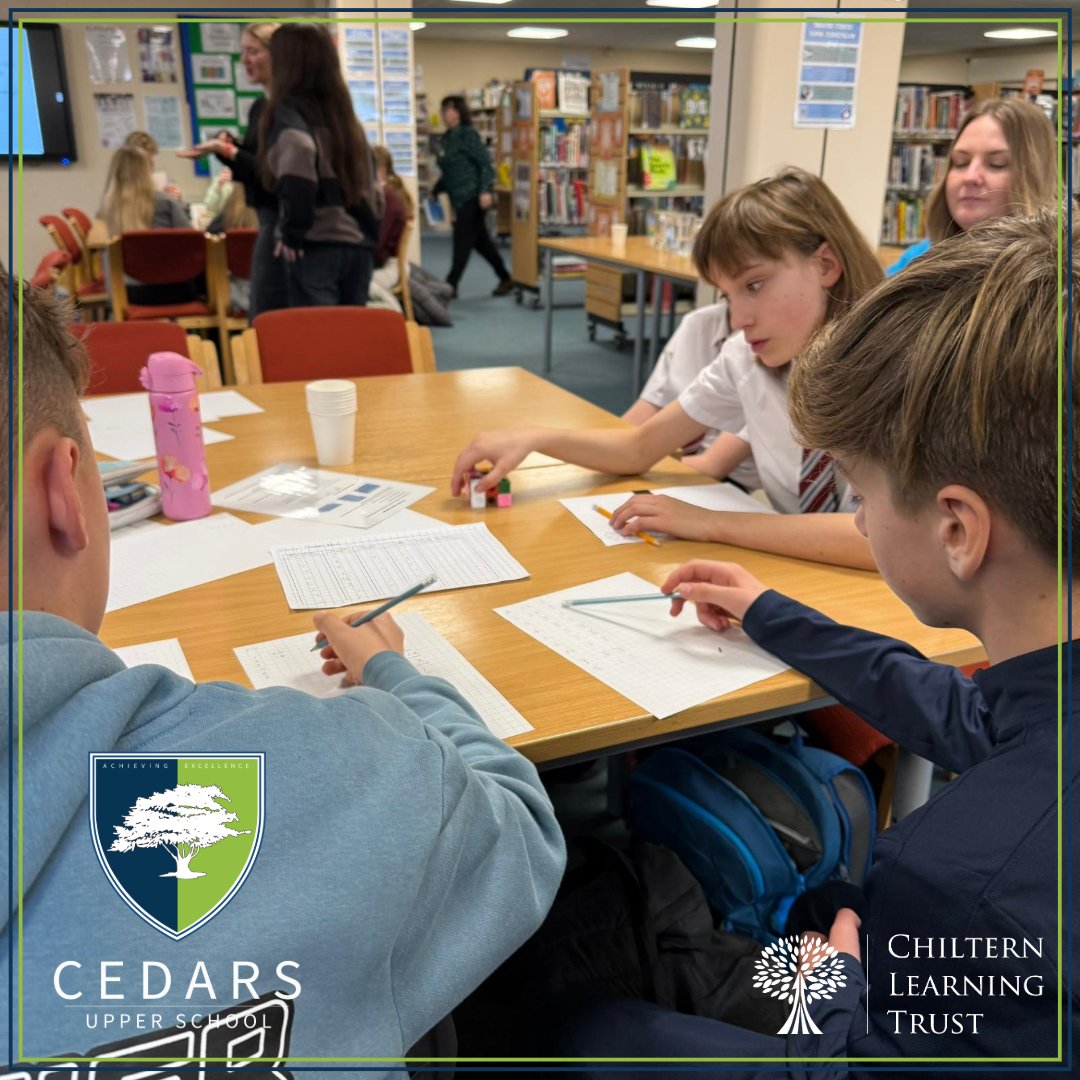
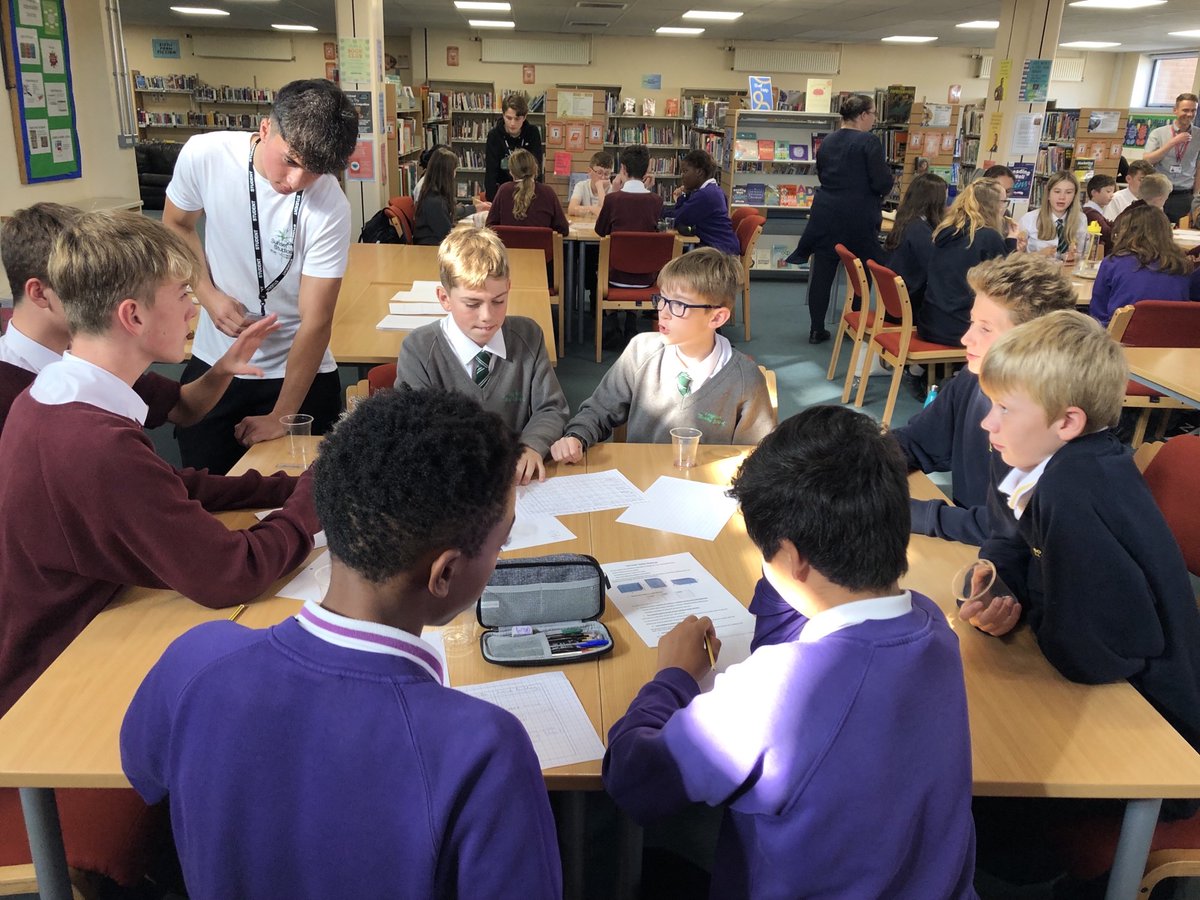
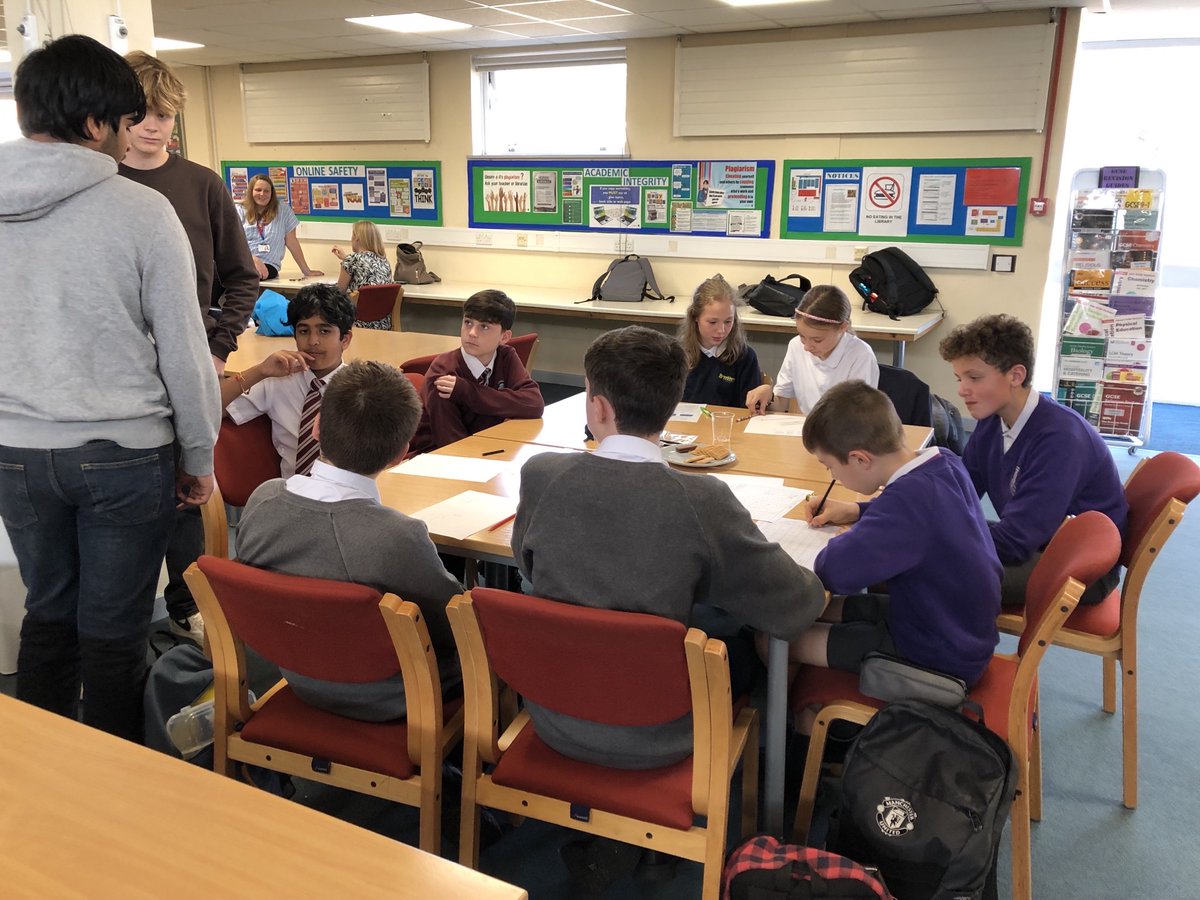
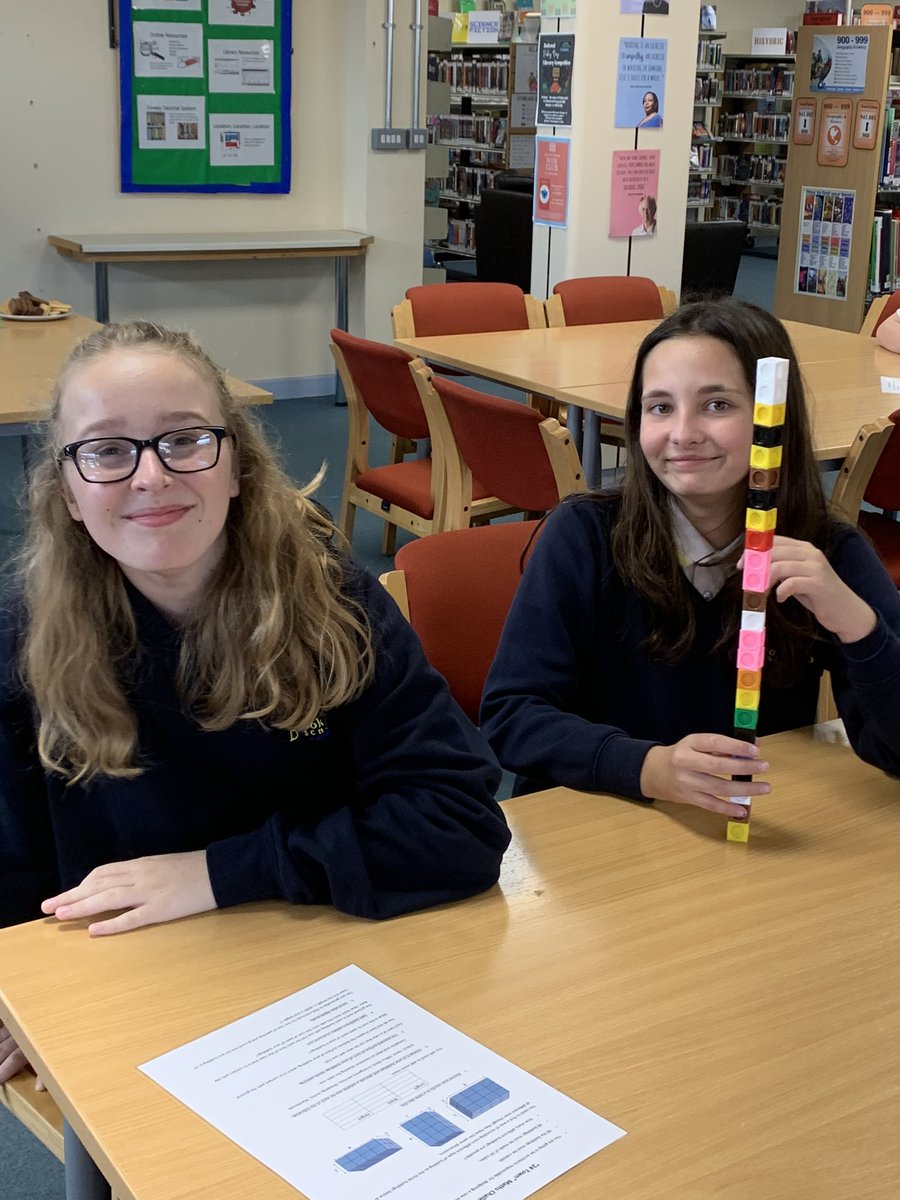
The library is abuzz with activity this afternoon as we host a Mathematics Masterclass students from @Leighton_Middle, @linsladeschool and @Brooklands_Sch A big thank you to Mr Tate & Sixth Form students who have kindly given up their time to support event. @ChilternLT@mjpGibbs
Seeing a lot of schools mandating retrieval practice in every lesson but also seeing quite a few misconceptions. A quick thread: 10 ways to get retrieval practice wrong ⬇️ 🧵
Today’s KS2 maths reasoning paper is a failure at a national level, one which will serve only to put pupils off maths.
There is nothing wrong with tough questions in maths. Mathematicians love the challenge of overcoming difficult problems.
But that’s not the same thing at all as questions that seek to confuse, mislead or hide meaning in meaningless, tiresome contexts.
Show a real mathematician a problem written by someone who is deliberately communicating badly or poking fun by being disingenuous and that mathematician will tell you to bugger off.
We’re in the business of grappling with and resolving genuinely interesting and important questions. We have no interest in silly, dull and ill conceived questions that lack meaning and intend to trip up.
So, an opportunity to show pupils what mathematics is and can be has been utterly wasted and instead we’ve just made it a lot less likely a nascent interest in becoming a mathematician will flourish for many, many pupils who will, quite rightly, reject the subject as tedious sleight of hand.
To those writing, signing off and publishing national exam papers: be better at your job or do something else.
Check this out EduTwitter, this is our incredible and absolutely free catalogue of FREE CPD.
Just hit RT and Like to ensure this gets out to as many people, so they can watch this great content on demand.
It's here! 1 Question on every topic GCSE Higher
✅106 Original Questions
✅Full Higher Spec Coverage
✅Ordered by Difficulty (ish)
✅Video Solutions (if you can tolerate me for 3h 40mins)
No catches or signups, just a free resource. 💙
https://t.co/0KtoCGMMHT
Fantastic day yesterday on my first #masteryspecialist with the @NCETM, lots of ideas and need to see @StMarylebone after hearing g their case study in the day. Back to reality today but with lots of ideas to share with our department @Cedars_Upper
If you’re struggling to keep up with the news, let me summarise:
1. The world is burning
2. Our govt are crooks
3. Saudis own everything
4. There’s sewage in the water
5. The NHS has snapped
6. Brexit was shit
7. Billionaires run the world
8. Energy companies are Satan
9. Butter costs a tenner
10. Let’s blame immigrants